..   .. ..
.   . .
.   . .
CARING
FOR YOUR CAVALIER
Vaccinations
-
Your pup should have been vaccinated by his
breeder and you will have been given a
certificate stating when the last was done,
and when he is due for his next. Usually,
once he has had all his needles as a pup, he will
just need an annual booster. You will need
to present this certificate if you want to board
your dog or join an obedience club.
Worming
-
A good breeder will have wormed the pup regularly
in the early weeks and will tell you when he is
next due. Then you should discuss worming
with your vet when you take the pup for a check
up or a vaccination, and he/she will advise you
on a suitable worming program.
Heartworm
-
Heartworm is very serious in dogs and can kill. It
is vital to use medication to prevent infestation. Daily
or monthly treatment is available. Monthly
medication is easier to keep track of, and some
now incorporate flea control and other things.
This is something to discuss with your vet also. If
you have an older dog and it has not been on
heartworm prevention, it MUST have a
blood test done by the vet, before commencing
treatment.
Feeding
-
There are many ways to feed your dog, the
breeder will be happy to discuss the type of food
they prefer. One thing to take note of
is that artificial colourings/flavourings and
preservatives can cause skin, and sometimes,
health problems.
....
. . .
..
Puppies
-
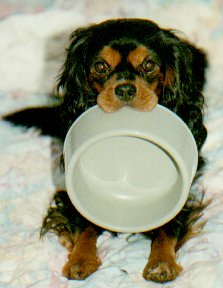
Most young pups are on 3 - 4 meals per day. Your
pup should come to you complete with a diet sheet
from his breeder to let you know what he is
eating. It is quite common for a pup to
arrive at his new home and turn up his nose at
whatever you've been told to feed him! A
healthy pup will not starve, so offer him his
dinner and if he leaves it take the bowl away
after 10 minutes. At the next meal do the
same. It is a good idea to keep fairly
closely to the diet he has been on to lessen the
chance of a tummy upset. Once he has settled
in you can then make some changes if you don't
like the current diet. It is not unusual for
a young pup to have a touch of diarrhoea with the
stress of leaving mum and his siblings and
familiar surroundings, also the change of water
in different areas can cause tummy upsets, speak
to your breeder about this. Make sure he has
access to fresh water and miss a meal if this
happens. Obviously a very young pup can't go
too long without food so for the next meal offer
him something very bland and easy to digest. Cooked
chicken, boiled rice and a little yoghurt (with
live cultures) are usually well tolerated. If
the diarrhoea doesn't settle quickly or if there
is vomiting or blood in the stool please take him
to the vet.
Adults
-
Adults need
one main meal each day, which can be given
morning or evening. Most Cavaliers LOVE food
and it is important for their health that they
not be over-fed. Those big brown eyes tell
everyone that they are starving!!! A fat
Cavalier snores more, puffs and pants when
exercising, and the extra weight puts a lot more
strain on the heart. In a breed that can
have heart problems it is very unwise to let
your dog get fat. You are doing them no
favours! Meals can be stretched a bit more
with veggies and/or boiled rice. Avoid
letting them have snacks through the day - though
if you must, there are a few things that are
better than sharing your cake! Frozen (and
fresh) baby carrots are good, and most just adore
ice cubes. Experiment with low joule treats
until you find something. If you use food
treats when training cut back a bit on the
quantity of food in their meal.
Water
-
Leave a bowl of fresh water down at all times. While
house training a young pup you might like to pick
up the bowl in the evening so they won't have a
big drink before bed. Though in very hot
weather make sure they have access at all times.
Bed
-
Cavaliers love to sleep with their owners but not
everyone wants a dog in the bed! Decide
where you want them to sleep and make sure they
are comfortable. A crate with nice cosy
bedding, is one option. Otherwise a kitchen or
other room where you can set up a bed for them. You
may need to put down newspapers, if they are
loose in a room it is quite possible they will
toilet during the night. Young pups usually
can't last through the night. Don't leave
water down for them unless it is a very hot night.
Take them out to the toilet last thing at night
and then snuggle them up with a cuddly toy and
something to chew. If they can be in their
crate in your bedroom they will probably settle
well, and you will know if they need to go out to
the toilet during the night.
Training
-
Cavaliers are intelligent dogs and are (usually!)
not difficult to train. One thing to note is
that they have NO road sense at all, so it
is important to keep them on lead unless you have
a safe area away from roads. Even a well
trained Cavalier can take off to 'talk' to
another dog or child and they won't stop to check
if a car is coming.
Your
first concern with a pup will obviously be house
training. A baby puppy needs to be taken
outside frequently and to be watched constantly
to be sure they won't toilet on the carpet. A
crate is a very handy thing to have with a pup in
the house. It is a safe place for them to be
when you can't watch them and dogs will generally
not soil their own bed. I know many people
see a crate as a 'cage' for a dog but the dogs do
come to love their crate and see it as a safe den. If
you feed the pup in his crate and tuck them away
in it with treats and toys they won't see it as a
punishment. They will run to a crate at dinner
time and quite often curl up for a sleep in an
open crate during the day. They are good for
safe car travelling, and also when visiting and on
holiday, the pup can be put safely in the crate
out of people and harms way!
As
soon as the pup wakes from a nap, has a meal or a
drink take them outside to the place you want
them to toilet. Wait with them and as soon
as they do their business, use a word
you want them to respond to - 'toilet' -'wee' -
something that you feel comfortable with! Reward
them with praise and a tiny treat. Keep
treats handy and always have one ready to
reward behaviour you like (and want a pup to
repeat). Only give a really small treat. Take
them back in after they have finished. If
you repeat the chosen word and reward each time
they perform, they will quickly learn to go on
command. Take them out frequently through
the day.
....
. . .
..
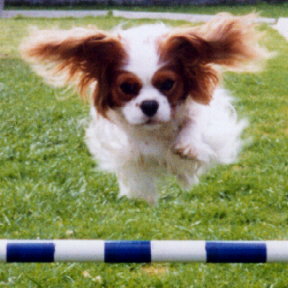
Further
Training - There are many Cavaliers with
titles in Obedience, Agility, Tracking and even a
few Endurance titled Cavaliers! They are a breed
who love to be with you and want to please. A
Cavalier needs to be trained with positive
reinforcement - lots of praise, tiny treats and
fun. A happily working Cavalier is a joy to
see..... the tail never stops! If you
are interested in building a wonderful bond with
your dog, training is a great way to do it. Puppy
pre-schools can be a great way to socialise your
pup and some teach you basic obedience. If
you find you are interested, find an obedience
class that uses these positive methods and learn
how to teach your dog. (See Cavalier Activities
page.)
Grooming
-
Brushing:
Get
your pup used to being brushed and combed at an
early age. They don't need much grooming at
this age but it's good to get them used to it.
A natural bristle brush and a comb are needed. Make
sure you comb thoroughly behind the ears as this
is a spot where they will tangle when older. Just
a very short session and reward the pup. Don't
get annoyed with them - you want them to remember
being brushed as a good thing - not a time
when they get into trouble! When they are
older and has a beautiful coat you will need to
brush them a couple of times a week. A
rubber mit is very good for removing dead hair -
both from them and your furniture! The mit
is also good for working shampoo into their coat.
Bathing:
A good bath and brush and your dog will look
wonderful. They are small enough to fit in
the laundry tub so a bath every week or two is a
simple matter. Use a good quality dog
shampoo and conditioner, warm water and rinse
well. Make sure they don't get chilled in
cold weather. On a hot day they can run
outside to dry (as long as they don't roll in the
dirt!) or you can use a hair dryer or fan heater. It
is a good idea to get puppies used to sitting up
on something, maybe your washing machine with a
towel on it, and being dried with a hairdryer.
This will make things much easier for when
your Cavalier has a lovely long coat and the
weather is bad. Puppies don't need a bath
very often - be guided by your nose and eyes.
Eyes:
Many Cavaliers have a problem with runny
eyes while they are young. It is because
they have such large eyes plus their heads change
shape as they grow. This quite often settles
down once they are older. In blenheims and
tricolours this can cause a stain. Under the
eyes can be wiped with a damp cloth each day,
always upwards, or you will make the staining
worse. There are products available to help
remove the stains. You do need to clean
regularly to keep the area stain free. A
good clean, dry, and then a dab of vaseline
(careful not to get into the eyes) each morning
seems to help quite a lot.
Teeth:
It is important to look after your dogs teeth -
tooth problems have been linked to illness so it
is vital to your dogs health to care for them. If
they eats raw bones regularly that may be enough
to keep them clean, but otherwise you may need to
have your vet clean them and then you will need
to attend to them regularly. There are
toothbrushes and toothpaste especially for dogs (don't
use people toothpaste). It would be a good
idea to get them used to you cleaning their teeth
while they are young. Not all dogs chew
their food properly, so raw bones daily can
make a marked improvement. Some chew toys
are designed to help fight tartar build up.
Ears:
Check your dogs ears weekly or if they are
scratching at them - if there is brown wax or any
sort of smelly discharge they need attention. Many
people use an ear cleaner regularly to keep the
ears clean. Check the ears and if they look
clean and there is no odour and the dog is not
scratching you can leave them alone. If
your cavalier gets ear mites, you will need
drops from the vet to clear this up. Food
getting in the long ears is rather unsightly and
messy. There are a couple of ways around
this without trimming off their beautiful ears! They
can eat out of a 'spaniel bowl'. This is a
bowl that is narrower at the top than others and
the ears fall either side of the bowl - or they
can wear a 'snood'. This is a small
elasticised, material 'hat' that goes over their
head and keeps the ears tucked back out of their
dinner. Excellent if they are eating a raw
bone! These are available through the
internet (see Rescue Page) or at dog shows.
Nails:
Their nails will need clipping. Buy some
nail clippers for this. Be careful not to
cut into the quick (the pink vein you can see if
you hold it to the light - though in a whole
colour mightn't be able to easily see it). Just
take the sharp end off the nail. Some
breeders remove the dew claws - a nail part way
up the inside of the leg - but if your dog has
them it's important to cut them regularly or they
can grow around into the leg. Cutting nails
on puppies can be a bit of a bother. Some of
them wiggle and squirm and you don't want to hurt
the pup. Enlist a helper to distract the pup
with a little treat or toy and once you finish
let the pup know how wonderful they are! Even if
you only do a couple of nails and then come back
and do more later you are training the pup to
cooperate and it's important that they do not see
it as punishment.
Trimming:
Cavaliers are a 'natural' breed. They are
not clipped - though a pet dog can be if you want. A
show Cavalier is not trimmed - the only trimming
allowed is between the pads on their feet. It
is a good idea to do this to cut down on slipping
on smooth floors. If you walk the dog on
hard surfaces often this may not be needed. A
pet Cavalier can be trimmed by a groomer if you'd
prefer a bit less coat to deal with.
Anal
Glands - These are small sacks located
at either side of the dog's anus and contain foul
smelling liquid. Cavaliers can have a
problem with them not expressing naturally,
sometimes this can be due to incorrect diet. They
are supposed to empty when the dog has a bowel
motion and when they don't the dog tries to
relieve it by 'scooting' across the floor on
their bottom! Your vet can express them for
you if this is a problem and you can learn to do
it yourself - ask the vet to show you how. If
ignored they can become impacted and an infection
can ensue. Many people think this scooting
is caused by worms but with regular worming it is
unlikely to be the cause.
....
. . .
..
Toys
-
There is a huge range of toys available for dogs. Be
sure you provide your pup with safe and suitable
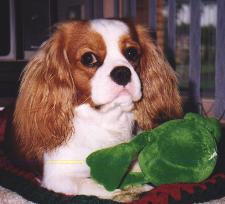
toys. Pups like to cuddle up with a soft
teddy bear but if they are a chewer beware they
don't rip the bear open and swallow a squeaker or
an eye! Some love disembowelling soft toys
and others are good with them, so it does
depend on the dog. Any toy with a squeaker
needs to be checked regularly to make sure the
dog hasn't damaged the toy to get the squeaker
out. Some dogs get into a frenzy over
squeakers! Nylabones seem fairly
indestructible and most dogs love rawhide chews
and pigs ears but there have been cases of
rawhide causing obstructions so care should be
taken with them. Large bones can provide
hours of entertainment. Kong's are a hollow
rubber toy that can be filled with treats and can
keep a pup busy for a long time as they try to
get every scrap of food out. They can also
be used as a ball. Balls should be big
enough that they can't be swallowed. If you
put your pup to bed with a toy do be sure it is a
safe toy. Leave squeaky toys for when you
can supervise play.
Desexing
-
Pups need to be desexed at around 6 months old. Unless
you have bought a pup from a reputable breeder on
main register it is a pet, and will benefit from
desexing. A male is unlikely to lift his leg
and mark every tree in sight and they will not be
looking for girls all the time!! It also
negates the chance of testicular cancer and
prostate problems. An undesexed bitch will
leave blood stains around your house every six
months and attract males from the neighbourhood -
you run the risk of one of the neighbourhood
Romeo's managing to scale the fence! She is
also likely to suffer phantom pregnancies, and
there is also the risk of pyometra (life
threatening) for which she would need emergency
spaying to save her life. Some vets believe
the chance of mammary cancer is lessened if she
is desexed young.
Microchipping/Registration
-
By law, pups in some states must be microchipped
before sale. If this is the case in your
area your pups breeder will provide you with
details of microchipping. The chip is very
small (about the size of a grain of rice) and is
implanted via a needle into the pups back between
the shoulder blades. There are several
registries that your dog can be placed on and if
they are found wandering they will be scanned and
traced back to you via one of the registries. Just
having the microchip in place is not enough - you
need to be sure they are on at least one register.
Further
Information See:
OzCavalier Email List Website, we are a friendly
list for those interested in the Cavalier King
Charles Spaniel in Australia. List members may
seek advice, or provide advice on any Cavalier
related topic. See Links page for address.


 . . . . . . . . . . . . . . . .
|