

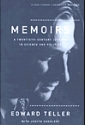


by Edward Teller , Judith Shoolery
FOREWORD
DESCRIBING WHAT I have been up to since January 15, 1908, or rather, describing the fraction I can remember, is neither simple nor straightforward. Our memories are selective; they delete some events and magnify others. Just the simple act of recalling the past affects the recollection of what happened. That some of my remembrances are not the commonly accepted version of events should not be surprising.
Describing those events-and the people who had a hand in making me the person I turned out to be-is even more difficult. We do not easily recognize what shapes us most deeply, and the results of introspection are even less reliable than memory. Anyone optimistic enough to try to understand peoplethe most complicated entities in the known universe-is entering a morass.
Writing the first five chapters of this book was especially hard. It was like remembering someone I once knew, a person who no longer exists. 1 felt as I did in 1933, when I wrote a poem called "Air Mail":
If I tied a letter to a balloon, it would say:
1 must find someone human Male or female, young or old, does not matter.
But 1 must find a human.
Why send such a letter? If even one soul
finds my letter, it may be read.
And the finder may consider it fitting
to write a response
And tie it to a balloon.
How should the twentieth century, during which I lived more than nine decades, be described? Its culture was science and technology; its course was unpredictable change; its fate was to suffer two major wars and a confrontation between two visions of mankind that threatened to lead to a third. My own life has been shaped by each of these forces, and I have been a bystander and also a participant in many of the events connected with these major upheavals.
My dreams were of other stuff, but some of my directions were present from the time of my earliest youth. Science was my earliest passion. I cannot divorce any of the major events in my life from the way of thinking that the study of science imposes. Such thought is not necessarily straightforward logic, but it never permits one to ignore facts or to substitute authority for self-conviction.
This book describes events I perceive as unique in the century I have experienced. Yet each observer has not only a time and a place from which he views events but also an inner perspective built from past understanding that cannot be dismissed but only acknowledged. My life has included many experiences alien to the majority of Americans. Some of them, shared by hundreds of thousands of people, are worth remembering in the hope that the condemnation of repeating history does not come to pass. Others may only help to explain the values and visions that color this book. If they add to the reader's objectivity in assessing the validity of my statements, then . . . [continued]