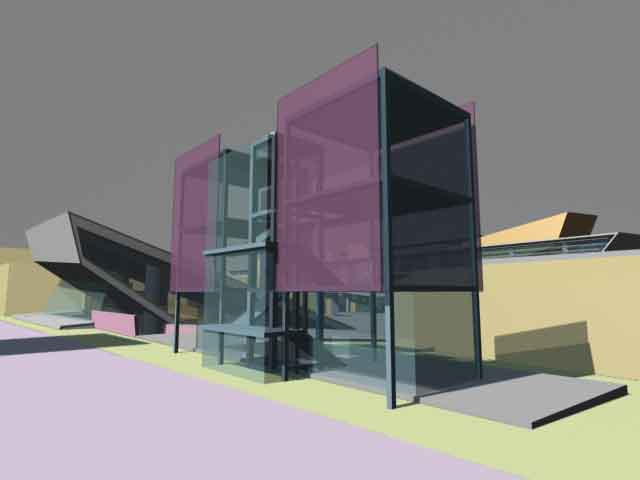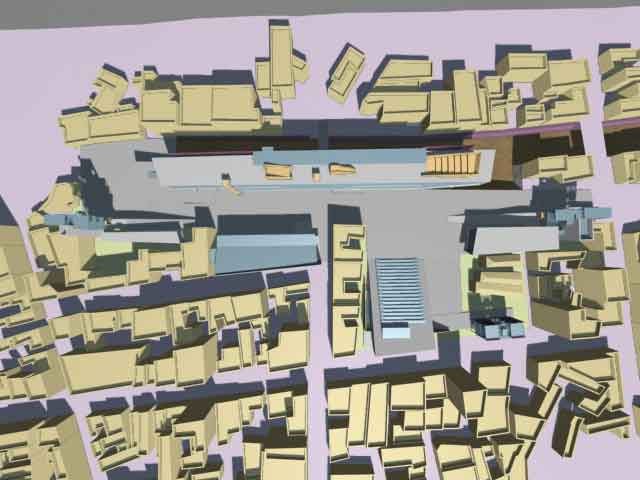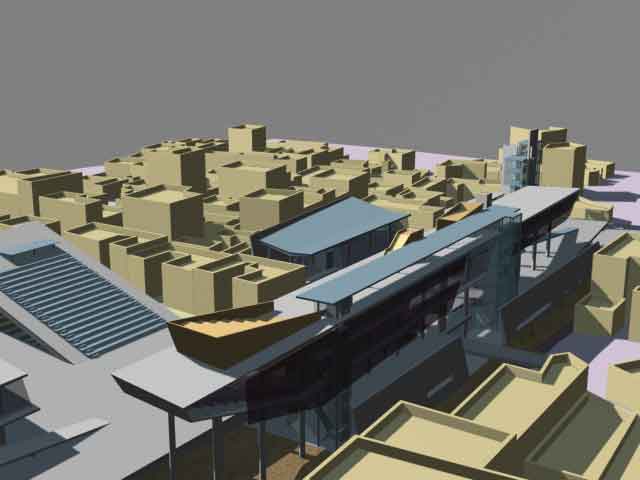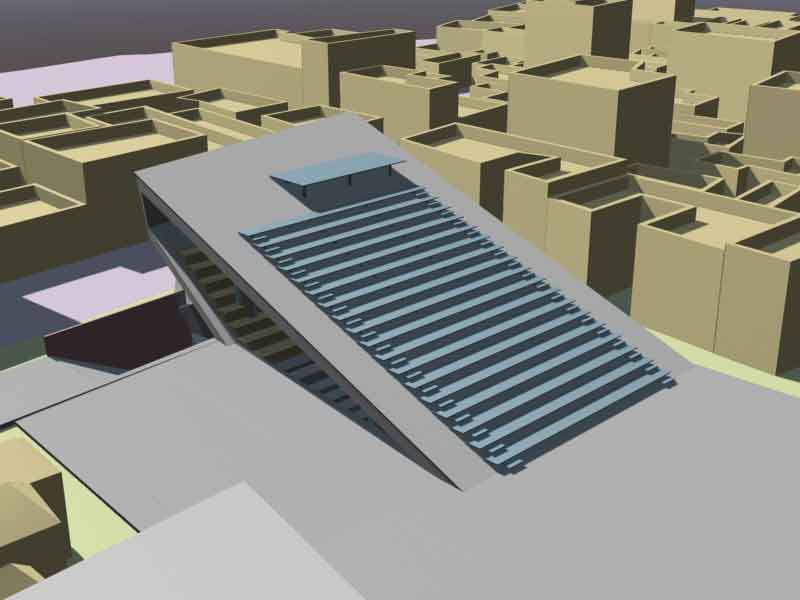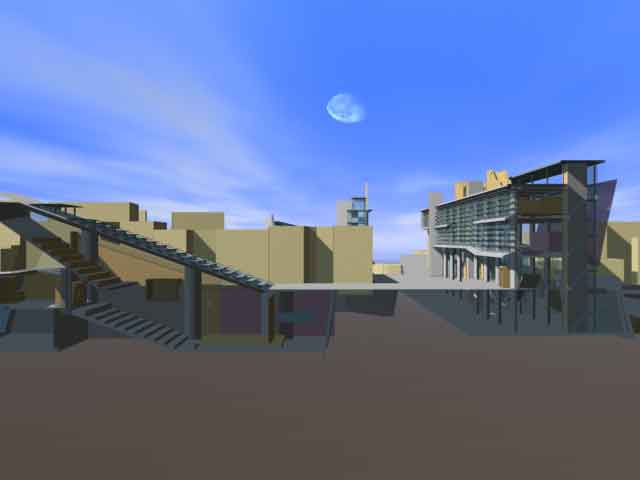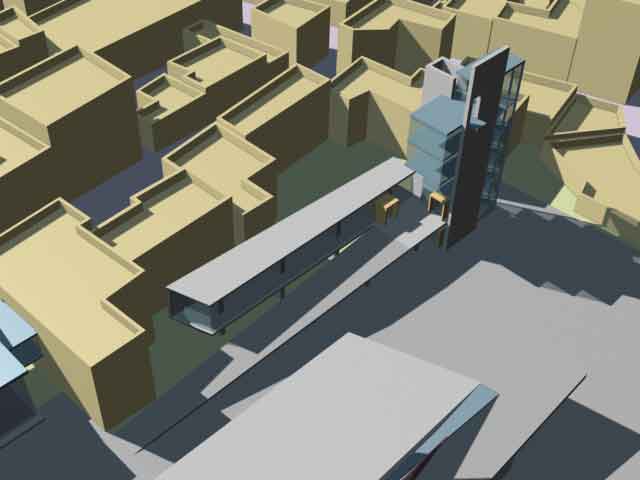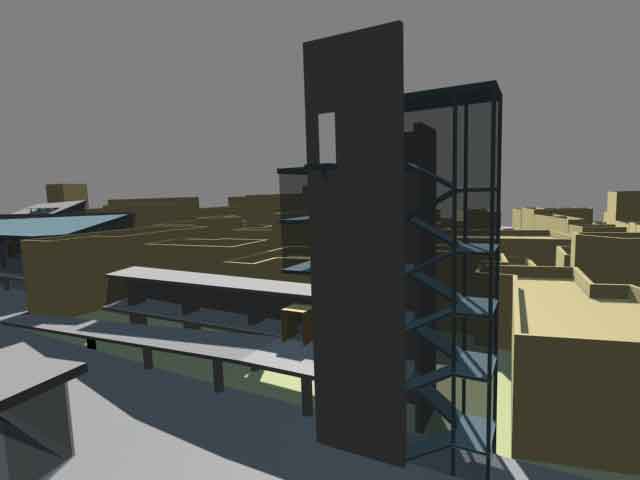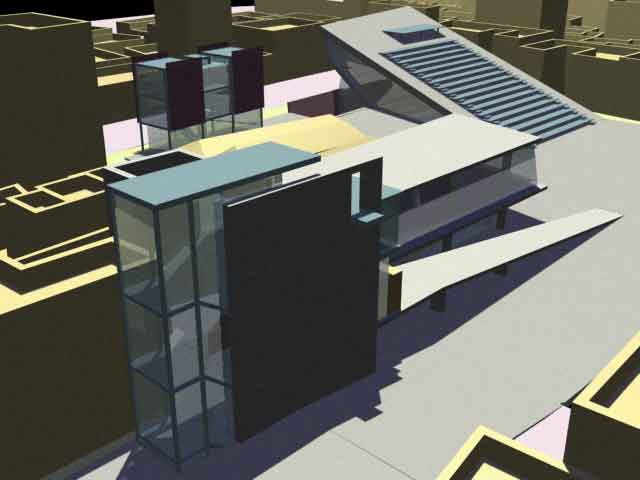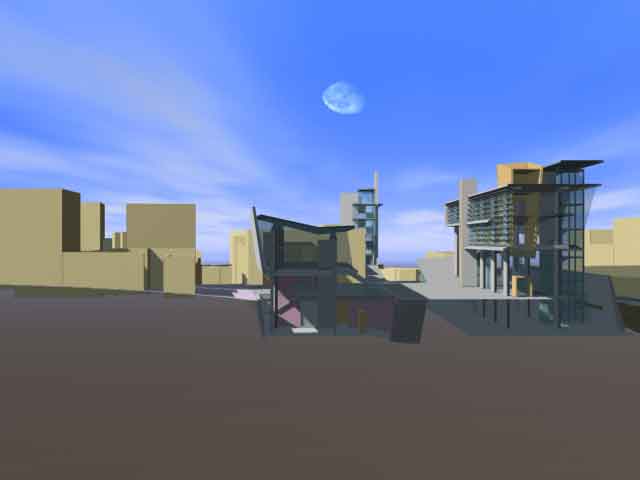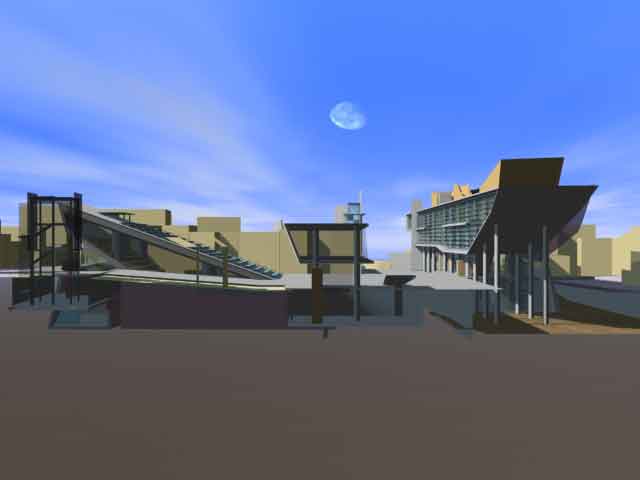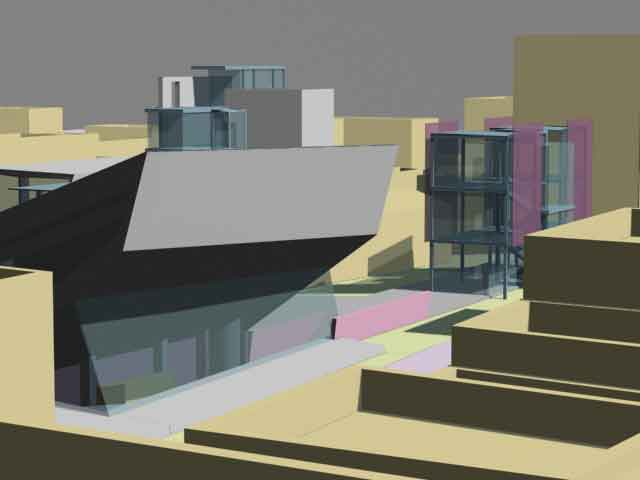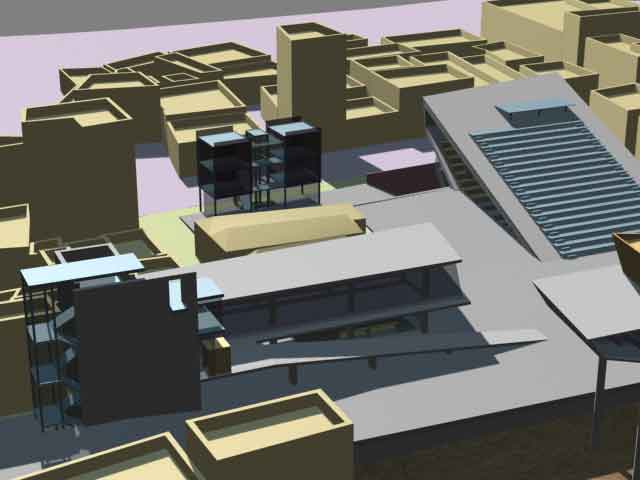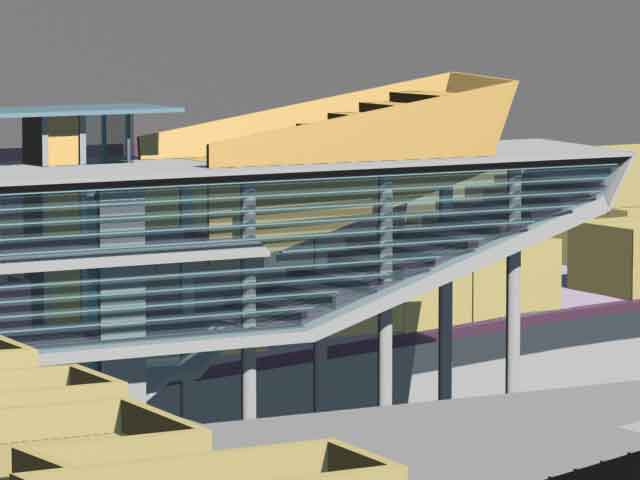
Exhibition space in linear building: Is the area where citizens-visitors can watch an exhibition relevant to a subject, choice of the researchers. They are designed so that they will use electronic media and can often change their subject. The content of their subject mainly has a comparative view. It is possible for the visitors to state their opinions and through them to form intervention groups. For more information the exhibitions lead to databases and to the students-researchers area.
Political space: In this area discussions are made, organized by the researchers of the center or from initiative groups. There is also a space for uninterrupted informing, discussion and action. This space is mainly referring to the square.
Information space: Is the main space - the heart of the building, to which all the linear building's areas are referring and to which the exhibitions, one way or another lead. Apart from a resting and communication area, it is a place where the visitors can gather information about what is or going to happen at the political space. He can gather initial information for further research. It is a reference space catering for the rest.
Researchers' - Students' area in the linear building: They are the people organizing and operating the center. They are the soul of the center. The researchers will be at the center for enough years so that they can accomplish a mid- and long-term planning. The students, apart from the classes they attend, are at the center for a limited time and become the contact point of the center with the citizens. The area we are now referring to will be for presentations of projects that are currently underway and for research activities that can possibly, later on, become exhibitions. It is a workspace, space for gatherings and presentations on behalf of the students.
Library / Study-room: It doesn't try to be typical library and compete with the existing ones. It has the concept of common libraries in cultural centers. It will contain various files, which will be referring to the European culture and will be at the same place with the database of the manuscripts. Its role will be to allow to visitors to approach the bibliographical sources of the exhibitions and to help to elaborate a paper. The exhibitions will be referring to it and the visitor will contact the complete work of a writer and not only to fractions of it as it usually happens with the exhibitions. The content mainly consists of magazines and texts in digital form. Some books will be at the visitors reach at the bookcases.
Classes: The classes will mainly serve the needs of the lessons-seminars of the researchers and the students. However, this process is chronically small compared to the operating hours of the center. Thus, during the remaining hours, there is a provision to offer free to the public seminars, for discussions, group meetings and for the programming and operating needs of the center.
Databases: The databases are very important for this center, since the exhibitions, on one way or another, are referring to them. They are divided in three sectors [written sources, vision (fine arts), moving images] and are situated near or in the respective sectors [library, exhibition area. Auditorium]. A person that wants to do a research can be directed to them. They are important because it is a space where people with special interests can contact each other and communicate, and possibly organize in common an action.
Area of the responsible researcher for the database: The specific researcher is responsible for the database and provides information and help to the visitors of this base. This space has an archive accessible to persons that want to do a research relevant to the field of database. The responsible is authorized to offer help to these persons. Also, he can do some classes-seminars or projections to special neighboring areas.
Auditorium: In the auditorium will be lectures, discussions and presentations, movie projections and theater, dance and music shows. These events can be organized from the center and can become part of its program or cover cultural needs that can find no other place.
Exhibition hall: In this area exhibitions will be organized [sculptures, painting, digital art, photography, architecture etc] relevant to the exhibition at the linear building. It is not planned to produce complete exhibitions, like in galleries. It is intended to produce exhibitions-comments, relevant to the role and the dynamic of this center.
Technology exhibition - Mass media: With this area we want to emphasize the role media is acting nowadays as well as modern technology in the field of information. Their role socially and politically. Culture is not only the fine arts and cultural movements. It is also our everyday life. This area intents to refer at this sector of culture.
Researchers' area: Because in the linear building we can't have workspace for the researchers, with the conditions we want to provide them, these areas have been provided at this building. There the researchers can have their own personal space to focus on research, work and contact with others.
Meeting area: It is a workspace for the researchers and the students. There takes place future planning for the exhibitions and the formation of the center's schedule, where the gathering of the data and information about the visitors' intentions is happening. At this area data is provided for the organization of cultural events to everyone that is interested.
Areas for the visitors:
These areas are provided to the visitors for their own use. There are copiers,
construction area for exhibition elements, meeting and creation areas and
spaces for access to the internet. These areas will have persons that will
help the public in constructional and technological issues, so that it achieves
its goals and produces the seeking result.