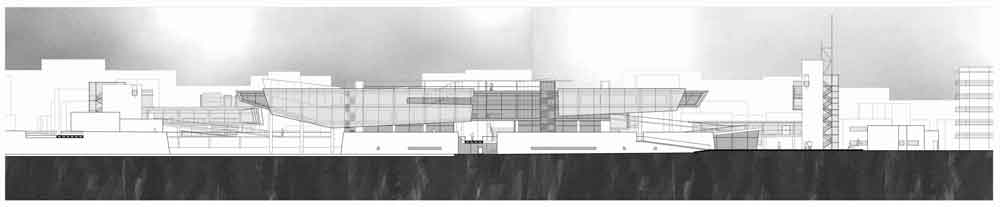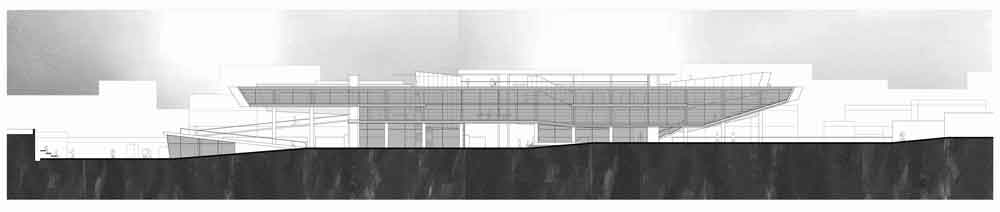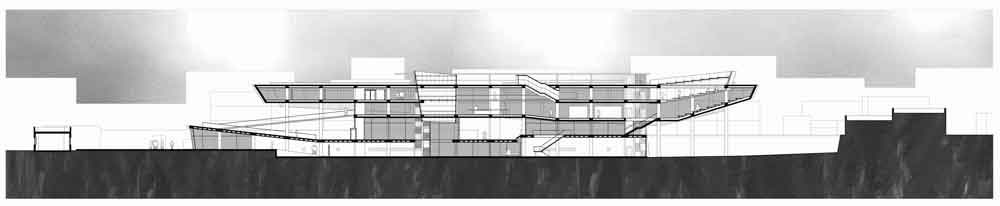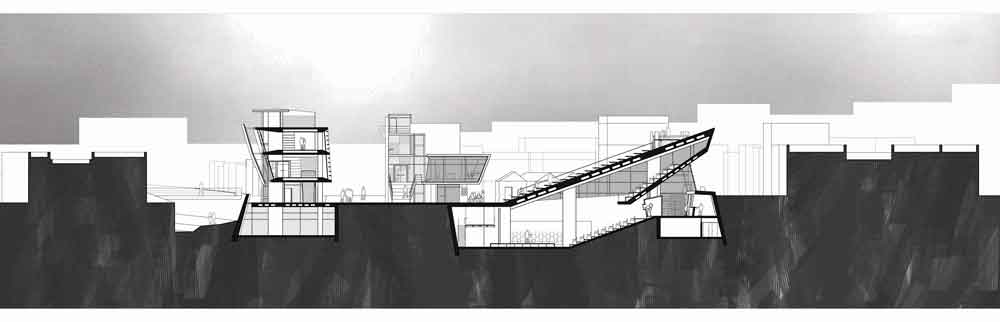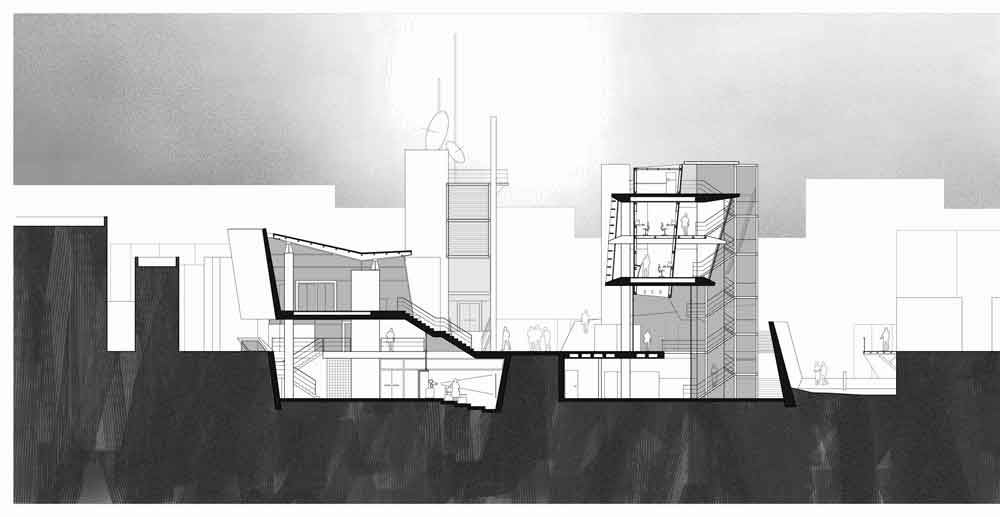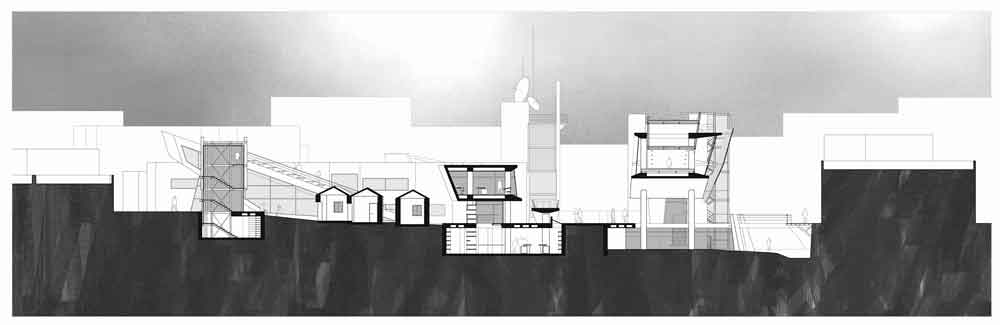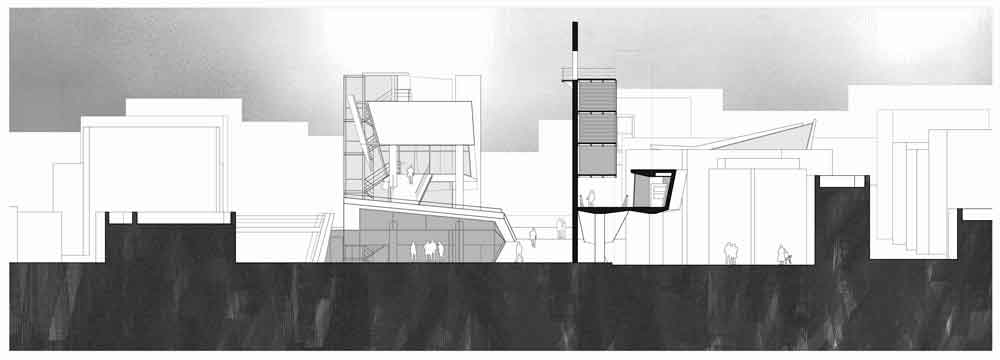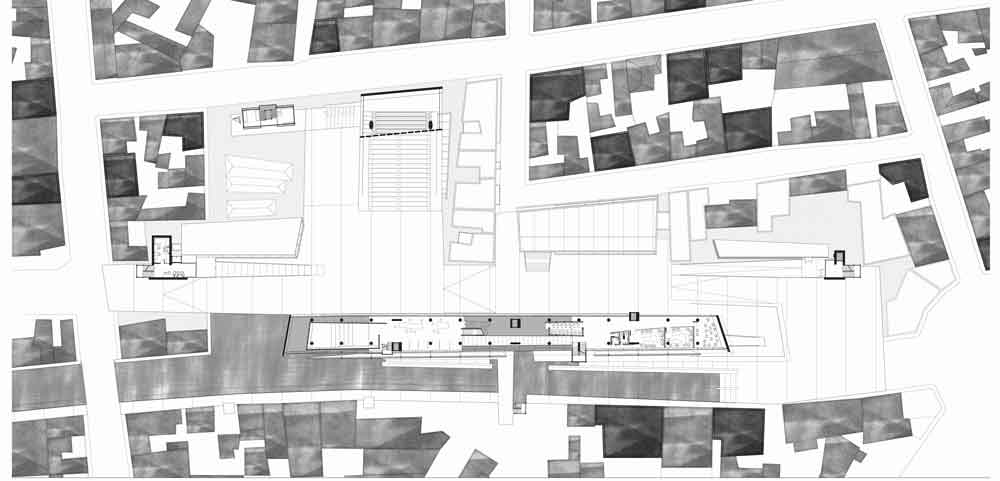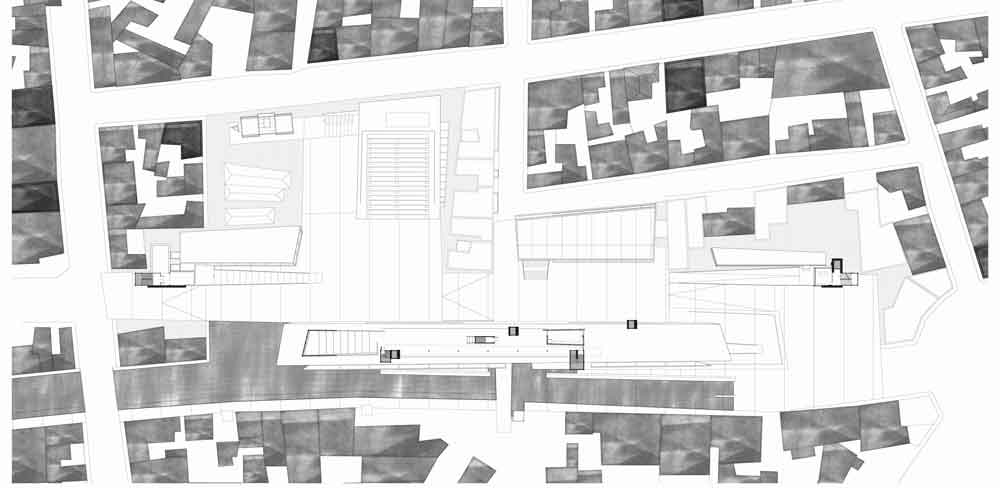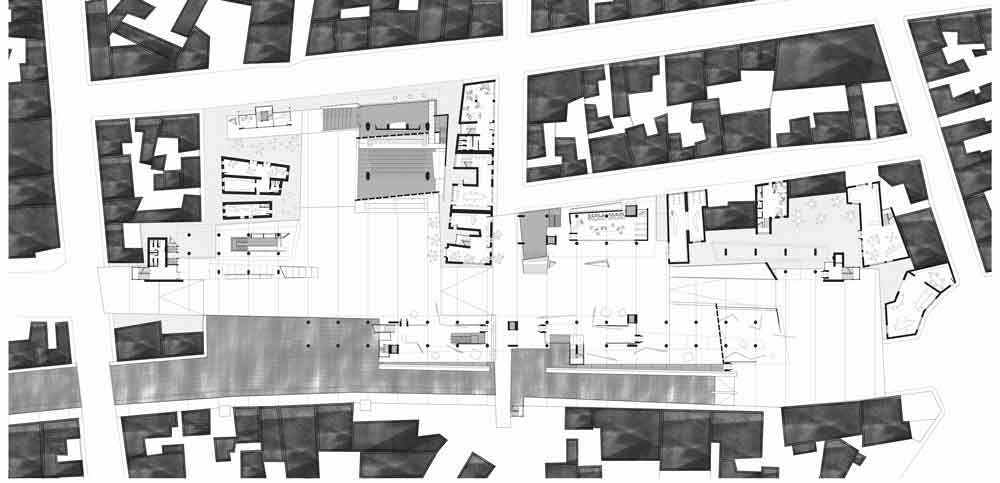
The specific cultural center-forum is a hybrid building (as far as its functions and its goals is concerned), in other words a building that is trying to go from one state of things and relations to an other, preserving elements and needs from today and placing to its functions new ones that will cover new possible needs. This practically means that there is no exact arrangement of functions defined by an organization. The arrangement and the way of its function is the main subject from this project. The reason that we are interested in such an issue is the potential that a hybrid building can offer.
It has been realized that in a building, which has found its position in the cultural, political and social system of a place, the citizen is confused, doesn't act according to its wishes and its needs, communicates and cooperates with its partner with difficulty, in other words tends to adjust to the forms and the rules the building and its administration make. On the contrary, buildings with new uses and diverse targets that have no norms, rules of functioning and behaving codes, the citizen is freed, feels the space familiar and in all, wants to act autonomous and single, he feels that can offer to that beginning and is not defined by anyone. Such conditions, according to our opinion, can be only offered by a hybrid building that always wants to be fresh.
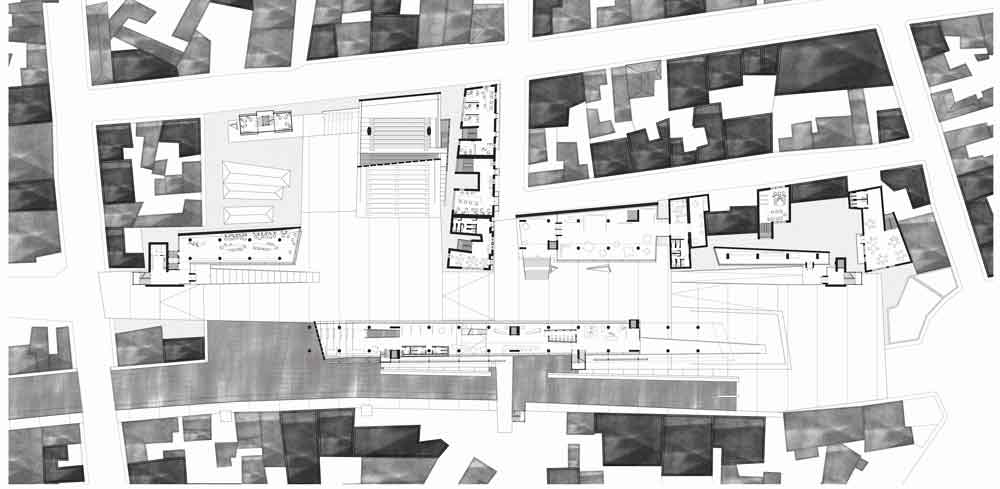
The compound is consisted of 5 sectors, where we place different functions, so that the open-air space has life.
In the first sector (linear building), at the ground floor we place the exhibitions of the center. They refer to books, sciences, education, history, representative arts (painting, sculpture, etc), rendering arts (theatre, movies, etc). Also, there is space for free expression and political initiative.
In the second sector (radio-station), we place the radio-station of the building, areas with free access to computer, offset and database of the science field.
In the third sector (exhibition hall), there is an area for representative arts' exhibitions (materialistic form) and the database of the relevant field.
In the forth sector (auditorium), there is an amphitheatre (500 seats), the database for the rendering arts, movie library etc.
In the fifth sector (book library),
there is the center's library, records with EU activities and the database
for the book field.
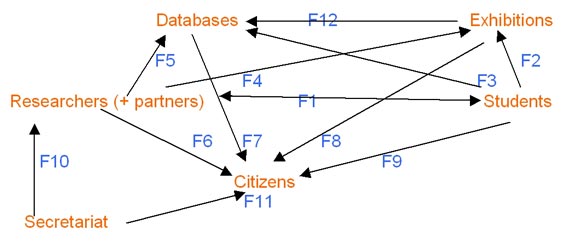
Participants' role.
The students will become the connection
between the exhibitions (F2) and the citizens (F9). They will follow the activities
of the public; the trends enlisted in the computers of exhibitions and will
readjust the exhibitions' and databases' theme (F3), so that they will cover
the needs of the citizens. The students will take part in the designing and
making of these exhibitions, in their transformation in intervals, with the
researchers (F1). In the future they will act as the center's personnel or
will have a looser relationship with it.
The researchers, apart from educational
responsibilities (F1), are responsible for the development of the center (F4
& F5), the planning of the exhibitions and its activities.
There will be a secretariat informing
the citizens (F11) for the research of the center and the activities that
can be part of, through EU programmes for culture.