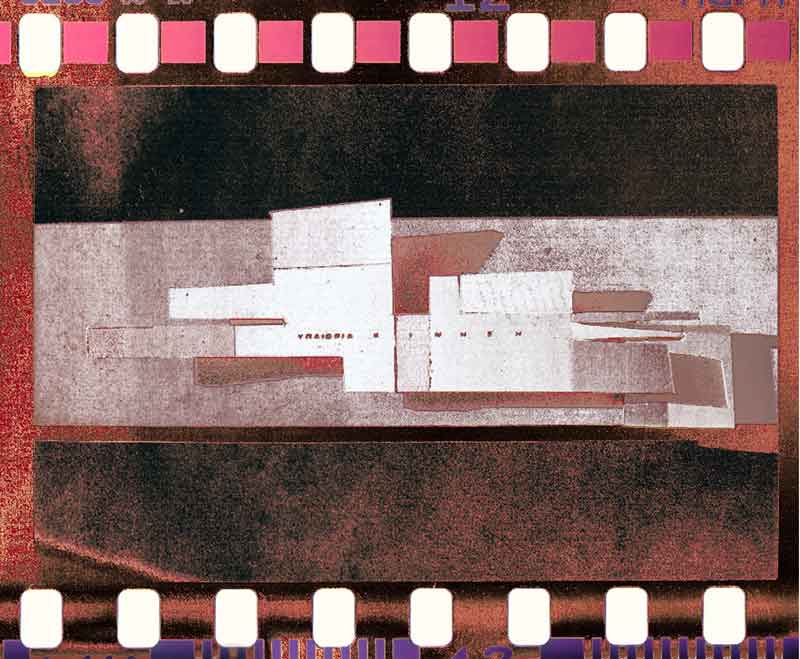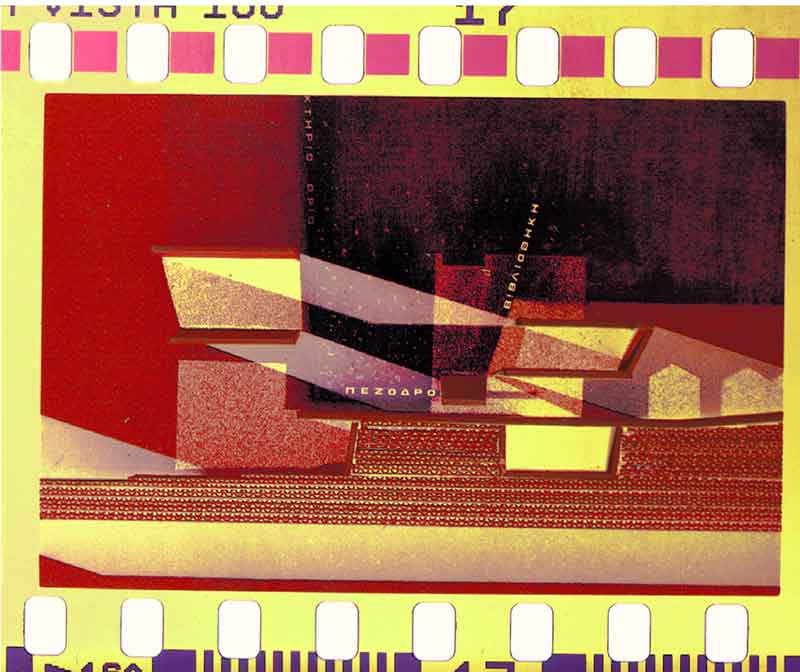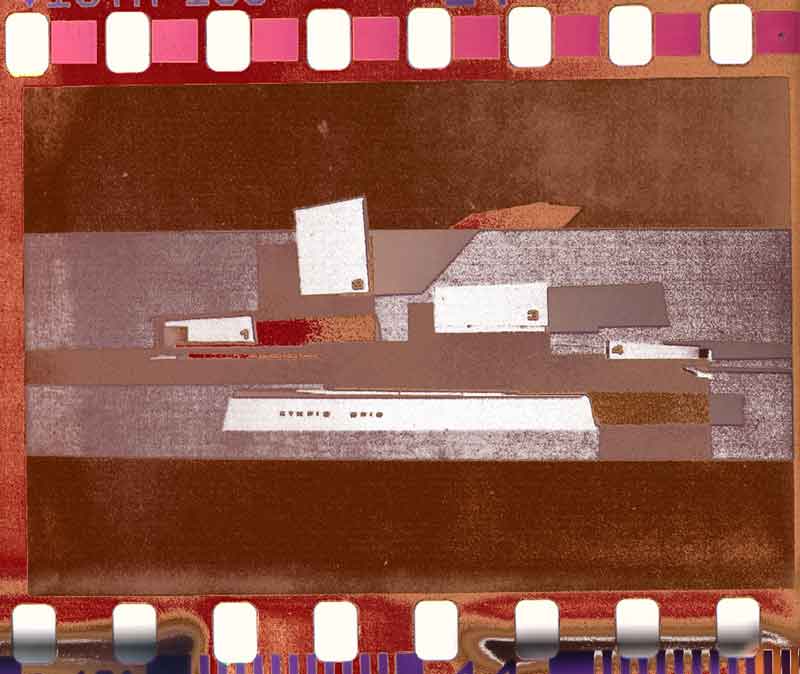
In this building we want people
to realize their selves as citizens, in other words as persons who can act
politically, to chose what to do, what course to follow, what will be the
next place to visit, depending on his interests and his wishes. This is not
self-evident for all public buildings. Cultural centers especially provide
a very specific cultural action; their content has been very strictly organized
so that the public can generate a very specific meaning and certain interpretation.
They see the user not as a person that acts in a political way but as a member
of a mass-democratic society (like ours), like a consuming subject that acts
socially, has the same needs with his neighbour and the same wishes. In other
words, cultural institutions believe that in front of them they have a colorless
and an uninteresting subject, which certain actions must be offered and, in
part, to lead them by the hand.
We want to make spaces familiar
by the citizens and to inspire their single and collective action. This sense
of familiar and open (in actions) environment is not earned by accident from
certain places but comes from the planning that can consciously exist. A building
can become more easily familiar when it is asked to express a new institution
(such an institution is also the multicultural center), that hasn't come to
a conclusion at the collective consciousness as something specific, thus seeking
its identity and its content. In this case a person is trying through his
own action to seek the limits of innovation, to understand it and to "color"
it. There a person can act interventionaly, as long as the model of an other
institution has not been projected at the building.
We mainly, though, believe that
to make a building places of action, a conventional architectural desigh is
not enough. Its function plays a key role. Meaning the ability of the user
to move through it, with the curiosity and the will as a motivation deciding
himself the future goals and his environment. At this, new technologies can
play an important pole, since through their structure and function; they have
the ability to create relations and references. They can create connections
that continuously change (relationships that have created and destroyed through
time, depending on the goals of their users). The net perception of things
characterizes the structure of our society and its daily life but it has not
been enforced in a great portion of public space, because the will for power
still prevails, together with the need to control information, produce a meaning
and spread a ruling interpretation of things that is profitable…
For us this building must quit
from the demand to produce a ruling meaning and return to the citizens, through
the use of new technologies, to investigate at first the limits of the European
culture towards the direction they wish, to obtain their own position for
it, and later to design their own course through the building and through
the world of thought that is hosting.
For us technology has two functions: a) allows the visitor to contribute to the content of knowledge of the center, contributing his agreement or his disagreement, his opinion and adding new contents (interactive activity). b) A computer can connect one source relevant to the first that is in a second sector of the building.
Cultural dimension.
The public building that we design is a cultural center and that gives it very specific properties and abilities, as long as we percept the culture (first of all, of our everyday life) like something more than just entertainment and style. If we limit ourselves to the field of arts, we will find many examples that show us that a cultural product, apart from ideas and thought that can move us, passes to us feeling that broaden our sentimental landscape and makes us see everyday life from a different point of view. Here is where the political dimension of civilization appears. Here is where the heart of culture comes to serve our initial goal: to this building the visitor can feel himself as an individual.
Multicultureness and the dreaming dimension of another culture.
If we overcome the common argument
that the contact with other cultures broadens the limits of our perception
for life and makes us aware of a different way of thinking and the overused
argument of political necessity to show a multiculturalism of our days, we
believe that we can stand to the conclusion that the modern civilian (at least
the youth) brings in himself a multiculturalism.
In other words, he is a carrier
of "usually" two distinguished civilizations: the first from his
place of birth and the second (acquired) from another cultural environment
through which, somehow, he contacted it and became aware of it.