 |
 |
 |
 |
 |
 |
|
 |
 |
 |
 |
 |
 |
 |
 |
 |
 |
 |
 |
 |
 |
 |
 |
 |
| Xian |
|
|
| The ancient Chinese also seemed to know about Mu. In 1900 a Taoist monk came across a cave containing a library, hidden away to avoid the Imperial edict given in 212 B.C. to destroy all texts dealing with the ancient past, which made reference to the Motherland, Mu, and which contained a fragment of an ancient map depicting a continent in the Pacific Ocean. Television and magazines in Japan have had a field day with their underwater cities. Ancient mysteries researcher and translator Shun Daichi sent me a videotape with serious and extensive TV coverage that included a large, beautifully executed scale model of one of the most impressive structures, with a toy boat suspended by a wire to illustrate the height of the sea's surface. Shun reports that you can draw a straight line connecting the underwater sites with on-land sites of similar design, ancient castles of unknown origin. Some geologists are surmising that the last time this area was above water was a minimum of 12,000 years ago, when the Ice Age ice sheets melted, raising the ocean levels. Which leads me to two of the most puzzling questions I have about these extraordinary archeological wonders: Why, in the age of instantaneous global communication, did it take two years for the news to reach us, and why haven't American news reports or archeological institutes reported on these newsworthy finds? |
 |
 |
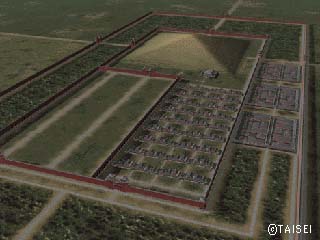 |
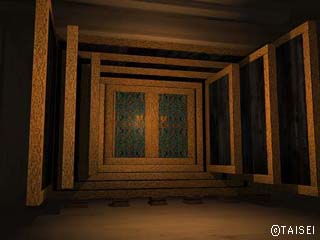
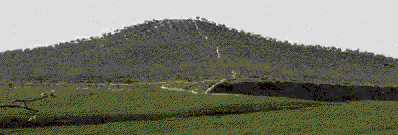
| The Secret Society of the White Pyramid How does the extraordinary story of the tomb-chamber of Shi Huangdi relate to the seemingly mythical White Pyramid of Xian? I will explain. I believe that researchers have not concentrated sufficiently on one subtly revealing detail in Simas account: his assertion that Qin Shi Huangdi was to be entombed with his sarcophagus virtually floating in a pool of mercury Yes, the mercury was used to provide a flowing liquid to make it possible for a vast relief map of circulating great rivers and streams of China to run forever in the tomb-chamber of the Emperor�s mausoleum. But, for the ancient Chinese, "forever" is a charged word when it comes to mercury We will recall that we have en-countered mercury before, in the guise of cinnabar, or mercury sulphide-perhaps the most potent of all the substances used in the vast, ongoing ancient Chinese industry of trying to discover the elixir of deathlessness. The tomb of this emperor, surrounded as it is by a garrison of some 1,400 terra cotta statues including archers, cavalry troops, charioteers, infantrymen and horses, represents nothing less than a colossal effort to attain to the state of Hsien, or material immortality. This tomb is truly the ultimate Project Apollo of the Chi-nese emperors. The cost of the mercury alone must have been enormous-the equivalent of filling the tomb with uranium, or plutonium. And what now lies in the tomb? Have we here encountered a clue as to why so little is known about the efforts of the Chinese government to excavate it? A year or so ago, a report leaked out of Beijing that the tomb-chamber of Qin Shi Huangdi was "like a palace." The implication was that a camera had been lowered into its unknown depths. Yet ofFcials have clearly stated that "nothing has yet been done" in terms of its excavation. Authorities have made similar claims regarding the 90 or 100 other tombs, or burial mounds, that rise up not far from Xian and the mausoleum of the emperor. Ruthlessly plundering the wealth of his country and of its citizens, Shi Huangdi was one of the richest men who ever lived. On nothing did he lavish money more freely than on his quest for material immortality If an entire terra cotta army stands outside his tomb, then what analogous splendors lie inside? Treasure, yes; treasure worth billions of dollars. Why then has the Chinese government not entered the tomb and retrieved these treasures, if for no other rea-son than to make use of the astronomical wealth they represent? Because, I believe, there is more at stake within the tomb of Shi Huangdi than simply riches; there are unheard-of secrets of material immortality, which only this emperor had the power and the wealth to seize upon. I believe there are people within the Chinese establishment today who know of these secrets, and who see to it that the tomb of Shi Huangdi is never touched. Yet rumours have filtered out; clandestine legends have built up over the past 2,000 years; these myths of wonders in the tomb of the First Emperor have taken on a veiled form-that of the White Pyramid of Xian. |
| This may be because the White Pyramid itself is more than legend. I believe there is a Secret Society of the White Pyramid of China. I believe it is highly possible that the rulers of the vast and brilliant Middle Kingdom never ceased to believe in the reality and power of the state of Hsien and that their efforts to attain it would ultimately be successful. I believe there may be a secret society today - one incredibly ancient - whose members think, in fact know, that the tomb of the emperor, while filled with treasure beyond imagining, contains only the illusion of a body; who know that the emperor himself, wearing the vestigial body of the Hsien, has long since gone into the realms of material immortality, trans-muted into that state by the catalytic agency of his bath of mer-cury. I wonder what other members of the Secret Society of the White Pyramid �reside� in the 100 or so other burial pyramids rising up modestly, though not inaccessibly, distant from the tomb of the emperor? Are these tombs also empty? If they were to be opened, and a ragged corpse discovered there, would not that be merely an illusion meant to mock grave robbers while, thanks to the genius of the ancient art of alchemy - and perhaps a greater Genius, and one far more ancient - the former resident of this tomb has for centuries roamed the heavens and the earth? |
| A species that geological convulsions consigned to an oblivion so profound that we can never, ever know that race was here? About such matters we cannot be certain. Nor can we know if places for which the name "Shambhala' has been used did not come into existence as time capsules of a sort, Alien Arks - places where Alien Mind saw fit to preserve something of the science and arts of the civilization then vanishing through natural catastrophe, or through war, or for other reasons otherworldly or unfathomable. These way-stations, bridging the gap between the extinction of old and the birth of new sentient species, would contain artifacts carefully picked by alien hand and, perhaps, an equally carefully chosen number of survivors. They might contain, in a way we also can never fathom, the spiritual Essence of that civilization - a simulacrum of its Soul. Over the long march of the millennia, other aliens may have come to earth, for reasons unrelated to the preservation of ele- ments of earth's civilizations. They may have come to wage war with the benevolent, protecting Alien Mind perhaps easing the tormented transitions of our planet between intelligent species. They may have come as sightseers, or as researchers in the name of science. They may have come here quite by accident. They could have been shipwrecked, and, on a world inhab- ited by primitives without technology, been tragically unable to signal from their ruined spacecraft their location and their need for rescue or spare parts. There is evidence to suggest that such a scenario may have unfolded in the mountainous Bayan Kara Ula region of western China some 12,000 years ago. These bits of evidence are extremely difficult to follow up, and lead us often to dead ends. Perhaps there are those who wish to keep this knowledge from us. -Mass Grave of the Dwarfish People of Bayan Kara Ula In the first week of January,1938, a scientific expedition led by Chinese archaeologist Chi Pu Tei penetrated deep into the pathless mountain regions of Bayan Kara Ula, not far from Tibet on the border of Qinghai and Sichuan Provinces. This area is also known as Payenk Ara Ulaa, or Bayan Har Shan. It is about the size of the State of Connecticut, and is the place where the Yalong and Yangtze Rivers originate, and where the Mekong River begins its long meandering course southward toward Vietnam where, a thousand miles distant, it becomes the life-line of that long-beleaguered country. The mountains in the Bayan Kara Ula region rise to over 17,000 feet, but, in the valleys below, it is - though you are still 7,000 feet above sea level - pleasantly warm in the summer. Ge- ologists believe it was even warmer 20,000 years ago; whatever the truth of the matter, this area contains traces of human habi- tation which go back to the very earliest prehistoric times. One perhaps-not-quite-accidental geographical detail: Just north of the principal chain of the Bayan Kara Ula mountains, there lies a group of lakes with the ambiguous name of `Ocean of Stars' (though `stars' can also be translated as `waters'). In the first week of the New Year, the party of Chinese archaeologists led by Professor Chi Pu Tei discovered, in a group of caves in this mountainous region, a series of graves aligned in rows. There were no head stones to mark the graves, nor were there epitaphs; but, on the cave walls there were drawings of stick figures with elongated heads and, apparently, the sun, the moon and the stars. |
| BAYAN KARA ULA The scientists carefully excavated the graves. They proved to contain skeletons with abnormally large skulls and tiny bodies no more than four feet long-far below the average size for the ethnic groups of our planet. Only the pygmies of the rain forests of Central Africa are in any way similar in proportion. The anatomy of these creatures consisted of a very slender, delicate skeletal structure, with narrow shoulders and thin extremities. According to the expedition's report, it was as if these creatures had had rickets, or their skeletal structure was related to that of flying mammals or birds whose limbs are built to with- stand great stress. To this day, extremely ancient legends circulate in the part of China about small-bodied yellow beings said to have appeared out of the clouds, and who, because of their strange, ugly ap-pearance and bizarre behaviour, were attacked and in large part murdered by the local inhabitants In more recent times, the rock caves upon which the archaeo- logical team stumbled have continued to be shunned by the su- perstitious and suspicious local people; the caves are in effecttaboo. This may be why the mysterious relic also found by the sci-entists at the grave site had lain undisturbed by grave robbers for millennia. -The 12,000-Year-Old Long-Playing Record - What the scientists found was a single stone disk half buried in the dust of the cavern floor. This stone disk resembled a long- playing record from the early days of the gramophone. Its cir- cumference was 12 to 12-l /2 inches and its thickness about 2/ 5 of an inch. There was a hole in the middle large enough to put a finger through. An incised groove spiraled outward from the hole, winding its way to the perimeter of the disk and then winding its way back in the overall pattern of a double spiral.It was not apparent then, but closer inspection would later reveal that the groove was a continuous, spiraling line of closely written characters. The contents of the discovery in the caves of Bayan Kara Ula, as I have described them up to this point, are not entirely unique in the annals of Chinese archaeology A tomb excavated in a cave at Xishuipo, in Hunan Province, in 1987, contained clamshell pavements thought to depict three prominent constellations, the Tiger, the Dragon, and the Big Dipper. This tomb is believed to date back extremely far in Chinese history, to 3000 B. C. This burial, and others at Xishuipo, may have been of shamans, or of other religious figures of high social standing. Equally intriguing was a jade turtle found in the same year in a 4,500-year-old tomb at Hanshan Lingjiatan, in Anhui Prov- ince. The modeling on the back of the turtle, which seemed to include a panoply of stars, strongly suggested that it was a sacred replica of the cosmos. Moreover, stone disks with a hole in the center and a basic double-spiral pattern are not an uncommon component of thegrave sites of very ancient China. They are artifacts whose origins may be traced back to the beginnings of matristic (or `matriarchal'), shamanistic societies of the Far East, and they are known to have some relation - in that their patterns resemble the pat- terns on a snake - to the worship of the serpent by the very earliest of shamanesses. But these stone disks at the Bayan Kara Ula grave site were different. The spiraling grooves spelled out a message; and that message was not of our planet. Stone Disk as Alien Message in a Bottle: We Are Shipwrecked." Not this expedition, but later expeditions, would unearth a total of 716 disks from the grave site. They would be trans- ported to institutes of learning in Central China. Over a period of 20 years, a handful of scientists would periodically pore over these odd, heavy, stone artifacts. During that period, one of them, Professor Tsum Um Nui of the Beijing Academy for An- cient Studies, would become convinced that the grooves con- tained a kind of writing. In 19G2, the small group of scientists working under his direction would announce that they had suc ceeded in decoding a story of an alien tragedy of epic propor- tions. The message on the stone disk was not entirely unlike a mes- sage in a bottle thrown into the sea by someone who is ship- wrecked and hopes that his message will reach a rescuer. The spiral script, stated Dr. Tsum, contained an account of the crash landing of an alien spacecraft in the mountainous region of Bayan Kara Ula 12,000 years before. Almost all the occupants had sur- vived; but the spacecraft, once it had come to rest in the harsh and rugged terrain, had been too severely damaged to be able to lift off from the surface again. |
| The Millennial Presence of Alien Mind Homo sapiens emerged from homo erectus about 200,000 years ago. The beginnings of Altaic/matristic civilization go back some 40,000 years. That happened on our planet between 200,000 B.C. and 40,000 B.C.? was there only the long, slow march of homo sapiens toward rudimentary control over his environment? Did other civilizations rise to splendid heights and then enter upon a decline over that enormous span of time, leaving not a trace behind? Or were there other sentient species on our planet, long before the ape-like creature that evolved into man? |
 |
| 4/5 |
|
| 4/5 |