 |
 |
 |
 |
 |
 |
|
 |
 |
 |
 |
 |
 |
 |
 |
 |
 |
 |
 |
 |
 |
 |
 |
 |
| Easter Island |
|
|
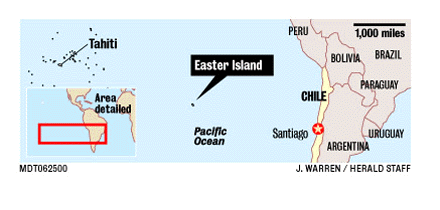
| TRAVELING TO EASTER ISLAND Easter Island may be remote, but it's very easy to get to. LanChile, the national airline of Chile, flies jet airplanes here twice weekly from Santiago, Chile's capital, and twice weekly from Tahiti. The island has been a part of Chile since 1852. Many locals who operate hotels and guesthouses arrive at Mataveri Airportto greet the tourists. The landing strip there is first rate because the U.S. space agency NASA upgraded the existing one to serve as an emergency landing facility for the space shuttle. |
 |
 |
| Once a year, representatives from each clan would gather at the ceremonial village of Orongo and swim to Motu Nui, a nearby Islet to search for the egg of the Sooty Tern. On his return, the competitor presented the egg to his representative who was then invested with the title of Tangata Manu. He then went down to Mataveri and from there was led in procession to the southwest exterior slope of Rano Raraku, where he remained in seclusion for a year. The Birdman ritual was still in existence when Europeans arrived on Easter Island - therefore historically documented. It was also featured quite prominently in Kevin Costner's film "Rapa Nui". In Hanga Roa -a sprawling and pleasant community where the island's 2,775 residents live because it's the only area on the island with electricity and running water. The most interesting souvenirs are miniature wood and stone carvings of moais, though some stone samples up to 6 feet tall are available. |
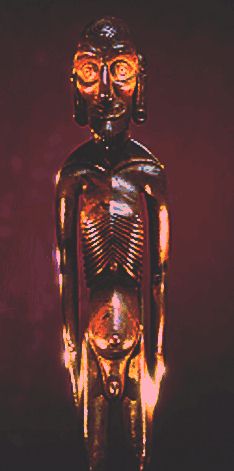
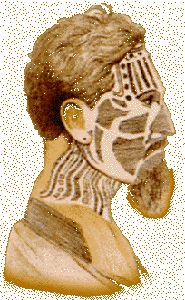
| Moai Kavakava A bearded emaciated man whose ribs and vertebrae are grotesquely extended. It is said to represent the spirits of dead ancestors. According to the local tradition, as Chief Tuu-ko-ihu was returning home, he saw two such spirits who had protruding ribs and hollow bellies. These Aku Aku later appeared to him in a dream. Other Rapa Nui wood carvings include: statues of female figures (moai pa'a pa'a), paddles (rapa), clubs (ua), staffs ('ao), lizards and birdman images (tangata manu). Today, most of the original wood sculptures reside in museums around the world - estranged from their ancestral home. The islanders still carve these statues; continuing a tradition which, to this day, commands respect and admiration from visitors. |
| CANNIBALISM Every Easter Islander knows that his ancestors were kai-tangata, 'man-eaters'. Some make jokes about it, others take offense at any allusion to this custom which has become in their eyes barbarous and shameful. According to Father Roussel, cannibalism did not disappear until after the introduction of Christianity. Shortly before this, the natives are said to have eaten a number of men, including two Peruvian traders. Cannibal feasts were held in secluded spots, and women and children were rarely admitted. The natives told Father Zumbohm that the fingers and toes were the choicest morsels. The captives destined to be eaten were shut up in huts in front of the sanctuaries. There they were kept until the moment when they were sacrificed to the gods. The Easter Islanders' cannibalism was not exclusively a religious rite or the expression of an urge for revenge: it was also induced by a simple liking for human flesh that could impel a man to kill for no other reason than his desire for fresh meat. (Man was the only large mammal whose flesh was available) Women and children were the principal victims of these inveterate cannibals. |
 |
 |
 |
| The reprisals that followed such crimes were all the more violent because an act of cannibalism committed against the member of a family was a terrible insult to the whole family. As among the ancient Maoris, those who had taken part in the meal were entitled to show their teeth to the relatives of the victim and say, 'Your flesh has stuck between my teeth'. Such remarks were capable of rousing those to whom they were addressed to a murderous rage not very different from the Maly amok. - Easter Island - A Stone-Age Civilization of the Pacific |
 |
|
| 3/5 |
| 3/5 |