Would you like to enjoy scent,
colours and soul of Old Japan?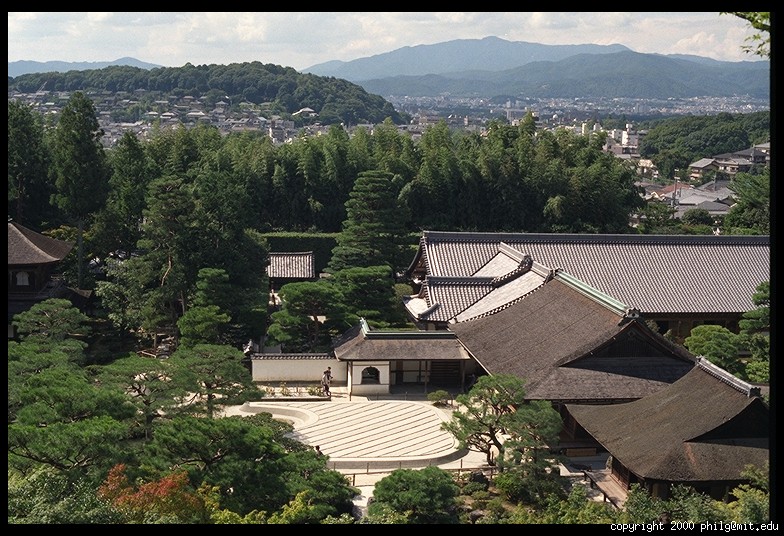 Then, please do join me for one
day tour of Kyoto, former Imperial Capital of Japan!
Then, please do join me for one
day tour of Kyoto, former Imperial Capital of Japan!
Good morning! It is a sunny, mild winter day and I am having breakfast at the small restaurant "Azalea" within the luxurious five stars hotel Kyoto International, in front of Nijo castle, Kyoto, Japan. Through the large bay windows I can admire a beautiful Japanese garden and two swans gliding gently on the surface of a small pond.
Leaving the hotel I have a look
toward the Nijo castle founded in the 17th century by the Tokugawa shoguns.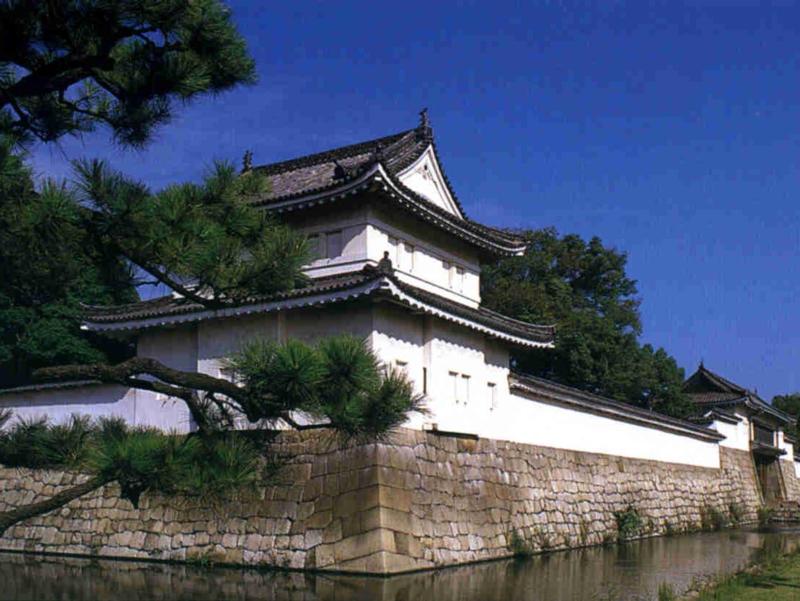
Afterwards I am heading for the temple Higashi Hongan-ji, where I will be joining the tourist group for the tour of Kyoto and meet the JTB's Tour Guide.
I am a little bit late. Two big coaches are already parked in front of the entrance, and the group is gathered in the middle of the large courtyard covered with small gravel.
Smoking is totally forbidden within the precincts of the temple and you will have to take your shoes off before stepping in the main halls.
The guide is an old and very modest Japanese man from Kyoto. He is like an encyclopedia of Japan's history. Let's listen to him!
An old Japanese man came to pray. I am sitting myself in the characteristic praying position gazing the altar featuring the statue of Buddha Amida. For a few seconds I can really feel the serenity and peace of the great temple. Buddha Amida's vow was clear: any human being asking for his help will be reborn into a pure land, within he will be regenerated after he will have reached the state of Buddha and there won't be any obstacles on the path of the Awakening. But, unfortunately, I can't stay too long in front of the altar.
The coach is ready for departure to the next site of the tour.
We are driving through the narrow and straight streets of Kyoto toward the old Muromachi district. And we are enjoying a very picturesque scenery with old Japanese houses while the guide is talking about various aspects of Japan's Middle Ages history.
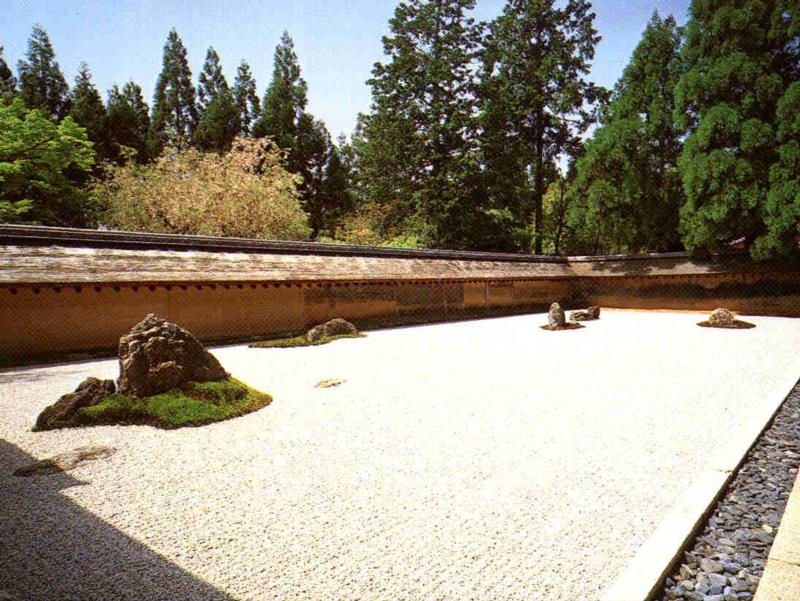
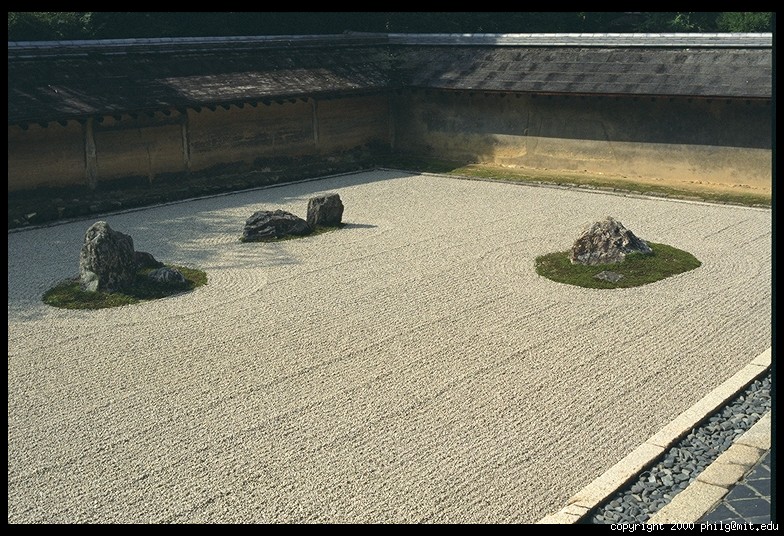
The ZEN temple of Ryoan-ji is located in the old Muromachi district of Kyoto. It is a very beautiful place. Its main attraction is the kare-sansui style(dry mountain stream style) garden. Thought to date back to the 15th century, it consists of fifteen stones displayed in three main groups on a rectangular surface covered with raked white gravel. The designer is unknown.
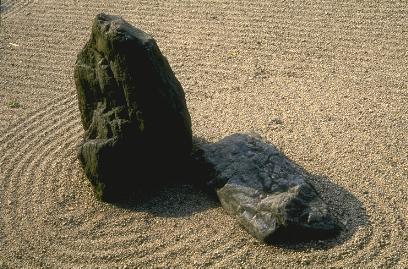 7-5-3 stones and you will be
searching for an absolute zip-zero...
7-5-3 stones and you will be
searching for an absolute zip-zero...
From the temple wooden structure you can count fifteen stones. From the lower terrace you will be able to see only fourteen stones. You can meditate at everything you want in front of this garden with its appearance of infinity. Nothingness, non-being are general notions belonging to the ZEN doctrine... But, again, it is only very little time!
You have to see also the
tea-house and, of course, the remarkable landscape garden around the Oshidori
pond(the ducks pond). They say in Japan that the ducks are the symbol of
faithfulness in marriage.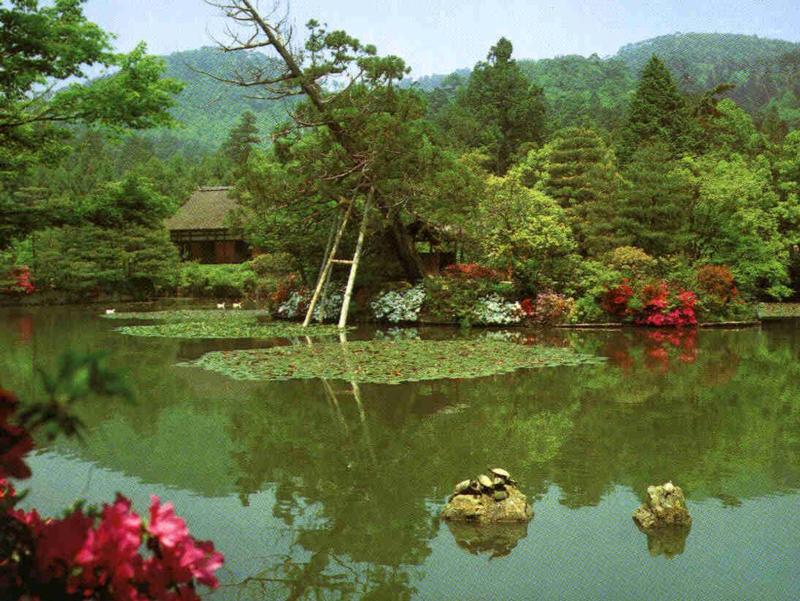
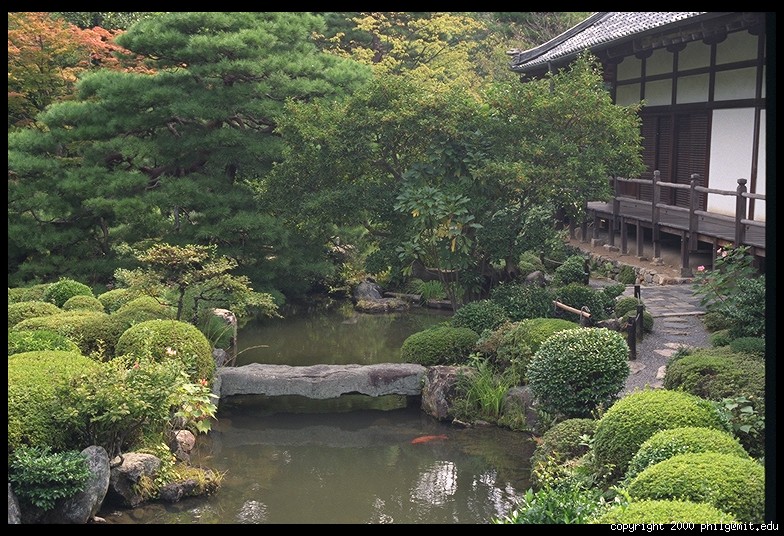
Leaving eventually the Ryoan-ji temple you will feel like you are carrying with yourself the fifteenth stone which you will discover after years in your own soul... Because ZEN starts where the intellect stops!
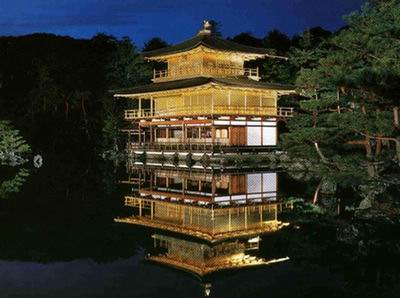
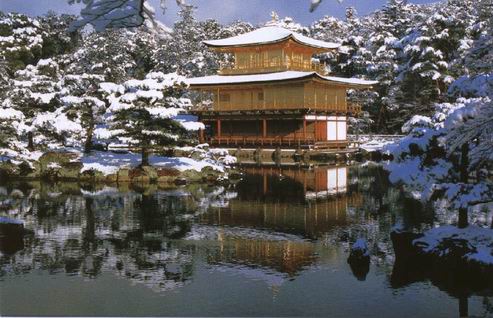
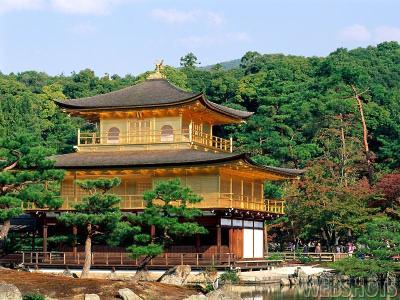
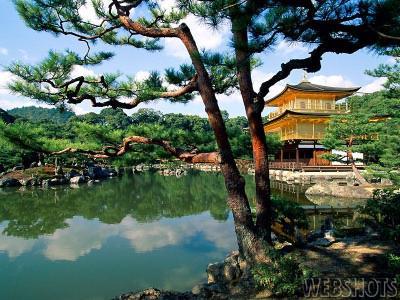
The next site is located nearby. It is the Golden Pavilion, Kinkaku-ji, surrounded by the most beautiful Japanese garden. It was conceived to be an image of Buddhist Western Paradise for the Buddhist believers.
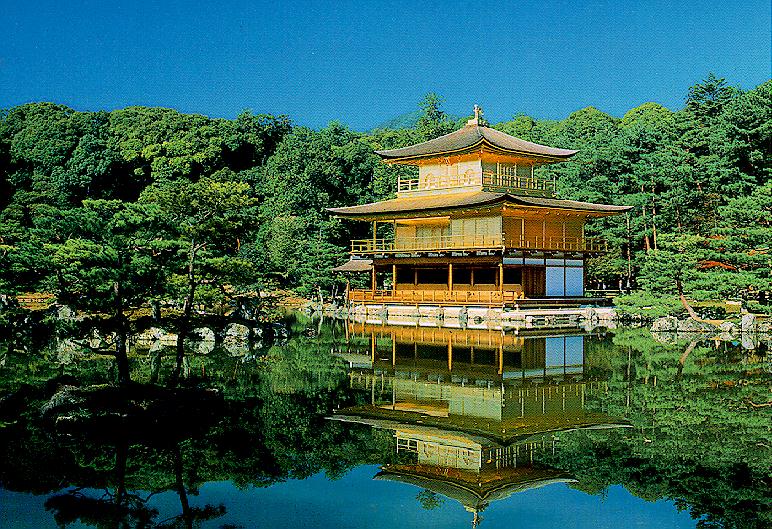
It is lunch time!
We are going to have lunch and enjoy demonstrations of Japanese traditional arts and crafts at Kyoto Handicraft Center. It is also a paradise for shopping!
Did you enjoy the Kyoto morning tour? If yes, you could join me for the Kyoto afternoon tour!
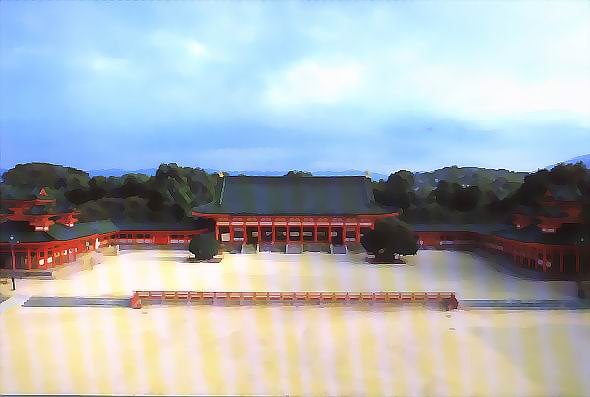
We are heading for the Heian Shrine, where the graceful medieval courtlife is reflected in the brightly coloured shrine with its vermillon pillars and green roof, and in its enchanting inner gardens and ponds.
The Heian Shrine was built in 1895 to commemorate the 1100th anniversary of the founding of Kyoto and to do the honour to his great emperor Kammu.
Whole buildings are about half the size of the first Imperial Palace built in 794 and have been made on the model of the old Chodoin of the Heian period. It consists of the Daigokuden(great hall) in the center, two turrets named Soryu and Byakko(green dragon and white tiger) which are connected by corridors to the great hall.
On the east side of the front
steps of the hall is a cherry-tree called Sakon-no-sakura and on the west side
is a citrus tree called Ukon-no-tachibana. A railing in front yard is called
Ryubi-dan(dragon tail platform) and a holy gate in the foreground is Otenmon(the
main gate). All these main buildings are the ones of the day of foundation.
 In the 13th year of Showa, a
sacred society had been formed for promoting of enshrinement of Emperor Kohmei
in this shrine. This emperor laid the foundation for the Restoration of Meiji.
Through great efforts of this society, the improvement and renovation of this
shrine were completed and on the 19th of October, in the 15th year Showa this
hard works gained success. Now, the Heian Shrine is
dedicated to the memory of two gods, the Emperor Kammu, the founder of Heian
capital, and the Emperor Kohmei, the last emperor of it, and worshiped as a
safeguard of Kyoto, not only by the citizens of Kyoto, but by most of the
peoples throughout Japan.
In the 13th year of Showa, a
sacred society had been formed for promoting of enshrinement of Emperor Kohmei
in this shrine. This emperor laid the foundation for the Restoration of Meiji.
Through great efforts of this society, the improvement and renovation of this
shrine were completed and on the 19th of October, in the 15th year Showa this
hard works gained success. Now, the Heian Shrine is
dedicated to the memory of two gods, the Emperor Kammu, the founder of Heian
capital, and the Emperor Kohmei, the last emperor of it, and worshiped as a
safeguard of Kyoto, not only by the citizens of Kyoto, but by most of the
peoples throughout Japan.
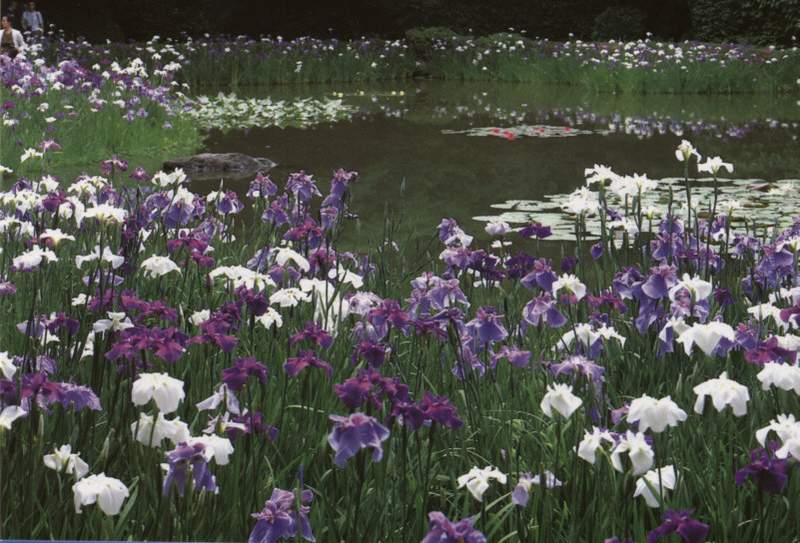
The holy garden of this shrine
is noted for its design. This garden, surrounding the whole structures, is
divided into three parts, the East-, the Middle-, and the West-garden, having a
pond, respectivelly, Byakko, Soryu and Seiho in it. These places are located far
from the madding crowds and the silence reigns all round. In the gardens are
always colourful flowers to look at all through the year and well said to be
"the Oasis for visitors", especially the weeping cherries in spring are noted
for their beauty so that this wonderful sights are often quoted to poems or
painted.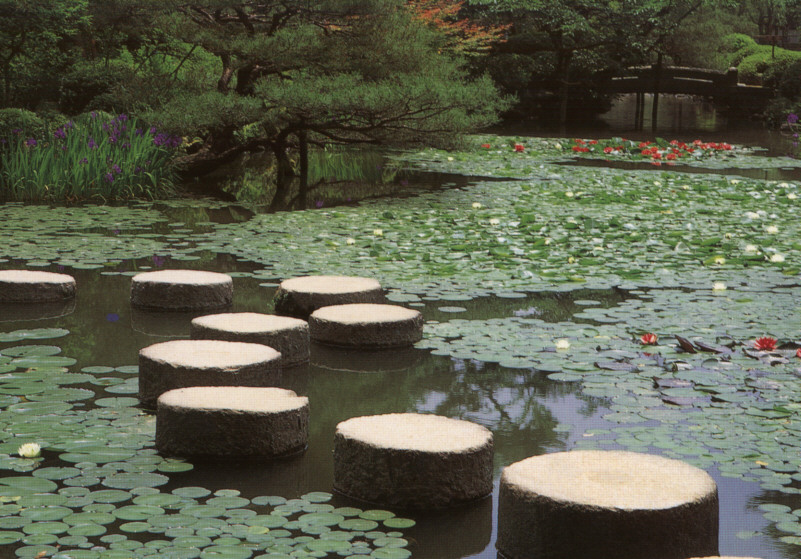
If you are lucky, you might see a Shinto priest performing a holy ceremony like blessing a new car.
In winter time you could enjoy
beautiful camellias in the garden.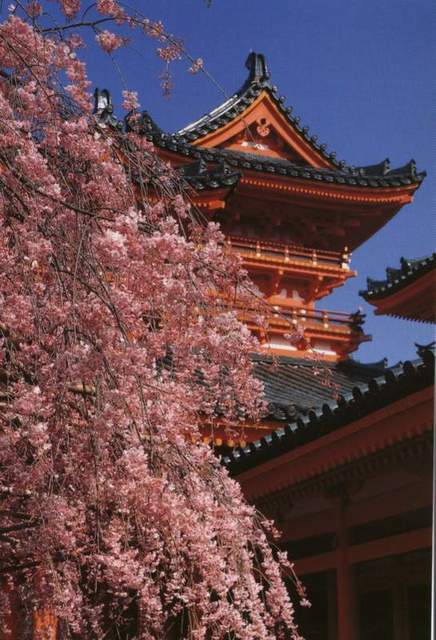
Leaving the Heian Shrine you will hear the vendor of sweat potatoes and the old Japanese atmosphere will be completed. You might even be invited to take a riksha for a walk... But the coach is waiting!
The next site will be the
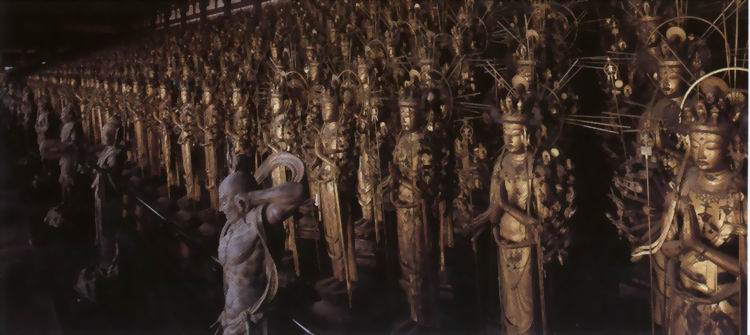
Sanjusangendo Hall dedicated to Boddhissatva Kannon. It is a renowned long
wooden hall housing all of 1001 statues of Kannon that date back 700 years.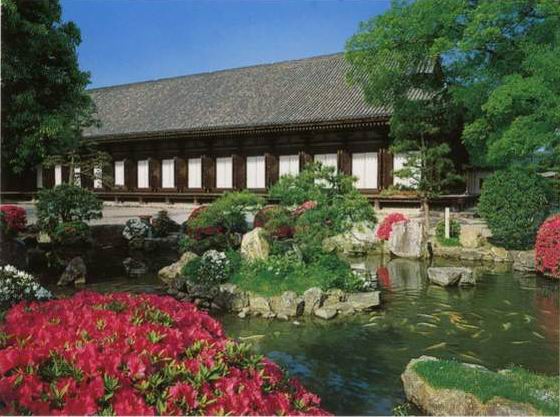
It is something really great!
It is said that you can see your own image like in a mirror among the 1001 guilded statues! Perhaps, at that time you will be reaching the state of Nirvana...
The last site chosen for the tour is the Kiyomizu temple, located on a hill overlooking the city of Kyoto.
The coach will remain in the parkage place while we, the tourists, will be walking on a quaint old lane lined with souvenirs shops leading to the temple.
Tamuramaro Sakanoue removed
"Sinden", and built the Kiyomizu temple in 807(Daido 2). The main temple was
reconstructed by Iemitsu Tokugawa who was the third Syogun in 1633(Kanei 10). The Kiyomizu temple is
well-known as a spiritual place and worshipers do visit it continuously.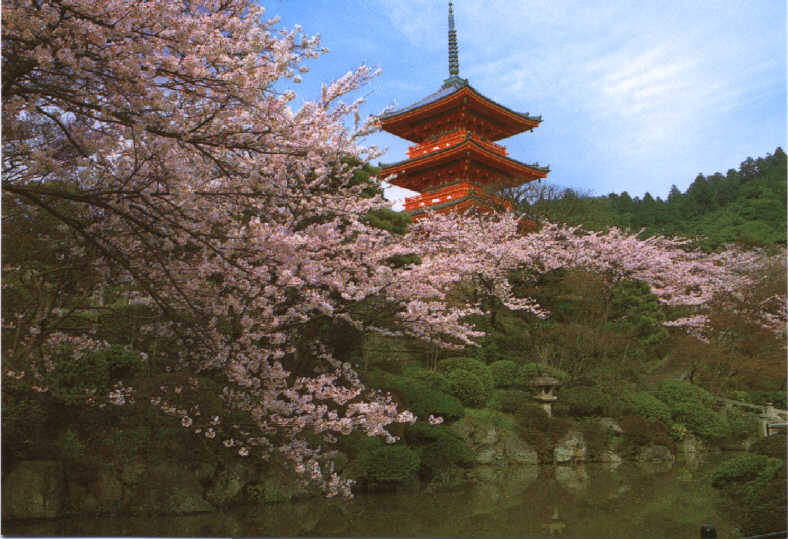 Many cherry blossoms are in
full bloom in spring, many red maples are at best in autumn time, and the
sweeping view of the entire city of Kyoto from the lofty terraces is wonderful. You can drink water from the
"Three Springs" and you will become healthier, more beautiful(handsome) and more
rich.
Many cherry blossoms are in
full bloom in spring, many red maples are at best in autumn time, and the
sweeping view of the entire city of Kyoto from the lofty terraces is wonderful. You can drink water from the
"Three Springs" and you will become healthier, more beautiful(handsome) and more
rich.
Dusk comes very early toward the end of December, here in Kyoto. There is no more time left for a cup of tea at the tea-house, in the garden of the temple.
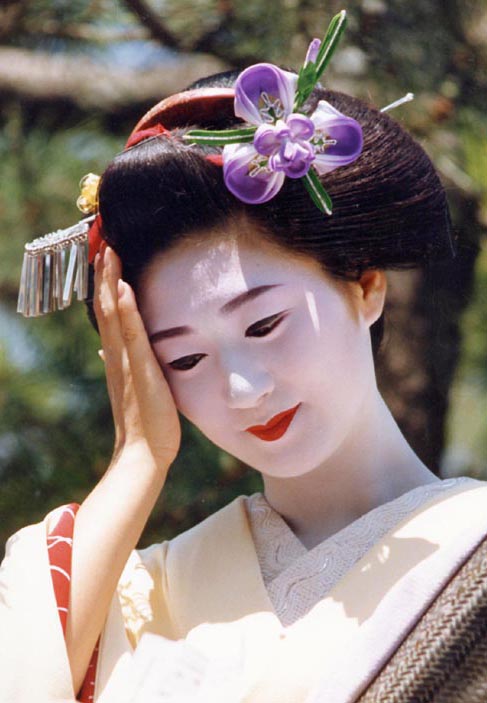
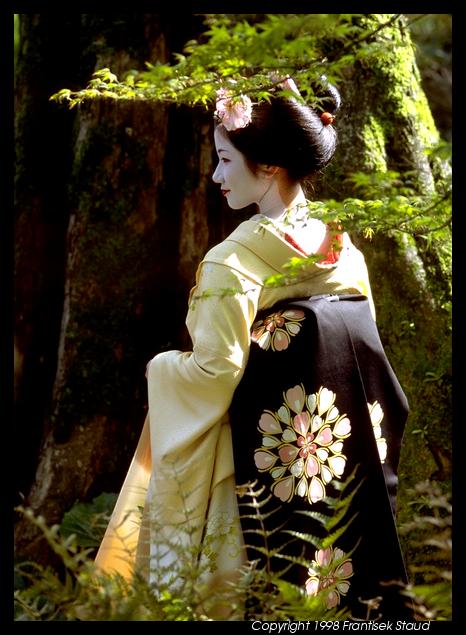
In front of the main gates I let a photo of mine be taken beside a young Japanese lady wearing a gorgeous kimono. If it is to come back there one day, perhaps I should be seeing it...
It is almost dark when the coach is returning to the city.
I had a wonderful time with the one day tour of Kyoto and, I hope, so did you!
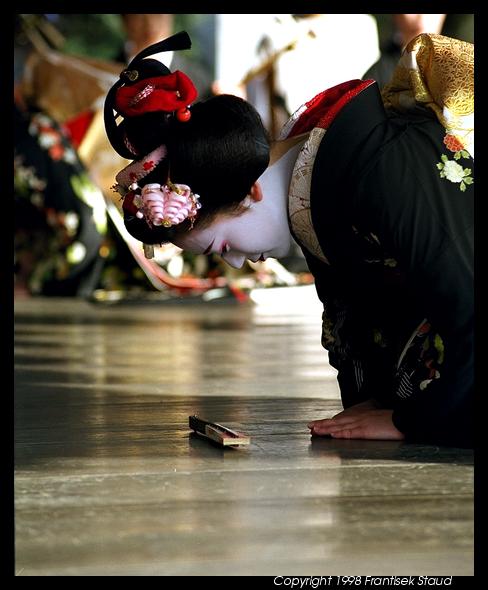
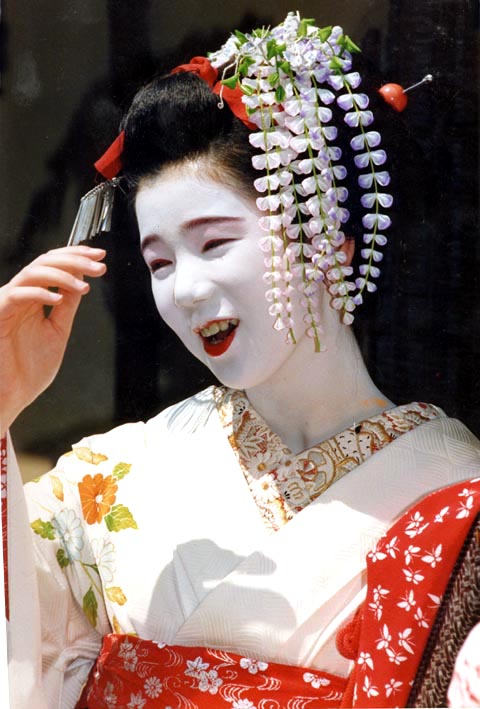
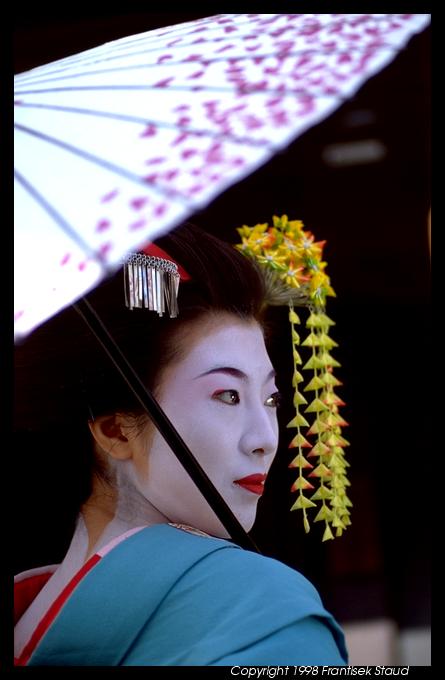
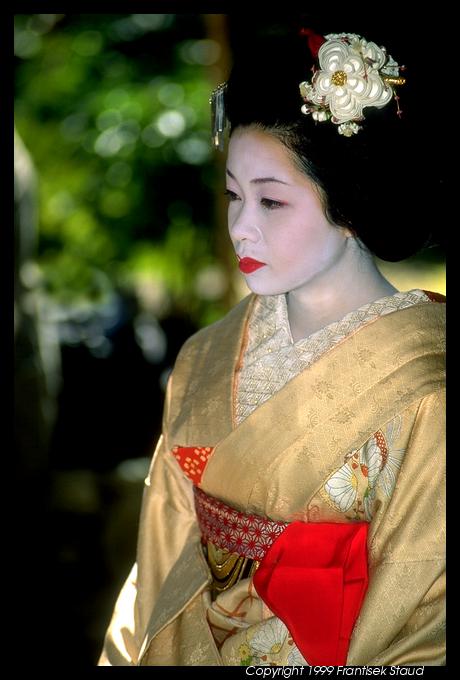
Evening time in the lounge of
the Kyoto Kokusai hotel with Maiko-san is, in my opinion, a perfect end
for this day. The most beautiful girls
throughout Japan are selected to become Maiko-san, the young Geisha, and you can
meet them only here, in Kyoto.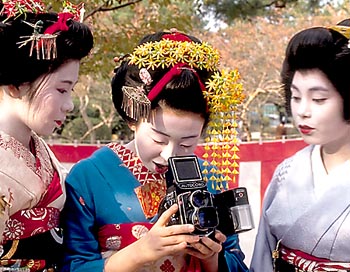 Maiko-san means the dancing girl. At the age of
twenty, they have two options: to go forward to the conservatory and become a
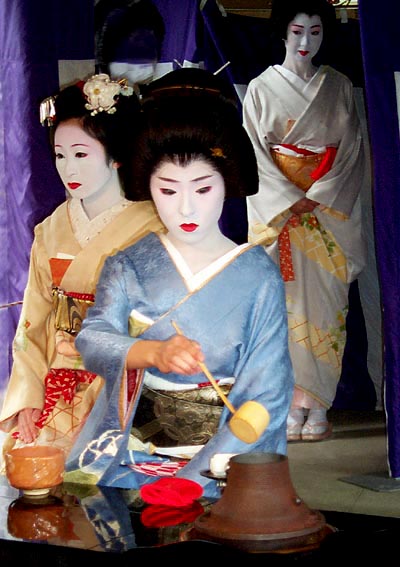
geisha or to stop their carreer. Maiko-san will perform the tea
ceremony in front of you, then she will be dancing in the small Japanese garden
within the inner courtyard of the hotel.
Maiko-san means the dancing girl. At the age of
twenty, they have two options: to go forward to the conservatory and become a
geisha or to stop their carreer. Maiko-san will perform the tea
ceremony in front of you, then she will be dancing in the small Japanese garden
within the inner courtyard of the hotel.