Methods of Protecting Data
Why is it easier to misuse data stored electronically that data stored on paper?
- It is easy to hack into other computer systems from your own system, providing the necessary communication links such as a modem and telephone lines are present. ‘Hackers’ don’t have to physically visit the place where the data is stored.
- Alterations to data stored on paper are easy to detect. Electronic alterations show no clear evidence that changes have been made.
- Data accessed electronically is accessed much faster than manual files. Copies can be made a lot quicker than having to photocopy paper files.
Data stored on computer must be correct because:
- Companies that store incorrect personal data can be prosecuted under the Data Protection Act, 1984.
- Incorrect data can result in a customer being charged too much or too little. Either way a business loses money.
- Confidential communication, e.g. medical information or bank account details could end up being sent to the wrong person.
- Information falling into the wrong hands could assist criminals.
- In extreme cases firms could lose thousands or even millions of pounds!
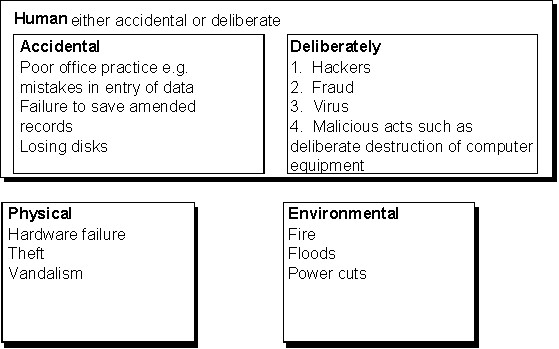
Data can be lost due to physical, environmental or human influences:
The Data Protection Act (1984)
The Act requires employers using a computerised data system to register as data users. They must state
- what information is being stored on computer
- why it is stored in such a way
- how and from where they have obtained it
- to whom it will be disclosed.
The Data Protection Registrar must then try to ensure that personal data:
- is obtained and processed fairly and lawfully
- is held only for one or more specified and lawful purposes
- is adequate, relevant and not excessive
- is not kept for longer than necessary
- is stored in a way which prevents unauthorised access of accidental loss or destruction.
Additional safeguards are required in respect of personnel data covering
- racial origin
- political opinions or religious or other beliefs
- physical or mental health
- criminal convictions.
Employees have a right of access to all computerised information held about them and may claim compensation for damage and distress if the information is inaccurate.
Exemptions
The provisions of the Act do not apply to:
- data held for the purposes of national security
- the detection or prevention of crime
- calculating payroll or for keeping accounts
- household affairs or recreational purposes
- the subsequent preparation of text (such as documents held in a word processor)
- the purposes of recording the 'intention' of the data user.