
|
|
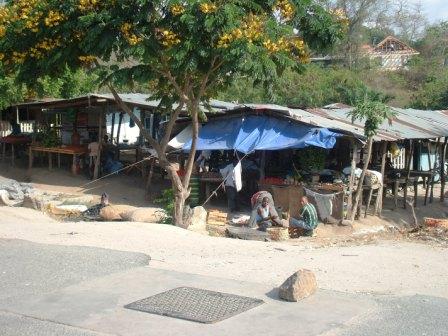
Picture 5.6: Yet another problem in this notorious area is the high demand for pedestrian crossing and only two were provided at the bottom of the hill. Both sides of the road are habited and there are economic activities e.g. a market place In this picture, apart from the market, see the stone on the ground. One real possibility is that, a lorry parked there to off-load goods at the market in which such stones are used at the tyres to provide support to the vehicle's hand brake. But once the off-loading is over they just drive off and leave the stone on the service lane. Look also at the manhole cover which is raised a bit off the surface. Both are hazardous to pedestrians. Another reason why this stretch is busy is that due to traffic jams. Passengers off-load from the minibuses and walk down the stretch to an exchange bus station situated just at the bottom of it. This saves the significant time. As a result there is heavy human crossing during the rush hours. |
|
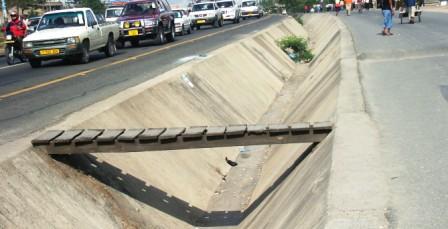
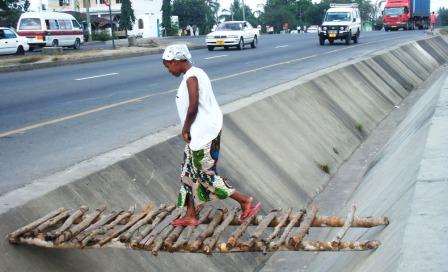
Picture 5.7: No provisions were made at design stage to ease mobility between the two sides of the road for over 500 metres stretch. People devised their own bridges over the trench, but unfortunately they lead them straight into the congested road and during the clear hours, to the speeding motors. This is not a very pleasant crossing as you can read from the concentration of the lady on it. . |
|
 |
Picture 5.8: Some of the bridges are not well maintained either while some are very convincing. |
|
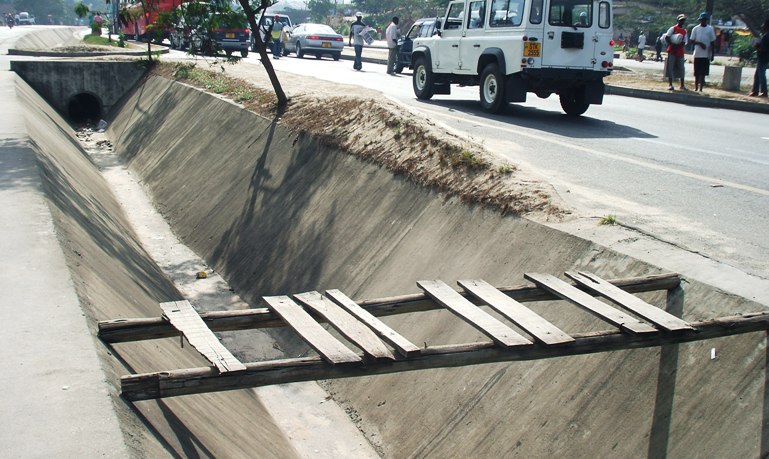
Picture 5.9: In addition to the poor condition of the bridge, see also the Land Rover crossing the ramp across the service/pedestrian lane. This is meant to break the speed of cars, motor cycles, cycles, and push carts etc to protect other pedestrians. |
|
|
|
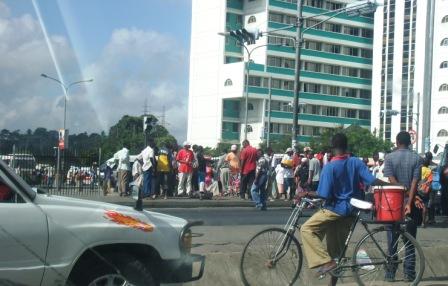
Picture 6: The busiest crossing at the bottom of the stretch. The high rising building is the headquarters of the national power company (Tanzania Electricity Supply Company Limited-TANESCO), and behind the metal barricade is the bus exchange station and you can see how busy the crossing is. This is a very dangerous crossing also because, although there are working traffic lights, a traffic police officer often overrides these to prioritize the heavily jammed side. Another bad thing is the outlet from the exchange station empties at the same spot. As you might have noticed in the crowd, there is a man laying down with knees up. This is a pedestrian who was just hit by a motor just as I was parking beside the road to take a picture that morning (my second road accident witnessed on the same day and road within about an hour from the time I left home and hit the road for this photographing mission). You also can see the crowd as they block the road trying to persuade some motorist to assist in providing transport to take him to hospital. |
|
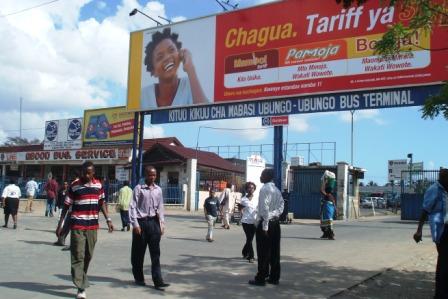
Picture 7: . Next we came to the busiest point on this road - the main bus terminal at Ubungo where all busses to up-country and neighbouring countries begin their journeys from. |
|
|
|
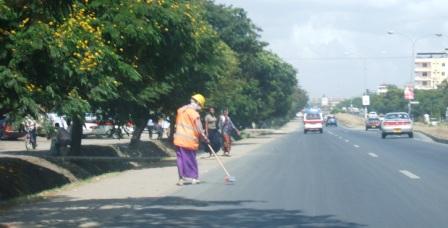
Picture 7.1: At this point we also see two women with a broom and a huge polythene bag. These women are part of NGOs participating in a "keep the city clean" programme. They clean the roads. But one observation is that they focus on removing the sand deposits on the road and any waste like broken glass, and any other rubbish on it and hardly deal with any rubbish in the trenches. They also hardly have protective gears or prohibition signs to warn motorists of them being at work ahead - very dangerous. |
|
Picture 7.2: Those who have long experience have acquired the minimum - helmet, and reflective jackets - as these are lowly paid workers they came up with ideas - hence the big polythene bag is used to collect water packaging bottles they find on their way, which they later sell on to collectors who eventually sell them to the recycling firm. |
|
|
|
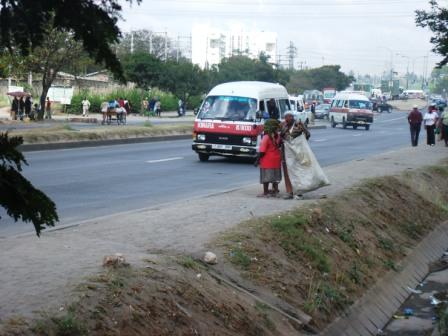
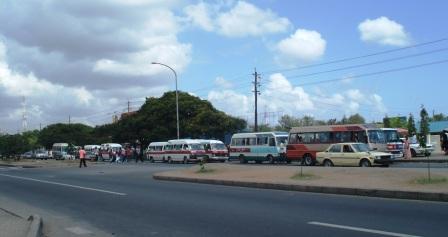
Picture 8.0: Here we see a good number of busses at a bus stop close to the Ubungo bus terminal. Two things are worth pointing out. First is the drivers' behaviour - as they scramble for passengers they end up parking outside the designated bus stop; as a result they sometime stop at the middle of the road or lane, blocking the flow of traffic. One theory is that some of them are not trained drivers and hence the lack of respect for the laws and regulation, or simply lack of awareness. The other, but related to the scrambling behaviour, is the lack of contracting mechanism in the business. Owners demand a fixed some per day from their drivers (there is no employment contract). So what the drivers do is to make sure they raise they boss's daily sum and extra for expenses, their salary, and for paying conductors and a number of youngsters at the bus stops who help out in convincing passengers to board their bus and not the next one. Again because the busses are too small, it is hard to have a time table. At a time you could have 20 of them at one bus stop and at times there is none for a number of hours. It is hard to plan a trip. |

 |
 |
 |
 |
This page last updated 04 November 2007
This page is maintained by
Stephen
Little
Head, Centre for Innovation, Knowledge and Enterprise
Open
University Business School
Milton Keynes, U.K.
[email protected]