NZ
Lidders can be contacted at
[email protected]
GALLERY
HOME
PROFILES
CONTACTS
SURF
SPOTS
NEWS
RANKINGS
LINKS
SURF
STORIES
|

|
| This section gives a brief
background for those who want to know a little bit more about New Zealand.
It's hard to sum up everything about New Zealand in one page but I have
tried my best.
Click on the following
links for more info on
|
|
BRIEF
BACKGROUND ON NEW ZEALAND
|
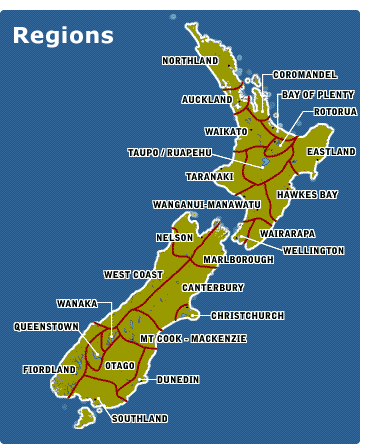
New Zealand is a small country
located Southeast of Australia - down under "down under". New Zealand is
most famous for it's natural raw beauty, it's beautiful beaches, coastline,
mountains, forests, rivers and lakes. In some ways New Zealand's scenery
is very similar to Canada's countryside (apart from our coastline).
New Zealand is a beautiful,
safe and laidback country to live in. The majority of New Zealanders are
very friendly and interesting.

|
|
SURFING
IN NEW ZEALAND
|
Surfing wise, New Zealand
pretty much has it all from beachbreaks, river bars, pointbreaks to reefs.
The country may not have an abundance of world class waves but still has
many excellent surfing areas such as Raglan, ShipWreck Bay, Gisborne, Taranaki,
the Kaikorua Coast and a number of other areas.
New Zealand is probably
one of the few places in the world where you can find a secret spot that
very few people know about and have it all to your self.
My advice to anyone who
is thinking of coming to New Zealand on a surf trip is to do some research
first to find out where the best spots are and what conditions they work
best on and to try and hook up with the right crew so that you have the
best chance of scoring New Zealand's surf at it's best.
|
The
following extracts are from the New Zealand tourism board's website they
give a more detailed background on NZ. A link to the site is provided at
the bottom of the page.
|
NEW
ZEALAND
|
| From a map, New Zealand
appears to lie in a remote corner of the southwest Pacific. In reality
it is only about three hours flying time southeast of Australia,
a non-stop overnight flight from the United States or a ten-hour direct
flight from Singapore.
New Zealand's spectacularly
beautiful landscape incorporates vast mountain chains, steaming volcanoes,
sweeping coasts, deeply indented fiords, lush rainforests and endless grassy
plains. Equivalent in size to Great Britain, California or Japan, it has
a
population of only 3.8 million
- making it one of the world's least crowdedd countries and a haven for
those seeking peace, rejuvenation and relaxation. It is also a playground
for those looking for thrills and adventure. Having a temperate climate
with relatively small seasonal variation makes it a year-round holiday
destination.

|
|
GEOGRAPHY
|
New Zealand is situated
in the South Pacific ocean between latitude 34'S and 47'S. The country
runs roughly north-south with mountain ranges down much of its length.
Its two main islands cover 266,200 sq km (103,735sq miles), about the size
of Japan or California and slightly larger than Great Britain.
|
|
CLIMATE
|
The North of New Zealand
is sub-tropical and the South temperate. The warmest months are December,
January and February, and the coldest June, July and August. In summer,
the average maximum temperature ranges between 20-30'C and in winter between
10-15'C. New Zealand is famous for its clean air and pleasant year-round
climate.
|
|
ENVIROMENT
|
New Zealand's separation
from other land masses for more than 100 million years has allowed many
ancient plants and animals to survive and
evolve in isolation. Complementing our unique flora and fauna is a
landscape that contains an unrivalled
variety of landforms. In a couple of
days drive it is possible to see everything from mountain ranges to
sandy beaches, lush rainforests,
glaciers and fiords and active volcanoes.

|
|
FAUNA
|
New Zealand is a land of
unique birds. The best known is the kiwi, New Zealand's unofficial national
symbol.
Also flightless are the
weka and the endangered kakapo, the world's largest parrot that, at a pinch,
is just able to scramble up into shrubs and small trees.
Another unique bird, one capable
of flight, is the inquisitive kea, which is
renowned for its fearlessness of humans and cheeky personality.
|
|
FLORA
|
In spite of around 800 years
of native bush clearance by humans,
about a quarter of the country
still remains forested - mostly in high-country areas. Fortunately, most
of these remaining areas are
protected from exploitation
in national and forest parks, where they can be enjoyed by all.
The characteristic New Zealand
forest is a temperate, evergreen rain forest with giant tree ferns, vines
and epiphytes - looking a bit like the popular
image of a jungle. The giant kauri, among the largest trees in
the world, is now restricted
to relatively small forest pockets in Northland and on the Coromandel Peninsula.
|
|
NEW
ZEALAND'S NATURAL HERITAGE
|
What makes New Zealand's
natural heritage so special?
Underlying New Zealand's
physical attractions - its dramatic mountains, unpolluted beaches and green
countryside - is an epic survival story of unique plants and animals. Cast
adrift from the ancient super-continent of Gondwanaland, these ancient
species evolved in isolation and struggled to survive in what renowned
naturalist David Bellamy has called "Moa's Ark" (named after New Zealand's
native, but now extinct, giant flightless bird, the Moa).
In only 800 years of human
settlement New Zealand has lost many
native species. But impressive
gains have been made in recent times to protect and enhance what is left.
These include removing introduced pests from island wildlife sanctuaries,
the establishment of 12 national parks, three maritime parks, two world
heritage areas, hundreds of nature reserves and ecological areas, a network
of marine reserves and wetlands, and protection for special rivers and
lakes. In total, around 30 percent of New Zealand's land area is protected
conservation land.
In addition, research and
management programmes have been
introduced to aid the recovery
of rare and endangered species like
kakapo, kokako, kiwi and
tuatara.
New Zealand welcomes everyone
to experience and discover its unique and precious natural heritage. We
only ask that you make as little impact as possible, so future generations
may marvel and wonder like us.
|
|
PEOPLE
|
New Zealand is an independent
nation and a member of the British Commonwealth. It has a diverse multi-cultural
population of around 3.8 million people. The majority of New Zealanders
are of British descent, and the largest minority is New Zealand's indigenous
Maori who make up around 14 percent of the population.
|
|
SETTLEMENT
|
The Maori were New Zealand's
first settlers. They made an epic journey from legendary Hawaiiki, probably
in Polynesia to the north of New Zealand, about 800 years ago. The great
explorer Kupe, who legend says first discovered New Zealand, named the
new land Aotearoa - Land of the Long White Cloud.
 The first documented European
to discover New Zealand was Dutch navigator
Abel Tasman who came here in 1642 in search of the fabled
great southern continent. Over
a century and a quarter later Captain James Cook claimed it for Britain
in 1769 and produced a map.
The first documented European
to discover New Zealand was Dutch navigator
Abel Tasman who came here in 1642 in search of the fabled
great southern continent. Over
a century and a quarter later Captain James Cook claimed it for Britain
in 1769 and produced a map.
|
|
THE
TREATY OF WAITANGI
|
The Treaty of Waitangi is
New Zealand's founding document and established
the country as a nation. It was signed in 1840 between leading
Maori chiefs and representatives of the British Crown. The
location, at Waitangi in the
Bay of Islands, is now one of the country's most
historic sites. The signing of the treaty began on 6 February, and is now
New Zealand's national day known as 'Waitangi Day'.
|
|
LANGUAGE
|
English is the common and
everyday language of New Zealand. You may also hear other languages spoken,
including Maori, which is also an official language of New Zealand.
|
|
ECONOMY
& GOVERNMENT
|
| New Zealand is a modern
country with a well-developed economy and a government structure based
on the British parliamentary system. New
Zealand has long been a sovereign nation in its own right with
only tenuous ties to Britain
through New Zealand's membership of the British
Commonwealth. |
For
further information about New Zealand visit the New Zealand tourism board
at
|
|
|
|
|
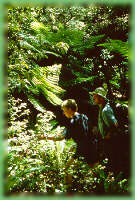
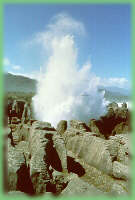
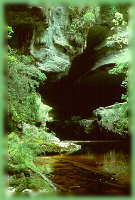
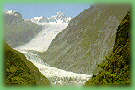
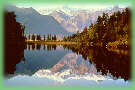
A few pictures
of the
New Zealand countryside. |
|