
STATES AND FEDERAL TERRITORIST
There are 13 states and 3 Federal territorist :
- Johor
- Melaka
- Negeri Sembilan
- Selangor
- Pahang
- Kelantan
- Terengganu
- Perak
- Pulau Pinang
- Kedah
- Perlis
- Sabah
- Sarawak
- Wilayah Persekutuan Kuala Lumpur
- Wilayah Persekutuan Labuan
- Wilayah Persekutuan Putrajaya
INTRODUCTION
Malacca (Malay: Melaka), dubbed "The Historic State", is the third smallest Malaysian state after Perlis and Penang. It is located in the southern region of the Malay Peninsula, next to the Straits of Malacca. It borders Negeri Sembilan to the north and Johor to the south. The capital is Malacca City, which is 148 kilometres (92 miles) south east of Malaysia's capital city Kuala Lumpur, 235 kilometres (146 miles) north west of Johor's largest city Johor Bahru, and 95 km (59 miles) north west of Johor's second largest city, Batu Pahat. This historical city centre has been listed as a UNESCO World Heritage Site since 7 July 2008.
Although it was the location of one of the earliest Malay sultanates, the local monarchy was abolished when the Portuguese conquered it in 1511. The head of state is the Yang di-Pertua Negeri or Governor, rather than a Sultan.
The state of Malacca covers an area of 1,664 km2 (642 sq mi). The state is divided into 3 districts: Central Malacca (Melaka Tengah) (314 km²), Alor Gajah(660 km²), and Jasin (676 km²). Malacca sits upon the southwestern coast of the Malay Peninsula opposite Sumatra, with the state of Negeri Sembilan to the north and Johor to the east. Malacca is situated roughly two-thirds of the way down the west coast, 148 km (92 mi) south of Kuala Lumpur, the capital of Malaysia and 245 km (152 mi) north of Singapore and commands a central position on the Straits of Malacca. The state capital is Malacca Town. The offshore Pulau Besar, Pulau Upeh and the exclave Tanjung Tuan are also parts of Malacca.
HISTORY
Before the arrival of the first Sultan, Malacca was a fishing village inhabited by local Malays. Malacca was founded by Parameswara, also known as Iskandar Shah or Sri Majara, the last Raja of Singapura (present day Singapore) following a Majapahit attack in 1377. He found his way to Malacca around 1400 where he found a good port—it was accessible in all seasons and on the strategically located narrowest point of the Malacca Straits.
According to a popular legend, Parameswara was resting under a tree near a river during a hunt, when one of his dogs cornered a mouse deer. In self-defence, the mouse deer pushed the dog into the river. Impressed by the courage of the deer, and taking it as a propitious omen of the weak overcoming the powerful, Parameswara decided then and there to found an empire on that very spot. He named it 'Melaka' after the tree where he had just taken shelter at, the Melaka tree (Malay: Pokok Melaka).
Because of its strategic location, Malacca was an important stopping point for Zheng He's fleet. To enhance relations, Hang Li Po, according to local folklore a daughter of the Ming Emperor of China, arrived in Malacca, accompanied by 500 attendants, to marry Sultan Manshur Shah who reigned from 1456 until 1477. Her attendants married locals and settled mostly in Bukit China (Bukit Cina). (See Zheng He in Malacca). "In
the 9th month of the year 1481 envoys arrived with the Malacca again
sent envoys to China in 1481 to inform the Chinese that, while Malaccan
envoys were returning to Malacca from China in 1469, the Vietnamese
attacked the Malaccans, killing some of them while castrating the young
and enslaving them. The Malaccans reported that Vietnam was in control
of Champa and also sought to conquer Malacca, but the Malaccans did not
fight back, because they did not want to fight against another state
that was a tributary to China without permission from the Chinese. They
requested to confront the Vietnamese delegation to China which was in
China at the time, but the Chinese informed them since the incident was
years old, they could do nothing about it, and the Emperor sent a
letter to the Vietnamese ruler reproaching him for the incident. The
Chinese Emperor also ordered the Malaccans to raise soldiers and fight
back with violent force if the Vietnamese attacked them again.
Culture Malacca began more than six centuries in which various ethnic customs and traditions blended perfectly. Peaceful life of the people of Melaka races due to the life that gave birth to the Malay, Chinese, Indian, Baba and Nyonya, Portuguese, Chitty and Eurasia. Each ethnic group gives a different taste of the famous people of Melaka as a friendly people.
Each of these races uphold their tradition and this is reflected in the food, religious customs, festivals, culture, design, application, jewelery and handicrafts.
Today Melaka has many things to offer to tourists such as culture, customs istiadar, historic sites, religious festivals, traditional celebrations in the city as well and Jasin.
Malay social organizations in Melaka is divided into two, namely those customary Temenggong the family of the wife by the husband and customs Perpatih, where the husband by the wife's family.
Malay women wear loose clothing and long sleeves called baju and sarong worn with little or tight clothes baju kebaya. Malay Male Malay dress worn with loose pants with a cloth known as well as tied at the waist. For weddings and feasts, songket cloth to be used as well. Traditions and other characters of the Malays as illustrated in the song Love Dondang Malay martial arts such as Silat Melayu.
The Chinese came to Malacca since the mass migration of Chinese from South province in central China. Communities such as Hokkien, Cantonese, Hakka, Teochew and Hainanese still follow customs, traditions, food, language and their cultural characteristics.
Indians in Melaka are the Tamils of South India where they inhabit the rubber. However, there are also among those who work in the business of jewelry, fabrics, retailers, merchants and money-lenders.
 Baba
and Nyonya Peranakan Chinese in Malacca is where their ancestors came
and married local women. Such intermarriage has produced a unique
Chinese culture and Malay traditions.
Baba
and Nyonya Peranakan Chinese in Malacca is where their ancestors came
and married local women. Such intermarriage has produced a unique
Chinese culture and Malay traditions.
Baba and Nyonya ethnic introduced unique furniture, porcelain and crockery, style and delicious food that can only be found in Malacca. Nyonya race wore kebaya with "brooches" various forms and jewelry made from silver or gold.
As well as Baba and Nyonya, Melaka has a small community called Chitty of people of Indian origin procreation or children of Indian traders who married Malay women. Village known as Kampung Chitty and is located towards the west Maman Elephant Road, one mile northwest of Chinatown. The entrance to the village is adorned with carved elephants Mutamariman adjacent to the temple. Like Kampung Morten, it is a beautiful area to visit and see the village houses are characterized by Malay villages. The best time to visit is during Mariamman Festival or Festival Mayor Char-char in May. It is a Hindu festival where you may have the opportunity to witness the Indian wedding ceremony.
Malacca is the only state that has a Portuguese settlement founded in 1930. The inhabitants of this place named Sua Chang Padre (Father Land) in conjunction with its founder. People living here are Eurasian of Portuguese descent living as fishermen. The Portuguese Catholic religious practice and speak Cristang or Cristao.
Ethnic Portuguese in Malacca provides traditional life, language, customs and music that appears unique. The most popular dance is Beranyo and Frapeirra. Christians also celebrate festivals with great including Christmas Day and Easter Festival San Pedra.
Religious places that can be visited include the Church of Christ, Church of St. Paul, Vinayagar Moorthi Temple Sri Poyyatha, Kampung Kling Mosque, Cheng Hoon Teng Temple, Mosque, Church St. Peter, Sam Poh Kong Temple and the Lamb.
1. Chicken Rice Ball
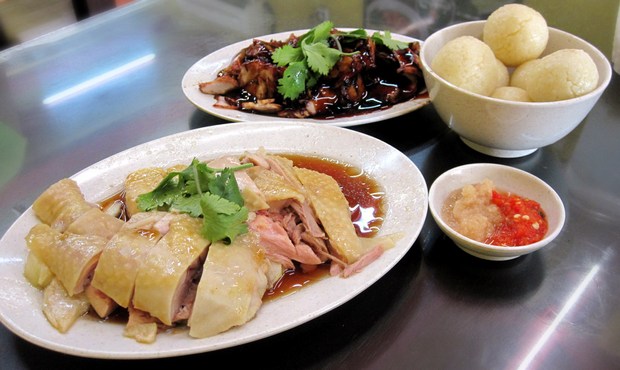
This is a dish of Chinese origin, and is most commonly associated with Hainanese, Malaysian and Singaporean cuisines. As I wrote earlier I like to eat. And chicken is one of my favorite ingredients. Here in Melaka, you’ll find something that is not commonly available in other parts of Malaysia, the chicken rice ball. The rice is first boiled in chicken soup with other seasonings. When cooked, it is rolled in a ball that gives the unique look and texture. You must try the Chung Wah one. Little chicken rice balls are very yummy, and the chicken is very tender!
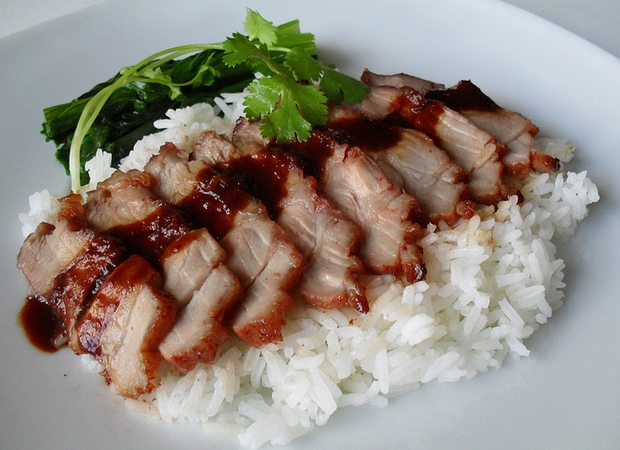
Some prefer flavorful, well roasted but soft lean pork meat. Others are mad about fatty meat with crispy, sweet flavors. But most people like the delicious sweet and savory gravy that is poured over the char siew slices and hot rice. You can find any type of Char Siew Rice you desire. Melaka is full of various cooking styles. I enjoyed the Char Siew Rice served at Boon Leong Food Court popularly known as Bunga Raya Food Court). Their Char Siew sauce is thicker and tastes nicer.

This is a fragrant rice dish cooked in coconut milk and “pandan” leaf commonly found in Malaysia. Nasi lemak is not only popular in Melaka, it is also considered as one of the national dishes. This street food is best served with the banana leaf as the aroma enhances the taste.
You can easily find good-tasting nasi lemak in Melaka. The one that I tried at New Wang Food Court had fluffy and fragrant rice and the side dishes were very good. The owner named the stall as “Nasi Lemak”.


The laksa is pungent, rich and well flavored from the spices and chilies. The aroma is super tempting. Once you put it into your mouth, I don’t know how to describe the taste; the food melts and takes you into heaven. For the uninitiated, there is a difference between Nyonya laksa and curry laksa. Nyonya laksa broth is prepared using chicken and prawns, while curry laksa uses chicken stock. The red-orange dotted oil on top of the Nyonya laksa comes from the prawns, which gives the curry a richer and sweeter taste.
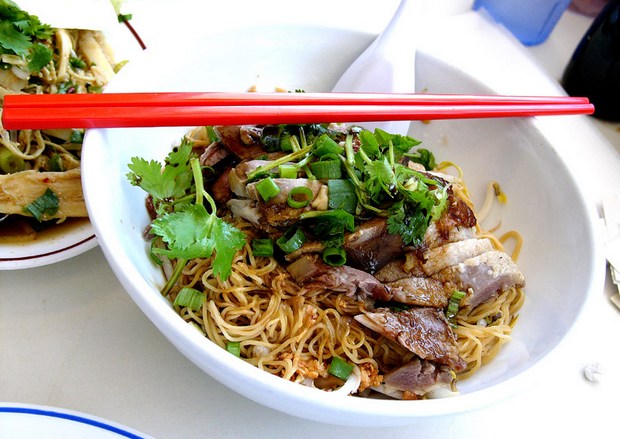
Tengkera Duck Noodle Restaurant is known for the Malacca-style Duck Noodles and I had a choice of soup or dry noodles. The latter is tossed in thick gravy and topped with shredded duck meat. This comes with small bowl of soup. The soup version is also decent – it really depends on whether you’re a soup or dry noodles person.
Soon Yen, some locals call it ‘under the big tree’ food court, along Jalan Tengkera offers delicious duck noodles too.


The main ingredients of this dish is fish/seafood, ladyfinger, eggplant, long green bean and tomato. This dish is cooked in asam (tamarind) juice with chili and different spices. The cooking process involves soaking the pulp of the tamarind fruit until it is soft and then squeezing out the juice for cooking the fish/seafood. This is the signature dish of the state. A very hot and mild sour fish curry making it very appetizing and is best to go with white rice. I normally eat it during lunch and dinner.
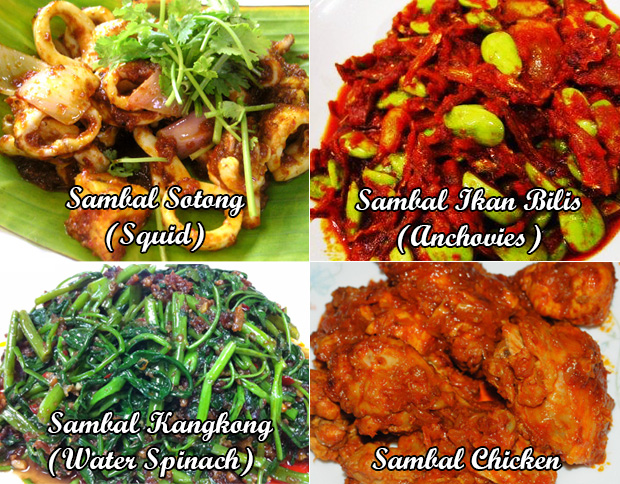
Sambal is a condiment that has a chili-based sauce. Typically made from a variety of chili peppers, it is sometimes a substitute for fresh chilies and can be extremely spicy for the uninitiated. Secondary ingredients of sambals often include shrimp paste and/or fish sauce, garlic, ginger, or shallots/green onions, sugar, lime juice, and rice vinegar or other vinegars. Some ready-made sambals are available at exotic food markets or gourmet departments in supermarkets.
Some of the sambal foods that are so irresistible include sambal sotong, sambal ikan bilis, sambal kangkong and sambal chicken. The above-mentioned Nyonya restaurants are 4 of my favorite places whenever I want to get the authentic sambal taste. Yummy!!
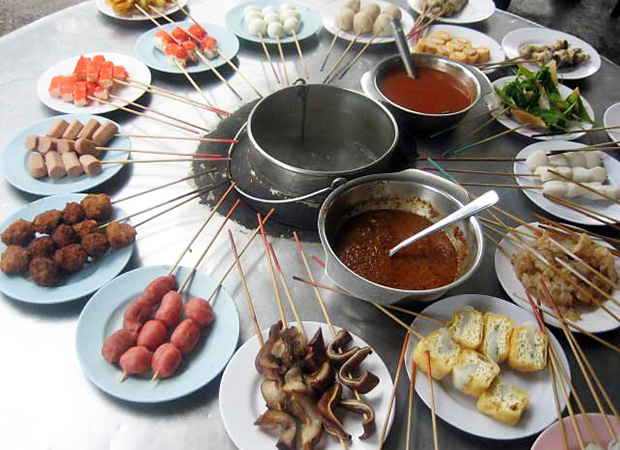
This is a dish where an assortment of raw and semi-cooked seafood, meat (including raw meat) and vegetables on skewers are dunked into a hot boiling pot of satay gravy. The best Satay Celup is at Capitol Satay. The long queue may turn you off and some may not like the taste but for me, it is nice and worth to wait. Don’t let the outlook of the restaurant disgust you as it is an old restaurant. Let’s just say they don’t have the need to renovate it as it is already insanely popular.
If you are tired of standing and waiting for 1-2 hours just to find a seat, you can get an alternative at McQueck Satay Celup.
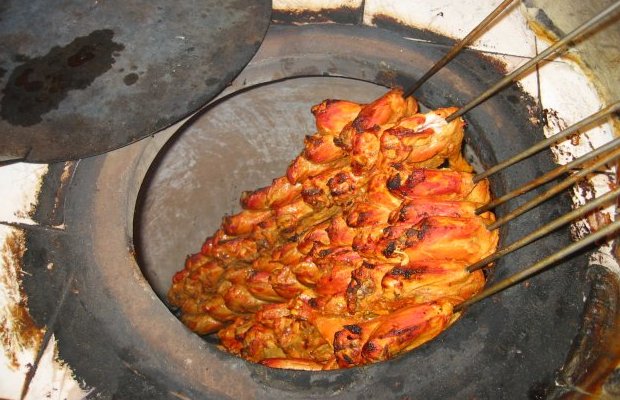
Tandoori chicken is a popular Indian dish consisting of roasted chicken prepared with yogurt and spices. The name comes from the type of cylindrical clay oven, tandoor, in which the dish is traditionally prepared. Two of the good places to eat the best tandoori is Pak Putra Tandoori Naan and Restaurant D' Tandoori's House. Their tandoori is so tender and I highly recommend it! The naan, a leavened, oven-baked flatbread, boasts a smoky flavor from the tandoori with slightly charred edges. Very tasty, especially when eaten with the tender, flavorful chicken.

Satay or sate is a dish of seasoned, skewered and grilled meat, served with a sauce. Satay may consist of diced or sliced chicken, goat, mutton, beef, pork, fish, other meats, or tofu; the more authentic version uses skewers from the midrib of the coconut palm frond, although bamboo skewers are often used. These are grilled or barbecued over a wood or charcoal fire, then served with various spicy seasonings. Good consistency on the peanut sauce and the taste is just right without being overly sweet.
I like the satay taste at Sun May Hiong SAtay House as the sour-sweet-spicy sauce is just the right accompaniment to the meat.

Oh yeah, it’s called “fried oyster omelet” too – due to the big amount of eggs. Oysters are fresh and although not big in size, the generous amount makes up for it. As for myself, I got to say that I enjoyed eating it. The eggs are simply delicious, and I actually care about the oysters – I just loved them. Fried oysters can be found in some Melaka food courts and the one that I like most is at the stall in Bunga RAya Foodcourt.

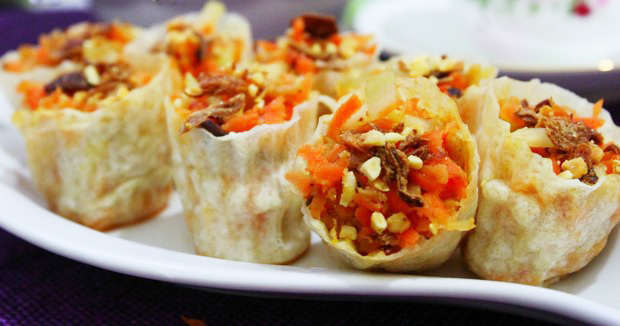
Also known as top hats, Pai Tee is a crunchy flour cup filled with julienned vegetables, omelet and fried shallots. These tiny treats went very well with the chili sauce provided. Simply pop it into your mouth and enjoy its crunchiness. The ‘hats’ were quite small – I could have polished all 5 pieces easily. Nancy's Kitchen is the place that amazed me with these little yummy things.
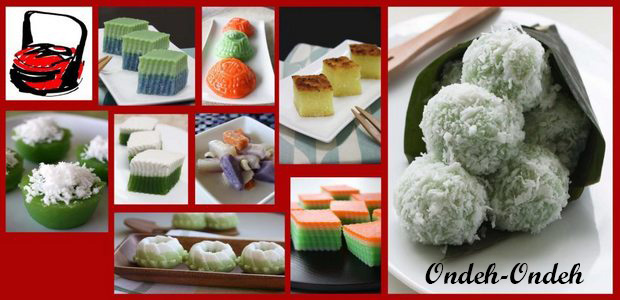
Nyonya Kuih (kuih is a term for Malay cakes) are bite-sized dessert that are colorful and popularly taken as a snack. Some are steamed, some grilled but most are sweet. My favorite Nyonya Kuih is Ondeh-ondeh (or onde-onde). It is either made from sweet potato or glutinous rice flour. The cute little ondeh-ondeh are infused with pandan (screwpine leaf) juice and filled with Gula Melaka (local sugar) or palm sugar and then rolled in with some fresh grated coconut. The palm sugar that’s in it literally bursts in your mouth when you take a bite. This warm dessert oozes into your mouth. Just ignore the diet and start a day with these sweet and delicious little yummy things.
I just love the authentic taste of Nyonya Kuih at Nancy's Kitchen For takeaway, drive over to Baba Charlie Nyonya Cakes located in a residential area which is frequented by locals and widely reported on media.
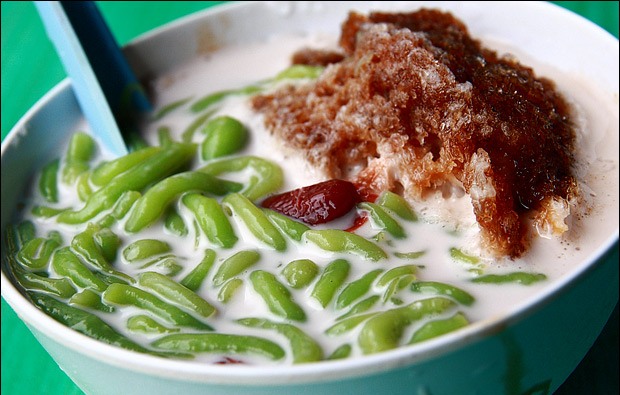
This is a traditional dessert made from shaved ice, coconut milk, green starched noodles with pandan flavoring and palm sugar. Other ingredients such as red beans, glutinous rice, grass jelly, creamed corn, might also be included. Each spoonful leaves behind a lingering sweetness and a creamy aftertaste from the fresh coconut milk. You should try it at Jonker Walk.
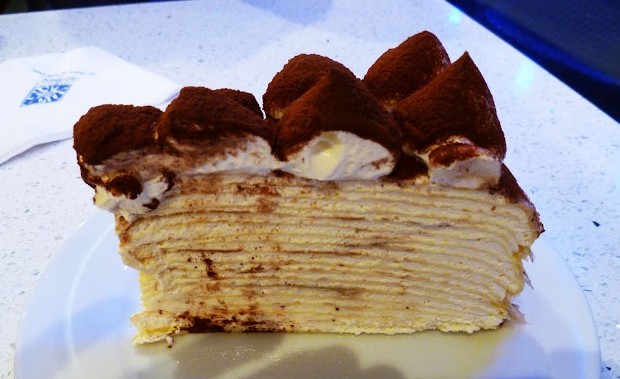
Mille crêpe is a French cake made of many crêpe layers. The word mille means “a thousand”, implying the many layers of crêpe. Go into Nadeje, but don’t expect to see a 1000-layer cake. You won’t find any. Here’s what to expect — about twenty lacy crêpes layered with fresh cream and custard.
The top crepe is usually sprinkled with sugar and flambéed until the surface caramelises. The cream was delicate yet firm enough, and the cake didn’t collapse at the plunge of a fork. The crepes were thin and crisp at the sides, and digging into the cake was like shovelling through snow. Light and luscious, each bite yielded a smoky sugar coat with refined layers of crepe and cream. Sounds yummy to you – go and try it!
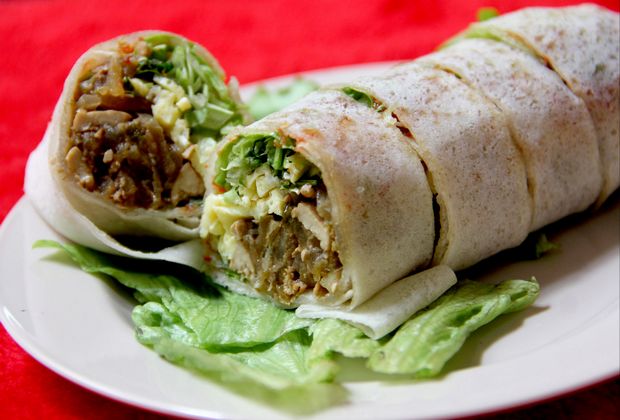
This is a Fujian/Chaozhou-style fresh spring roll. The popiah is one of the better ones in Melaka, where the egg wrap is generously filled with ingredients, sweet sauce and piquant chili sauce. Good stuff! The egg-skin wrap was of just the right thickness and held the popiah together nicely. Moist, generously filled and full of oomph from the chili sauce – what’s not to like? Baba Low and Nancy's Kitchen is the right place for this authentic delicates.
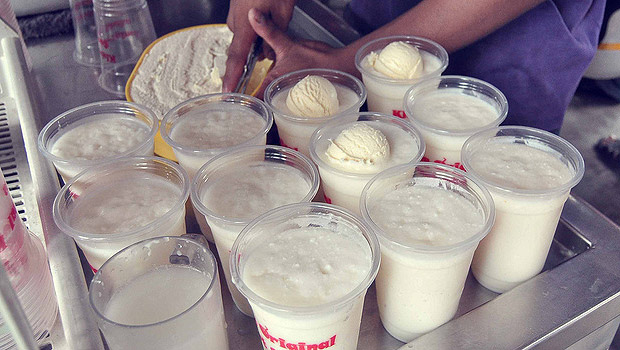
One of my readers suggest to review and include the cocunut milkshake Klebang in
the list of best Melaka food. I personally went to the place and
ordered one with ice cream. The recipe looks simple. It is a concoction
of coconut water, flesh, ice cube and vanilla ice cream blended
together in a mixer.
Al Azim Mosque
Al Azim Mosque is a state mosque located at Bukit Palah, 2 km from Malacca city.
Malacca Zoo
It is located about 13 km from Malacca city. It is the second largest zoo in the country covering and area of 54 acres with about 1,200 animals made up of 200 different species of animals found in Southeast Asia and Africa amidst natural setting. It was established in 1963 and it is the first zoo in the region with the almost extinct Sumatran Rhinoceres and Seladang on display. The latest attraction is the "Safari Theme Park". Rated the best zoo in this part of the country, it is an enciting place to discover the animal kingdom at your own pace. Entrance fee for adult is RM5.00 and children is RM2.00. Visiting hours is daily from 9.00 am to 6 pm.
Portuguese Square
Perhaps the right phrase to infer strong affinity to Portugal would be 'Mini Lisbon'. Located within the Portuguese Settlement, the square is the culmination of Portuguese culture in its full splendour and colours.
A'Famosa Water World
Located near Simpang Empat, Alor Gajah. A'Famosa Water World is fully equipped with a captivating array of international standard water theme park facilities ensuring thrilling hours of fun and excitement for everyone.
Light and Sound Display
The best way to learn up the history of Malacca. The Light and Sound show at Bandar Hilir, Padang Pahlawan is the first such project in South East Asia. It is equal to other projects namely the Egyptian Pyramid at Gaza, the Acropolis at Athens, and the Red Fort at Delhi. Significant events in Malacca’s history are re-enacted by means of lights, narrative, dialogue, music and relative sound effects to project real-life drama that will glue visitors to the seat. Highly educational yet entertaining, visitors to Malacca should make it a point to attend the show to understand Malacca, its culture, its people and the history of Malaysia. The shows starts at 8.30pm with narration in English and the tickets cost RM10.00 for adults and RM2.00 for children.
Jasin's Museum
Established to uncover the facts, and the myths, behind the establishment of Jasin as one of the significant settlements of Malacca's territorial expansion. Exhibits range from historical and cultural artifacts.
River Boat Cruise
Discover the places where countless generations of traders from all over the world had lived and pilled their trade. Part of Malacca's charm lies in its narrow, meandering river which winds through the heart of the old town. Witness the spot where one scene from the movie "Entrapment" starring Sean Connery and Catherine Zeta Jones was filmed. In the actual movie it shows both of them cruising down the Malacca River with the foreground replaced with the Kuala Lumpur skyline. Located near the Malacca Tourist Information Centre.
Hawksbill turtle (Pulau Upeh)
The Hawksbill turtle is a medium sized marine turtle with a hawklike beak and a thorny shell. Brown and likely striped, these turtles find the ideal resting ground on the island of Upeh. One of the earth's rarest species it lays its eggs from the month of March to June but visitors can expect to catch sight of at least a few turtles every night throughout the year.
Peacock Paradise Bird Park
Located in 4.5 hectares of landscaped pathways the Peacock Paradise Bird Park is the world's largest walk in aviary. It contains over 3000 free flying birds from 100 species within a netted enclosure. It opens from 9.00 am to 6.00 pm with entrance fee for adults at RM5, children 7 to 12 years old RM2 and children from 5 to 6 years old RM1 . Located near Air Keroh along the way to Durian Tunggal Town.
Alor Gajah's Museum
Exhibits will help visitors to journey into the past and to visualise the amazing stories behind the district of Alor Gajah.
Bullock Cart Ride
At one time the main mode of transportation for the rich of Malacca. The features that separate the bullock cart of Malacca to that of others are, the pointed roof in the shape of the hor of a bull, trappings and colours. A ride around Air Keroh near the Crocodile Farm at a minimal fee of RM1.50/person.
Butterfly Farm
One of the world's most comprehensive butterfly and insect farms with well over 200 local species including rare ones namely Raja Brooke and Birdwing. There is also a collection of more than 400 insect specimens.
Auyin Hill Resort
Constructed based on the philosophy of 'Feng Shui' (geomancy), the resort is one of a kind in the country. Every element has been placed relative to the principle of celestial and terrestrial positioning accuracy to enhance its charm, 'chi'(power) and prosperity.
Mini Malaysia
A marvelous theme complex to enable visitors to view the traditional houses of the 13 states of Malaysia on a single visit. The complex displays life-size authentic houses of Malaysia crafted by master builders. Each house has been furnished with corresponding elements adding ambience of originality that capture the houses in their traditional setting.
Mini ASEAN
A unique theme park conceived as the summary of prominent cultural elements of the countries that make up ASEAN i.e. Malaysia, Indonesia, Thailand, Phillipines, Singapore and Brunei.
Recreational Forest
A serene setting of tropical forests awaits discovery. Untouched to enable visitors to truly experience a leisurely walk through a tropical haven.The trees are labelled making it fun and an educational for a quick lesson in Malaysia's rich flora and fauna. It is an ideal setting for juggle tracking, hiking, jogging and cycling. The routes are marked.
Crocodile Farm
The farm is the largest in the country. More than 100 species of crocodiles are reared here including Albino and hunchbacked. Lanscaped to create a natural environment conducive for the reptiles.
Dol Said Grave
The ninth ruler of Naning who defiantly opposed the imposition of tax on the districtby the British. The Naning war, waged in 1834, made Dol Said a hero of exceptional valor that earned him a permanent place in the history of Malacca.
Gadek Hot Spring
Located in the District of Alor Gajah, approximately 30 km away from Malacca. It was believed that local villagers discovered the hot spring in the forest after watching some English soldiers settled around the spring. After the war, visitors from far and wide discovered that the hot spring had strong healing elements unlike many that they had encountered before. Today visitors can enjoy the spa pool or the "Soak In Pool" for those seeking therapeutic cure for skin ailments. A restuarant and playground is made available to provide additional attractions for visitors. An ideal spot for family outing. It opens daily from 7.00 am to 9.00 pm. Entrance fee for adult is RM2.00 and children between age 4 to 12 years is RM1.00.
Dutch Fort
About 49 km. from Malacca city on the route to Port Dickson stands a Dutch fort built in 1757. It stands on raised ground known as Bukit Supai(Sepoy's Hill).
Hang Tuah's Mausoleum
A fully decorated admiral of Malacca's naval forces, who defended successfully, countless attacks against Malacca sovereignty from Siamese and Achinise fleets. Hang Tuah's outstanding performance as a military officer made him a legend that has graced many a court and the history of Malacca.
Hang Tuah's well
Located in Kampung Duyong where Hang Tuah was born and spent his childhood among four of his good friends who would later become the famous knights of Malacca. The well is said to be the abode of his soul, which takes the apparition. of a white crocodile. For a commoner to catch the glimpse of Hang Tuah is hardly likely. It is said that the holy among us can ever hope to see the apparition.
Pulau Besar
A haven for holiday makers seeking sandy beaches, clear blue water, the sun and the sea front chalets on stilts. The island is an excellent resort for swimming, fishing, picnicking and snorkeling. The island has long been associated with fascinating legends and myths such as "Keramat 7 Beradik", "Makam Nenek Kebayan", "Tasik Bunian", "Batu Belah", "Keramat Sultan Arifeen", and "Makam Sharifah Rodziah". The island was once an anchoring point for ancient ships before Malacca was founded and is one of the five islets called "wu-shu" used by the chinese navigators as landmarks in the Ming dynasty.
Tun Teja's Mausoleum
The daughter of Sri Amar Di Raja Pahang convinced by Hang Tuah to marry Sultan Mahmud Shah. Died a queen in Merlimau, about 24 km. from Malacca City, while retreating with members of Malacca royal family from Portuguese attack in 1511.
Malacca Traditional House
Architecturally resplendent and signature to Malacca's 19th century artistic style. Built by a Chieftain, intricate wood carving forms the unique facade as well as the interior section of the house. Located 5 km. Southwest of Merlimau town.
Cape Rachado
Birdwatchers' paradise. An important lowland marking to migrating birds set in a serene headland forest punctuated by a blue lagoon and a beautiful beach. Tanjung Tuan, with an area of 93 hectares, was first gazetted in 1921 as a Permanent Forest Reserve. However, part of this was later excised for development and the remaining 60 hectares given full protection in 1953 when it was declared a Virgin Jungle Reserve. In 1971, the site received increased legal protection when it was gazetted as a Wildlife Reserve. Located here is the oldest lighthouse in the country which was build in 1817 by the Dutch. It is said that the legendary warrior Hang Tuah left his footprint here. It is also believed that Parameswara's grave is located in this area. Many ancient Portuguese and Dutch shipwreck lie at the bottom of the sea nearby. In March and October each year thousand of raptors on migration stop over here.
Grilled Fish spots
On the shores at Serkam and Pengkalan Pernu(Umbai) some 15 Km. and 10 km. respectively from Malacca, on the road south to Muar, visitors can pick their own fish and savour the delightful flavour of fresh grilled fish with an assortment of local dishes in a kampung or village environment.
Trishaw Ride
The best way to enjoy Malacca in a slow and laid back manner. The trishaw will take you through streets and corners of Malacca that you could easily miss out if you decide to venture on your own. The trishaw can be rented on hourly or distance covered basis at The Stadthuys.