
|
||
| BASIC CONCEPT |
NETWORK ARCHITECTURE |
NETWORK TOPOLOGY |
|
PEER TO PEER |
CLIENT- SERVER NETWORK |
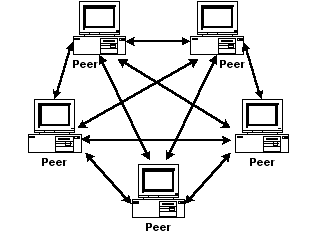 |
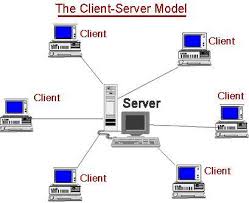 |
| A
network which all computers can function as clients or servers as
needed,and there's no centralized control over the network resources |
Network in which one or more
computers act as a server and other computers(clients)on the network
request services from the server |
| ADVANTAGES: -less start up cost to setup the network architecture because no server needed -easy to install and configure for the computers in the network -when a peer fails,it will not effect other peers so the network reliable |
ADVANTAGES -Centralized-Resources and data security are controlled through the server -Scalability-adding or removing resources in the network can be easily done by configuring the server -Better management of files-All files are stored in the server -Acessibility_server can be accessed remotely and across multiple platforms including Windows ,Linux,and Mac OS |
| DISADVANTAGES: -Decentralized- no central repository for files and applications -Less security-does not provide the security available on client /sever network -Every user is taking care is his/her own machine. |
DISADVANTAGES -Expense-Requires initial investment of dedicated server -Maintanance-Large networks will require a staff to ensure effecient operation -Dependence-When server goes down,operations will cease across the network |
| -Difficult to manage the resources in the network |
-Easy to manage the resources in the network (server existence facilitate the distribution of the resources) |
| -Less cabling cost |
-higher cabling cost |
| -software intallation for all computer |
-software intallation in the server only |
| Security control by their own |
-security control by server(centralized) |