Those who are colorblind tend to be missing some of these color sensitive cones. It might not allow a certain amount of a main color to be viewed, instead it will appear darker. For example, a colorblind person would probably see a red apple as a shade of grey or a neutral color, light tan-ish.
There are different kinds of
colorblindness. It varies from person to person. Here are some terms
related to colorblindness
These are the prefixes.
"Protan"
means weak in red.
"Deutan" means weak in green.
A
weakness in blue is rare because a lot of rods in the retina are blue
sensitive. If any blue cones are missing, these rods will replace
them.
"Anomalous
Trichromasy" is seeing all 3 colors, but
abnormally.
"Dichromasy" is referred to only seeing only 2
colors.
Those are the general terms.
Here is the
original image

There are two kinds of
anomalous trichromasy.
|
"Protanomaly"
|
"Deuteranomaly"
|


There are also two kinds of dichromasy.
| "Protanopia"
|
"Deuternopia"
|
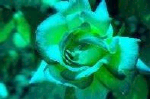

Images taken from http://members.shaw.ca/hidden-talents/vision/color/colorblind1.html
Total loss of every color is very
rare. All a person would see is grey, black, and white.
Color
blindness is an inherited trait. If one of your parents have it, then you
will have a chance of having it too.
Rare in females and common in
males.
Females = XX, and Males = XY
Colorblindness is carried on the
X chromosome. If a female inherits it, the other X can make up for the
colorblindness. However males do not have a second X to make up for the
affected X. That is why it is more common in
males.