|
SC 207 - Term Paper |
Comments | |||||||||||||||||||||||||||||||||||||||||||||||||||||
|
1. Introduction 2. Related
Work 3. Comments 4. References |
Uses The main use of this article is to identify areas in which an organization could cut back development effort. It points out process maturity as the key factor if the organizational goal is productivity improvement.
Even though data used in this article was collected from 161-projects from 18 sources, it was selection biased. There was no data on unfinished or unsuccessful projects and unsuccessful companies. The organizations chosen were all mature enough to practice data collection. Even though data collected covered the full PMAT range, it is still biased. Therefore more quality data especially from the unsuccessful range is required to improve the study.
Notations / Diagrams Table 1
Table 2
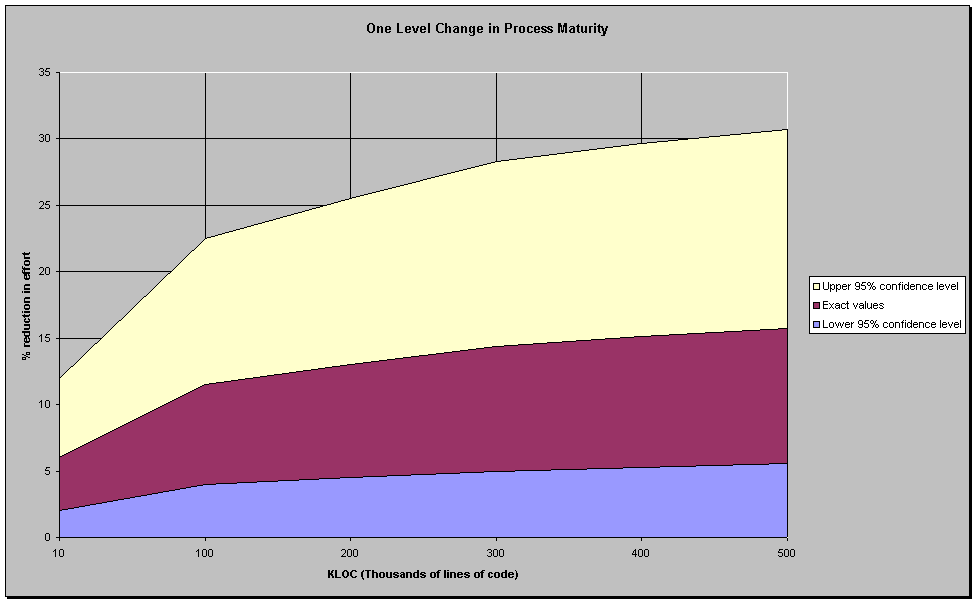
Results The main setback of the article is that the data collected is not precise. The effort data collected came from individual time reporting which may be only accurate to within 15%. Furthermore, uncompensated overtime was not consistently collected for the data. Other factors such as interpretation of qualitative rating makes the data imprecise. Therefore the results have been plotted on a chart with a confidence interval of 95%.
Future The percentage change in effort among each PMAT level increase is not uniform. More data could be collected at the KPA level to show the quantification of change between each level. More KPA data also needs to be collected to study which KPA's affect effort the most. Based on this KPA results, the model could be refined to display any slight change in improvement between the SW-CMM levels. To obtain up-to-date information about the article, I mailed the author asking him for any new research or improvement on the current article, that he has made or come across
|