Sugar Milling & Ethanol

This is a smokestack of an old small sugar mill that made
muscovado (brown) sugar. White sugar was not yet popular those days.
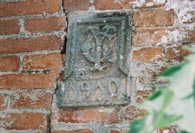
See the carving? This mill was erected in 1910.
Can this small size mill be revived for a group
of small sugar planters? Improvements can be installed
to make ethyl alcohol (ethanol) instead? Global sugar
prices have been down a long time. Better to make ethanol
for car fuel instead?

Large rollers on the right extracted juice from raw sugar cane.
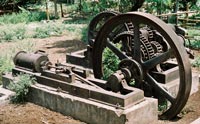
Thru the large flywheel & a set of gears, the rollers
were indirectly driven by the single steam piston seen in this
photo on the front-left side of the flywheel.
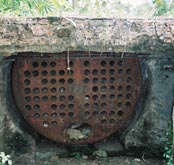
This is the boiler which supplied the steam
to push the single piston back & forth.
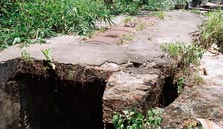
The boiler was a large & horizontal. Its top
surface is shown in these two photos.

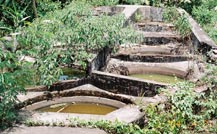
Juice extracted at the rollers were poured
into heated vats to evaporate the water content.
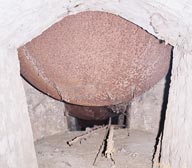
The bottom of each vat was heated with firewood or BAGASSE.
Bagasse refers to the already crushed sugar cane.
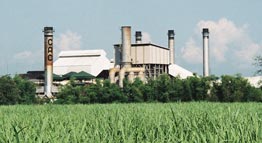
Modern sugar mills are huge but energy efficient. This whole mill
can be powered by pure bagasse alone. Fuel oil & diesel are used
only during start-ups. Once running, bagasse takes over as sole fuel.
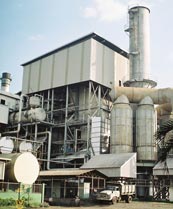
Apart from energy efficiency, the integrated boiler-furnace of
modern mills are also almost pollution free. Notice the vertical
scrubbers & filters & dust/ash collectors at the base of the smokestack?
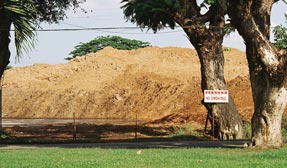
Bagasse from the crushers are collected for use as THE FUEL.
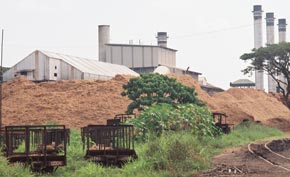
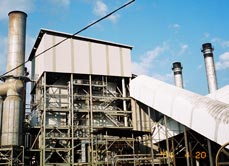
The inclined conveyor system on the right feeds bagasse to the furnace.
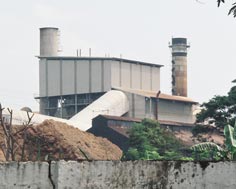
Even if oil prices will decline, the strategic benefit of
producing ethanol fuel will be the savings in import-Dollar$
Another SubTopic ==> Coffee Drying
Previous Topic ==> Tech Transfer & Energy