
| |
Norwegian Buhund
(Norsk Buhund) (Norwegian Sheepdog)
(Nordiske Sitz-hunde).
|
Pronunciation
|
Norwegian
BOO-hund |
|
Description
|
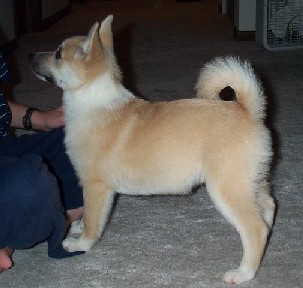
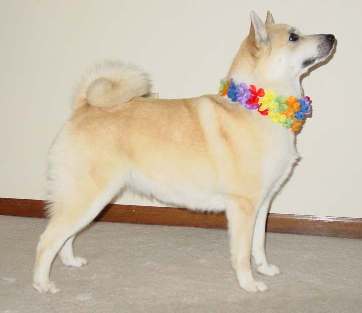
The Norwegian Buhund is a typical spitz dog
of medium size, lightly built, with a short, compact body, erect,
pointed ears, and a tail carried curled over the back. The
coat is usually wheaten or biscuit, ranging from light to yellowish
red. Black and wolf-sable Buhunds are also know (The Wolf
Sable colour is no longer accepted in several countries, including
the US and Norway). The
outer coat is smooth and harsh, while the undercoat is soft and
wooly. The feet are small, oval shaped, and webbed. |
|
Temperament
|
The Norwegian Buhund is vigilant, cheerful,
active, and untiring, intelligent and attentive. Very
affectionate, they loves giving kisses and snuggling. They
enjoy physical and mental stimulation and require consistent
training as they can be headstrong. They like to be taught and
learn very quickly. A natural watch dog, it is brave and vocal
but not aggressive. It is unlikely to bite or snap unless
provoked. Buhunds love their family and are know for their
fondness of children. It is an ideal size for a house
dog and a great people lover. This is a very trainable breed.
The Norwegian Buhund is very active and demands and gives lots of
love and affection. It barks to communicate, needs obedience
training to establish reliable manners, and wants lots of playtime
with its owner. This breed can be very stubborn at times. |
|
Height, Weight
|
Height: Males 17-18½ inches (43-47 cm)
Females 16-17½ inches (41-45 cm)
Weight: Males: 31-40 pounds (14-18 kg) Females 26½-35½ pounds
(12-16 kg) |
|
Health Problems
|
Inherited eye and hip problems can occur in
this breed.
(See Health Info Page) |
|
Living Conditions
|
The Norwegian Buhund would do best living in
a house with at least a small fenced in yard. They are very
active and should get plenty of changes to exercise. They can
however live in an apartment if extra care is given for sufficient
exercise and the apartment is fairly big for the dog to move around. |
|
Exercise
|
This is a very active breed that needs to be
exercised every day. They greatly enjoy walks and sessions of
play. |
|
Life Expectancy
|
About 13 to 15 years |
|
Grooming
|
The Buhund has a medium to short easy-care
coat that does not mat or tangle when it sheds. The coat
should be brushed regularly and needs extra care during shedding
season. This breed is a seasonal heavy shedder. |
|
Origin
|
In the ancient Gokstad excavation in Norway,
where a Viking grave from about the year 900 was opened, skeletons
from six dogs of various sizes were found. They would be the
representatives of modern-day Buhunds. When Vikings
died, their most cherished and necessary possessions were buried
alongside their owners. This was to care for the Vikings in
their afterlife. Then these Buhunds who protected farms (bu)
and herded cattle and sheep were expected to continue these duties
in the afterlife. It has been documented that these dogs
traveled with Vikings on their many journeys, by sea and by land.
The more refined, beautiful type we see today were nurtured in the
rainy western coastlands of Norway where they herded sheep and
guarded farms. Due to the initiative of Norway's
state-counsel, John Saeland, the first Buhund show was held at
Jaeren in the 1920's. The Norsk Buhundklubb was established in
1939. Toralf Raanaas was the first president. These men
selected the very best for show, breeding and workability.
Besides working ability, Buhunds are trained to aid the hearing
handicapped, perform some types of police work, and score well in
obedience and agility trials. In olden times they hunted bear
and wolf. Today they work with livestock and guard home and
family. The Buhund is considered by many researchers to be the
easiest of the Spitz breeds to train due to their innate desire to
please plus a quick learning aptitude. Their Spitz
independence is an asset if they have to be left alone for awhile. |
|
Group
|
Herding, Pastoral, Spitz |
|
Recognition
|
NBCA, FCI, KCGB, ANKC, NKC, CKC, AKC (FSS
Only) |
|