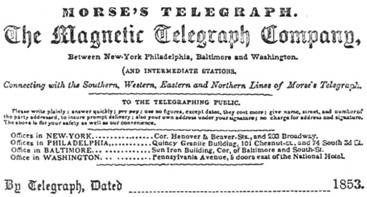
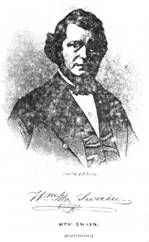
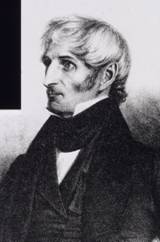
William Moseley Swain and Amos Kendall
|
|
|
|
|
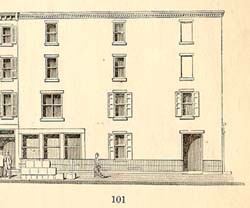
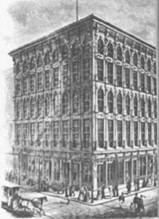
(Offices of the
Baltimore Sun newspaper) |
The Magnetic "Egg" -- C.D. 700
and C.D. 700.1 (C.D. EGG and C.D. EGG.1)
by Shirley Patocka
Reprinted from "INSULATORS
- Crown Jewels of the Wire", JJune 1978, page 17
Arise, all owners of the
magnificent Magnetic Egg! We who have one of these embryo pieces of telegraphic
history in our collections are the privileged possessors of a truly special
insulator! It was around away back in the days when Morse and his co-workers
were trying to get the telegraph in a workable condition that was economically
worthwhile. Let's get down to facts with a brief history of the Magnetic
Telegraph Company.
In March 1843, Samuel Morse
began a campaign to raise funds for the development of a telegraph company. He
figured he would need about $15,000. An act of incorporation for a company was
granted by the State of
The stockholders finally
met for an organizational meeting on January 14, 1846, and chose the first
Board of Directors. The line between Philadelphia and Baltimore was built in
1846 with more "trial and error" construction. The entire length of
iron wire was coated with tar by hand. Insulation on the poles consisted of a
rubber cloth wrapped around the wire, which was wedged into grooves in the pole
arms with plugs of wood. When this did not pan out, little blocks of grooved
glass were tried. About this time galvanized wire was imported from England,
and someone thought of improving the joints by soldering the wire, so at least
the wire problems were getting solved!
Not so the insulator! In
1850 a new type was tried on a line between Washington and New York. James D.
Reid, author of the 1879 book on American Telegraphic History, was on the scene
at the time. He stated that this, the brimstone insulator, was "one of the
most unfortunate scientific devices ever conceived." It was a heated
mixture of brimstone, gum shellac and resin wrapped around a piece of iron. It
did not work! Next, a gutta percha
insulator was tried, but it had problems, too.
On July 9, 1850, the Magnetic
Telegraph Company finally got out of the bush leagues by electing William M.
Swain president. He had been a member of the board and a stockholder since the
beginning. He tackled the job head on and got all of the departments of the
company shaped up. Personnel, public relations and service were all updated. To
get to the bottom of the faulty line construction, he walked the whole line
from New York to Washington. After studying the matter first hand, he came up
with a sketch of the "insulator of the future" -- our EGG! These were
soon used exclusively on this line, first on wood brackets and later on iron
pins.
In 1852 the property of the
"Bain Line", the North American Telegraph Company, was surrendered to
the Magnetic Telegraph Company when it was proven that they had pirated Morse's
invention. This gave the company a shot in the arm, and from then on good
dividends with a good surplus in the company treasury were assured. In 1856 the
company expanded further when the Washington and New Orleans Telegraph Company
was leased for a period of ten years.
In 1859 the Magnetic
Telegraph Company bowed to the larger American Telegraph Company and
consolidated with it. So the company was swallowed up and was no more. However,
some of the "eggs" still survive!
And what do we know about
the Magnetic egg? If I tell you about mine, and ask you to tell me about yours,
maybe we can get a true picture of one small facet of the insulator hobby! This
insulator was so important to the early telegraph that I think everyone should
know more about it.
There is a C.D. 700 and CD
700.1. These are basically the same insulator. C.D. 700 has rounder sides, and
C.D. 700.1 has straighter sides. I have both styles with and without extended skirts,
although they are more pronounced on the C.D. 700.1 (but some of these nave no
skirts at all). Could the two styles be the interpretations of the same
insulator by two different manufacturing companies? Heights of mine vary from
3-1/8 inches short to 4-1/16 inches tall; and widths do not vary much from
2-3/8 inches. Who manufactured them? Did any company advertise them?
Just how many are in
existence, and where did they come from? I have 16, and I know that more than
half of them came from the Far West -- Sacramento, San Francisco, Virginia City
and Tucson. If their use was that widespread out here when this was the Wild
West, they certainly must have been plentifully used in the East! How many are
in collections today? Where did they come from originally?
Colors? I have C.D. 700 in aqua, very clear
light sage green (short skirt), and a light purple. My C.D. 700.1 includes
emerald green, root beer amber, light and dark aqua, clear (!) with many
bubbles and light blue with bubbles. What other colors are there? I know that
there is a pink one and a deep purple one in
Mountings? I have one on a square bent spike
(I wonder how the spike was bent without breaking the insulator?); one is on a
hand forged iron pin; and there is room for four on a huge, ugly, iron
contraption (you'll have to see it to believe it -- be sure to come to the
National at Reno, July 28, 29 and 30!). There is a fellow in
And other
company equipment?
On
So, Egg collectors, let us
unite! I hope that this is a beginning. Let's hope it hatches up enough
interest for more information in a follow-up article in a later issue of Crown
Jewels!
"Threadless
Corner"
by Ray Klingensmith
Reprinted from "INSULATORS
- Crown Jewels of the Wire", FFebruary 1980, page 13
"Putting All Your Eggs In One Basket"
It's been nearly two years
in the making, but in some way, the Egg article has finally hatched. After
Shirley Patocka's informative article in the June,
1978, issue of Crown Jewels, covering the CD 700 and 700.1, I felt I
would wait a little while for collectors to digest the info, and perhaps have
time to dig up some material on the CD 701, the cousin to the CD 700
series.
There are several different
styles of the "egg" insulator with a regular pinhole (one which does
not travel completely through, as with the CD 700). To start things off with
this article, I feel it would be best to begin with what was probably the birth
of the "egg", with a history of William Swain and The Magnetic
Telegraph Company. The Magnetic, the pioneer of private lines in the
It is interesting to note
the contracts for the line construction specified "insulators of the glass
bureau-knob pattern".
Although the line met with
great difficulties, owing to its early "trial and error" methods
(and, may I add, mostly error), it still managed to become a financial success.
Later, it was joined with
Newspaper men were among
those who used the telegraph, and contributed much to its success. One of these
men was William M. Swain, proprietor of The Philadelphia Public Ledger. Swain
was one of those who pledged money to The Magnetic in its early history. His
overwhelming interest for the success of The Magnetic line eventually resulted
in his becoming President of The Magnetic in 1850.
Swain was a true
businessman to the extreme. He was described by various people who were
associated with him as a man of positive character, determination and hardness.
James Reid, in The Telegraph in America, stated that Swain's favorite
motto was "Business is business". After taking over the presidency,
Swain made many changes in company policy which resulted in a large increase in
business. The following is taken from The Telegraph in America, by
Reid:
As a telegraph officer, he at once gave vigor, method and
responsibility to the business. His predecessor was far too delightful a man
for such a position. The change of administration was felt at once when Swain
took the reins. He first had the outward structure carefully inspected.
Although a large man he personally accompanied the inspect ors of the line on
foot over every inch of the route from
That was the feature which he wanted. The line was quickly
stripped of its former insulation and equipped with egg insulators, first on
wooden brackets and afterward on iron pins. The long gaps of hours during which
the service of the line had often been suspended by rains and crosses and
escapes and broken wires, soon disappeared.
The insulator shown in Reid's
book may have been drawn by Reid himself, and it is difficult to determine by
looking at the drawing whether Swain invented an insulator with a then pinhole
or a regular pinhole. That question has bothered me for quite some time. Some
collectors have felt Swain's invention was in fact the "thru pinhole
egg", but I now believe that style was simply a later variation. In The
Telegraph In America, Reid states ".... equipped with egg insulators,
first on wooden brackets and afterward on iron pins.", in referring to the
first use of Swain's egg insulator on The Magnetic line, which is an indication
the pinhole did not carry completely thru the insulator. The regular deep green
eggs (style A) have been found in the east, where The Magnetic Tel.
About
the year 1850 or '51 Wm. M. Swain, who was then President of the "Old
Magnetic Line" between
In
designing the model of this insulator Mr. Swain succeeded in combining
excellent insulating qualities with the highest degree of strength and
durability. The general form of the egg or double cone is the strongest that
could possibly have been selected. In fact, it has not been an uncommon
occurrence for one of these insulators to be dropped from the top of a high
pole upon a stone pavement without material injury. Under the ordinary
conditions of exposure in the telegraphic service they are very rarely
broken.
In
considering its insulating qualities, we find that the conducting surface
constantly grows narrower from the wire at 1 to the support at 3 (see Fig. 2).
During rain a portion of the falling water drips from the flange below the wire
at the point 1, thus reducing the conduction from thence to the point 2. The insulating
space between 2 and 3, although too short (and this is the principal defect in
the design), is of great value in point of resistance, on account of its
narrowness -- or, in other words, its small diameter -- which is rendered
possible by the use of an iron support in place of the wooden pin previously
used. This support was an iron L shaped arm, driven into the post. The whole
formed a most substantial and durable mode of construction, which was actually
better, both in design and execution, than that usually employed at the present
day.
The
effect of the adoption of Mr. Swain's improvements in telegraphic construction
upon the receipts of the Magnetic Company's lines was as follows:
CASH
RECEIPTS OF MAGNETIC TELEGRAPH CO.
|
For year
ending |
$52,252. 81 |
|
For year
ending |
$ 63,367. 62 |
|
For year
ending |
$ 61,383. 98 |
|
For year
ending |
$ 67,787. 12 |
|
For year
ending |
$ 103,860. 81 |
Mr.
Swain was elected President in 1850. It probably required about a year for him
to get his improvements well under way, and the next year following (1852)
shows an increase in the receipts of nearly fifty per cent!
The
egg insulator, upon an iron support, was also quite extensively used from 1851
to 1860 upon many of the telegraph lines in the Eastern and
Figure
3 is an insulator which was taken from an old Fire Alarm wire in
After
the egg insulators had been in use several years the wires began to work very
badly, and show a great deal of escape in wet weather. This was principally
caused by the surface of the glass deteriorating from exposure, and becoming
coated with dirt and smoke from locomotives and other sources.
The
true cause, however, was not at that time understood or even suspected. The
managers of telegraph lines "jumped" to a conclusion, which, as
usual, was an erroneous one -- that the trouble was owing to the egg insulator
being too small at the bottom. A certain distinguished advocate of glass
insulation remarked: "When I find that a parasol is a better thing than an
umbrella in a big rain, then I shall begin to believe that the egg glass
insulates better than the umbrella." The iron supports also came in for a
large share of the general condemnation.
So
all the "egg glasses" and iron arms were thrown away, and a new era
of experimenting commenced. Many lines adopted the hard rubber insulator, and
others the Lefferts plug. The advocates of glass
returned to the old "umbrella" (Fig. 1), which they mounted on wooden
pins, under the mistaken idea that these helped the insulation. This was true
to a certain extent, but, on the other hand, the larger opening beneath the
insulator, rendered necessary by the greater diameter of the wooden support,
much more than made up the difference.
Another
popular fallacy, that prevailed extensively about this time, was that the
larger the insulator, and the more glass there was in it, the better it would
insulate! This absurd idea, which, it is almost needless to say, was directly
the reverse of the truth, was carried out on a large scale on many lines that
might be mentioned. The result, of course, was far from satisfactory.
Pope's article gives much
information as to the use and development of the egg. The insulator shown in
his Fig. 2 is identical in shape to the insulators (style A) found in the east
in a very deep green color. They are the same in every detail, including the
base which has a slight indentation and a raised ring. The improved insulator
(Fig. 3) shows an egg with a larger skirt interior (style B). Pope states he
believes it to have originated in
This
insulator was again improved by Mr. William M. Swain, president of the Magnetic
Telegraph Company. He abolished the flange and constructed the glass in the
shape of an egg, as represented by the following figures.
Fig.
20 represents the form of the glass with line wire groove at its centre. The
lower end is concave and the upper slightly convex. The flange insulator was
easily broken, but the egg form cannot be broken by the ordinary service of the
telegraph. I have seen this insulator thrown as much as a hundred yards, and
against brick houses, and not break. This rotund-shaped glass insures long
service, as has been demonstrated by its use on a long range of lines for many
years.
In
the arrangement of this insulator Mr. Swain did not only have in view
substantiality, but also the perfection of the insulation of the line wire from
earth currents. At number 1, fig. 21, the cone is concave. when the water
collects upon the upper part of the insulator it does not follow the glass to the
numeral 1, but falls from the centre projection. The moisture under the drip
forms globules, and breaks from the cone at or above 1, as seen falling from
the flange of the cone, fig. 25. The point of drip, therefore, is not at the
lower end, but above at the centre projection as just described. Fig. 26
represents the drip of a house.
The
falling drop breaks the rain and keeps dry the projection seen under the eave
of the house. In the same manner the dripping from the above described glass
insulates the lower cone from the rain.
Of
course the lower end of the glass will not be dry, but there will be less
liability for a watery connections with the earth from the wire than when the
drip is at the lower end of the glass. I have seen this philosophy illustrated
at the
Fig.
21 represents the glass adjusted to the wire when on a right line; fig. 22 when
the wire is oblique, as upon the side of a hill, and fig. 23 when the wire is
perpendicular with the post. In order to prevent the glass from pulling off
from the iron arm, the screw combination represented by fig. 24 was adopted.
The iron arm 3, is cut so that the teeth will serve as a male screw. The glass
is made with a female screw as seen by numeral 2. Fig. 25 represents the glass
on the arm, with the line wire fastened to it at an angle pulling the glass
upward, the teeth of the iron arm fitted into the grooves of the screw prevents
the glass from being separated from the iron arm.
The
above figures are engraved with so much variety that further explanation is
unnecessary. They have been gotten up with care, and they are replete with
demonstrative philosophy.
On the previous page is a
copy of a patent issued to Amasa Stone of
At this time no egg
insulators have been found with the screw thread, but it seems very likely they
were produced. First, they are listed in the 1859 book as being adopted to
prevent the glass from pulling off the iron arm, which indicates the author of
the book probably saw the actual insulator, or was very up to date on patent
information. Second, Amasa Stone was involved with
the production of jars with the screw thread, so it seems likely he also could
have produced the insulator. Third, it is interesting that Stone chose the egg
style for the patent drawing. Remember, Swain, inventor of the egg, and President
of The Magnetic until 1858, was proprietor of a Philadelphia newspaper,
Philadelphia also being Stone's hometown. It seems very likely Stone and Swain
could have known each other and produced the threaded egg.
The Magnetic Telegraph
Company existed until 1859, when it was consolidated into The American
Telegraph Company. The threaded egg could have been used on a Magnetic line
prior to the consolidation, or perhaps later on on an
American Telegraph Company line.
In a phone conversation
with Wendall Hunter, who initially brought my
attention to the Stone patent, Wendall mentioned
there was also a wealthy Amasa Stone of Cleveland,
Ohio. Wendall stated he believed reading the A. Stone
of Cleveland was on the Board of Directors of the Western Union Telegraph
Company, possibly in the 1860's. This could be the same Amasa
Stone that was earlier in Philadelphia. At the present, I have no proof they
are the same person, but most likely they were. If they were, it shows Stone's
interest in the telegraph, first in a patent showing an insulator, later
producing a jar named after the ship that laid the Atlantic Cable, and still
later, on the board of a telegraph company. So, there are probably threaded
eggs out there somewhere!
Now,
finally getting to the insulator variations. Most likely the first egg
insulators used on the Magnetic line were of the type shown in Fig. 4 (style
A). These have been found in the east and south. They most likely were used on
The Atlantic & Ohio Telegraph Company line, as one of these was found in a
small
Amos Kendall, the first
president of the Magnetic, labored to connect the Magnetic line in
Figure 5 shows style B, which F. L. Pope mentioned in the material
written for The Telegrapher, which was shown earlier in this article.
Pope stated "....and as near as can be ascertained, originated in
)
Doug MacGillvary
reported a near clear egg was dug at the site of the Coventry Glass Company in
Connecticut. However, further research by Doug revealed Coventry went out of
business in the 1840's, prior to the production of the eggs. Perhaps it was
used on a nearby telegraph line, or maybe there was a later glass company at
the site which we don't know about.
There also was a clear or
near clear egg dug at the Sandwich Glass Company dumpsite. (Correct name may be
Boston & Sandwich Glass Co. I didn't do my homework.) I was told it had an
indentation on the dome which may have been an imperfection, or perhaps it was
like figure 6, style C, which may have been a different type of mold than style
B. At any rate, Sandwich produced clear and colored glass. They were in
business in the 1850's and into the 1870's, if my memory is correct from the
visit I made to the Sandwich Museum four years ago. Once again, however, there
was a telegraph line through the area which may have been the source of the
insulator. However, due to the fact that Sandwich produced a high quality,
clear and light colored glass, among other colors, I feel that the one found at
the site, and perhaps a large part of those found in New England, were produced
at Sandwich. There were a large number of glasshouses throughout New England,
and it's possible several companies produced
insulators.
Figure 6, style C, is the
same as style B with the exception of the indented dome. This may have been a
manufacturing deformity, but I personally feel it was intentionally made that
way in a different mold than style B, so am classifying it as a different
style. Color is a very lite green, almost
clear.
Figure 7, style D, is a
somewhat smaller version than the rest. It has a pinhole somewhat similar to
the revised model (style B), but has the indentation and extending ring on the
base, similar to the base on style A. As near as I can tell, all of these
originated in Ohio, and all may be from a telegraph line which followed the
National Road. There have been threadless insulators
found beside and in the area of the National Road over the years, and it's my
belief all the style D eggs were used on that line. The National Road was an
early wagon road which traveled east and west through Maryland, Pennsylvania,
West Virginia, Ohio, Indiana and Illinois. It eventually linked St. Louis with
Washington, D.C. and Baltimore. Thousands of people used the road in the middle
1800's, and it was the primary wagon road of the large area in its day. Of the
three style D eggs I've seen, two were aqua, and one was a more sparkling
darker shade of blue-aqua. The darker blue-aqua one was uncovered by a
bulldozer doing some excavation for a modern road which replaced the old
National Road.
Style E is a larger egg
which has been found in the south. It is similar to the deep green Magnetic
type, but is taller and wider. (See fig. 8, second from right.) In viewing the
regular sized egg and this larger one "in person", a big difference
in their size can be seen. I believe one of these was found in Virginia and one
in Tennessee. This style has also been found in Mobile Bay, Louisiana. This
item is found in the deep green with a teal tint, and I believe it also is
known in the regular deep green. This item is uniform and neatly made.
Style F (figures 8, 9 and
13) is a real crude monster measuring 4-3/4" tall by 2-7/8" wide at
the base. This insulator in my opinion is the most crudely made of all
insulators. It looks like a piece of dark green wax which a three year old
child has just carved with a knife in the shape of an insulator! This insulator
is very near in shape to style E, except that this one has a long extended base
and is crudely made. The surface on this large insulator is very coarse and
pebbly. The wire groove at some pints is nearly filled with glass, and the dome
top is recessed into the insulator. (The dome top is formed in a saucer of
bowl-like depression -- see Fig. 9.) The base on these flares out forming a
concave skirt and has an extension which projects downward 1/2 inch. The
extension is on all of the style F units I've seen, and I would guess they were
intentionally made that way. These are nicknamed "The Confederate
Egg" because of their being found in areas once occupied by Confederate
troops during the Civil War. This insulator was found in Mobile Bay where the
Confederate Army reportedly built a telegraph line on a bridge across the bay.
(Also found with these were styles A and E.) One also was found along a
railroad right of way near Richmond, Va.
I sometimes wonder if
perhaps the mold used to produce style E was badly damaged in some way, perhaps
by overheating, or exposure to water, which resulted in a rough surface on the
mold interior. Assuming these were made during the Civil War, for Confederate
use, the main factor concerned would be good insulation, and not a nicely made
insulator. So, in my opinion, the style E mold could have been damaged and
altered, and the style F egg then produced in the same mold. It's also quite
possible that with a lack of proper equipment to make a fine mold, during the
Civil War, a Southern manufacturer made one as best it could, using a style E
egg for a model. One must remember that supplies in the south at that time were
very limited, due to the fact that the major industrial areas capable of
producing equipment were in the north. Before going on to the next item, I
thought I'd point out the fact that the style F egg has a large pinhole which
tapers from 1-1/4 inch at the bottom to one inch at the top.
Next on the list of eggs is
the porcelain, which measures 3" x 2-5/8". These have been assigned
U970 in Jack Tod's Universal Style Chart for
porcelain. I know of five of these in collections. One of these was found at
the site of an encampment of the Alabama Department of the Confederacy near Dunfries, Va. Between twenty and thirty were found at the
bottom of the old Kanawha Canal several years ago by someone who didn't know
they had any value, and unfortunately left them there. Sorry to say, they are
now buried under tons of dirt. These are reported to have been made in
Richmond, Va. at Parr's Pottery in 1861. There are two reports on their use --
one on a telegraph line parallel to the railroad between Richmond and
Fredericksburg, and the other on a line between Richmond and Yorktown. Of the
five I know of, three have a lite cream-tan glaze,
and one a grey glaze. Dick Bowman reported his has a nail through the body of
the insulator! Dick stated the nail is rusted, and it appears as though a hole
was made in the skirt area prior to the firing of the porcelain, and perhaps
when placed on a pin, the nail was inserted. If you can't cement a threadless to a pin, why not nail it on! One of the other
porcelain eggs I saw had a repaired area on the dome and appeared as though an
attempt was made to drive a nail hole, and in the field a line constructor got
the idea of driving the nails into them; but, as stated, Dick indicated the
hole in his appeared to have been made prior to firing it. All this is very
interesting, and I wonder how the nail driven into the pin may have affected
insulation!
)
At present there are seven
distinctively different styles of eggs. It appears these were in use from 1850
or 1851 and probably until or shortly after 1870. I had believed they were
probably no longer produced after the Civil War, but the ad shown above
indicates otherwise. I believe this was from the March 1868 issue of The
Telegrapher. Bartlett was offering "Eggs" at that time, and one
could assume they are referring to that type covered in this article. I'm not
sure if Bartlett was in Boston or New York. I would assume it to be New York,
as that is where The Telegrapher was printed, and the ad doesn't
indicate another city. Bartlett probably was from there also.
The brackets shown in
figure 12 are all from the New York State line described in the information on
style A. They are hand forged iron. The longest one in the photo measures
14-1/2 inches. Unfortunately for collectors, when the insulators and brackets
were removed from the poles, it appears as though a hammer or large object was
used to smash them off the pole, breaking all the insulators.
If anyone has any
additional information or color/style variations not listed, please contact me
(Ray Klingensmith, 709 Rt. 322, East Orwell, OH
44034), so that is can be placed in an upcoming "Threadless
Corner". A big thanks to the following people for photos, information,
written material, and also for allowing me to photograph items in their
collections, etc.: Dick Bowman, The Branhams, Gary Cranfill, Dennis Donovan, Glenn Drummond, Fred Griffin, Wenall Hunter, Mike Johnson, Frank Jones, Greg Kareofelas, Doug MacGillvary,
Mike Sovereign, and the Paul Plunkett family.

home | index | contacts | resources
family timeline | residences | businesses | social organizations | churches | schools | additional links