| Types of network | Peer To Peer Architecture | Client-Server Architecture |
| Diagram | 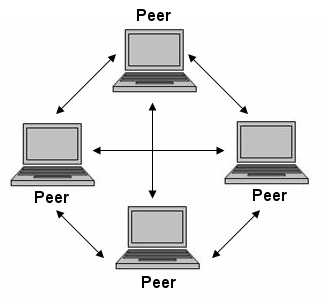 | 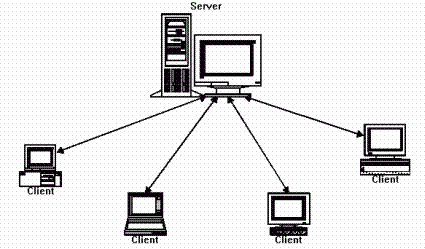 |
| Definition | Network
model in which all computers can function as clients or servers as
needed, and there's no centralized control over networl resources. | Network
in which one or more computers act as server and the computers
(clients) on the network request services form the server. |
| Advantages | - Less startup cost to set up the network architecture as there is no need for a server.
- Easy to install and configure for the computers in the network.
- When a peer fails it will not affect other peers so the network is reliable.
| - Centralised: Resources and data security are contolled through the server.
- Scalability: Adding or removing resources in the server can easily be done by configurating the server.
- Accessibility: Server can be accessed remotely and across multiple platforms including Windows, Linux and Mac OS.
|
| Disadvantages | - Decentralized: No central repository for files and applications.
- Less security: Does not provide the security available on a client/server network.
- Every users is taking care of his/her own machine.
| - Expense: Requires initial investment dedicated server.
- Maintenance: Large networks will require staff to ensure efficient operation.
- DEpendence: WHen server goes down, operations will ease across the network.
|