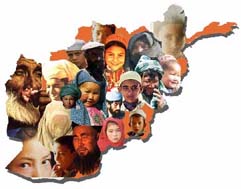
| AFGHANISTAN FACTS Population: 26 million Capital: Kabul Major language: Pashto, Dari (Persian) Major religion: Islam Life expectancy: 46 years (men), 45 years (women) Monetary unit: 1 Afghani = 100 puls Main exports: Fruit and nuts, carpets, wool, opium Average annual income: Not available Internet domain: .af International dialling code: +93 Tajiks & Hazarah =35% & 8% Pashtun = 35 % Uzbeks & Turkmans = 9% & 8% Balouch = 5% Others = 5% |
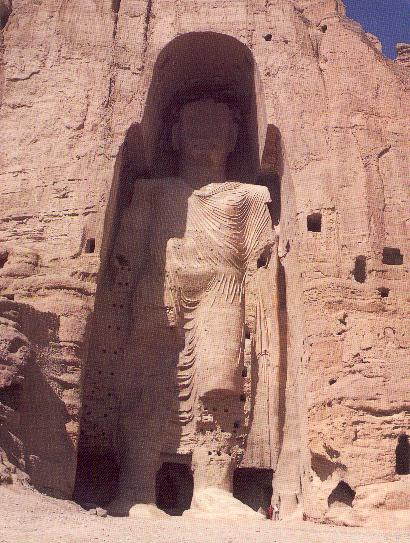
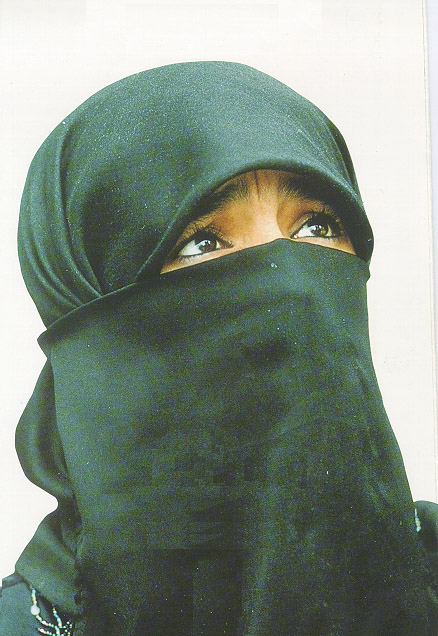
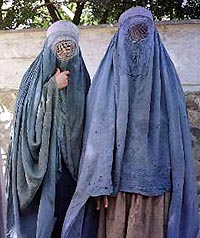
| Afghanistan About 99% of people in Afghanistan are Muslims. The non-Muslim of Afghanistan consists of Hindos and Sicks. Among the Afghan ethnicity's Pashtoons are predominantly Sunni, While Hazaras are predominantly Shiite. Takiks, Uzbeks and Trukmens are a mix of Sunni and Shiites. The Afghan people have always had a strong concision about their religion and they are mostly very religious. Most of the schooling especially in villages are mosque based which means the students mostly learn the Quran and the material related to Islam. Even in Kabul where people get formal education most parents send their children to the mosque to learn Quran and the basic teachings of Islam. Most children go to school in the morning and in the afternoons before the sunset they go to the mosque and study there. Islam was introduced in Afghanistan in the 7th century A.D. Before the introduction of Islam Afghans were mostly Buddhists and Zardashti. The Zardashti's worshipped fire. Some of the earliest Muslims who came to Afghanistan are still buried in Afghanistan. For example Jubiar and Tamim Ansar are buried in outskirt of Kabul city. Later on Afghan they became the advocates of Islam, and spread Islam to other nations. For example Mahmood Ghaznavi spread Islam in India in the 10th century A.D. Sufism has also been an important part of Islam in Afghanistan. The Sufi School of Macsh Bandi has a berry strong root in Afghan society. Even though some might argue that Islam and Sufism are two different things, Sufism in Afghanistan is considered an integral part Islam. I have to emphasize that Sufism practiced in Afghanistan is very different then the Turky and the West. The difference is in the way Sufism is practiced. Whie Sufism is an ideology in other parts of the world in Afghanistan Sufis emphasize on worship and Zikr. |
 |
 |
 |
| Thanks 4 visiting |
 |
 |
 |
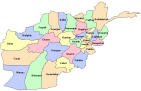
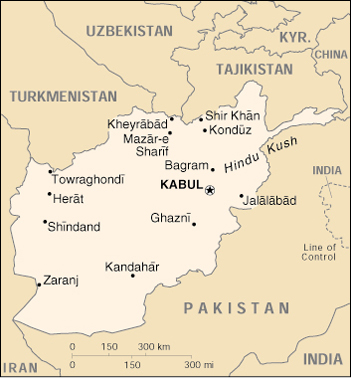
| Provinces For now, Afghanistan is divided into 30 provinces, and two more may be added soon. Below is a list of all the provinces and their capitals. 1- Badakhshan--(Feyzabad) 2-Badghis--(Qaleh-ye Now) 3-Baghlan--(Baglan) 4-Balkh--(Mazar-e-Shariff) 5-Bamian--(Bamian) 6- Farah--(Farah) 7- Faryab--(Meymaneh) 8-Ghazni--(Ghazni) 9- Ghowr--(Chaghcharan) 10-Helmand--(Lashkar Gah) 11-Herat--(Herat) 12-Jowzjan--(Sheberghan) 13-Kabul--(Kabul) 14Kandahar--(Kandahar) 15-Kapisa--(Mahmud-e-Raqi)16- Konar--(Asadabad) 17-Kunduz--(Qonduz) 18 Laghman--(Mehtar Lam) 19-Lowgar--(Baraki Barak) 20-Nangarhar--(Jalalabad) 21-Nimruz--(Zaranj) 22-Oruzgan--(Tarin Kowt) 23-Paktia--(Gardez) 24- Paktika--(ZarehSharan) 25- Parwan--(Charikar) 26-Samangan--(Aybak) 27-Sar-i Pol 28-Takhar--(Taloqan) 29-Wardak--(Kowt-e-Ashrow)30 Zabol--(Qalat) 31-Nuristan (possible addition)32-Khost(possible addition) |
 |
 |
 |
 |
 |
 |
 |
| 2 My Web Page |
 |
 |
 |
 |
 |