MALAYSIAN FOOD
In particular, Malaysian food is heavily influenced by Thai, Chinese, Indonesian and Indian cuisine. These influences extend from the use of the wok to the combinations of spices used in many popular dishes.
Malay food is generally spicy. Dishes are not always necessarily chilli-hot per se, but there will always, at the least, be a chilli-based sambal on hand. Traditional Southeast Asian herbs and spices meet Indian, Middle Eastern and Chinese spices in Malaysian food, leading to fragrant combinations of coriander and cumin (the basis of many Malay curries) with lemongrass, kaffir lime leaves, cardamom, star anise and fenugreek.
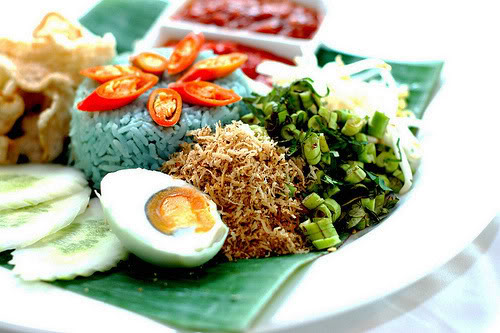
As elsewhere in Asia, rice is an essential staple. Local or Thai rice is the most common, but Indian basmati is used in biryani dishes. Nasi lemak (‘fatty rice’), a dish of rice steamed with coconut milk and served with dried anchovies (ikan bilis), peanuts, hardboiled eggs, dried shrimp, cucumber and sambal, is considered Malaysia’s national dish and may be eaten for breakfast, lunch or dinner. It is often served with a choice of curries or a popular spicy meat stew (usually, though not always, beef) known as rendang. Noodles are another popular starch staple, as are Indian breads such as roti canai, idli, puri and dhosa, which are commonly eaten with breakfast.
Early Chinese settlers often wed local Malay brides and this gave rise to a generation of mixed Chinese-Malays known as Peranakan. The Malay word "nonya", a term of respect for older women, has become synonymous with the distinctive Malaysian-Chinese cooking style of the Peranakans. The best known example in Australia is the popular spicy noodle soup laksa, of which there are two main types, curry laksa and asam laksa. Curry laksa is a coconut curry soup with noodles, while asam laksa is a sour fish soup with noodles.
Malaysian desserts are wonderfully colourful and creative, including layered rice flour and coconut sweets, multi-layered butter cake known as Lapis Legit, and sweet coconut rice balls. A popular dessert is Kueh Bahulu, mini sponge cakes that are dipped in black coffee.
KOREAN FOOD
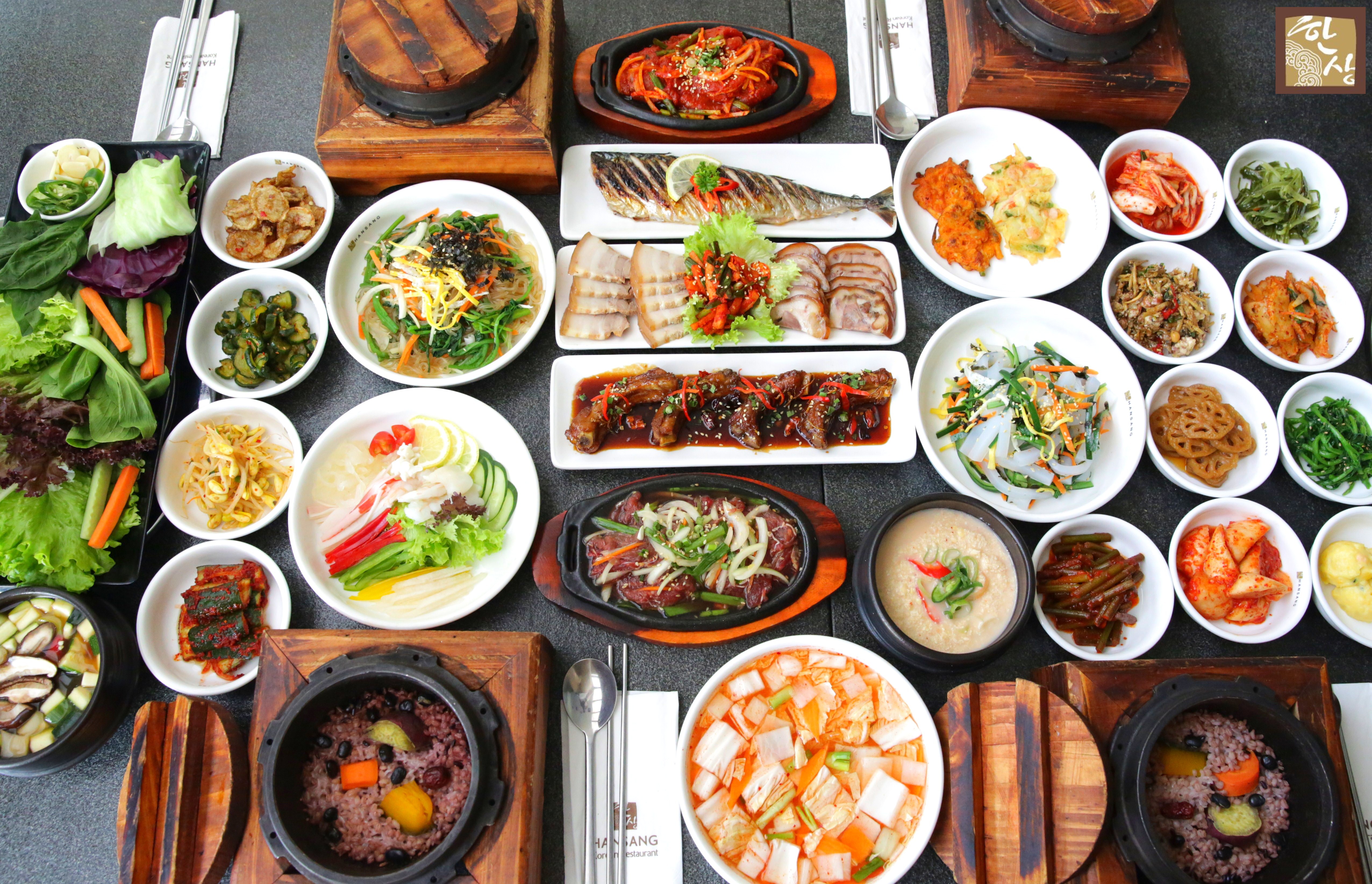
In Korean cuisine all
the dishes are served at the same time. A typical meal normally includes rice, soup,
and several side dishes, the number of which vary. Traditionally, lower classes had three side
dishes, while royal families would have twelve.
In Korea, like in neighboring China and Japan, people eat with chopsticks. However, a spoon is used more often in Korea,
especially when soups are served. Formal rules have developed for table setting,
which can vary depending on whether a noodle or meat dish is served.
Food is a very important part of Korea culture, and Koreans pay great attention to the way in which food is
served
THAILAND FOOD
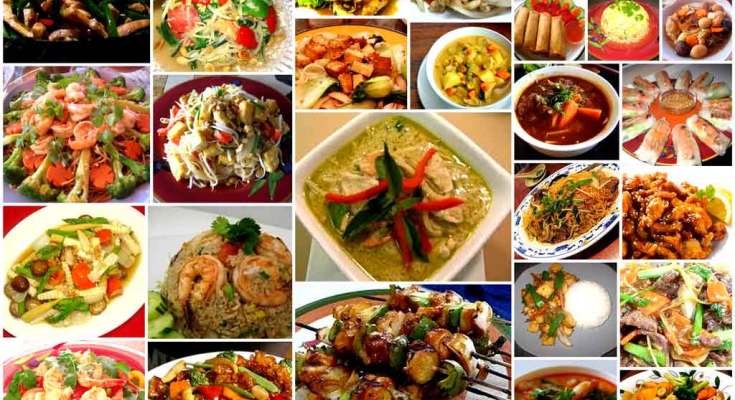
Thai cuisine is the national cuisine of Thailand. Balance, detail, and variety are of paramount
significance to Thai chefs. In his book The Principles of Thai Cookery, celebrity chef, writer, and authority on Thai cuisine McDang wrote:[1]
"What is Thai
food? Every country in the world has its own food profile. It reflects its
culture, environment, ingenuity and values. In the case of Thailand, these
words come to mind: intricacy; attention to detail; texture; color; taste; and
the use of ingredients with medicinal benefits, as well as good flavor.
We not only pay attention to how a dish
tastes: we are also concerned about how it looks, how it smells, and how it
fits in with the rest of the meal. We think of all parts of the meal as a whole
- sum rap Thai (the way Thais eat), is the term we use for the unique
components that make up a characteristically Thai meal."
Thai cooking places emphasis on lightly prepared dishes with
strong aromatic components and a spicy
edge. It is known for its complex interplay of at least three and up to four or
five fundamental taste senses in each dish or the overall meal: sour, sweet,
salty, bitter, and spicy. Australian chef David Thompson,
a prolific chef and expert on Thai food, observed that unlike many other
cuisines:
"Thai food ain't about simplicity. It's
about the juggling of disparate elements to create a harmonious finish. Like a
complex musical chord it's got to have a smooth surface but it doesn't matter
what's happening underneath. Simplicity isn't the dictum here, at all. Some
westerners think it's a jumble of flavours, but to a Thai that's important,
it's the complexity they delight in.".
Korea was once a primarily agricultural nation, and since ancient times rice has been cultivated as Koreans' staple food. These days Korean cuisine also contains a large variety of meat and fish dishes along with wild greens and vegetables. Various preserved food, such as kimchi (fermented spicy cabbage), jeotgal(seafood fermented in salt) and doenjang (fermented soy bean paste) are particularly popular due to their distinctive flavor and high nutritional value.