Page 6

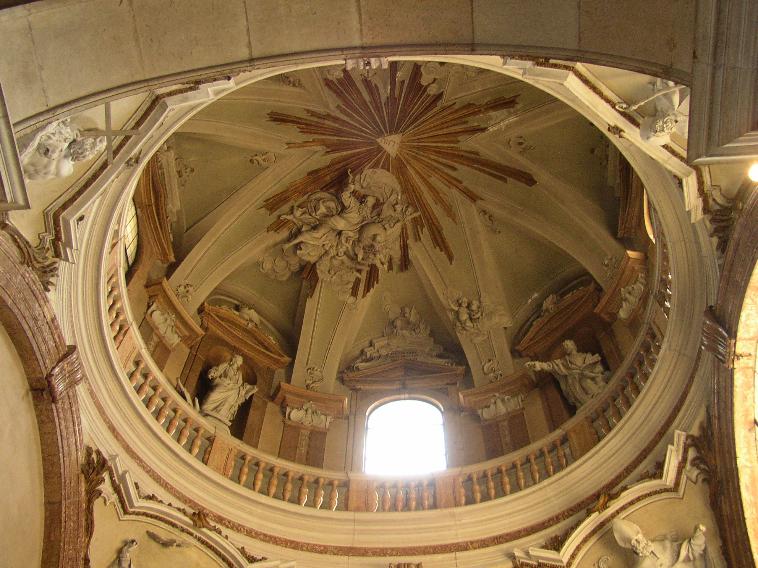
                  The ceiling above the altar.

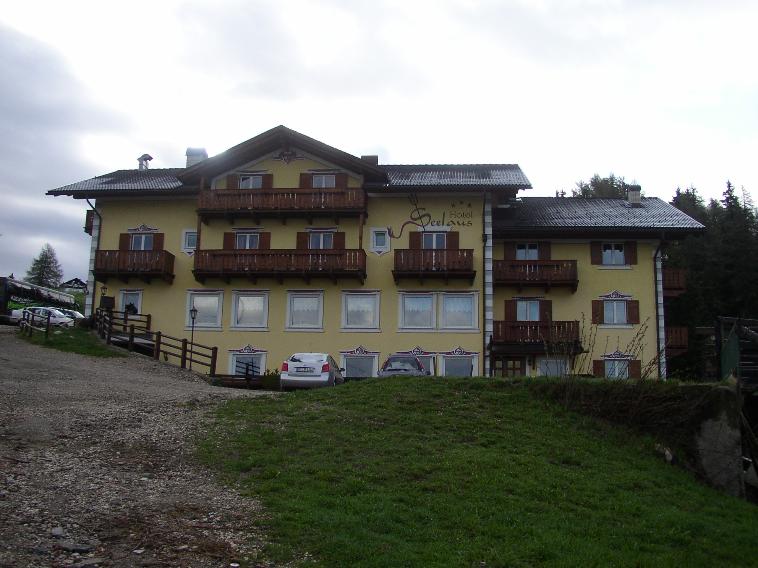
   The beautiful German chalet Pension Seelaus Hotel!
Venice (Venezia)

Venice is without a doubt Europe’s most romantic city.  We hung our hats at the Domus Cavanis on Rio Terra Foscarini.  Now, you are probably asking why on earth did I give you the name of the street?  Well, the street was a former canal (rio) which was filled in with dirt (terra).  So, if you keep your eyes open and use a little logic, you can figure out a lot without being told!                   

In Venice, Renaissance art and architecture were financed by trade.  For 500 years, Venice was known as the “Bride of the Sea” and the envy of all of Europe.  The economy, glorious buildings, art, and elegant way of life all depended on sea trading.  Every year the leader of Venice, after renewing a kind of wedding vow, tossed a ring into the Adriatic.  This act symbolized the marriage between the sea (Neptune) and its bride (Venus).  And, the winged lion, the symbol of Saint Mark’s became the symbol of Venice.    

Venice had been founded as a kind of refugee camp around the year 400 by Italian mainlanders.  After suffering one too many barbarian rape-pillage-and –plunder, the Venetians got together and decided to move out into the lagoon, hoping the barbarians didn’t like water.  They built on muddy islands, pounding in literally millions of tree trunks for support.  And, those very same trees support the Venice of today.  Rather than trying to build solid roads, they dredged canals for passageways.  So, the wonderland of a  100 islands is laced together by 400 bridges, 25 miles of canals, and 2,000 alleys.  You can’t get lost in Venice because you are on an island.  But, if you are tired or hungry I highly suggest you return via the same streets you arrived!      

Farming was impossible in the mud, so the Venetians quickly learned to trade fish and salt (for preserving meat) for agricultural products.  Gradually their trading took them to more and more distant lands.  They were situated perfectly to link Europe with the wealthy Byzantine Empire and the treasures of the East.  When the Crusades created a demand in Europe for Eastern luxury goods, Venice became the go-between.  

By the year 1200, Venice was Europe’s economic superpower.  Products from as far away as Scotland and India passed through Venetian warehouses.  (And, it is important to remember that at that time everything reached Venice via boat.  Just recently they built a 2 mile causeway to Venice enabling the cargo and tour buses easier access.)  Venetians traded by ship
Next Page

Alpe di Siusi

Well hot, tired, and thirsty we headed north toward the Dolamites.  And, believe it or not we passed a Rick Steve’s tour bus going south!  What a small world!  As we turned off the autostrata (toll expressway), I suddenly realized that I had been here before.  Yes, just last year I made this very same turn on my tour of Austria and Switzerland.  What a deja-vu!  

The Dolamites are Italy’s dramatic limestone rooftop and one of the richest areas!  A hard-fought history has left the region bicultural, with an emphasis on the German.  Locals speak German first, and some wish they were still part of Austria.  In the Middle Ages, it was part of the Holy Roman Empire and later it was part of the Austrian Hapsburg realm.  By losing World War I, Austria’s South Tirol became Italy’s Alto Adige.  Mussolini did what he could to Italianize the region, including giving each town an Italian name.  But, you will find that all signs and literature are in both German and Italian.   

Alpe di Siusi is Europe’s largest high alpine meadow which separates two the most famous Dolomite ski-resort valleys.  Measuring 8 x 20 miles and soaring up to 6,500 feet high, Alpe di Siusi is dotted by farm huts and wildflowers surrounded by dramatic Dolomite peaks and cliffs.  It was so, so beautiful and very German in architecture and culture!  We arrived late at the beautiful German/Swiss chalet Pension Seelaus hotel, but had a wonderful dinner and then it was off to bed to check out our eyelids!

Bolzano (day trip)

We were up bright eyed and bushy tailed the next morning to visit Bolzano, the gateway to the Dolomites.  Willkommen to the Italian Tirol!  If it weren’t so sunny, you could be in Innsbruck!  This was a very enjoyable town of 100,000 and very easy to navigate!  So, my confidence is building with regard to figuring out how to get around in these villages!  Thank goodness!  

The medieval heart of town is just beyond Piazza Walther to Piazza Erbe with its ancient and still thriving open air produce market.  And, yes the water flowing out of all the fountains in Italy is drinkable so you can also wash your fruit!  So, we strolled about the town enjoying the sights waiting for our reservation at the South Tirol Museum of Archaeology.  Now you are probably thinking this is really going to be a boring museum!  But, just be patient!  This village was especially memorable because of the apothecary shop!  At the front of the drug store was the herb store.  Yes, there were people behind the counter actually dispensing herbs.  It was obviously very old and extremely interesting to say the least!  Also, they were speaking German so I was able to catch a word or two.  And, of course the modern day drug store was located at the rear of the store.  Bolzano was also the site of my first gelato!  Yummy for your tummy!  

The South Tirol Museum features the original Ice Man.  “Oetzi the Ice Man” is a 5300 year old body found frozen with his gear in a glacier at the Italian Austrian border by some German tourist a few years ago.  Oetzi originally went to Austria, but an Italian surveyor discovered that he was actually on the Italian side of the invisible line.  So, off he went to Bolzano.  With the help of informative displays and a great audioguide, we learned about life in this prehistoric period way before ATM machines.  There was a very convincing reconstruction of Oetzi and yes we got to actually see the man himself lying peacefully inside a specially built freezer.  What an amazing exhibit and it is my understanding that the museum has won several awards for excellence.  I thoroughly enjoyed this exhibit and it was well worth the experience!  And, what a surprise as I had no clue we would be seeing this ancient man!  

We returned to a chalet home in time for a wonderful afternoon of leisure in the hotel spa.  Talk about the height of luxury in the middle of the Alps!  Wow!  They had a wet and dry sauna with a wonderful pool and Jacuzzi.  The pool had some really special features!  You pushed a button and suddenly you were swimming against the current.  Another button started a waterfall and the third button caused a section of the pool bottom to bubble.  Talk about a little kid in a new playground!  Now, mind you this was not all.   One side of the spa was solid windows and it had started to snow!  Now picture this ~ You are in the Alps with huge trees, it is snowing, and you are swimming and playing in a pool!  I thought I had died and gone to heaven!  I would go back there in a heart beat!  Talk about an oasis!  

It snowed all afternoon and night, so we were slightly worried that we might have to stay longer.  But, I driver was from Norway and he said there is no snow until it is at least 2 feet.  So, off we went down the mountain to the magical atmosphere and traffic free streets of Venice.

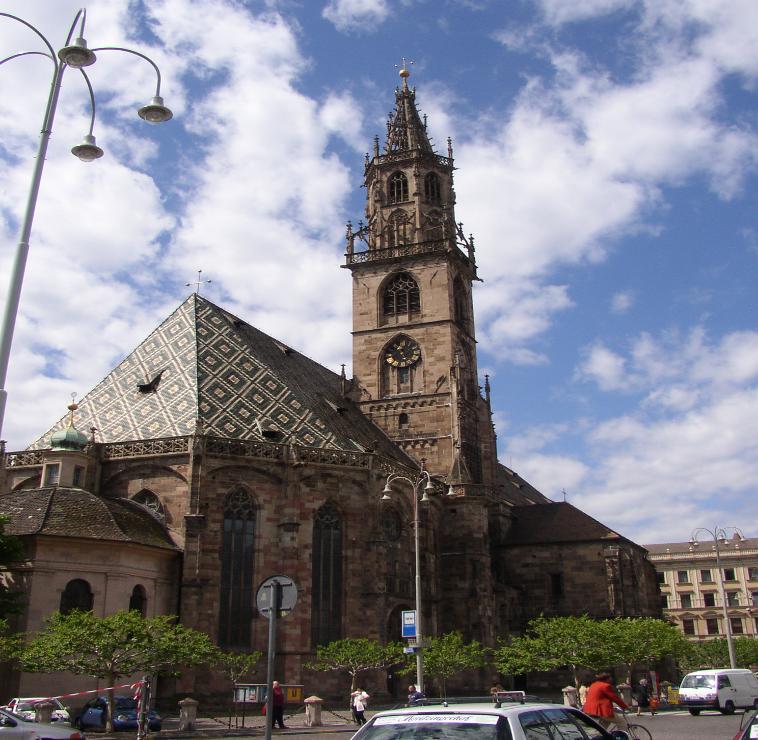
13th century Domenican Church in Bolzano (notice the mosaic roof)

Hosted by www.Geocities.ws

1