bon scott
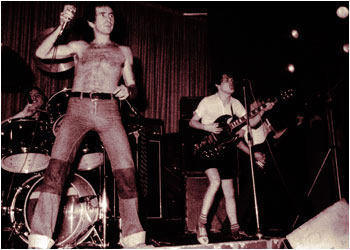
The life of legendary rock musician Bon Scott is to be commemorated in his Angus birthplace. From around the world, fans of AC/DC and their late lead singer, Bon Scott, have been enquiring about a commemoration of this legendary rock musician in Kirriemuir. There have been numerous famous men and women associated with Kirriemuir, but few are as well known throughout the world as Bon Scott. What is not as obvious is that his interest in music could be said to reach back to his birthplace and his father's involvement in traditional music in the town. Ronald Belford 'Bon' Scott was born on 9 July 1946. Bon's family lived in Kirriemuir and his father Charles Scott worked in the family bakery in Bank Street and was also in the local pipe band. In 1952, when Ronald was six years old the family emigrated to Australia, where Bon - as he was soon nicknamed - grew up. He first joined pop-rock band, The Spektors and later played with The Valentines but it was with a young rock band from Sydney, led by two fellow Scots, Angus and Malcolm Young that he found fame. AC/DC were to become one of the most famous rock groups in the world and it is a testament to their success that the recently released DVD - Family Jewels (described as a definitive history of the band) - has been hugely successful. It is 25 years since Scott's tragic death in February 1980, and the display at the museum celebrates the career of this notable figure and will feature a host of objects, many lent by enthusiastic fans from around the world including rare vinyl albums, photographs, programmes and posters. During the time the display is open, the museum would like to continue to develop its own collection of images, objects and stories about Bon Scott and his family here in Kirriemuir. If anyone remembers the Scotts, or Kirriemuir pipe band, they are asked to get in touch with the museum and share their memories. Artistic visitors to the museum during the display will be able to design their own album cover for display in the museum and fans can test their knowledge of Scott while new visitors develop their knowledge of this fascinating man and his music. The display opens on 14 May and continues until 20 August 2005.
AC/DC's mammoth power-chord roar became one of the most influential hard rock sounds of the '70s. In its own way, it was a reaction against the pompous art rock and lumbering stadium rock of the early '70s. AC/DC's rock was minimalist -- no matter how huge and bludgeoning the guitar chords were, there was a clear sense of space and restraint. Combined with Bon Scott's larynx-shredding vocals, the band spawned countless imitators over the next two decades. AC/DC was formed in 1973 in Australia by guitarist Malcolm Young after his band, the Velvet Underground, collapsed (Young's band has no relation to the seminal American group). With his younger brother Angus as lead guitarist, the band played some gigs around Sydney. Angus was only 15 years old at the time and his sister suggested that he should wear his school uniform on stage; the look became the band's visual trademark. While still in Sydney, the original lineup (featuring singer Dave Evans) cut a single called "Can I Sit Next to You," with ex-Easybeats Harry Vanda and George Young (Malcolm and Angus' older brother) producing. The band moved to Melbourne the following year, where drummer Phil Rudd and bassist Mark Evans joined the band. The band's chauffeur, Bon Scott, became their lead vocalist when their singer, Dave Evans, refused to go on stage. Previously, Scott had been a drummer for the Australian pop bands ... AC/DC's mammoth power-chord roar became one of the most influential hard rock sounds of the '70s. In its own way, it was a reaction against the pompous art rock and lumbering stadium rock of the early '70s. AC/DC's rock was minimalist -- no matter how huge and bludgeoning the guitar chords were, there was a clear sense of space and restraint. Combined with Bon Scott's larynx-shredding vocals, the band spawned countless imitators over the next two decades. AC/DC was formed in 1973 in Australia by guitarist Malcolm Young after his band, the Velvet Underground, collapsed (Young's band has no relation to the seminal American group). With his younger brother Angus as lead guitarist, the band played some gigs around Sydney. Angus was only 15 years old at the time and his sister suggested that he should wear his school uniform on stage; the look became the band's visual trademark. While still in Sydney, the original lineup (featuring singer Dave Evans) cut a single called "Can I Sit Next to You," with ex-Easybeats Harry Vanda and George Young (Malcolm and Angus' older brother) producing. The band moved to Melbourne the following year, where drummer Phil Rudd and bassist Mark Evans joined the band. The band's chauffeur, Bon Scott, became their lead vocalist when their singer, Dave Evans, refused to go on stage. Previously, Scott had been a drummer for the Australian pop bands Fraternity and the Valentines. More importantly, he helped cement the group's image as brutes -- he had several convictions on minor criminal offenses and was rejected by the Australian Army for being "socially maladjusted." And AC/DC was socially maladjusted. Throughout their career they favored crude double entendres and violent imagery, all spiked with a mischievous sense of fun. The group released two albums -- High Voltage and TNT -- in Australia in 1974 and 1975. Material from the two records comprised the 1976 release High Voltage in the U.S. and U.K.; the group also toured both countries. Dirty Deeds Done Dirt Cheap followed at the end of the year. Evans left the band at the beginning of 1977, with Cliff Williams taking his place. In the fall of 1977, AC/DC released Let There Be Rock, which became their first album to chart in the U.S. Powerage, released in spring of 1978, expanded their audience even further, thanks in no small part to their dynamic live shows (which were captured on 1978's live If You Want Blood, You've Got It). What really broke the doors down for the band was the following year's Highway to Hell, which hit number 17 in the U.S. and number eight in the U.K., becoming the group's first million-seller. AC/DC's train was derailed when Bon Scott died on February 20, 1980. The official coroner's report stated he had "drunk himself to death." In March, the band replaced Scott with Brian Johnson. The following month, the band recorded Back in Black, which would prove to be their biggest album, selling over ten million copies in the U.S. alone. For the next few years, the band was one of the largest rock bands in the world, with For Those About to Rock We Salute You topping the charts in the U.S. In 1982, Rudd left the band; he was replaced by Simon Wright. After 1983's Flick of the Switch, the band's commercial standing began to slip; they were able to reverse their slide with 1990's The Razor's Edge, which spawned the hit "Thunderstruck." While they haven't proved to be the commercial powerhouse they were during the late '70s and early '80s, the '90s have seen them maintain their status as a top international concert draw. In the fall of 1995, their sixteenth album, Ballbreaker, was released. Produced by Rick Rubin, the album received some of the most positive reviews of AC/DC's career. Ballbreaker entered the American charts at number four and sold over a million copies in its first six months of release. In february 2000 they published Stiff Upper Lip.
Homepage
Songs
Angus
Photos
History
cliff williams
chris slade
brian johnson
malcom young
top 100 guitarests