|
| |
What
is in my crocked mind
Hidetoshi
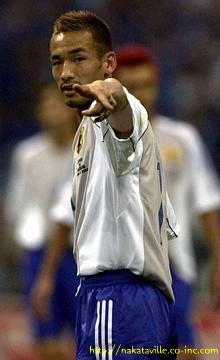
Nakata, the soccer phenom who kicked his way into Europe and who embodies
JapanÃÔ World Cup aspirations this year. He burst into Japanese consciousness
by engineering the countryÃÔ first trip to the World Cup in a 1997 victory
over Iran. And whatÃÔ up with his tresses? Nakata changes hair color more
often than most men change channels. He always trying to do something new, to
break the rules. More important, chicks dig them. There arenÃÕ any Japanese
men like him. He just is so¡¦ool. Independent. I think he is very brave. One
thing Nakata is not, however, is tall. NakataÃÔ stocky 1.75 m. That is part of
his appeal. Endowed by genetic with standard equipment, they excel at pursuit
that tend to favor more formidable types.
Nakata
grew up in a small town near the base of Mount Fuji and before he found fame,
planned to study accounting. Nakata is anything but. He dyed his hair a coppery
red for World Cup play four years ago, which set off a craze for multihued
follicles among JapanÃÔ youth. He dresses in jeans, T shirts and
rhinestone-studded sandal, moans with un-Japanese candor about loneliness in his
diary, then post his innermost secrets on his fan website. According to the myth
surrounding him, he is unable to tolerate the rigid structure of life in
Japan-he reputedly breaks out in a rash whenever is in his homeland. HeÃÔ a
free spirit on the field, too, an improvisational midfielder who sets up goals
for team strikers with fluidity and grace. He has a gift, invaluable in
fast-moving team sport, of knowing instantly where he is in relation to
opponents and teammates. He says he keeps an aerial view of action in his head,
appraising the situation with the acuteness of a hovering seagull.
Nakata
is the teamÃÔ reigning International Man of Mystery. He carries himself as
coolly as a Milan runway model and betrays barely an emotion, even after scoring
a goal as he did against Tunisia ( in World Cup 2002, Korea & Japan ) when
his header deflected off the goalkeeperÃÔ shoe and trickled into the net. His
outward calm hides an inner fire and said that they have a mission to show the
rest of the world how good Japanese soccer really is!.
So
it was in 1997 when Nakata, then 20, kicked three perfectly weighted passes to
set up each of JapanÃÔ three goals in a now famous World Cup qualifier against
Iran. Japan won. From that point on, it didnÃÕ matter what he did. Nakata had
become the hero of the nation. What he did eventually, was leave. ¡¦In Japan,
seniority is all important,¡¦Nakata said recently in his apartment in Parma,
Italy, decorated with Helmut Newton photographs of leather-clad women. ¡¦
ItÃÔ a vertical society. You must constantly pay respect to the person above
you. From the time I was a boy, I didnÃÕ feel like this. I felt a freedom from
this.¡¦Imbued with this streak of independent, in 1998 Nakata took
the unusual step of heading to Europe, Where the pay-and-pressure-was
bigger. He sign to play with Perugia in ItalyÃÔ Serie A for $3.5 million,
shocking fans by announcing his plans just an hour before his departure. But
even heroes must wrestle with disappointment and defeat. After two season
seasons delighting fans in Perugia and Rome, Nakata, now playing for AC Parma,
has found himself sidelined just months event of his life-the World Cup to be
played on his native soil. Nonetheless, Nakata is still the heart and soul of
JapanÃÔ team-and of a nation of hopeful World Cup fans. It doesnÃÕ really
matter now if he wins or not, if he score or misses. So many people in Japan are
afraid to try anything new. When someone like Nakata does, they donÃÕ mind if
he fails. At least he is trying. What Nakata have done is remind the country
that Japan may be down, but it can stand tall once more.
By Ami ( Author, Webmaster )
|