










ATTESA is the mechanically controlled unit which senses which wheel has grip and will send the power to that wheel like a limited slip differential.
Intercooler - (If you dont understand the turbo yet click on CARS) Cools the charged compressed air after the turbo and before the engine. The problem Nissan had when they went rallying is that the intercooler was placed on top of the engine, which meant the heat from the hot engine would soak upwards and instead of the intercooler cooling the air it would sometimes heat up the air. Hot air means expanded air which means less room for petrol in the pistons and therefore less power and more vulnerability to detonation! So many people have moved the intercooler from the top of the engine to the Front which allows better cooling and eliminates heat soak meaning quicker car. There are Pace front mounts, Skyline ones. You might lose your aircon though.
Boost - Standard car runs about 9psi which is about 0.6bar. Many people would increase the boost, which in the shorterm would mean very quick car but in the longterm, detonation, and failed engine pistons. Also by simply increasing the boost, there is the possibility of boost spiking where sudden increases in boost pressure occur, these are the culprits for blown engines. One way round this is a boost controller like the Apexi AVC-R which controls boost pressure and prevents spiking. Also allowing you to safely increase the boost pressure to about 0.8bar without any modifications. After this it becomes a grey area. Some people say you can run up to 1.4Bar with no mods. However I would say at least get a boost controller and run higher octane petrol like Super Unleaded or better still Optimax which allows better burning of the fuel meaning less harm to your engine.
Engine - Forged pistons should allow you to run up to 1.5bar boost any more than that and you shouldnt be reading this site. Costs 3500. But like buying a new invincible engine. Then there is increasing displacement to 2.2 litres which is when things get very serious.
Brakes - Apparently the GTi-R has crap standard brakes, i say apparently because i have never used them, i bought my car with Tar-OX 6-pot callipers already on them. Now basically the number of pots means how many pistons are squeezing the brake disc if you like. So the more pot callipers you have, the better braking distribution there is. For the R I would personally recommend the Tar-Ox set, they are great for the car. There is also avaialable the 10pot Tar-Ox calliper set. As for the discs, i have a set of Tar-Ox 44 groove discs both back and front. The grooves minimise glazing which can reduce braking power. Cross drilled discs help disspate heat that builds up on braking. Top of the line are the AP complete set 4-pots. Watch for brake fluid boiling off quickly.
Clutch - The standard clutch wont take any signficant power increase and will give up very quickly. Most people have AP clutches. There are two forms of clutch, cerametallic - which is good for standing starts and organic which last longer if not abused. Also HKS do a cerametallic clutch which is also meant to be quite good. Whenever you get your clutch done I would strongly recommend you get anew clutch master cylinder as well as this will prevent juddering and other problems. Choose one that suits your driving needs. The clutch often squeaks because it pulls away from the bulkhead. People have fixed this by welding a piece of metal to the clutch and bulkhead.
Gearbox - The standard gearbox has manged to survive with people who have gone up to 350+ BHP, but also fails on many people with hardly any mods. There is a quaife gearbox which apparently keeps breaking so no one recommends it at the moment. The Nismo one is such a close ratio box that at 70mph is is at 5000 revs. PAR in australia do a great set of gearboxes. One which has a dog box and the rest normal. They can take beyond 400BHP.
ECU - The ECU is located behind the centre console, behind the head unit. You have to remove the side plastic to get to it. The main mods, are Unichip which sits on top and can be mapped out to whatever you desire. There is the Nismo ECU which was used by the rally cars. Then the ultimate is the MoTech chip which is a complete rally chip, it maps with and without the turbo and reduces lag very efficiently.
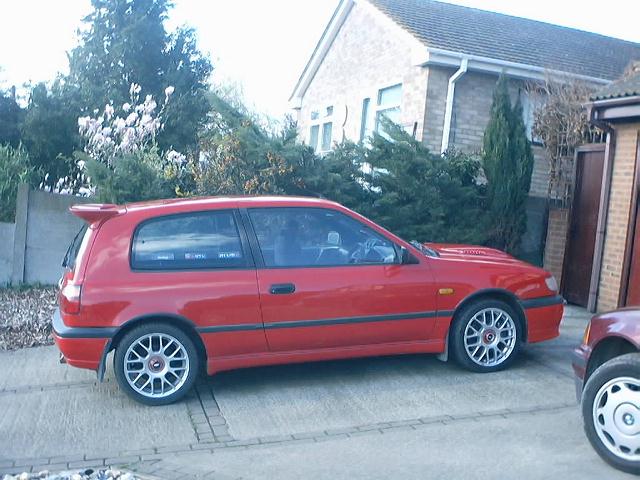
Wheels - Standard I think is 14inch alloys. I run 16 inch alloys with a 30mm drop in suspension. Some people run 17inch with standard ride height. Offset is 35mm - 38mm depending on who u talk to.Basically if you get larger alloys you will have more space for bigger brakes BUT you will sacrifice handling! This is due to unsprng weight. Where the more weight you have attached below your suspension (wheels,brakes,disks,etc) the worse your habdling will become as the momentum of the weight will mean your tyres now spend more time in the air then on the ground but the lighter they are the easier your suspension can push the tyres back on to the road. Now you understand why so many people are sticking superleggeras on Rs these days.
Tyres- Great in the dry - Yokohamas
Great in the wet - Goodyear eagle F1s
Comprimise - Toyos Proxes
Choose what suits your driving style.
Suspension - Strut McPherson standard. Many people are finding that they have excessive inside wearing on their tyres this is due to your 10 year old dampers being knackered! Made even worse by people sticking on larger alloys and then lowering the car. All makes it worse. Solution is to buy a new set of dampers. I would advise to buy dampers and springs that are matched and buy them at the same time. Top of the range is the Fullroad whiteline kit (from australia) Costs about 750 and comes with camber bolts, anti-lift castor kit and sway and roll bars. Transforms your handling. While your here I would strongly recommend getting a bump-steer kit from Powerstation. This will reduce understeer and improve handling. Costs 70 and takes half an hour to fit. Get a 4-wheel alignment and your are set.
Other options include coilovers but if the guy from powerstation is now leaving his coilovers to go back to whiteline i would suggest the whiteline kit would be your ultimate goal.