 |
|
|
|
|
|
|
|
|
|
|
|
|
|
|
|
|
|
|
|
|
|
|
|
|
|
|
|
|
|
|
|
|
 |
 |
|
|
 |
|
|
|
|
|
Cars - How They work and what does all the jargon mean? |
|
|
 |
|
|
|
 |
|
|
|
 |
|
|
|
|
|
|
Basics of an engine |
|
|
 |
|
|
|
 |
|
|
|
|
|
|
How to make a car faster |
|
|
 |
|
|
|
|
|
|
Differentials, Understeer and oversteer |
|
|
 |
|
|
|
 |
|
|
|
|
|
 |
|
|
|
Dispelling Car myths |
|
|
|
|
|
Understanding BHP and torque |
|
|
|
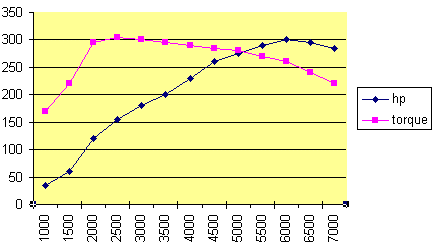 |
|
|
|
From this graph we can see that the engine peaks at 5000rpm. If you go past this point you will start to notice a decrease in acceleration and also a need to change gear as the engine is no longer in the productive part of the rpm. |
|
|
|
VTEC |
|
|
|
One problem engines face is that as you reach high revs. The timing of the valves to allow air in and out is not good as now air has only a fraction of a second to get in or out. So a car with good low speed performance will lack performanc in high speeds. And likewise a car with good high speed lacks low speed. To overcome this Honda designed VTEC. (Variable valve Timing and lift Electronic Control) This allows the car to have mulitple cam shafts. So at different rpms the valves will open at different times to maximise gas intake and exhaust. Thus are able to reach 12000rpm in some Hondas |
|
|
|
Next |
|
|
Back |
|
|
|
|