
|
|

 N Generations
Recent News
Archived News
Jobs
NES Codes
SNES Codes
N64 Codes
Virtual Boy Codes
Gameboy Codes
Gamecube Codes
Game Previews
Game Reviews
Game Walkthroughs
Pics
Music
Video
Games
Affiliates
Other Sites
My Sites
Forums
Chat
Newsletter
Puzzles
Shopping @
N Generations
Recent News
Archived News
Jobs
NES Codes
SNES Codes
N64 Codes
Virtual Boy Codes
Gameboy Codes
Gamecube Codes
Game Previews
Game Reviews
Game Walkthroughs
Pics
Music
Video
Games
Affiliates
Other Sites
My Sites
Forums
Chat
Newsletter
Puzzles
Shopping @
Amazon.com
Staff
Legal Stuff |
 "The Magic of Mario"
Mario is
probably the most famous character in videogaming history. If you think
about it, Pac Man, Sonic, and even Zelda don’t come close. I bet
if you asked somebody who knew nothing about Nintendo who Mario was, they
could at least say, “Oh yeah, he’s the red guy with the “M” on his hat.”
Since this little Italian guy is so special, lets look a little bit into
his illustrious history. Get ready to dive into “The World of Mario!”
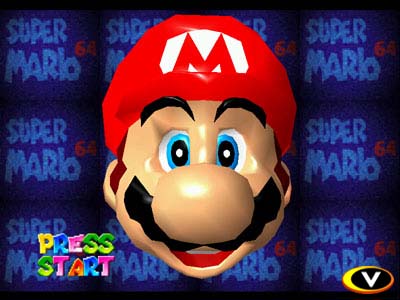 To look at the beginnings of Mario, we first have to look at the beginnings of Nintendo. Nintendo started making videogames in 1980 with an arcade game called Radar Scope. Radar Scope was meant to try to boost earnings in the American market. Though a good idea, the game was a failure. To try to rebound, Nintendo decided to market the games of Gunpei Yokoi, an early designer of LCD games. The games were called “Game and Watch” and used pre-drawn elements being LCD instead of pixel elements like the videogames of today. 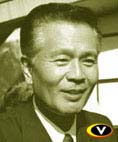 Luckily for Nintendo, the Game and Watch games (notably Ball, Parachute, and Popeye) were a big hit. It was then, in 1981, that Nintendo decided to reenter the illusive arcade market. They returned with a little known artist named Shigeru Miyamoto. His job was to take Nintendo’s unsold Radar Scope cabinets and turn them into a new game that would sell. After collaborating with Nintendo’s hardware and software designers, Miyamoto set to work. The main character of his new game would be a carpenter who had just enough animation to run, jump, climb a ladder, and grab a hammer. His goal was to save a girl from a giant gorilla (who also has achieved some stardom). Well, as you know that carpenter became Mario, the girl was Princess Peach, and the big guy was none other than the DK himself. 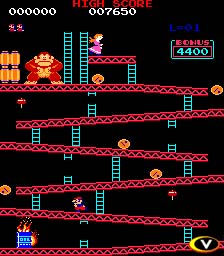 And that is how Mario started. The arcade game (Donkey Kong) was mega-popular in both the United States and Japan and lifted Nintendo’s sales into the stratosphere. Nintendo would come out with a sequel to Donkey Kong eventually, but first they had to name the “hero in red.” They finally decided on Mario after their landlord Mario Segali. As time passed, Nintendo released Donkey Kong 2, which also made waves. Then in 1983, “Mario Brothers” was released with Mario (who was now a plumber) and his bud Luigi making his first appearance. Mario and Luigi would run in sewer systems inhabited with lobsters, turtles, fireballs, and bonus coins. The game was a success. Because of all these successes, Atari and Coelco started buying manufacturing rights to Donkey Kong and Mario and selling the games through their respective platforms. Selling more games and making more money, Nintendo was enjoying a sweet existence even then, but the President of Nintendo (Hiroshi Yamauchi) saw how it could be even sweeter. By making a system of their own, Nintendo could manufacture their own games just like Coelco and Atari, and make more money in the process. That’s how the Family Computer or “Famicom” got started. Released only in Japan, by 1984, the Famicom had control of 90% their gaming market. This is amazing in and of itself, but add to it that, Nintendo had no third-party developers, and you’ve got a feat of science! In 1985, the original NES system was released only in New York as a “test”. After the New Yorkers responded well to the system, stores nationwide started carrying Nintendo software by 1986. The first game that came with this NES system was a game called Super Mario Brothers (the first million-seller game). Soon after in Japan, Mario Brothers 2 was released. It wasn’t until 1988 though, that the game was released in the U.S. It was a smash hit and spelled the demise of Atari who was now cheating Nintendo by making games without the Nintendo seal of approval! 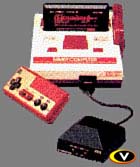 You might think all this would be enough, but things were actually just starting. While Nintendo was pushing its new product, the Game Boy, newly established gaming mags were talking about the new NES game to come, Super Mario Brothers 3. To build anticipation, Nintendo featured SMB3 in a movie called “The Wizard”, and then delayed the game for a year until 1990. It paid off. SMB3 was then the best selling game in U.S history (over seven million copies sold). That same year, Nintendo released the Super Nintendo (Super Famicom) in Japan. It featured the “hands down” best sound chip and comparable graphics compared to the Sega Genesis. The first games released in Japan were Super Mario World and Pilotwings who both tore up the competition. In Christmas ’91, Nintendo released the system in the U.S. They were sold out within three days, and Mario’s new game prospered, but Nintendo was starting to lose momentum to Sonic and company. By ’92, Sonic had become more than just a little known competitor. Sega commercials were bashing the SNES making fun of it and making unfair comparisons to the Genesis. Mario was fading from the spotlight. Nintendo realizing this, decided to fight back with some advertising of their own. It really didn’t help, but what did help was Capcom. If it weren’t for Capcom, Nintendo probably wouldn’t be around today. The decision to release Street Fighter 2 only for the SNES was devastating for Sega and convinced previously undecided customers to choose the Super Nintendo. This kept gamers from “only” choosing the Sega system and created a standoff of Sega and Nintendo. Nintendo used their “break” and created Star Fox using the polygon pushing Super FX chip inside the cartridge. This game was probably the turning point and pushed Nintendo and Mario back into focus. 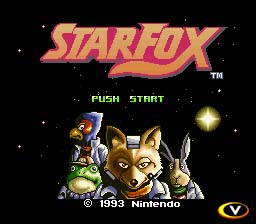 Now it was 1996 and Sony was starting to make waves. Their video game character (Crash Bandicoot) was “cute” but never really caught on with people. What caught on more was all the games Playstation had. Developers were everywhere making games for the “newer” Playstation and these new games were who was stealing Mario’s spotlight. Nintendo responded by releasing the Nintendo 64. The Super Mario 64 game that was released at the same time was very successful selling at nearly a 1:1 ratio with the Nintendo 64 system! Mario, who once had taken a backseat to Donkey Kong during the final years of SNES, hogged the spotlight in 1996 and once again became the industry's most talked about star. Shigeru Miyamoto, Nintendo's single most important game developer, was finally recognized for his tremendous talent. 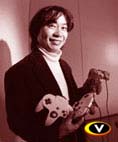 Now Mario is the single greatest character in videogame history. No one can compare. Mario has showed staying power in the market and has never seemed to get old to consumers. Why is that you say? Well, I would have to reply that it’s the Magic of Mario! - Darklord007 |
 Forums!
N64
Codes
NES
Codes
Magic
of Mario
History
of Sega Forums!
N64
Codes
NES
Codes
Magic
of Mario
History
of Sega
  
|
