
|
|

 N Generations
Recent News
Archived News
Jobs
NES Codes
SNES Codes
N64 Codes
Virtual Boy Codes
Gameboy Codes
Gamecube Codes
Game Previews
Game Reviews
Game Walkthroughs
Pics
Music
Video
Games
Affiliates
Other Sites
My Sites
Forums
Chat
Newsletter
Puzzles
Shopping @
N Generations
Recent News
Archived News
Jobs
NES Codes
SNES Codes
N64 Codes
Virtual Boy Codes
Gameboy Codes
Gamecube Codes
Game Previews
Game Reviews
Game Walkthroughs
Pics
Music
Video
Games
Affiliates
Other Sites
My Sites
Forums
Chat
Newsletter
Puzzles
Shopping @
Amazon.com
Staff
Legal Stuff |
 "The Few Failures of Nintendo"
Over the
years, Nintendo has made a name for itself by making some of the most durable,
best quality products on the market, but (contrary to popular belief) there
were some small failures. No, they didn’t ruin the company or anything,
but they taught the good people at NOA and NOJ some valuable lessons in
game design and production. These minor “downfalls” have made Nintendo
into the extraordinary company they are today, and have given them valuable
“future” references. Yes, everybody makes mistakes; even Nintendo, and
here are some of those “Few Failures of Nintendo.”
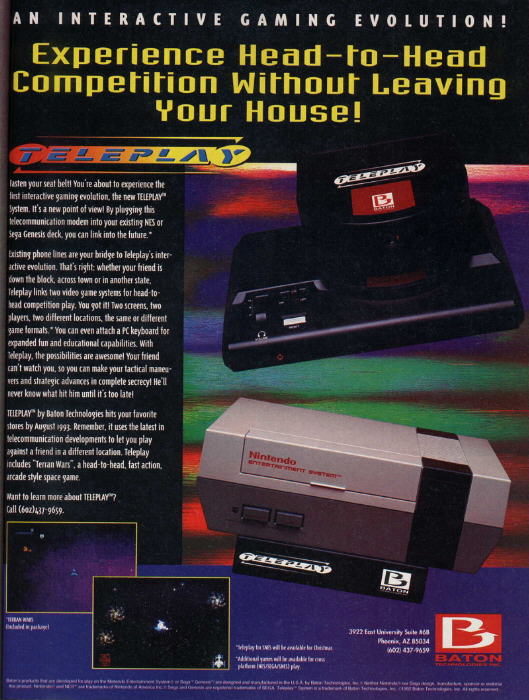 The Teleplay was not a licensed Nintendo product though, which is probably why no one has really heard of it. It also came with a game called Terran Wars (a space shooter) which looked more like the one of the first Action Replay games. The idea was good, and if there had been cool games out there with its release, it would've been a best seller. 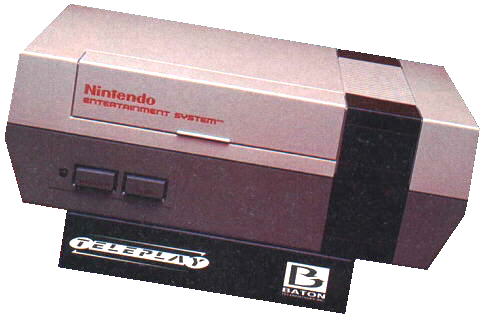 Next is the R.O.B. (Robot Operating Buddy), the first peripheral for the Nintendo. The idea was to provide an interactive medium between the TV screen and player. In the two R.O.B. games released (Gyromite and Stack-up), the player controlled R.O.B. while the robot's actions affected game play on the screen. Sound confusing? It was. A lot of people didn't understand how it worked. 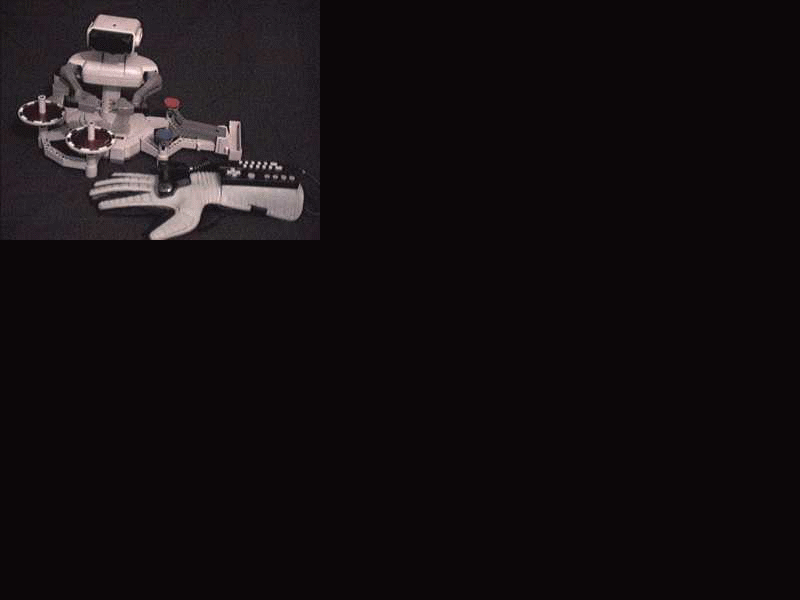 Lastly for the NES is the fairly well known Power Glove. The Power Glove was a glove that covered your hand. This somehow acted as a controller, but only for the games that supported it. There was only one game made for the Power Glove (Super Glove Ball) and it tanked sending the Power Glove with it. As for the company who made Power Glove (PAX inc.), they went bankrupt. 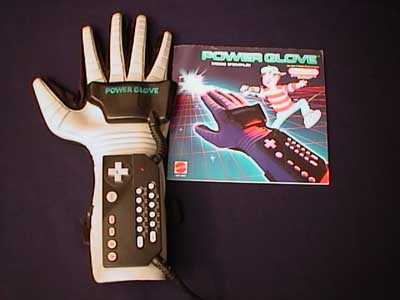 Now we go to the Gameboy. There have been many peripherals and other add-ons made for this system, but what separated the good ones from the bad? Well to tell you the truth, nothing. Every game company just about has made a magnifier, light, and battery pack of their own for the Gameboy at one time or another. Being general though, through the years the GB lights and battery packs have sold well while the magnifiers, sounds systems, and other miscellaneous stuffs (such as organizers and cases) have not. Next we go to the SNES. SNES was home to some of the best games of our era, but where did they fail? Well, the most obvious one was the Super Scope. The Super Scope came with a cart of six Super Scope games called “Super Scope 6.” The main reason why the Super Scope failed is because of its horrendous battery consumption. It would suck those six AA batteries dry in about 3-4 hours, depending on if you left the gun on all the time while playing. To add to this, there was no way to use an AC adapter with the gun. Another Nintendo “blooper” was the SNES mouse. In 1992, Nintendo released the Super NES Mouse to try to help bring PC gaming to the SNES. This device however ended up being mostly used for the "game" that came with it, Mario Paint. Mario Paint was, in fact, an interesting cart. It was much like many popular of the PC art programs of today; different brushes, flood fill, spray paint, and the like. One unique thing about Mario Paint was that it allowed players to create music, using a strange interface; it consisted of four music lines printed on sheet music. Using different symbols such as mushrooms, fire flowers, etc., you could place them on different points on the lines, and thereby make different tunes. The problem with Mario Paint was that you could only save one file on it so if you were a serious artist, you really couldn’t produce a lot of artwork. Mario Paint may have been good for the kiddies or those just looking to play around with an art program, but is was by no means for someone interested in doing “serious” computer artwork. Lastly, we move on to the Nintendo 64. The Nintendo 64 really has had the least of the peripheral troubles as compared to the other systems. The only major peripheral failure in Nintendo’s recent history has been the 64DD, which was never released in the U.S. The idea was to find a strong medium between cartridge and CD. Carts have a disadvantage because of their low storage capacity, but CDs on the other hand take forever to load so the 64DD would use disks. The disks were called MOs, which could hold almost as much as a CD and could run almost as fast as a cart could. By compromising, Nintendo was thought then to have found the perfect medium for storing their materials. Even though it was a great idea, the 64DD never really caught on in Japan and eventually Nintendo gave up the system/peripheral and refunded the price in full to the consumers who actually did support the new idea. The failures you have seen here are just a few of the failures that Nintendo has experienced, but all of them have taught Nintendo and us mutually, valuable lessons for the future. - Darklord007 |
 Forums!
N64
Codes
NES
Codes
Magic
of Mario
History
of Sega Forums!
N64
Codes
NES
Codes
Magic
of Mario
History
of Sega
  
|
