|
||||||||
 |
 |
 |
 |
 |
 |
|
Traveling in China It would take a hundred lifetimes to see all the marvelous sights of the Middle Kingdom as it is the world's third largest country, stretching more than 5,000 km (3,000 miles) across the face of Asia. The
capital, Beijing, lay the remnants of Peking Man. Embroideries
and funerary objects dating back 5,000 years can be seen in Beijing's
Forbidden City. In ancient Xi'an, thousands of terra-cotta soldiers
still guard the tomb of Qin Shi Huang. You can find the endangered precious
pandas of China in Sichuan. And learn about Chinese gong-fu in
Shaolin Temple at Luoyang. Here
are some travel tips for first-time travelers to China. |
|
| Language The national language is Putonghua (the common speech) or Mandarin. However, English has become quite common among the locals. It is widely understood in major hotels and the stores, especially in Beijing and Shanghai. Other widely spoken dialects include Cantonese, Shanghainese, Fujianese and Sichuanese |
|
| Money Chinese Money is called Renminbi. (People's Currency). The popular unit of RMB is Yuan. Renmibi comes in 100 Yuan, 50 Yuan, 10 Yuan, 5 Yuan, 1 Yuan, 5 Jiao and 1 Jiao. The official exchange rate between U.S. Dollar and Renminbi Yuan currently is about 1 : 8.3 (1.00 Dollar = 8.30 Yuan). 1 Sing dollar is approximately 4.5 Yuan. |
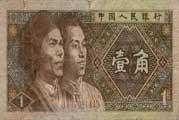 Chinese currency |
| Passport A valid passport is required for travel in China. In addition to passports, visitors must hold a valid visa issued by the Chinese authorities prior to entry into China. Traveling to China requires a visa stamped on a full passport with validity of no less than 6 months upon arrival to China. |
|
| Vaccinations Usually there is no need for evidence of inoculations on entering China. Unless the visitor has come from or through an area where an epidemic has broken out recently. |
|
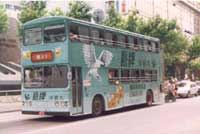
| Transport Travelers can get a taxi through the local travel agency or hotel service desk. If you speak Chinese, you may call the taxi company directly. Taxi fares are charged according to the cab model and mileage driven. It is not necessary to tip drivers. You may also like to try the public buses, which is very much cheaper. In Beijing, you can try taking the public train, which is something like the MRT. To get around provinces, you will have to take a train. Train cables are segmented into several different classes. The lower the class, the cheaper the ticket, but more people you have to squeeze with. |
 |
| Telephones Rooms in hotels are usually equipped with telephones. There are 2 kinds of international calls: regular and urgent. Travelers can make a call by using the hotel room phone and registering the call through the operator. Calls are charged according to the length of the call with a basic unit charge of a yuan per 3 minutes. Each additional minute will be charged accordingly. |
|
| Clothing For summer, choose clothes that are light-weight, made of fabrics that breathe in the heat - natural fabrics such as cotton and linen are cooler than synthetics. For spring and fall, dress as you would for these seasons in the temperate latitudes such as Europe and the U.S. Light jackets and sweaters should be adequate, if supplemented by a raincoat. (back to top) |
|