UNITED STATES HISTORY
 |
|
|
|
|
|
|
|
|
 |
 |
 |
 |
 |
 |
 |
 |
|
1900 To 1910
A New President
Vice President Theodore Roosevelt took office in 1901. after President William Mckinley was assassinated. Roosevelt supported many progressive ideas.
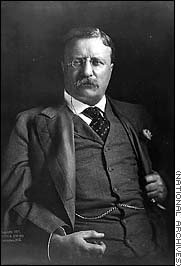
In 1902,, more than 100,000 Pennsylvania coal miner went on strike. They wanted an eight hour day and a pay raise. They also complained that they were forced to live in town houses. However many wealthy bussiness owners would not talk to the miner or to leaders of their union, the United Mine Workers. The strike went on for several months. Finally Roosevelt warned that he would have U.S troops take over the mines. That got owners to talk. The owners gave some of what the miners wanted.
Trust Busting And Other Reforms
Owners of big bussiness organized giant corporations called trusts. President Roosevelt felt that it was against the law for trusts to force smaller companies out of bussiness. Roosevelt took several trusts to court. The courts ordered that the trusts be brojen into smaller bussinesses. In 1904 Roosevelt was easily elected into office. He got Congress to pass laws that cleaned up rundown areas of citys and made factories safer. Laws were also passed to control the power of railroads and allow health officals to inspect meatpackaging plantrs.
William Taft's Reforms
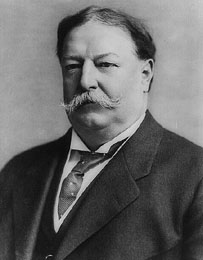
Roosevelt did not want to run for a second term. Instead he supported William H. Taft. Because many Americans liked Roosevelt, they voted for Taft. Taft and Roosevelt shared many of the same beliefs about Goverment. However, Taft was not as forceful a leader as Roosevelt. Some Progressives thought that Taft made decisions that supported big bussiness. Other Americans thought he wasn't doing enough to protect national parks and forests. However Taft's term in office did not bring many reforms. For example, Taft brought twice as many trusts to court as Rossevelt had. Taft supported a federal income tax. Shortly before Taft left office the Sixteenth and Seventeenth Ammendments were passed. The Seventeenth Ammendment said that U.S senators must be directly elected by voters and not state lawmakers.