
To
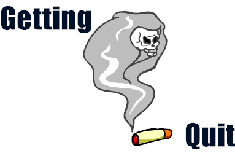 FROM SMOKING
Cigarettes! one
of the most addictive and destructive, drugs known to modern man.
One of the few legal substances available in shops that can injure or
kill when used as intended. Most rational people know this as a fact,
yet many continue to smoke. Some smokers know, deep in their hearts,
they want to quit. Others are quite content to keep on puffing because
they think they enjoy it so much.Why would seemingly intelligent people
continue to smoke, knowing full well the dangers and implications of
doing so? It is because they are nicotine addicts since the
smoker's body cells have become addicted to nicotine, to quit
smoking won't be easy, since withdrawal symptoms can be expected.
If you have tried to quit smoking, you know how hard it can be. It
is hard because nicotine is a very addictive drug
Quitting is hard. Usually people make 2 or 3 tries, or more, before
finally being able to quit. Each time you try to quit, you can learn
about what helps and what hurts.
Write down why
you want to quit. Do you want
-
to feel in control of you life?
-
to have better
health? 
-
to set a good example for your children?
-
to protect your family from breathing other people’s smoke?
Quitting takes hard work and a lot of effort, but you can
quit smoking.
Quitting
smoking is one of the most important things you will ever do.
-
You will live longer and live better.
-
Quitting will lower your chance of having a heart attack,
stroke, or cancer.
-
If you are pregnant, quitting smoking will improve your chances
of having a healthy baby.
-
The people you live with, especially your children, will be
healthier.
-
You will have extra money to spend on things other than
cigarettes.
Here are some
helpful tips that might ease the quitting process:
Quiting depends on how one smokes ,are you are heavy smoker or a
light smokerthese are some of the proccesses that might help you quit
better depending on the amount of cigarettes your taking
-
If you're a light smoker, you should quit immediately, this
will shock your bodyn system moderately if you
are an addict.
-
If you are a heavy smoker you should allow two weeks for
cutting down, then quit completely. An extended cutting-down period only
prolongs the pain. Prepare for an agonizing month or two, though you
might get off easily. The close family must give up, too, at least in
your presence. It'd of course be best if the whole family quit at
once. But "normal", for many smokers, means frequent constipation.
Stools must always be soft, never, ever, necessitating any straining.
-
After eating don't sit down. Take a walk instead. Try to avoid
situations that you associate with smoking, such as sitting in your
favorite chair, particularly after meals. Try to avoid situations that
are conducive to smoking, such as bars, meetings, and boredom. Don't
invite smoking friends over during the critical first few months.
In fact, after you've quit for a few months, you'll notice how your
clothes still have a strong residual smell of an ashtray. It may be
necessary to clean or clear away every source of that smell, usually
from carpets and clothes. Then get ready for a new life of clean lungs
and great health. Your non-smoking friends won't avoid you anymore now
that you no longer smell like an ashtray.
-
When you get that urge to smoke (and you will), drink some
water. Phone a friend who's also trying to quit. Think of the
satisfaction of not having given in to that filthy urge. Think how bad
you'll feel if you do give in. Think about how your cigarette money
helps support those hypocritical tobacco companies whose income is
derived at the expense of the health, wealth, happiness, efficiency, and
resources of the addicted smoker.
-
Try to avoid calories, if you find that substituting food
for cigarettes helps you give up smoking, then by all means have an
apple, gum, beef , or a prune. If at all possible, exercise a bit every
day, especially when you get the urge to smoke. It's a good substitute,
and you'll find that exercising comes much easier as a non-smoker.
-
Cigarette displays, cigarette ads, anything having to do
with smoking, must be looked upon in your mind as existing only for
those poor unfortunates who are addicted to that filthy habit.Life's too
good and too short to waste on that filthy habit.
1)Set a quit date.
2)Change your environment.
3)Get rid of ALL
cigarettes and ashtrays in your home, car, and place of work.
3)Don't let people smoke in your home.
Review your past attempts to quit.
Think about what worked and what did
not.
Once you quit, don't smoke not even a
puff.
- Get Support and Encouragement
1)You have a better chance of being
successful if you have help. You can get support in many ways:
2)Tell your family, friends, and
co-workers that you are going to quit and want their support. Ask them
not to smoke around you or leave cigarettes out.
3)Talk to your health care provider (for
example, doctor, dentist, nurse, pharmacist, psychologist, or smoking
counselor).
4)Get individual, group, or telephone
counseling. The more counseling you have, the better your chances are of
quitting. Programs are given at local hospitals and health centers.
- Learn New Skills and Behaviors
1)Try to distract yourself from urges to
smoke. Talk to someone, go for a walk, or get busy with a task.
2)When you first try to quit, change your
routine. Use a different route to work. Drink tea instead of coffee. Eat
breakfast in a different place.
3)Do something to reduce your stress.
Take a hot bath, exercise, or read a book.
4)Plan something enjoyable to do every
day.
5)Drink a lot of water and other fluids.
- Get Medication and Use It Correctly
1)Medications can help you stop
smoking and lessen the urge to smoke.
2) Uganda has approved the
following medication to help you quit smoking:
Nicotine patch—Available by prescription but at the moment it's
quite expensive
3)Ask your health care provider for
advice and carefully read the information on the package.
4)This medication will more or
less double your chances of quitting and quitting for good.
5)Everyone who is trying to quit may
benefit from using a medication. If you are pregnant or trying to become
pregnant, nursing, under age 18,
smoking fewer than 10 cigarettes per day, or have a medical condition,
talk to your doctor or other health care provider before taking
medications.
- Be Prepared for Relapse or Difficult Situations
1)Most relapses occur within the first
3 months after quitting. Don't be discouraged if you start smoking
again. Remember, most people try several times before they finally quit.
Here are some difficult situations to watch for:
2)Alcohol. Avoid drinking alcohol.
Drinking lowers your chances of success.
3)Other Smokers. Being around smoking can
make you want to smoke.
4)Weight Gain. Many smokers will gain
weight when they quit, usually less than 10 pounds. Eat a healthy diet
and stay active. Don't let weight gain distract you from your main
goal—quitting smoking. Some quit-smoking medications may help delay
weight gain.
5)Bad Mood or Depression. There are a lot of ways to improve your
mood other than smoking.
Keep this in your mind
at all times, and re-read it when necessary, to refresh your memory of
all the ugly disadvantages of smoking, and all the advantages of not
smoking.Remember your not the only one trying to quit but others are
also trying to therefore your not alone in this fight against smoking.It
may be hard at first but keep on reminding yourself why you wanted to
quit in the first place then this will help you achieve success at
longlast.I wish you the best of luck as you try to quit.
Thank you for using this page,please let me if it has been of help to
you or if you have any additional information you would like to be added
onto this page by contacting me @