Solid State Physics, Materials Science and Nanophysics Research
Consultants University Lectures Higher research student supervision
Published books Recent publications & Conferences Workshops and training experience
Curriculum Vitae of M. A. Abdulsattar
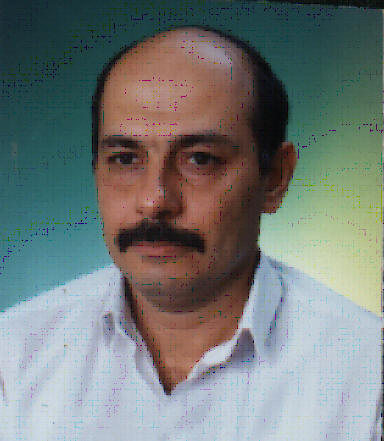
| Name: | Mudar Ahmed Abdulsattar |
| Birth: | Baghdad 1958 |
| Marital status: | Married with four children: Sawsan, Hasan, Nureddin and Nazar |
| Residence: | Baghdad, Iraq, Alharithia, Sec. 213, St. 17, House 19 |
| Telephone: | +964-15419469, mobile +964-7901335231 |
| P. O. Box: | 8012 Alsalhia, Baghdad, Iraq |
| Website: | http://www.mudarahmed.com/ |
| E-mail: | [email protected] |
| B Sc: | Physics, Baghdad University 1980 |
| M Sc: |
Theoretical Nuclear Physics, Baghdad University, Thesis title 'Electromagnetic Transitions in the Interacting Boson Model of the Nucleus', 1985 |
| PhD: | |
| Senior Researcher: |
Ministry of Science and Technology, 2003, Directorate of Materials Science, Building Materials Center |
| Chief Senior Physicist | Ministry of Science and Technology, 2007 |
ACHIEVEMENTS, RESEARCH, LECTURES AND SKILLS
1- Industrial applications, mostly related to material’s science and more specifically to structure, properties, processing, and performance of metal alloys, polymers, ceramics and composites. Computer simulation methods in these cases are used to solve relevant equations such as heat transfer equations to account for the proper use of these materials in situ. This includes steel arc welding, aluminum alloys microstructure optimization, resole or epoxy composites manufacturing and performance, heat sink design and manufacturing, corrosion and cathodic protection of oil pipelines…etc.
2- Theoretical research covers areas of electronic structure of covalent and zinc-blend semiconductors, mainly using semiempirical Hartree-Fock theory. Semiempirical theory in my work is applied to nanophysics, the effect of pressure and temperature on semiconductors band structure, and ab-initio molecular and atomic calculations. My theoretical research also covers some areas of nuclear and plasma physics.
3- University lectures are usually given to postgraduate students during their first year of preparation. Student-centered lectures mostly include part of my book under preparation: “COMPUTER MODELING AND SIMULATION IN SCIENCE AND ENGINEERING’”. The lectures prepare students to write detailed programs in their fields of specialization. University work also includes the supervision of 15 postgraduate theses (5 PhD & 10 MSc) & criticizing more than twice this number of researches or postgraduate works.
4- Excellent computer skills that span computer languages (FORTRAN, Visual Basic, Pascal...etc), databases (FoxPro, Clipper…etc), office tools (MS Word, MS Excel, MS PowerPoint, MS FrontPage…etc), graphics (ACAD)…etc.
5- Other training experiences include Principles of Administration, Operational Research, Artificial Intelligence, Quality Control, Industrial and Environmental Safety.
EMPLOYMENT
|
1993 to 2007: |
Materials Science and Engineering Senior Researcher at the Ministry of Science and Technology, Baghdad, Iraq. This includes the preparation, properties, testing…etc of Industrial Materials such as Metal Alloys, Ceramics, Polymers and Composites, |
|
1983- 1993: |
Nuclear Physics Researcher at the Iraqi Atomic Energy Commission. Research and experience are in Nuclear Structure, Reactions, Reactors, Instruments and Plasma Physics. |
|
1999 - 2006 |
Part Time lecturer and postgraduate research supervisor in Alnahrain University, Baghdad University, Technical College – Baghdad, Technical University, Babylon University. |
[1] Mudar A. Abdulsattar and Khalil H. Al-Bayati, ‘Corrections and parameterization of semiempirical large unit cell method for covalent semiconductors’, Phys. Rev. B 75, 245201 (2007). (PDF)
[2] Ibtesam O. Radi, Mudar A. Abdulsattar, Ahmed M. Abdul-Lettif, ‘Semiempirical LUC-INDO calculations on the effect of pressure on the electronic structure of diamond’, Phys. Stat. Solidi b 244, 1304 (2007). (PDF)
[6] Mudar A. Abdulsattar, Akram A. Al-Ajaj and Mazin K. Hamid, ‘Simulation, manufacturing and performance of 242 Watt free convection heat sink for electrical circuits’, Proceedings of the International Conference on Modeling and Simulation (AMSE), Turkey, 413 (2006). (Best of AMSE book 2006)
[10] M. A. Abdulsattar, A. Abdulhasan and A. M. Saeed, ‘Numerical simulation of solidification and heat transfer of aluminum or dural using finite difference method’, J. of Alnahrain University, Iraq, 7, 1 (2004).
[11] M. A. Abdulsattar, ‘Band structure of diamond using 64-atom large unit cell method with exchange and correlation corrections’, J. of Alnahrain University, Iraq, 6, 66 (2002).
[13] M. A. Abdulsattar and K. H. Al-Bayati, ‘Numerical evaluation of restricted Hartree-Fock calculations of helium and beryllium atoms’, J. of Alnahrain University, Iraq, 5, 170 (2001).
RECENT MEETINGS & CONFERENCES
1- Knowledge Based Industries & Nanotechnology Conference, Doha, Qatar, (2008)
2- SIAM Conference on Computational Science and Engineering, California, USA, (2007).
3- Fire and Materials, San Francisco, USA, (2007).
4- International Conference on Modeling and Simulation AMSE, Konya, Turkey, (2006).
Consultants and advices can be given in applied calculations, programs and data basis in materials science and solid state physics in the following subjects:
1- Data basis, standards and manufacturing technology of various materials such as:
1.1 alloys and related materials
1.2 polymers
1.3 ceramic materials
1.4 composite materials
2- Applied calculations, programs and lectures using simulation and modeling methods such as Hartree-Fock method for electronic structure of solids, and finite difference method for materials science and engineering which include:
2.1 electronic structure and related properties of atoms, molecules nanoclusters and solids
2.2 sand molding design and calculations
2.3 metal molding design and calculations
2.4 microstructure and physical properties prediction
2.5 thermal stresses calculations
2.6 chills and sinks design and calculations
2.7 thermal calculations of casting systems
2.8 hardening calculations
2.9 heat treatment, quenching and directional solidification
2.10 void and shrinkage calculations
2.11 laser and other thermal sources effects on materials
2.12 nitriding and carborizing calculations
2.13 ablative test of insulators
2.14 thermal insulation calculations
2.15 furnace calculations and design
2.16 exothermic materials calculations
2.17 corrosion and cathodic protection calculations
2.18 various physical measurements such as thermal conductivity, heat capacity, hardness, …etc
2.19 phase transformation under thermal, pressure or aging effects
2.20 welding
3- cost calculations of manufacturing various materials
University Lectures: These lectures were given by Abdulsattar M. A.
|
University |
Department |
Lectures |
Students |
Year |
|
Alnahrain University-College of Science |
Physics Department |
MSc |
2004-2005 2003-2004
|
|
|
Baghdad University- College of Education for Women |
Computer Education Department |
Software Engineering |
Under graduate |
2003-2004 |
|
Technical College – Baghdad |
Casting and Welding Engineering Departments |
MSc |
2003-2004 2002-2003
|
|
|
Technical University |
Industrial, Production and Metal Engineering Departments |
PhD MSc |
2002-2003 2001-2002 2000-2001
|
|
|
Technical University |
Materials Engineering Department |
MSc |
2001-2002 |
|
|
Baghdad University-College of Education for Women |
Computer Education Department |
Programming with BASIC |
Under graduate |
2000-2001 |
|
Baghdad University- College of Education for Women |
Computer Education Department |
Programming with PASCAL |
Under graduate |
2001-2002 2000-2001 |
Scientific research students supervision:
The following postgraduate research students were supervised by Mudar A. Abdulsattar:
1- Zain El-Abideen Yousif, 'The effect of pressure and temperature on some properties of cubic boron nitride crystal', M.Sc thesis, Babylon University, College of Science, Physics Department, Iraq (2006).
2- Hamad Rahman Jappor, 'Band structure and some physical properties of aluminum phosphide crystal using Hartree- Fock method', M.Sc thesis, Babylon University, College of Science, Physics Department, Iraq (2006).
3- Thaer Gahdban Shallan Alreekabi, 'Design of casting system for aluminum alloys using finite difference method', M.Sc thesis, Technical College-Baghdad, Casting engineering techniques Department, Iraq (2006).
4- Faiza Mohammed Saleem, 'Ablative, thermal, and mechanical properties of directionally reinforced epoxy-matrix composites', Ph.D. thesis, University of Technology, Department of applied science, Iraq (2006).
5- Abdul-Abbas Hasson Alwan, 'Improvement of aluminum-20%tin alloy microstructure by new thixocasting', M.Sc thesis, Technical College-Baghdad, Department of materials engineering, Iraq (2006).
6- Hayder Mohammed Abduljalil, 'Numerical ab-initio molecular orbital calculations', Ph.D. thesis, Al-Mustansiriyah University, College of Science, Department of Physics, Iraq (2006).
7- Bahjet Bahloul Kahdim, 'Mechanical and thermal properties and ablative simulation for resole composites', Ph.D. thesis, Baghdad University, College of Science, Department of Physics, Iraq (2006).
8- Muhammad Ghanim Merdan, 'Self-consistent field calculations for the effect of pressure and temperature on some properties of gray tin crystal', M.Sc thesis, Babylon University, College of Science, Physics Department, Iraq (2005).
9- Laith Sabah Mohamed, 'Modeling of welding distortions and their treatment', M.Sc thesis, Technical College-Baghdad, Department of welding engineering technology, Iraq (2005).
10- Ibtesam Omran Radi, 'Effect of pressure and temperature on some properties of diamond crystal using Hartree-Fock method', M.Sc thesis, Babylon University, College of Science, Physics Department, Iraq (2005).
11- Adnan Naama Abood, 'Design and characterization of advanced semi-solid casting processes', Ph.D. thesis, University of Technology, Production & Metallurgy Engineering Department, Iraq (2003).
12- Ahmed Muhamed Ali, 'Design of casting system using numerical solution of heat transfer equation', M.Sc thesis, University of Technology, Production & Metallurgy Engineering Department, Iraq (2003).
13- Mahmood Musafer Ubais, 'Study of the effect of pressure on band structure and physical properties of silicon crystals', M.Sc thesis, Babylon University-College of Science-Physics Department, Iraq (2002).
14- Bashair Saleh Bayae, 'Study of the effect of pressure on band structure and physical properties of germanium crystals', M.Sc thesis, Babylon University-College of Science-Physics Department, Iraq (2002).
15- Issa Zain-Al-Abdin Hassan, 'Semiempirical self-consistent field calculations of III-V zinc-blend semiconductors', Ph.D. thesis, Alnahrain University-College of Science-Physics Department, Iraq (2001).
CONTENTS OF LECTURES & THE BOOK:
‘COMPUTER MODELING AND SIMULATION IN SCIENCE AND ENGINEERING’
1 General physics, mathematics and software engineering
1.1 Introduction to computers, FORTRAN and software engineering
1.3 Numerical solution of Ordinary differential equations
1.4 Partial differential equations and finite difference method
1.5 Classical and quantum physics
2 Nuclear science and engineering
2.2- Shell theory of the nucleus
2.3 Electromagnetic transitions in the interacting boson model
3 Atomic and molecular science
3.1 Beryllium atom iso-electronic series
3.2 Semiempirical self-consistent calculations
3.2 Ab-initio calculations of hydrogen fluoride molecule
4 Classical areas of science and engineering
4.1 Corrosion protection of an oil pipeline
5 Plasma and electrical discharges
5.1 One-dimensional plasma calculations
5.2 Two-dimensional plasma calculations
6 Solid state, electronic band structure
6.1 Electronic band structure of diamond, silicon, germanium and tin
6.2 Electronic band structure of III-V compounds
7 Solid state, electronic, mechanical and thermal properties
8 Materials science and engineering
8.2 Effect of cooling rate on microstructure and properties
8.3 Infiltration of liquid metal processing of composites
Appendices
Workshops and training experience:
1- Quality control
2- Internet
3- Environment and industrial safety
4- Operational research
5- Artificial intelligence using PROLOG programming
6- Advanced FORTRAN computing
7- Computer graphics using ACAD
Suggested Researches for Solid State Physics, Materials Science and Nanophysics
1- Preparation of exothermic materials for casting purposes (PH.D.),(Experimental and theoretical)
This project aims to prepare and simulate the effect of exothermic materials that is used in casting and welding of alloys. These materials are applied to reduce casting and welding expenses.
2- Preparation of slug for electroslug refining process (PH.D.),(Experimental and theoretical)
A material that is called slug which is a mixture of ceramic powder oxides is needed in the electroslug refining process of steel. The preparation of this material includes melting of these materials to reduce the effect of humidity.
3- Preparation of high thermal conducting cupper composite for heat sinks (PH.D.),(Experimental and theoretical)
A high thermal conducting material that works at normal temperature is frequently needed in several applications such as computers and power electronic circuits. One of these materials are cupper composites that have the highest thermal conductivity. This composite material will be prepared in the lab and its performance will be examined and simulated using finite difference method.
4- Electronic structure and physical properties of II-VI zinc blend semiconductors using intermediate neglect of differential overlap (PH.D.),(theoretical)
The electronic structure and physical properties of a group of materials that are used in semiconductor industry such as zinc sulfide will be simulated using intermediate neglect of differential overlap. The simulation includes band structure, bulk modulus, x-ray form factors, effect of pressure and the effect of temperature.
5- Band structure, physical properties and the effect of pressure and temperature on Gallium arsenide crystals (M.Sc.),(theoretical)
The electronic structure and physical properties of gallium arsenide crystals a material that is used in semiconductor industry will be simulated using intermediate neglect of differential overlap. The simulation includes band structure, bulk modulus, x-ray form factors, effect of pressure and the effect of temperature.
6- Simulation of flame hardening of steel using finite difference method (M.Sc.),(Experimental and theoretical)
A simple and an economical method that is used to harden steel is flame hardening. Simulation of the method and its timing will be performed using finite difference method. Comparison will be made with lab experimental results
Suggested Researches for Simulation, and Modeling
1- Construction of a design program for metal casting purposes (M.Sc.)
Finite difference method will be used to construct a program to calculate the cooling rate of a casting which will eventually produces the physical properties of the casting including grain size, hardness…etc. The program uses object-oriented and visual programming techniques. The core program is written in FORTRAN and an interface to visual basic is made for inputting and outputting data and graphics.
2- Numerical ab-initio molecular orbital calculation program including physical properties (M.Sc.).
The program includes the numerical evaluation of two-electron integrals and core Hamiltonian. The output of the program includes energy levels of the molecule, force constant, vibrational, rotational spectrum…etc. The program also outputs the shape of the molecule including charge distribution of electrons. The program uses object-oriented and visual programming techniques. The core program is written in FORTRAN and an interface to visual basic is made for inputting and outputting data and graphics.
3- Band structure and physical properties program for solids using intermediate neglect of differential overlap (M.Sc.).
The program includes the analytical evaluation of two-electron integrals and core Hamiltonian of solids using the framework of intermediate neglect of differential overlap. The output of the program includes band structure of solids, bulk modules, x-ray form factors, effect of pressure and temperature…etc. the program also outputs the shape of the solid lattice including charge distribution of electrons. The program uses object-oriented and visual programming techniques. The core program is written in FORTRAN and an interface to visual basic is made for inputting and outputting data and graphics.