
WHERE ARE THE PICTURES STORED?
Back in the old days, when digital photography was still in its infancy, there was only one kind of memory used to store pictures -- internal (fixed) memory. And that dictated how many pictures you can take with the camera before forcing you to download them to your computer. Nowadays, however, storage capacities have significantly improved and you have the option to add more memory besides the one that came with your camera.
A few digicams still use the standard micro-floppy diskette (3½ inch 720 KB - 1.44 MB capacity) and CD-Recordable Media to store photographs. The advantage of the floppy diskette was you can easily transfer the images directly to your computer. However, due to it's limited capacity, it led to the unfavorable tradeoff in image quality, not to mention the number of images you can store. Although CD-R media significantly stored more photographs (650 MB and up -- a far cry from the micro-floppy diskette), the main problem was the media itself was not eraseable. Once you take the photo, it is permanently burned in the media. Upon exhausting the CD-R, you have to buy another one.
Digicams of today use removable memory cards to store images. Though most of them come with a pathetic 8MB - 16MB memory card, that doesn't prevent you from buying a higher capacity card, so upgrading the memory capacity is as simple as plugging in a larger memory card. You can even use several cards, swapping out the used one with another one just like what you do with a roll of film. And the nice thing about these cards is that they are reusable. You need space? Just erase the pictures you don't want.
Perhaps the only problem with memory cards is that they are not as common as floppy disks or CD-R media when it comes to transferring images. Either you use the supplied cable to transfer them or get an external card reader.
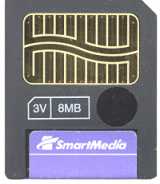
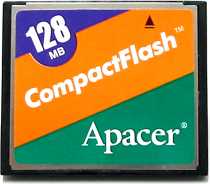
| TOP THREE MEMORY CARDS USED IN DIGITAL CAMERAS | ||
 |
|
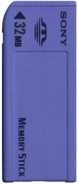 |
| COMPACTFLASH | SMARTMEDIA | MEMORY STICK |
There are many memory cards out in the market, among them, three common formats: CompactFlash, SmartMedia, and Memory Sticks. Each have their own advantages/disadvantages and their capacities are big enough for the casual photographer. For example, a 2 megapixel digicam consumes on average, close to about 1 MB per picture at its highest resolution. So, if you have a 128 MB memory card, you can take more than 128 photographs -- and more than a thousand if you shoot at a low resolution! -- using just one card.
Of course, memory should not be the main consideration here. Don't purchase the camera based on the memory type and capacity alone. Let the camera be the deciding factor. Then, narrow down your choices to which type of storage media you want to use.
| Previous Page | Main Page |