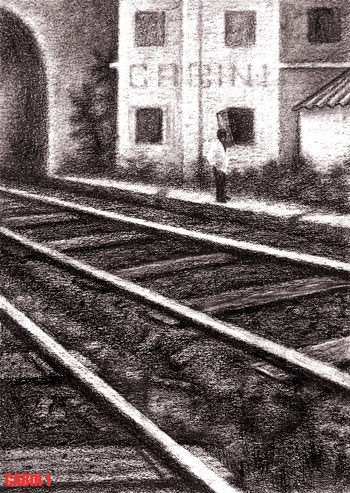
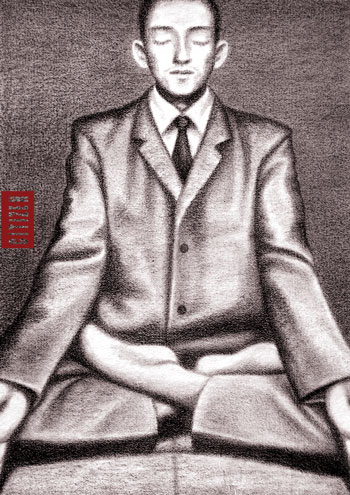
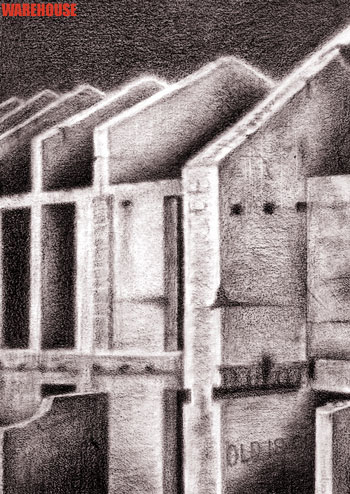
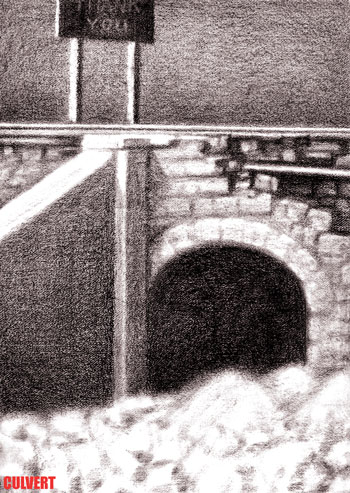
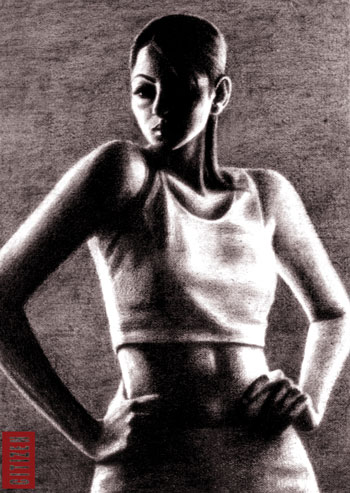
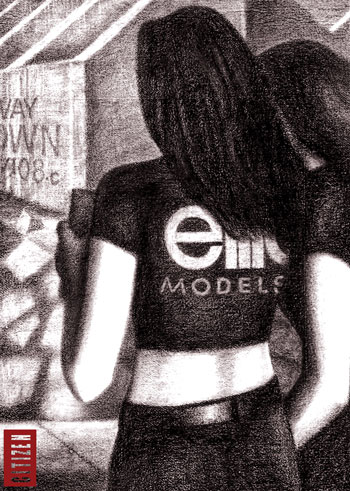
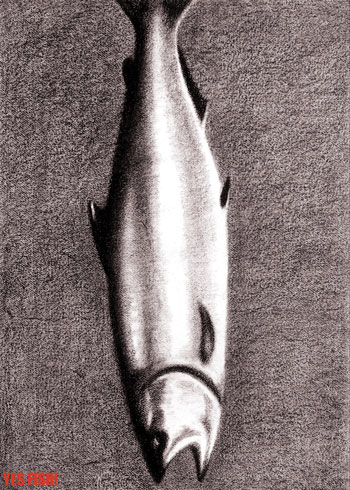
I began my brief introduction to Rajan M. Krishnan�s �Little Black Drawings� with a visual analysis of one of his images. I paired it with a quote from Walter Benjamin to suggest that I see these drawings as the work of translation. Translation, for Benjamin, is an act that preserves the meeting with an original form as a fluid and contingent process rather than a stable outcome. A successful translation does not block or cover the original but instead allows it to shine through. Inspired by in situ encounters and mass media images, the drawings of Rajan M. Krishnan function as documents of social translation. They do not cover the reality of the people represented, but rather through the medium of charcoal, they illuminate and allow the light of humanity to emanate.
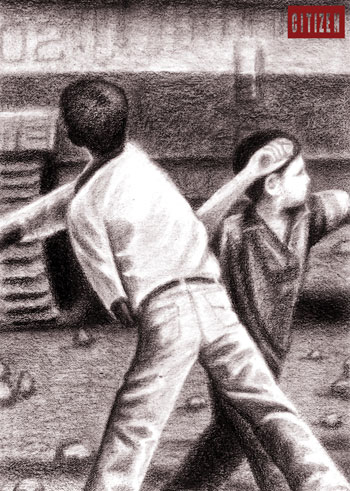
The drawings entitled CLIPPING recall ubiquitous mass media images; however, Rajan subverts the stability of these �originals� by translating them into a visual engagement that seizes upon the fragment. The tightly framed figures that populate these images are often unmoored from their larger pictorial circumstances. Pressed to the outer reaches of the picture plane, the figures hover at the edges of their own representational space and threaten to spill into ours. Their ambiguity and strategic dislocation urge the viewer to seek out a context-a frame of reference to ease understanding. It is through the visual embrace of the fragment that these images undermine the possibility of a cohesive social text. They, like the CITIZEN drawings, pose larger questions and weaken the ideologically driven tendency to make social space a manageable construct. Fueled by the inclusion of truncated words and underscored by the ebb and flow of the gray spaces, these images not only undercut the formation of a stable narrative but also call to mind a social fabric in a state of endless change. |