PROCESSING
Introduction
Basically Ginned cotton is converted into Cotton Yarn through Ring Spinning and Open end spinning.
The manufacturing process of ring spun cotton yarn comprises of:
i. Cotton testing
ii. Cleaning of cotton (blow room stage)
iii. Elimination of short fibers and impurities (carding and combing),
iv. Paralleling of fibers (draw frames and roving)
v. Spinning (ring frames)
vi. Post spinning operations (winding, doubling, etc.) and
vii. Waste handling
i. Cotton testing Cotton, is tested for fiber length, fitness, strength, maturity, Rigidity, fiber friction and structural features and if it is in permissible limit, it is sent for further processing. ii. Cleaning of Cotton - Blow Room Cotton enters the first stage of yarn formation where it is blended to form a uniform mass by blow room technology, which gently handles the material with a combination of high level cleaning and production rate. Opening of cotton, plucking and cleaning process is carried out in Blow room through the following machines:
1. Bale Plucker
2. Waste opener
3. Ventilators
4. High Capacity Condenser & Ventilator
5. Vario Clean
6. Uni Mix
7. Flexi-clean
Bale plucking is programmed to handle one to four bale blocks per side one to four assortments. It assures a constant uniform plucking action from all components of the bale. The plucking tooth and grills are so arranged that plucking is uniformly done throughout the bale lay down. Vario cleaner is normally located after the Bale openers. The smallest tuft formed by the bale openers are fed by an air steam into the Vario Clean and are made to travel around the opening roller several times before they are sucked by the next machine. The different types of beating elements result in (a) Coarse opening (b) Medium opening and (c) Fine Opening of the tufts so that the impurities are liberated. Micro-dust is taken away by the positive suction through the perforated sheets. It is imperative that the raw materials are exploited to its limits by homogenous blending resulting in a low number of ends down in spinning. While processing mixing for fine counts the fine feed can be fed directly from the UNIMIX. Next process in blown room is to clean material with high productively and cleaning efficiency. iii. Elimination of short fibers & impurities - Carding Blow Room provides uniform feeding to carding machines. Carding in its process of fractionating the individual fibres out of the small tufts of fibres coming to the lay from blow room. Carding breaks up any particular hard tuft of fibre that have escaped the action of previous opening and scotching machine and also attenuate the mass of fibres and make them more nearly parallel to one another. The fibres thus passing through the machine are combed and straightened whilst it is carried forward to the doffer, which picks it off the large cylinder. From doffer roller the straightened and purified blend passes in the form of lap through a vibrating comb and is then narrowed to the form a thick sliver, which is coiled into tall narrow cans. - Breaker Draw Frame Carded slivers are drafted and doubled by drafting rollers for better fiber parallelization and sliver uniformity. In draw frame machines slivers are mixed or combined and then attenuated, a process more usually spoken of as drafting. The draft is such that on emerging from the draw frame, the sliver only just strong enough to withstand further handling. - Lap Former In lap forming process slivers are converted into laps by pressing the doubling of slivers uniformly and material is rolled on a lap. This is intermediate process, which produce feed material for the comber. - Comber After Carding Process, cotton sliver in homogenous form reaches for Combing Process. Under Combing Process, Unilap prepares uniform laps for combing to take place. Combers further straighten the cotton fibers and enhance qualities of evenness, strength, smoothness and visual appearance. In this process, short fibers are removed for better yarn strength and evenness. iv. Paralleling of fibers - Finisher Draw-frame & Auto-leveling After combing of the cotton sliver, it becomes ready for Drawing Process, which improves the quality, evenness and homogenization of fibers. The cotton sliver is made ready for being processed into yarn. The sliver goes through drafting Rollers and is systematically drawn for better evenness. We can now return to the further preparation of the cotton for spinning, since the combing must be regarded as an extra process. At this stage the original cotton has now been converted into one two distinct forms. One is the carded sliver and other is the carded and combed sliver. The differences between them are important yet simple. The carded silver contains fibres not uniform in length and not particularly parallel to each other. These two types of slivers are not led through special draw frames, so that they may be steadily reduced to the thickness of sliver (later termed roving) suitable for spinning into yarn. - Speed Frame (Roving preparation) Here the sliver is drawn into strands called roving. In this process both drafting and twisting takes place. The roving process reduces the weight of the sliver to a suitable size for spinning into yarn and inserting twist, which maintains the integrity of the draft strands. v. Spinning - Ring Frame Subsequent drawing and high speed twisting of roving bobbins is carried out on Ring Frames until the required fineness is achieved. After passing through all the process enumerated above, the cotton now fully purified, thoroughly blended so as to have a uniform composition, and has its individual fibres aligned parallel to each other so that it is ready for spinning into yarn. The roving at this stage is about as thick as coarse string. But what a large amount of detailed processing is necessary to bring it to this point. Thus the roving is twisted as it is drafted, the amount of twist being sufficient to give the necessary strength to the roving without preventing it form undergoing the draft. So, in this first operation, the roving is converted into fine twisted yarn extending between the carriage spindle tip and the drafting rollers of the frame. In the next operation the spindle is further rotated to insert additional twist, such as is required to make the yarn strong and have the characteristics required of it. Then follows their operation in which the carriage moves back to the frame whilst the spindle again rotates in such a manner that yarn just formed in wound on it without further twist. In a ring-spinning machine the bobbins of roving are positioned on the upper part of a framework. The roving from each bobbin is led down ward through drafting rollers of the usual type to be wound on a lower vertical spindle which rotates at the very high speed of 5000-10000 rev/min. Around the spindle is a light ring, and attached to this is a very small light shaped traveller which move easily around the ring. When this spinning machine is operating the roving drafted by the rollers and is then wound on the spindle. The traveller imparts a slight drag on the attenuated roving passing through it and this has the effect of tensioning it whilst guiding it around the spindle. Thus the roving is drafted and suitably twisted into yarn as it passes from the drafting rollers to the spindle. The amount of twist is governed by the relative rates at which the drafted roving is delivered to the spindle and at which the spindle rotates. Ring spinning occupies little floor space and is continuous feature, which commend it in preference to mule spinning. Now, Cotton Yarn becomes ready for winding. vi. Post spinning operations - Auto Winder Auto-winder wind the yarn in a form suitable for storage, transportation and further processing, Auto winder carries out extraction of all disturbing yarn faults. For making saleable packages of the single yarn cones are formed on cone winding machine. - T.F.O. After winding of yarns, if required as per customers’ specifications, yarn is doubled through Twisting Machines. - Yarn conditioning The aim of conditioning is to provide lasting improvement in yarn quality by supplying the necessary moisture in a short time. Conditioning enhances twist stability and consistency in yarn properties. - Packing Each individual cone of yarn undergoes Ultra Violet (UV) Rays check. Yarn is then packaged in poly-bags and put into cartons or packaged as pallet as per the request of the customer. Cones are packed in card board boxes and bundles in bales for marketing. vii. Waste handling In the present state of the art, central vacuum systems automatically return waste from opening, picking, carding, drawing and roving. The central vacuum system is used for cleaning of machinery, automatically collecting waste from under machinery such as fly and motes from carding, and for returning unusable floor sweeps and wastes from filter condensers. In modern waste-house technology, wastes are accumulated from the central vacuum system in a receiving tank, which feeds a horizontal bale press. FOR OPEN END SPINNING The manufacturing process of Open End Cotton Yarn comprises cotton testing, cleaning of cotton (blow room stage), elimination of short fibres & impurities, parallelization of fibres (draw frames), spinning (Open End). Cotton Testing Cotton, which is the raw material for manufacturing cotton yarn, undergoes strict quality tests in Quality Control Laboratory (QC Lab) for fiber length, fineness, strength, maturity, Rigidity, fiber friction and structural features. Once it passes the tests it becomes ready for further processing. Cleaning of Cotton Blow Room Cotton enters the first stage of yarn formation where it is blended to form a uniform mass by Reiter’s blow room technology, which gently handles the material with a combination of high level cleaning and production rate. Elimination of Short Fibres & Impurities Carding Blow Room provides uniform feeding to carding machines. The Picker Lap undergoes carding to remove short fiber and eliminates impurities and dust to provide additional orientation and alignment of individual fibers. The Carded Lap is removed by Doffer Cylinder in the form of Sliver, which undergoes additional blending to improve uniformity and density, which is carried out by Carding Machines. Draw frame After combing of the cotton sliver, it becomes ready for Drawing Process, which improves the quality, evenness and homogenization of fibres. The cotton sliver is made ready for being processed into yarn. The sliver goes through drafting Rollers and is systematically drawn for better evenness. Open End Machine Open end machine convert sliver into yarn by importing drafting & twisting together. Its production rate is 5 to 7 times higher compared to ring frame. Open End Yarns are very bully and uniform. Post Spinning Operations Cheese Winding In cheese winding process, two yarns are parallel winded in cheese. These cheese are feed to TFO, which produces double yarn by twisting two yarn together. T.F.O. After winding of yarns, if required as per customers’ specifications, yarn is doubled through Twisting Machines. Packing Each individual cone of yarn undergoes Ultra Violet (UV) Rays check. Yarn is then packaged in poly-bags and put into cartons or packaged as pallet as per the request of the customer. Open end spinning involves following steps: - 1. MIXING Besides using virgin cotton, this process allows different types of raw materials like cotton and cotton wastes to be mixed together in pre-determined proportions. 2. BLOW ROOM In order to loosen the cotton received in bales and to remove impurities, the following steps are undertaken: - Opening : To reduce the hard pressed bales cotton to the smallest possible tuft size which will allow foreign matter to be separated from the fibres. Cleaning : To remove the maximum possible trash and foreign matter with the least possible amount of lint loss and damage to the fibres. Blending : To get uniform yarn quality and strength, toppling and mixing is done thoroughly. Lap Formation: To produce even compact or chute feed short for following process (carding). 3. CARDING The Chute which is fed to carding in the form of lap or by chute feed is in form of small tufts, which lay criss cross and are entangled with each other. They also contain a fair amount of foreign matter such as sand/dust, seed coat, fragments, etc. Carding aims to achieve the following: - Individualize the fibres Clean the fibres by removing foreign matters Remove the wept present in incoming material. Convert the carded fibres into loose, soft cotton called Sliver. 4. DRAWING The quality of sliver is improved by drawing in following manner: - 1. Parallelias the criss crossed fibres with one another and align them to cris 2. Remove the hooks of carded fibers and strengthen them by sliding over one another during drafting. 3. Improve the height per unit length of Sliver by the process of doubling the number of sliver from the card. This also provides homogeneous blending of fibres from different variety of cotton used in mixing. 4. Lay the sliver uniformly in can in form of coils 5. ROTOR SPINNING The machine has a spin box assembly and a winding process. There is also piece carriage and dotting unit provided with the machine. . The spin box consists of opening or combing roller to remove impurities from the sliver and has provision to collect the trash pneumatically. A yarn sensor controls feeding through an electromagnetic clutch. The films are separated in a drafting mechanism, which is connected by means of a feed tube to rotating spinning chamber. The fibres are carried by overflow. On its way from collection surface inside the rotor to withdrawal out, the stormed is rotated and twisted to form a yarn by rotation of rotor and continuous flow of fibres. The yarn drawn from spinning chamber is washed and coned. 6. YARN CONDITIONING SYSTEM Yarn conditioning machine is used for increasing the moisture in the yarn, which is not possible, by usual conditioning process. In this process, vacuum is created in side the big SS vessel where yarn is preserved in batches on trollies for complete cycle time. Simultaneously steam is injected to have the required moisture gain. This improves the quality of yarn by: - • Increase in single yarn elongation • Increase in single yarn strength • Constant co-efficient of friction • Better hairiness values • Less Fly generation
The plucking tooth and grills are so arranged that plucking is uniformly done throughout the bale lay down.
Vario cleaner is normally located after the Bale openers. The smallest tuft formed by the bale openers are fed by an air steam into the Vario Clean and are made to travel around the opening roller several times before they are sucked by the next machine. The different types of beating elements result in (a) Coarse opening (b) Medium opening and (c) Fine Opening of the tufts so that the impurities are liberated. Micro-dust is taken away by the positive suction through the perforated sheets. It is imperative that the raw materials are exploited to its limits by homogenous blending resulting in a low number of ends down in spinning. While processing mixing for fine counts the fine feed can be fed directly from the UNIMIX. Next process in blown room is to clean material with high productively and cleaning efficiency. iii. Elimination of short fibers & impurities - Carding Blow Room provides uniform feeding to carding machines. Carding in its process of fractionating the individual fibres out of the small tufts of fibres coming to the lay from blow room. Carding breaks up any particular hard tuft of fibre that have escaped the action of previous opening and scotching machine and also attenuate the mass of fibres and make them more nearly parallel to one another. The fibres thus passing through the machine are combed and straightened whilst it is carried forward to the doffer, which picks it off the large cylinder. From doffer roller the straightened and purified blend passes in the form of lap through a vibrating comb and is then narrowed to the form a thick sliver, which is coiled into tall narrow cans. - Breaker Draw Frame Carded slivers are drafted and doubled by drafting rollers for better fiber parallelization and sliver uniformity. In draw frame machines slivers are mixed or combined and then attenuated, a process more usually spoken of as drafting. The draft is such that on emerging from the draw frame, the sliver only just strong enough to withstand further handling. - Lap Former In lap forming process slivers are converted into laps by pressing the doubling of slivers uniformly and material is rolled on a lap. This is intermediate process, which produce feed material for the comber. - Comber After Carding Process, cotton sliver in homogenous form reaches for Combing Process. Under Combing Process, Unilap prepares uniform laps for combing to take place. Combers further straighten the cotton fibers and enhance qualities of evenness, strength, smoothness and visual appearance. In this process, short fibers are removed for better yarn strength and evenness. iv. Paralleling of fibers - Finisher Draw-frame & Auto-leveling After combing of the cotton sliver, it becomes ready for Drawing Process, which improves the quality, evenness and homogenization of fibers. The cotton sliver is made ready for being processed into yarn. The sliver goes through drafting Rollers and is systematically drawn for better evenness. We can now return to the further preparation of the cotton for spinning, since the combing must be regarded as an extra process. At this stage the original cotton has now been converted into one two distinct forms. One is the carded sliver and other is the carded and combed sliver. The differences between them are important yet simple. The carded silver contains fibres not uniform in length and not particularly parallel to each other. These two types of slivers are not led through special draw frames, so that they may be steadily reduced to the thickness of sliver (later termed roving) suitable for spinning into yarn. - Speed Frame (Roving preparation) Here the sliver is drawn into strands called roving. In this process both drafting and twisting takes place. The roving process reduces the weight of the sliver to a suitable size for spinning into yarn and inserting twist, which maintains the integrity of the draft strands. v. Spinning - Ring Frame Subsequent drawing and high speed twisting of roving bobbins is carried out on Ring Frames until the required fineness is achieved. After passing through all the process enumerated above, the cotton now fully purified, thoroughly blended so as to have a uniform composition, and has its individual fibres aligned parallel to each other so that it is ready for spinning into yarn. The roving at this stage is about as thick as coarse string. But what a large amount of detailed processing is necessary to bring it to this point. Thus the roving is twisted as it is drafted, the amount of twist being sufficient to give the necessary strength to the roving without preventing it form undergoing the draft. So, in this first operation, the roving is converted into fine twisted yarn extending between the carriage spindle tip and the drafting rollers of the frame. In the next operation the spindle is further rotated to insert additional twist, such as is required to make the yarn strong and have the characteristics required of it. Then follows their operation in which the carriage moves back to the frame whilst the spindle again rotates in such a manner that yarn just formed in wound on it without further twist. In a ring-spinning machine the bobbins of roving are positioned on the upper part of a framework. The roving from each bobbin is led down ward through drafting rollers of the usual type to be wound on a lower vertical spindle which rotates at the very high speed of 5000-10000 rev/min. Around the spindle is a light ring, and attached to this is a very small light shaped traveller which move easily around the ring. When this spinning machine is operating the roving drafted by the rollers and is then wound on the spindle. The traveller imparts a slight drag on the attenuated roving passing through it and this has the effect of tensioning it whilst guiding it around the spindle. Thus the roving is drafted and suitably twisted into yarn as it passes from the drafting rollers to the spindle. The amount of twist is governed by the relative rates at which the drafted roving is delivered to the spindle and at which the spindle rotates. Ring spinning occupies little floor space and is continuous feature, which commend it in preference to mule spinning. Now, Cotton Yarn becomes ready for winding. vi. Post spinning operations - Auto Winder Auto-winder wind the yarn in a form suitable for storage, transportation and further processing, Auto winder carries out extraction of all disturbing yarn faults. For making saleable packages of the single yarn cones are formed on cone winding machine. - T.F.O. After winding of yarns, if required as per customers’ specifications, yarn is doubled through Twisting Machines. - Yarn conditioning The aim of conditioning is to provide lasting improvement in yarn quality by supplying the necessary moisture in a short time. Conditioning enhances twist stability and consistency in yarn properties. - Packing Each individual cone of yarn undergoes Ultra Violet (UV) Rays check. Yarn is then packaged in poly-bags and put into cartons or packaged as pallet as per the request of the customer. Cones are packed in card board boxes and bundles in bales for marketing. vii. Waste handling In the present state of the art, central vacuum systems automatically return waste from opening, picking, carding, drawing and roving. The central vacuum system is used for cleaning of machinery, automatically collecting waste from under machinery such as fly and motes from carding, and for returning unusable floor sweeps and wastes from filter condensers. In modern waste-house technology, wastes are accumulated from the central vacuum system in a receiving tank, which feeds a horizontal bale press. FOR OPEN END SPINNING The manufacturing process of Open End Cotton Yarn comprises cotton testing, cleaning of cotton (blow room stage), elimination of short fibres & impurities, parallelization of fibres (draw frames), spinning (Open End). Cotton Testing Cotton, which is the raw material for manufacturing cotton yarn, undergoes strict quality tests in Quality Control Laboratory (QC Lab) for fiber length, fineness, strength, maturity, Rigidity, fiber friction and structural features. Once it passes the tests it becomes ready for further processing. Cleaning of Cotton Blow Room Cotton enters the first stage of yarn formation where it is blended to form a uniform mass by Reiter’s blow room technology, which gently handles the material with a combination of high level cleaning and production rate. Elimination of Short Fibres & Impurities Carding Blow Room provides uniform feeding to carding machines. The Picker Lap undergoes carding to remove short fiber and eliminates impurities and dust to provide additional orientation and alignment of individual fibers. The Carded Lap is removed by Doffer Cylinder in the form of Sliver, which undergoes additional blending to improve uniformity and density, which is carried out by Carding Machines. Draw frame After combing of the cotton sliver, it becomes ready for Drawing Process, which improves the quality, evenness and homogenization of fibres. The cotton sliver is made ready for being processed into yarn. The sliver goes through drafting Rollers and is systematically drawn for better evenness. Open End Machine Open end machine convert sliver into yarn by importing drafting & twisting together. Its production rate is 5 to 7 times higher compared to ring frame. Open End Yarns are very bully and uniform. Post Spinning Operations Cheese Winding In cheese winding process, two yarns are parallel winded in cheese. These cheese are feed to TFO, which produces double yarn by twisting two yarn together. T.F.O. After winding of yarns, if required as per customers’ specifications, yarn is doubled through Twisting Machines. Packing Each individual cone of yarn undergoes Ultra Violet (UV) Rays check. Yarn is then packaged in poly-bags and put into cartons or packaged as pallet as per the request of the customer. Open end spinning involves following steps: - 1. MIXING Besides using virgin cotton, this process allows different types of raw materials like cotton and cotton wastes to be mixed together in pre-determined proportions. 2. BLOW ROOM In order to loosen the cotton received in bales and to remove impurities, the following steps are undertaken: - Opening : To reduce the hard pressed bales cotton to the smallest possible tuft size which will allow foreign matter to be separated from the fibres. Cleaning : To remove the maximum possible trash and foreign matter with the least possible amount of lint loss and damage to the fibres. Blending : To get uniform yarn quality and strength, toppling and mixing is done thoroughly. Lap Formation: To produce even compact or chute feed short for following process (carding). 3. CARDING The Chute which is fed to carding in the form of lap or by chute feed is in form of small tufts, which lay criss cross and are entangled with each other. They also contain a fair amount of foreign matter such as sand/dust, seed coat, fragments, etc. Carding aims to achieve the following: - Individualize the fibres Clean the fibres by removing foreign matters Remove the wept present in incoming material. Convert the carded fibres into loose, soft cotton called Sliver. 4. DRAWING The quality of sliver is improved by drawing in following manner: - 1. Parallelias the criss crossed fibres with one another and align them to cris 2. Remove the hooks of carded fibers and strengthen them by sliding over one another during drafting. 3. Improve the height per unit length of Sliver by the process of doubling the number of sliver from the card. This also provides homogeneous blending of fibres from different variety of cotton used in mixing. 4. Lay the sliver uniformly in can in form of coils 5. ROTOR SPINNING The machine has a spin box assembly and a winding process. There is also piece carriage and dotting unit provided with the machine. . The spin box consists of opening or combing roller to remove impurities from the sliver and has provision to collect the trash pneumatically. A yarn sensor controls feeding through an electromagnetic clutch. The films are separated in a drafting mechanism, which is connected by means of a feed tube to rotating spinning chamber. The fibres are carried by overflow. On its way from collection surface inside the rotor to withdrawal out, the stormed is rotated and twisted to form a yarn by rotation of rotor and continuous flow of fibres. The yarn drawn from spinning chamber is washed and coned. 6. YARN CONDITIONING SYSTEM Yarn conditioning machine is used for increasing the moisture in the yarn, which is not possible, by usual conditioning process. In this process, vacuum is created in side the big SS vessel where yarn is preserved in batches on trollies for complete cycle time. Simultaneously steam is injected to have the required moisture gain. This improves the quality of yarn by: - • Increase in single yarn elongation • Increase in single yarn strength • Constant co-efficient of friction • Better hairiness values • Less Fly generation
The different types of beating elements result in (a) Coarse opening (b) Medium opening and (c) Fine Opening of the tufts so that the impurities are liberated. Micro-dust is taken away by the positive suction through the perforated sheets. It is imperative that the raw materials are exploited to its limits by homogenous blending resulting in a low number of ends down in spinning.
While processing mixing for fine counts the fine feed can be fed directly from the UNIMIX. Next process in blown room is to clean material with high productively and cleaning efficiency. iii. Elimination of short fibers & impurities - Carding Blow Room provides uniform feeding to carding machines. Carding in its process of fractionating the individual fibres out of the small tufts of fibres coming to the lay from blow room. Carding breaks up any particular hard tuft of fibre that have escaped the action of previous opening and scotching machine and also attenuate the mass of fibres and make them more nearly parallel to one another.
The fibres thus passing through the machine are combed and straightened whilst it is carried forward to the doffer, which picks it off the large cylinder. From doffer roller the straightened and purified blend passes in the form of lap through a vibrating comb and is then narrowed to the form a thick sliver, which is coiled into tall narrow cans.
- Breaker Draw Frame
Carded slivers are drafted and doubled by drafting rollers for better fiber parallelization and sliver uniformity. In draw frame machines slivers are mixed or combined and then attenuated, a process more usually spoken of as drafting. The draft is such that on emerging from the draw frame, the sliver only just strong enough to withstand further handling.
- Lap Former
In lap forming process slivers are converted into laps by pressing the doubling of slivers uniformly and material is rolled on a lap. This is intermediate process, which produce feed material for the comber.
- Comber
After Carding Process, cotton sliver in homogenous form reaches for Combing Process. Under Combing Process, Unilap prepares uniform laps for combing to take place. Combers further straighten the cotton fibers and enhance qualities of evenness, strength, smoothness and visual appearance. In this process, short fibers are removed for better yarn strength and evenness.
iv. Paralleling of fibers
- Finisher Draw-frame & Auto-leveling
After combing of the cotton sliver, it becomes ready for Drawing Process, which improves the quality, evenness and homogenization of fibers. The cotton sliver is made ready for being processed into yarn. The sliver goes through drafting Rollers and is systematically drawn for better evenness. We can now return to the further preparation of the cotton for spinning, since the combing must be regarded as an extra process. At this stage the original cotton has now been converted into one two distinct forms. One is the carded sliver and other is the carded and combed sliver. The differences between them are important yet simple. The carded silver contains fibres not uniform in length and not particularly parallel to each other. These two types of slivers are not led through special draw frames, so that they may be steadily reduced to the thickness of sliver (later termed roving) suitable for spinning into yarn. - Speed Frame (Roving preparation) Here the sliver is drawn into strands called roving. In this process both drafting and twisting takes place. The roving process reduces the weight of the sliver to a suitable size for spinning into yarn and inserting twist, which maintains the integrity of the draft strands. v. Spinning - Ring Frame Subsequent drawing and high speed twisting of roving bobbins is carried out on Ring Frames until the required fineness is achieved. After passing through all the process enumerated above, the cotton now fully purified, thoroughly blended so as to have a uniform composition, and has its individual fibres aligned parallel to each other so that it is ready for spinning into yarn. The roving at this stage is about as thick as coarse string. But what a large amount of detailed processing is necessary to bring it to this point. Thus the roving is twisted as it is drafted, the amount of twist being sufficient to give the necessary strength to the roving without preventing it form undergoing the draft. So, in this first operation, the roving is converted into fine twisted yarn extending between the carriage spindle tip and the drafting rollers of the frame. In the next operation the spindle is further rotated to insert additional twist, such as is required to make the yarn strong and have the characteristics required of it. Then follows their operation in which the carriage moves back to the frame whilst the spindle again rotates in such a manner that yarn just formed in wound on it without further twist. In a ring-spinning machine the bobbins of roving are positioned on the upper part of a framework. The roving from each bobbin is led down ward through drafting rollers of the usual type to be wound on a lower vertical spindle which rotates at the very high speed of 5000-10000 rev/min. Around the spindle is a light ring, and attached to this is a very small light shaped traveller which move easily around the ring. When this spinning machine is operating the roving drafted by the rollers and is then wound on the spindle. The traveller imparts a slight drag on the attenuated roving passing through it and this has the effect of tensioning it whilst guiding it around the spindle. Thus the roving is drafted and suitably twisted into yarn as it passes from the drafting rollers to the spindle. The amount of twist is governed by the relative rates at which the drafted roving is delivered to the spindle and at which the spindle rotates. Ring spinning occupies little floor space and is continuous feature, which commend it in preference to mule spinning. Now, Cotton Yarn becomes ready for winding. vi. Post spinning operations - Auto Winder Auto-winder wind the yarn in a form suitable for storage, transportation and further processing, Auto winder carries out extraction of all disturbing yarn faults. For making saleable packages of the single yarn cones are formed on cone winding machine. - T.F.O. After winding of yarns, if required as per customers’ specifications, yarn is doubled through Twisting Machines. - Yarn conditioning The aim of conditioning is to provide lasting improvement in yarn quality by supplying the necessary moisture in a short time. Conditioning enhances twist stability and consistency in yarn properties. - Packing Each individual cone of yarn undergoes Ultra Violet (UV) Rays check. Yarn is then packaged in poly-bags and put into cartons or packaged as pallet as per the request of the customer. Cones are packed in card board boxes and bundles in bales for marketing. vii. Waste handling In the present state of the art, central vacuum systems automatically return waste from opening, picking, carding, drawing and roving. The central vacuum system is used for cleaning of machinery, automatically collecting waste from under machinery such as fly and motes from carding, and for returning unusable floor sweeps and wastes from filter condensers. In modern waste-house technology, wastes are accumulated from the central vacuum system in a receiving tank, which feeds a horizontal bale press. FOR OPEN END SPINNING The manufacturing process of Open End Cotton Yarn comprises cotton testing, cleaning of cotton (blow room stage), elimination of short fibres & impurities, parallelization of fibres (draw frames), spinning (Open End). Cotton Testing Cotton, which is the raw material for manufacturing cotton yarn, undergoes strict quality tests in Quality Control Laboratory (QC Lab) for fiber length, fineness, strength, maturity, Rigidity, fiber friction and structural features. Once it passes the tests it becomes ready for further processing. Cleaning of Cotton Blow Room Cotton enters the first stage of yarn formation where it is blended to form a uniform mass by Reiter’s blow room technology, which gently handles the material with a combination of high level cleaning and production rate. Elimination of Short Fibres & Impurities Carding Blow Room provides uniform feeding to carding machines. The Picker Lap undergoes carding to remove short fiber and eliminates impurities and dust to provide additional orientation and alignment of individual fibers. The Carded Lap is removed by Doffer Cylinder in the form of Sliver, which undergoes additional blending to improve uniformity and density, which is carried out by Carding Machines. Draw frame After combing of the cotton sliver, it becomes ready for Drawing Process, which improves the quality, evenness and homogenization of fibres. The cotton sliver is made ready for being processed into yarn. The sliver goes through drafting Rollers and is systematically drawn for better evenness. Open End Machine Open end machine convert sliver into yarn by importing drafting & twisting together. Its production rate is 5 to 7 times higher compared to ring frame. Open End Yarns are very bully and uniform. Post Spinning Operations Cheese Winding In cheese winding process, two yarns are parallel winded in cheese. These cheese are feed to TFO, which produces double yarn by twisting two yarn together. T.F.O. After winding of yarns, if required as per customers’ specifications, yarn is doubled through Twisting Machines. Packing Each individual cone of yarn undergoes Ultra Violet (UV) Rays check. Yarn is then packaged in poly-bags and put into cartons or packaged as pallet as per the request of the customer. Open end spinning involves following steps: - 1. MIXING Besides using virgin cotton, this process allows different types of raw materials like cotton and cotton wastes to be mixed together in pre-determined proportions. 2. BLOW ROOM In order to loosen the cotton received in bales and to remove impurities, the following steps are undertaken: - Opening : To reduce the hard pressed bales cotton to the smallest possible tuft size which will allow foreign matter to be separated from the fibres. Cleaning : To remove the maximum possible trash and foreign matter with the least possible amount of lint loss and damage to the fibres. Blending : To get uniform yarn quality and strength, toppling and mixing is done thoroughly. Lap Formation: To produce even compact or chute feed short for following process (carding). 3. CARDING The Chute which is fed to carding in the form of lap or by chute feed is in form of small tufts, which lay criss cross and are entangled with each other. They also contain a fair amount of foreign matter such as sand/dust, seed coat, fragments, etc. Carding aims to achieve the following: - Individualize the fibres Clean the fibres by removing foreign matters Remove the wept present in incoming material. Convert the carded fibres into loose, soft cotton called Sliver. 4. DRAWING The quality of sliver is improved by drawing in following manner: - 1. Parallelias the criss crossed fibres with one another and align them to cris 2. Remove the hooks of carded fibers and strengthen them by sliding over one another during drafting. 3. Improve the height per unit length of Sliver by the process of doubling the number of sliver from the card. This also provides homogeneous blending of fibres from different variety of cotton used in mixing. 4. Lay the sliver uniformly in can in form of coils 5. ROTOR SPINNING The machine has a spin box assembly and a winding process. There is also piece carriage and dotting unit provided with the machine. . The spin box consists of opening or combing roller to remove impurities from the sliver and has provision to collect the trash pneumatically. A yarn sensor controls feeding through an electromagnetic clutch. The films are separated in a drafting mechanism, which is connected by means of a feed tube to rotating spinning chamber. The fibres are carried by overflow. On its way from collection surface inside the rotor to withdrawal out, the stormed is rotated and twisted to form a yarn by rotation of rotor and continuous flow of fibres. The yarn drawn from spinning chamber is washed and coned. 6. YARN CONDITIONING SYSTEM Yarn conditioning machine is used for increasing the moisture in the yarn, which is not possible, by usual conditioning process. In this process, vacuum is created in side the big SS vessel where yarn is preserved in batches on trollies for complete cycle time. Simultaneously steam is injected to have the required moisture gain. This improves the quality of yarn by: - • Increase in single yarn elongation • Increase in single yarn strength • Constant co-efficient of friction • Better hairiness values • Less Fly generation
We can now return to the further preparation of the cotton for spinning, since the combing must be regarded as an extra process. At this stage the original cotton has now been converted into one two distinct forms. One is the carded sliver and other is the carded and combed sliver. The differences between them are important yet simple. The carded silver contains fibres not uniform in length and not particularly parallel to each other.
These two types of slivers are not led through special draw frames, so that they may be steadily reduced to the thickness of sliver (later termed roving) suitable for spinning into yarn.
- Speed Frame (Roving preparation)
Here the sliver is drawn into strands called roving. In this process both drafting and twisting takes place. The roving process reduces the weight of the sliver to a suitable size for spinning into yarn and inserting twist, which maintains the integrity of the draft strands.
v. Spinning
- Ring Frame
Subsequent drawing and high speed twisting of roving bobbins is carried out on Ring Frames until the required fineness is achieved.
After passing through all the process enumerated above, the cotton now fully purified, thoroughly blended so as to have a uniform composition, and has its individual fibres aligned parallel to each other so that it is ready for spinning into yarn. The roving at this stage is about as thick as coarse string. But what a large amount of detailed processing is necessary to bring it to this point.
Thus the roving is twisted as it is drafted, the amount of twist being sufficient to give the necessary strength to the roving without preventing it form undergoing the draft. So, in this first operation, the roving is converted into fine twisted yarn extending between the carriage spindle tip and the drafting rollers of the frame. In the next operation the spindle is further rotated to insert additional twist, such as is required to make the yarn strong and have the characteristics required of it. Then follows their operation in which the carriage moves back to the frame whilst the spindle again rotates in such a manner that yarn just formed in wound on it without further twist.
In a ring-spinning machine the bobbins of roving are positioned on the upper part of a framework. The roving from each bobbin is led down ward through drafting rollers of the usual type to be wound on a lower vertical spindle which rotates at the very high speed of 5000-10000 rev/min. Around the spindle is a light ring, and attached to this is a very small light shaped traveller which move easily around the ring.
When this spinning machine is operating the roving drafted by the rollers and is then wound on the spindle. The traveller imparts a slight drag on the attenuated roving passing through it and this has the effect of tensioning it whilst guiding it around the spindle. Thus the roving is drafted and suitably twisted into yarn as it passes from the drafting rollers to the spindle. The amount of twist is governed by the relative rates at which the drafted roving is delivered to the spindle and at which the spindle rotates. Ring spinning occupies little floor space and is continuous feature, which commend it in preference to mule spinning.
Now, Cotton Yarn becomes ready for winding.
vi. Post spinning operations
- Auto Winder
Auto-winder wind the yarn in a form suitable for storage, transportation and further processing, Auto winder carries out extraction of all disturbing yarn faults.
For making saleable packages of the single yarn cones are formed on cone winding machine.
- T.F.O.
After winding of yarns, if required as per customers’ specifications, yarn is doubled through Twisting Machines.
- Yarn conditioning
The aim of conditioning is to provide lasting improvement in yarn quality by supplying the necessary moisture in a short time. Conditioning enhances twist stability and consistency in yarn properties.
- Packing
Each individual cone of yarn undergoes Ultra Violet (UV) Rays check. Yarn is then packaged in poly-bags and put into cartons or packaged as pallet as per the request of the customer. Cones are packed in card board boxes and bundles in bales for marketing.
In the present state of the art, central vacuum systems automatically return waste from opening, picking, carding, drawing and roving. The central vacuum system is used for cleaning of machinery, automatically collecting waste from under machinery such as fly and motes from carding, and for returning unusable floor sweeps and wastes from filter condensers. In modern waste-house technology, wastes are accumulated from the central vacuum system in a receiving tank, which feeds a horizontal bale press.
FOR OPEN END SPINNING
The manufacturing process of Open End Cotton Yarn comprises cotton testing, cleaning of cotton (blow room stage), elimination of short fibres & impurities, parallelization of fibres (draw frames), spinning (Open End).
Cotton Testing
Cotton, which is the raw material for manufacturing cotton yarn, undergoes strict quality tests in Quality Control Laboratory (QC Lab) for fiber length, fineness, strength, maturity, Rigidity, fiber friction and structural features. Once it passes the tests it becomes ready for further processing.
Cleaning of Cotton
Blow Room
Cotton enters the first stage of yarn formation where it is blended to form a uniform mass by Reiter’s blow room technology, which gently handles the material with a combination of high level cleaning and production rate.
Elimination of Short Fibres & Impurities
Carding
Blow Room provides uniform feeding to carding machines. The Picker Lap undergoes carding to remove short fiber and eliminates impurities and dust to provide additional orientation and alignment of individual fibers. The Carded Lap is removed by Doffer Cylinder in the form of Sliver, which undergoes additional blending to improve uniformity and density, which is carried out by Carding Machines.
Draw frame
After combing of the cotton sliver, it becomes ready for Drawing Process, which improves the quality, evenness and homogenization of fibres. The cotton sliver is made ready for being processed into yarn. The sliver goes through drafting Rollers and is systematically drawn for better evenness.
Open End Machine
Open end machine convert sliver into yarn by importing drafting & twisting together. Its production rate is 5 to 7 times higher compared to ring frame. Open End Yarns are very bully and uniform.
Post Spinning Operations
Cheese Winding
In cheese winding process, two yarns are parallel winded in cheese. These cheese are feed to TFO, which produces double yarn by twisting two yarn together.
T.F.O.
Packing
Each individual cone of yarn undergoes Ultra Violet (UV) Rays check. Yarn is then packaged in poly-bags and put into cartons or packaged as pallet as per the request of the customer. Open end spinning involves following steps: - 1. MIXING Besides using virgin cotton, this process allows different types of raw materials like cotton and cotton wastes to be mixed together in pre-determined proportions. 2. BLOW ROOM In order to loosen the cotton received in bales and to remove impurities, the following steps are undertaken: - Opening : To reduce the hard pressed bales cotton to the smallest possible tuft size which will allow foreign matter to be separated from the fibres. Cleaning : To remove the maximum possible trash and foreign matter with the least possible amount of lint loss and damage to the fibres. Blending : To get uniform yarn quality and strength, toppling and mixing is done thoroughly. Lap Formation: To produce even compact or chute feed short for following process (carding). 3. CARDING The Chute which is fed to carding in the form of lap or by chute feed is in form of small tufts, which lay criss cross and are entangled with each other. They also contain a fair amount of foreign matter such as sand/dust, seed coat, fragments, etc. Carding aims to achieve the following: - Individualize the fibres Clean the fibres by removing foreign matters Remove the wept present in incoming material. Convert the carded fibres into loose, soft cotton called Sliver. 4. DRAWING The quality of sliver is improved by drawing in following manner: - 1. Parallelias the criss crossed fibres with one another and align them to cris 2. Remove the hooks of carded fibers and strengthen them by sliding over one another during drafting. 3. Improve the height per unit length of Sliver by the process of doubling the number of sliver from the card. This also provides homogeneous blending of fibres from different variety of cotton used in mixing. 4. Lay the sliver uniformly in can in form of coils 5. ROTOR SPINNING The machine has a spin box assembly and a winding process. There is also piece carriage and dotting unit provided with the machine. . The spin box consists of opening or combing roller to remove impurities from the sliver and has provision to collect the trash pneumatically. A yarn sensor controls feeding through an electromagnetic clutch. The films are separated in a drafting mechanism, which is connected by means of a feed tube to rotating spinning chamber. The fibres are carried by overflow. On its way from collection surface inside the rotor to withdrawal out, the stormed is rotated and twisted to form a yarn by rotation of rotor and continuous flow of fibres. The yarn drawn from spinning chamber is washed and coned. 6. YARN CONDITIONING SYSTEM Yarn conditioning machine is used for increasing the moisture in the yarn, which is not possible, by usual conditioning process. In this process, vacuum is created in side the big SS vessel where yarn is preserved in batches on trollies for complete cycle time. Simultaneously steam is injected to have the required moisture gain. This improves the quality of yarn by: - • Increase in single yarn elongation • Increase in single yarn strength • Constant co-efficient of friction • Better hairiness values • Less Fly generation
1. MIXING
Besides using virgin cotton, this process allows different types of raw materials like cotton and cotton wastes to be mixed together in pre-determined proportions.
2. BLOW ROOM
In order to loosen the cotton received in bales and to remove impurities, the following steps are undertaken: -
Opening : To reduce the hard pressed bales cotton to the smallest possible tuft size which will allow foreign matter to be separated from the fibres.
Cleaning : To remove the maximum possible trash and foreign matter with the least possible amount of lint loss and damage to the fibres.
Blending : To get uniform yarn quality and strength, toppling and mixing is done thoroughly.
Lap Formation: To produce even compact or chute feed short for following process (carding).
3. CARDING
The Chute which is fed to carding in the form of lap or by chute feed is in form of small tufts, which lay criss cross and are entangled with each other. They also contain a fair amount of foreign matter such as sand/dust, seed coat, fragments, etc. Carding aims to achieve the following: - Individualize the fibres Clean the fibres by removing foreign matters Remove the wept present in incoming material. Convert the carded fibres into loose, soft cotton called Sliver. 4. DRAWING The quality of sliver is improved by drawing in following manner: - 1. Parallelias the criss crossed fibres with one another and align them to cris 2. Remove the hooks of carded fibers and strengthen them by sliding over one another during drafting. 3. Improve the height per unit length of Sliver by the process of doubling the number of sliver from the card. This also provides homogeneous blending of fibres from different variety of cotton used in mixing. 4. Lay the sliver uniformly in can in form of coils 5. ROTOR SPINNING The machine has a spin box assembly and a winding process. There is also piece carriage and dotting unit provided with the machine. . The spin box consists of opening or combing roller to remove impurities from the sliver and has provision to collect the trash pneumatically. A yarn sensor controls feeding through an electromagnetic clutch. The films are separated in a drafting mechanism, which is connected by means of a feed tube to rotating spinning chamber. The fibres are carried by overflow. On its way from collection surface inside the rotor to withdrawal out, the stormed is rotated and twisted to form a yarn by rotation of rotor and continuous flow of fibres. The yarn drawn from spinning chamber is washed and coned. 6. YARN CONDITIONING SYSTEM Yarn conditioning machine is used for increasing the moisture in the yarn, which is not possible, by usual conditioning process. In this process, vacuum is created in side the big SS vessel where yarn is preserved in batches on trollies for complete cycle time. Simultaneously steam is injected to have the required moisture gain. This improves the quality of yarn by: - • Increase in single yarn elongation • Increase in single yarn strength • Constant co-efficient of friction • Better hairiness values • Less Fly generation
Individualize the fibres Clean the fibres by removing foreign matters Remove the wept present in incoming material. Convert the carded fibres into loose, soft cotton called Sliver.
4. DRAWING
The quality of sliver is improved by drawing in following manner: - 1. Parallelias the criss crossed fibres with one another and align them to cris 2. Remove the hooks of carded fibers and strengthen them by sliding over one another during drafting. 3. Improve the height per unit length of Sliver by the process of doubling the number of sliver from the card. This also provides homogeneous blending of fibres from different variety of cotton used in mixing. 4. Lay the sliver uniformly in can in form of coils 5. ROTOR SPINNING The machine has a spin box assembly and a winding process. There is also piece carriage and dotting unit provided with the machine. . The spin box consists of opening or combing roller to remove impurities from the sliver and has provision to collect the trash pneumatically. A yarn sensor controls feeding through an electromagnetic clutch. The films are separated in a drafting mechanism, which is connected by means of a feed tube to rotating spinning chamber. The fibres are carried by overflow. On its way from collection surface inside the rotor to withdrawal out, the stormed is rotated and twisted to form a yarn by rotation of rotor and continuous flow of fibres. The yarn drawn from spinning chamber is washed and coned. 6. YARN CONDITIONING SYSTEM Yarn conditioning machine is used for increasing the moisture in the yarn, which is not possible, by usual conditioning process. In this process, vacuum is created in side the big SS vessel where yarn is preserved in batches on trollies for complete cycle time. Simultaneously steam is injected to have the required moisture gain. This improves the quality of yarn by: - • Increase in single yarn elongation • Increase in single yarn strength • Constant co-efficient of friction • Better hairiness values • Less Fly generation
1. Parallelias the criss crossed fibres with one another and align them to cris
2. Remove the hooks of carded fibers and strengthen them by sliding over one another during drafting.
3. Improve the height per unit length of Sliver by the process of doubling the number of sliver from the card. This also provides homogeneous blending of fibres from different variety of cotton used in mixing.
4. Lay the sliver uniformly in can in form of coils
5. ROTOR SPINNING
The machine has a spin box assembly and a winding process. There is also piece carriage and dotting unit provided with the machine. .
The spin box consists of opening or combing roller to remove impurities from the sliver and has provision to collect the trash pneumatically. A yarn sensor controls feeding through an electromagnetic clutch. The films are separated in a drafting mechanism, which is connected by means of a feed tube to rotating spinning chamber. The fibres are carried by overflow. On its way from collection surface inside the rotor to withdrawal out, the stormed is rotated and twisted to form a yarn by rotation of rotor and continuous flow of fibres. The yarn drawn from spinning chamber is washed and coned.
6. YARN CONDITIONING SYSTEM
Yarn conditioning machine is used for increasing the moisture in the yarn, which is not possible, by usual conditioning process. In this process, vacuum is created in side the big SS vessel where yarn is preserved in batches on trollies for complete cycle time. Simultaneously steam is injected to have the required moisture gain. This improves the quality of yarn by: -
• Increase in single yarn elongation
• Increase in single yarn strength
• Constant co-efficient of friction
• Better hairiness values
• Less Fly generation
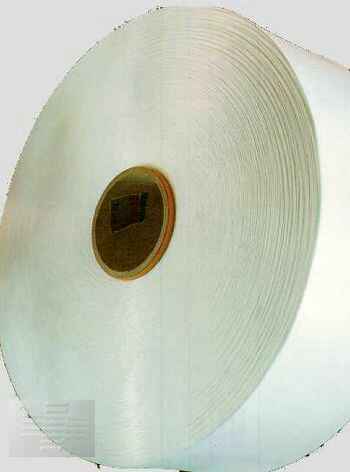 The manufacturing process of ring spun cotton yarn comprises of: