| Home | Quickie | Links | Web Design | Music | Adventure | Photography |
Links and thumbnail images below go to large JPEG images 150 - 500 KB in size.
For other photos, see the Adventure
Galleries: One | Two | Three | Four | Five | Six | Seven | Eight | Nine | Ten | Eleven
|
| ||||
| 1) Prairie Creek Redwoods State Park; Gold Bluff Beach |
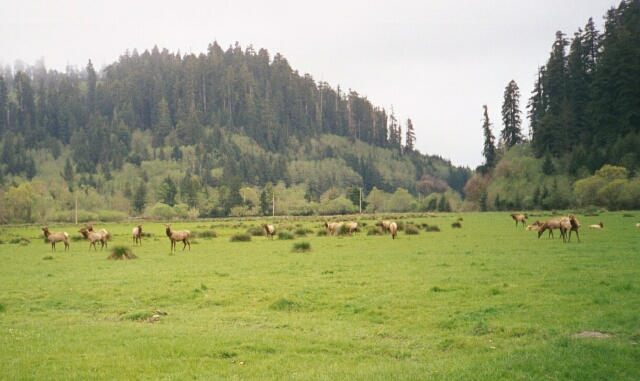
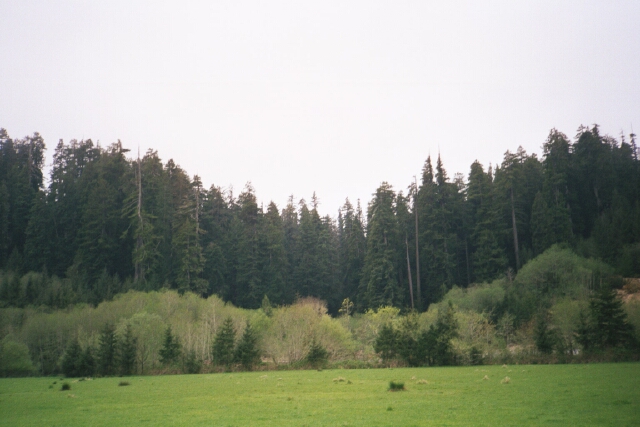
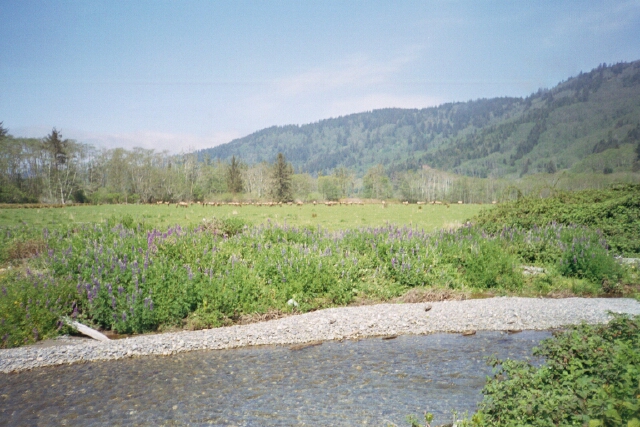
Row 1 is from Prairie Creek Redwoods State Park, a part of Redwood National Park, near Orick, CA (besides the last photo, which is a nearby ocean vista). Prairie Creek contains huge meadows where Roosevelt Elk gather, as well as a hundred square miles of old growth forest. There are dozens of trees over 300 feet tall.
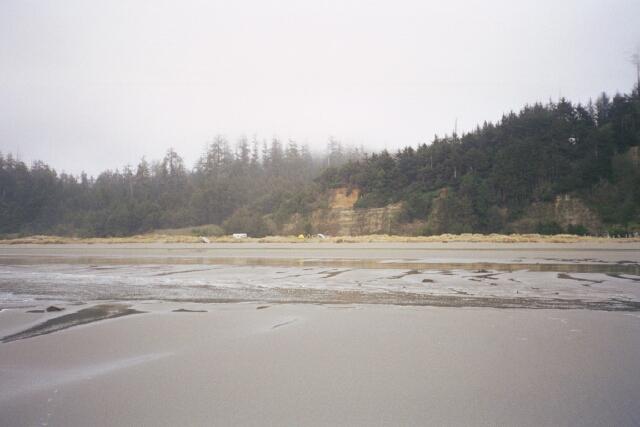
On the west side, there is a little-known beach campground called Gold Bluff Beach (see the tents in the second photo below). It's usually empty during the winter. It's a primitive beach with a forest on its edge and streams running from the hills through the dunes to the sea. You can walk for miles in either direction on this wide, wild beach where the ocean lashes without restraint. The Roosevelt elk herd crosses from the inland meadow, through the redwoods, to the coast, to graze on the grassy hillsides nearby. You reach this area by driving 6 miles west on a gravel road which branches off from a narrow section of Highway 101, crosses a small mountain ridge and descends to the coast. Near the campground, an ocean trailhead connects you to many miles of roller-coaster forest routes. Many of them connect with trails on the park's main road several miles inland, making it a very large and accessible hiking region. A few miles north of Gold Bluff Beach is Fern Canyon, one of the most pristine places you might ever see. I'm hoping for some photos of the place for a new gallery coming soon.... |
|||
|
|
|
|
|
|
| ||||
| 2) Sandstone Formation, Santa Cruz Mountains, CA |
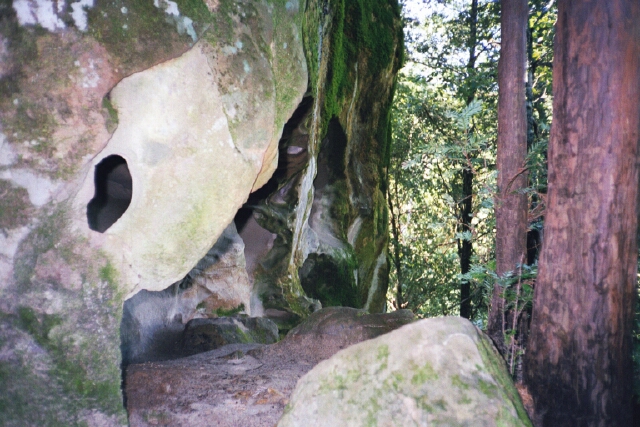
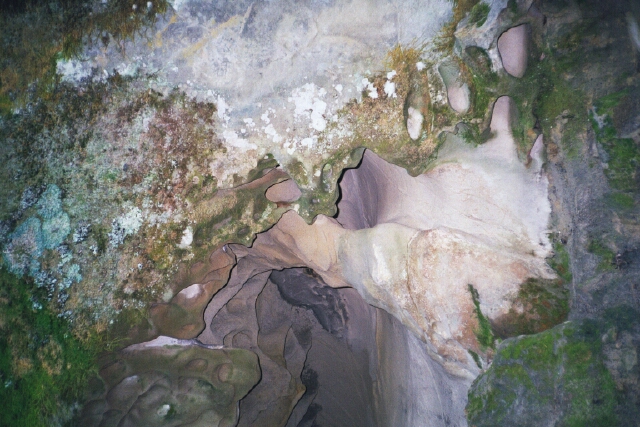
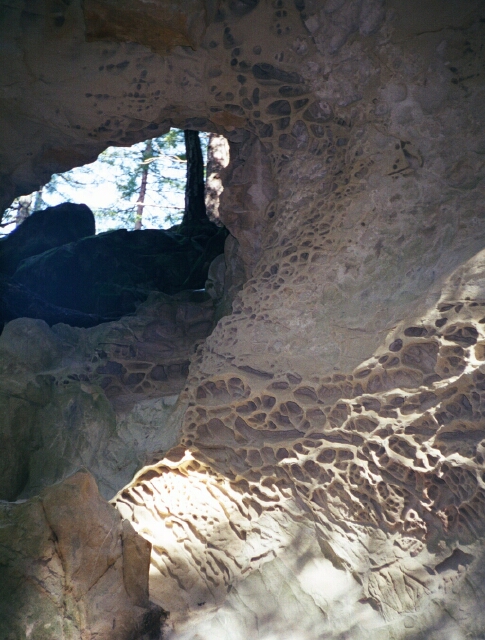
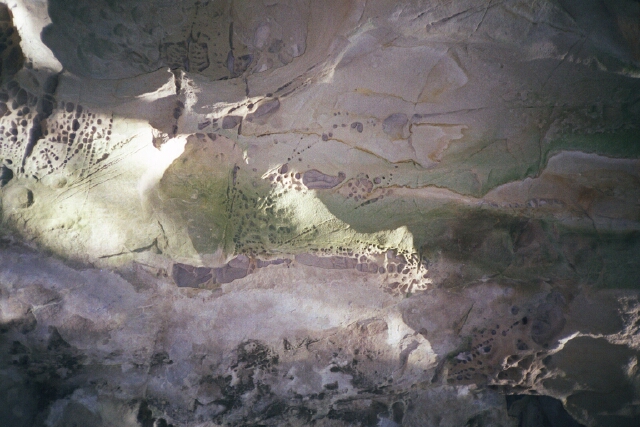
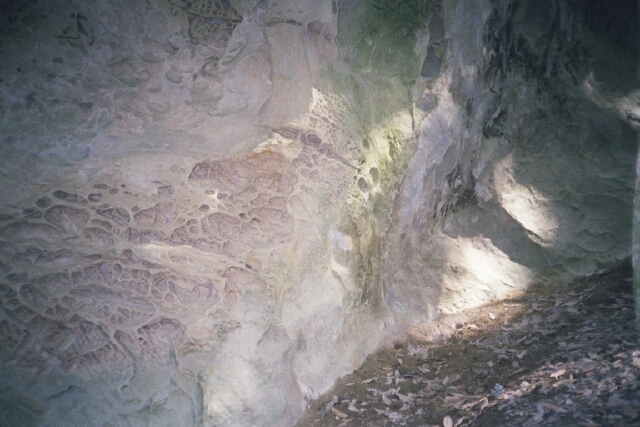
The second row of images are from El Corte de Madera Creek Open Space Preserve, in the Santa Cruz Mountains, about 5 miles north of Skylonda, CA, and approximately 5 miles west of the San Andreas fault. There is a large sandstone formation, the centerpiece of which is approximately 50 feet tall, full of caves, nooks, and crannies. Surrounding it are other huge slabs of stone, some of which have caves big enough to sit in. The central rock is fragile and should not be touched or climbed. This spot is in shadows most of the day, and I planned returning to get it with direct light on the central rockface. I had to wait a couple of hours for it that day.
This is a very magical spot, which no doubt has had spiritual value throughout human history. It's very quiet, being surrounded by huge redwoods, and buried in a gully. The rock, a special form rich in calcium carbonate called tafoni, erodes in a spectacular way, forming intricate patterns in several spots in the San Jose/Palo Alto area. A better-known tafoni formation is found at Castle Rock State Park, south of Saratoga, CA, and approximately 30 miles from El Corte de Madera Creek; both are on the ocean-facing side of the mountain range. | |||
|
|
|
|
|
|
| ||||
| 3) Northern California Beaches and Ocean Vistas |
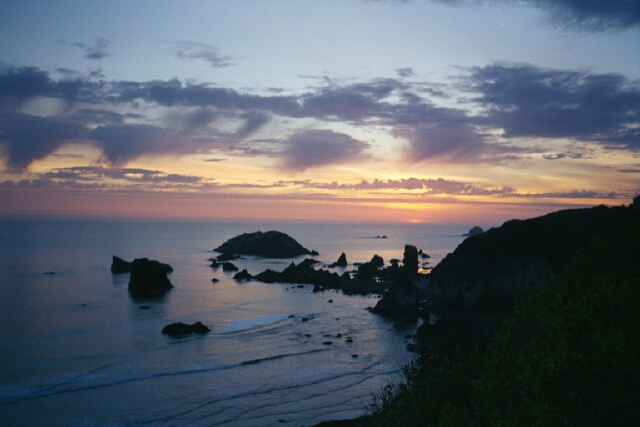
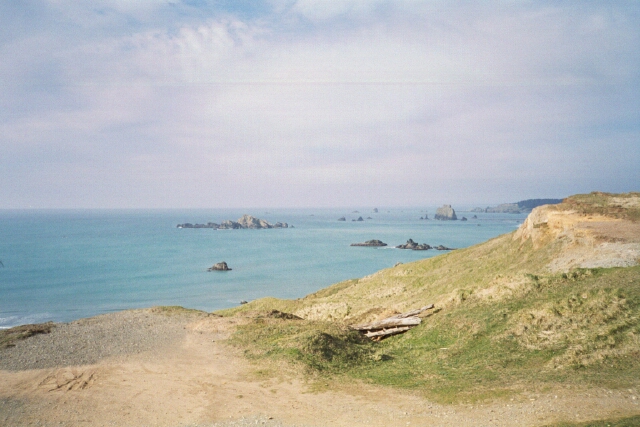
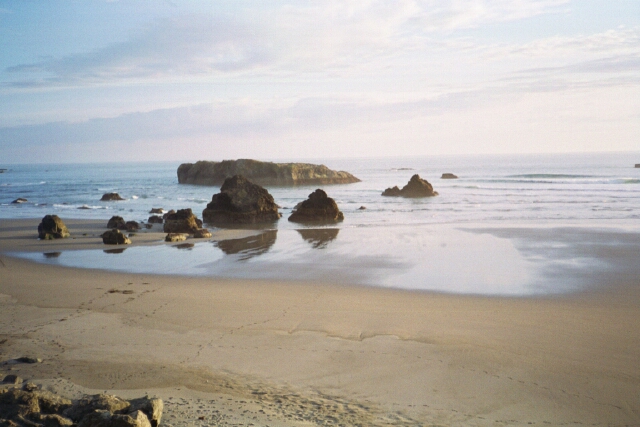
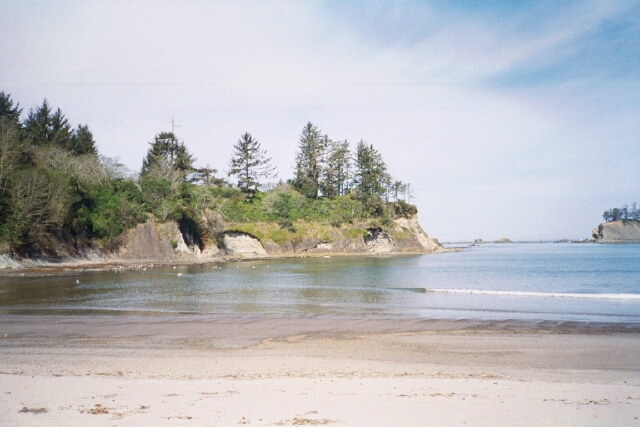
The third row photos were taken on the far Northern California coast.
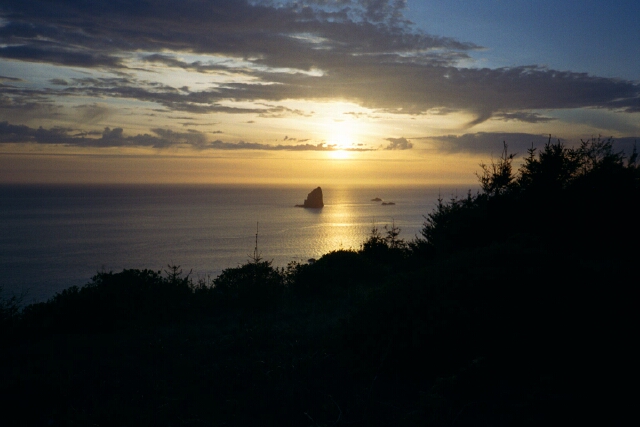
I spend lots of time driving that area, which is full of huge forests and empty beaches. Here are a few samples of the area between the border and Arcata, CA, almost 80 miles south. The sunset in the first frame is at the city park beach just north of Crescent City. The other photos come from places like Klamath and Humboldt Lagoons State Park. There are no big cities for hundreds of miles in any direction. The southern Oregon is coast is equally inviting.
| |||
|
|
|
|
|
|
| ||||
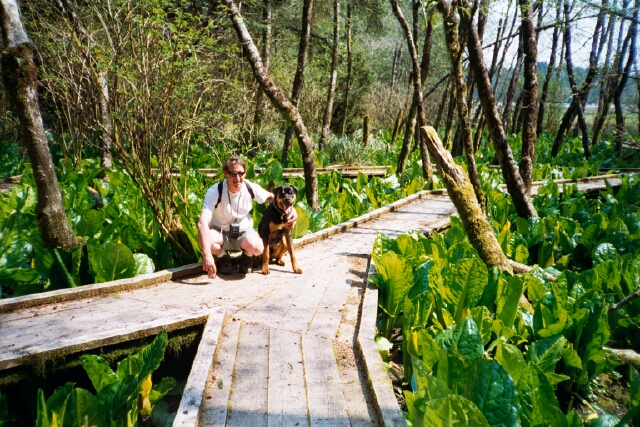
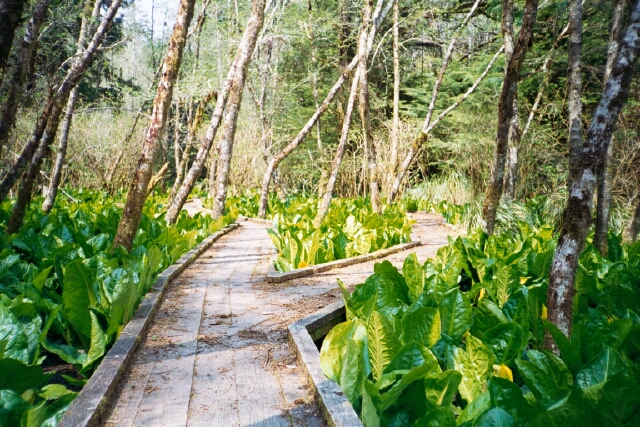
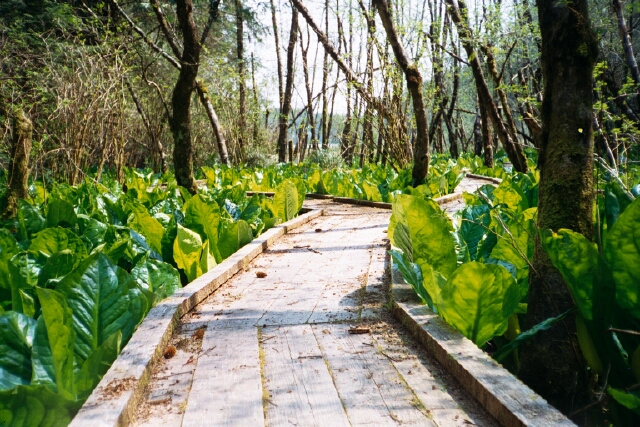
| 4) Skunk Cabbage Swamp, southern Oregon coast |
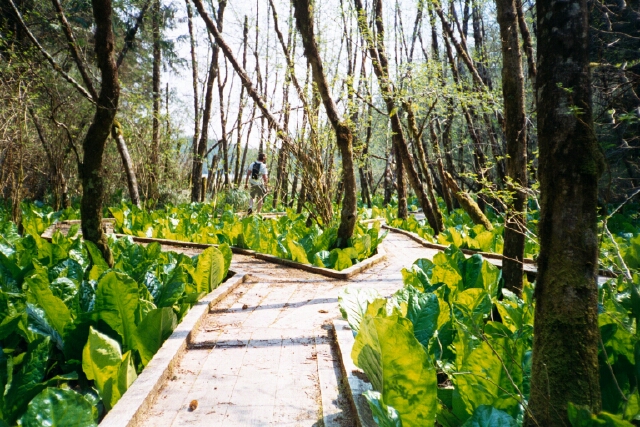
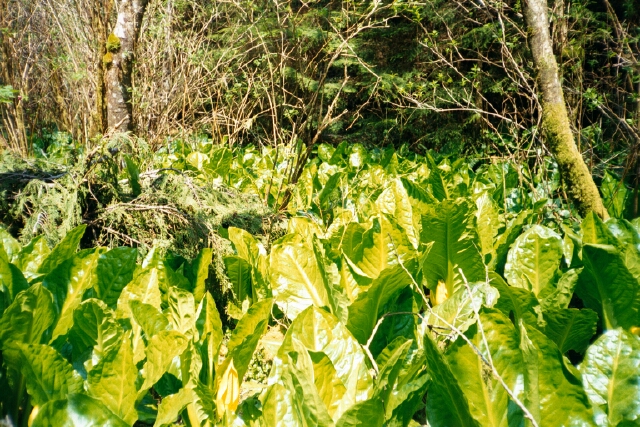
Row four features photos from a unique boardwalk in the wetlands near Sunset Bay State Park in southern Oregon. Here's an
online map of the the Bandon / Coos Bay, OR area. A trail leads through an immense swamp full of skunk cabbage, which are slightly more striking to the eyes as they are to the nose, hence the name. In one photo, my brother Jeff, who lives near Portland, OR, enjoys the spring day with his Rottweiler, Butch. The dog found the cabbages' odor interesting. It is imposaible to capture the true color of the leaves that day. Their leaves are incredibly waxy, and water beaded up on them, looking like transparent pearls in the sun. This plant is common in Northern California as well.
| |||
|
|
|
|
|
This page is: http://www.geocities.com/mountainwalker/one01.html
Last updated: October 9, 2001