 |
|||
ผลงานของศาสตราจารย์ ดร. มนตรี จุฬาวัฒนทล ภาควิชาชีวเคมี คณะวิทยาศาสตร์ มหาวิทยาลัยมหิดล email: [email protected] |
|
|||
ผลงานของศาสตราจารย์ ดร. มนตรี จุฬาวัฒนทล ภาควิชาชีวเคมี คณะวิทยาศาสตร์ มหาวิทยาลัยมหิดล email: [email protected] |
1. ผลงานวิจัยเกี่ยวกับระบบสืบพันธุ์เพศชาย อัตราการเพิ่มของประชากรโลกมีส่วนคุกคามสันติสุขของมนุษย์และความสมดุลย์ของธรรมชาติ แม้จะมียาและวิธีคุมกำเนิดในสตรีแล้ว แต่วิธีคุมกำเนิดเพศชาย ยังมีข้อจำกัดที่เหนี่ยวรั้งความยอมรับและการใช้อย่างแพร่หลาย จึงควรที่จะดำเนินการศึกษาระดับพื้นฐานเกี่ยวกับระบบสืบพันธุ์เพศชาย เพื่อสร้างองค์ความรู้ที่จะนำไปสู่การพัฒนายา และกรรมวิธีที่เหมาะสมกับการคุมกำเนิดบุรุษเพศต่อไป ศ. ดร. มนตรี จุฬาวัฒนทล ได้จัดตั้งกลุ่มวิจัยชีววิทยาระบบสืบพันธุ์ และได้ร่วมมือกับ ศ. นพ. วิฑูรย์ โอสถานนท์ แห่งคณะแพทยศาสตร์ โรงพยาบาลรามาธิบดี และคณาจารย์ในภาควิชาชีวเคมี อันได้แก่ ศ. ดร. สกล พันธุ์ยิ้ม, ศ. ดร. ม.ร.ว. ชิษณุสรร สวัสดิวัตน์, ศ. ดร. วิชัย บุญแสง, รศ. ดร. ธีรยศ วิทิตสุวรรณกุล และ ศ. ดร. นงนุช ตันไพจิตร ได้ดำเนินโครงการวิจัยต่างๆ โดยได้รับการสนับสนุนจากหน่วยงานต่างประเทศหลายแห่ง เช่น มูลนิธิร๊อกกี้เฟลเล่อร์ องค์การอนามัยโลก และ International Development Research Centre เป็นต้น |
| ผลงานวิจัยพอสรุปได้ดังต่อไปนี้ |
ก.ตัวอสุจิ ได้มุ่งศึกษากลไกการเคลื่อนที่ของตัวอสุจิเพื่อหาวิธียับยั้งการเคลื่อนที่ อันจะนำไปสู่การคุมกำเนิดในบุรุษ ได้พบว่า สารคาฟเฟอีนสามารถกระตุ้นการเคลื่อนที่ของตัวอสุจิ ได้ศึกษาการใช้พลังงาน (ATP) ของตัวอสุจิ กลไกของการสะบัดหาง และบทบาทของ cAMP และการเติมฟอสเฟทลงในโปรตีนไมโครทูบูลในการเคลื่อนที่ ความรู้นี้ได้ถูกนำไปทดสอบในคลีนิคผสมเทียม โดยการเติมคาฟเฟอีนไปช่วยเร่งการเคลื่อนที่ของตัวอสุจิ |
ข. ท่ออีพิดิไดมิส ตัวอสุจิที่ผลิตจากลูกอัณฑะจะยังไม่สามารถผสมกับไข่ได้ ความสามารถในการปฏิสนธิจะเพิ่มขึ้น เมื่อตัวอสุจิได้ผ่านการเจริญตัวในท่ออีพิดิไดมิส ดังนั้นกลุ่มวิจัยของ ศ. ดร. มนตรี จุฬาวัฒนทล จึงได้ศึกษาชีวเคมีของท่ออีพิดิไดมิส ได้พบว่าตัวอสุจิขณะที่เจริญตัวผ่านท่อนี้ ได้มีการเปลี่ยนแปลงผิวของตัวอสุจิ โดยการวัดปริมาณกรดไซยาลิค หมู่ประจุลบไซยาโลไกลโคโปรตีน และความสามารถในการจับกับเล็คติน ท่ออิพิดิไดมิสซึ่งอยู่ภายใต้อิทธิพลของฮอร์โมนเทสทอสเตอโรนจะหลั่งโปรตีนหลายชนิด บางชนิดก็จับกับผิวของตัวอสุจิขณะเจริญตัว คณะวิจัยได้พบไซยาโลไกลโคโปรตีนที่มีฤทธิ์เป็นอัลฟา-แลคอัลบูมิน ซึ่จะจับกับส่วนของตัวอสุจิที่จะไปจับกับผิวของไข่ในขณะเกิดการปฏิสนธิ และยังได้พบโปรตีนอิมโมโบบิลินในท่ออีพิดิไดมิส ที่สามารถทให้น้ำในท่ออีพิดิไดมิสมีความหนืดสูง เพื่อบังคับไม่ให้ตัวอสุจิเคลื่อนที่เพื่อประหยัดพลังงาน ขณะที่ตัวอสุจิจะถูกหลั่งออกจากท่ออีพิดิไดมิส |
ค. โปรตีนในน้ำอสุจิ คณะวิจัยได้ค้นพบโปรตีนและเอ็นไซม์ตัวใหม่ในน้ำอสุจิที่หล่อเลี้ยงตัวอสุจิที่ถูกหลั่งออกมาเพื่อผสมกับไข่ ได้พบเอ็นไซม์เอซิดิคโปรตีเอสและโปรเอ็นไซม์ของมัน ซึ่งสามารถเปลี่ยนเป็นเอ็นไซม์ที่ทำงานได้ ได้พบไซยาโลไกลโคโปรตีนจากต่อมลูกหมาก ที่สามารถจักกับสเตรอยด์ และพบไซยาไกลโคโปรตีนจากต่อมเซมินัลเลซิเคิล ซึ่งทำให้น้ำอสุจิกลายเป็นวุ้นเมื่อถูกหลั่งออกมาใหม่ๆ ความรู้นี้ได้นำไปสู่แนวคิดที่จะคุมกำเนิดบุรุษ โดยการเพิ่มความหนืดของน้ำอสุจิด้วยการเติมเล็คตินที่สามารถจับไกลโคโปรตีนในน้ำอสุจิ |
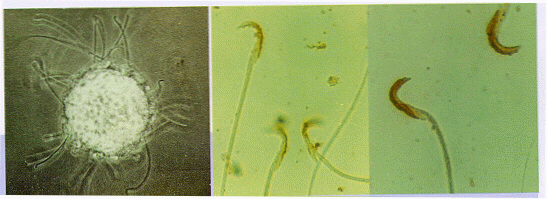
ตัวอสุจิจับกับ DEAE-Sephadex Sperm binding to DEAE-Sephadex |
ตัวอสุจิของหนู (Rat Sperm) |
Achievements in Research on Male Reproductive System Dr. Montri Chulavatnatol email: [email protected] |
Global population growth is a threat to the well being of mankind and to the balance of nature. Although pharmaceuticals and methods for female fertility control are available, the control of male fertility is limited, not well accepted and not widely used. Basic research should be carried out to provide the understanding of the male reproductive system so that suitable birth control pills and methods can be developed in the future. Professor Dr. Montri Chulavatnatol decided to set up a reproductive biology group. He cooperated with Professor Dr. Vitoon Osathanondh of Ramathibodi Hospital and other faculty members of the Department of Biochemistry, namely Professor Dr. Sakol Panyim, Professor Dr. M.R. Jisnuson Svasti, Professor Dr. Vichai Boonsaeng, Assoc. Professor Dr. Dhirayos Wititsuwannakul and Professor Dr. Nongnuj Tanphaichitr. Their research projects won supports from several international organizations such as Rockefeller Foundation, World Health Organization and International Development Research centre. The research achievements are summarized below. |
a. Sperm Mechanism of sperm motility was identified as the focus of the research in order to seek intervention of sperm motility as a mean towards male contraception. The research group was the first to discover the activation of sperm motility by caffeine. Also studied were the energy (ATP) requirement, mechanisms of tail movement, the role of cAMP and the importance of phosphorylation of microtubules in sperm motility. The understanding led to clinical test of caffeine stimulation of sperm motility to improve on the success of in vitro fertilization. |
b. Epididymis Sperm leaving the testis are immature and incapale of fertilization. The fertilizing capability is imparted when the sperm undergo maturation during passage through the epididymal tubule. The research mapped out changes on the surface of the sperm during epididymal maturation as detected by quantitation of sialic content, anion sites, sialoglcoproteins and lectin-binding characteristics. Under the testosterone control, the epididymis also secreted proteins that can bind and modify the sperm surface. An epididymal sialoglycoprotein was discovered to possess an alpha-lactalbumin activity which blocked and protected the egg-binding sites of the sperm during maturation. In addition, an immobulin from the epididymal secretion was found to be responsible to a marked increase in the viscosity of the epididymal fluid. The high viscosity kept the mature sperm quiescent in the epididymis and preserving the sperm energy. |
c. Proteins in seminal plasma The research uncovered several new proteins and enzyme in semen. An acidic protease and its proenzyme were discovered and the proenzyme activation into the active enzyme was described. Also discovered was a new sialoglycoprotein from ventral prostate that possesses steroid-binding activity. Another new sialoglycoprotein from seminal vesicle was discovered to be responsible for semen coagulation following ejaculation. The knowledge pointed to a novel approach to male fertility control by enhancing the viscosity of semen with the addition of lectins to aggregate glycoproteins in the semen. |
| Last updated: Friday 24 October 1997 created and developed by Thitika Vajrodaya email:[email protected] |
 |