Bicycle Camping in Tuscany and Latium(September 2008)
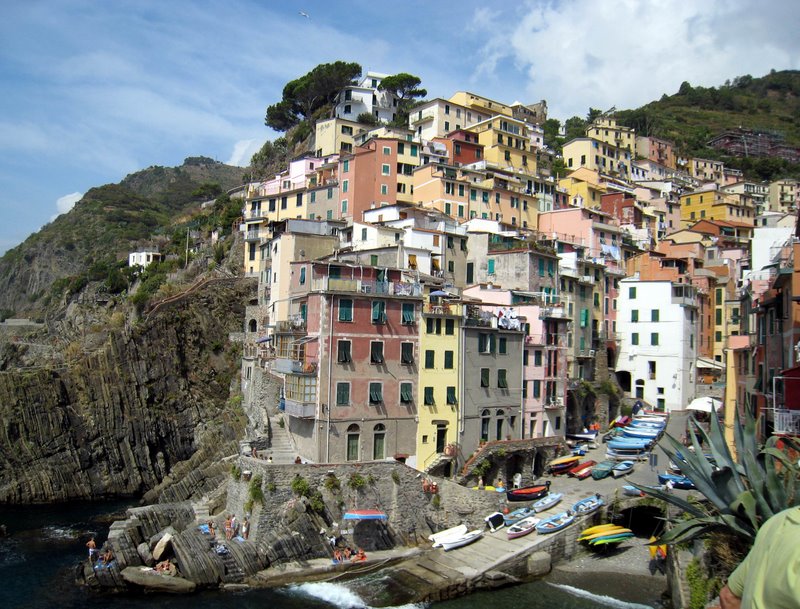
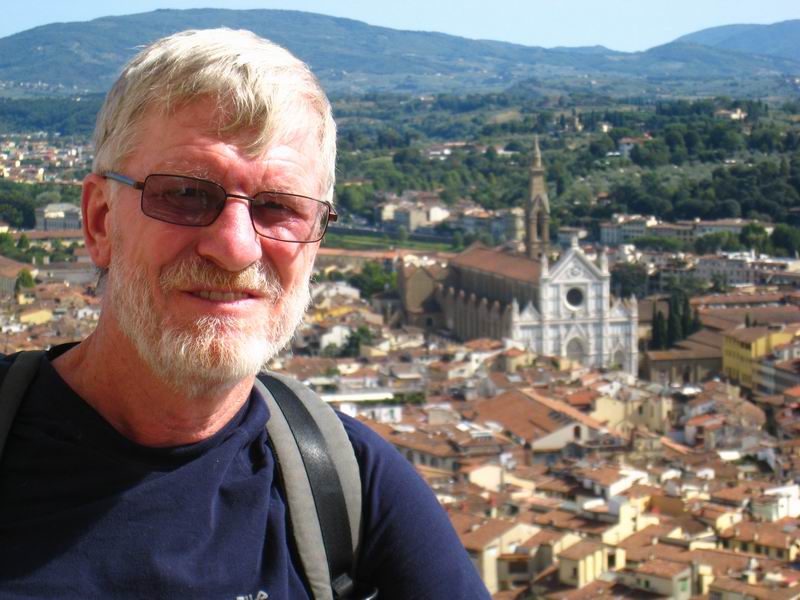
Riomaggiore (Cinque Terre) The Author in Florence
Bicycle Camping in Tuscany and Latium(September 2008)
Riomaggiore (Cinque Terre) The Author in Florence
Itinerary
|
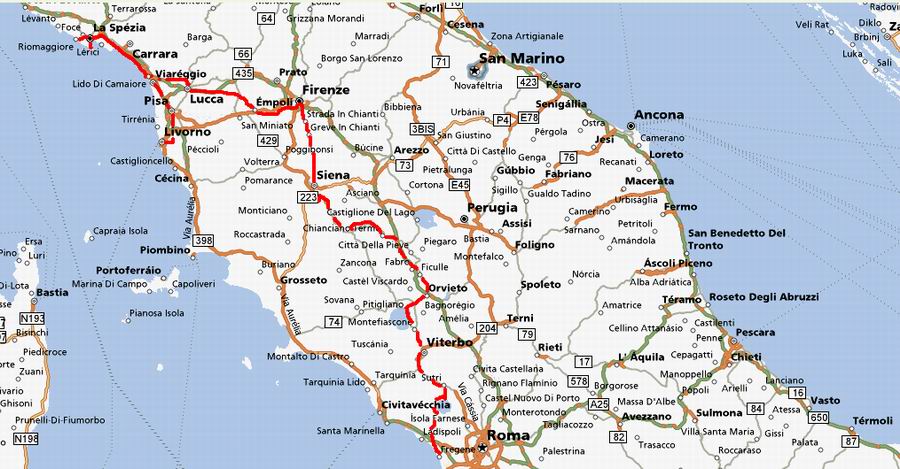
After crossing France from Bordeaux to Lausanne in June 2007, I left my bicycle and camping equipment in Switzerland (see Bicycle Camping through France from Bordeaux to Lausanne). For 2008, the challenge was Italy, a very hilly country with a limited number of campgrounds. To plan my itinerary, I used a 1:200,000 Italian Touring Club map and convenient Web sites like Google Maps, Camping.it and SBB.ch (the Swiss Railways), which offer neat bike-on-train services on both domestic and international lines, but you have to phone to make a reservation. |
- From Switzerland to Tuscany
- A Dip in Liguria
- Back in Tuscany
- Through Umbria and Latium
- Conclusion
From Switzerland to Tuscany
|
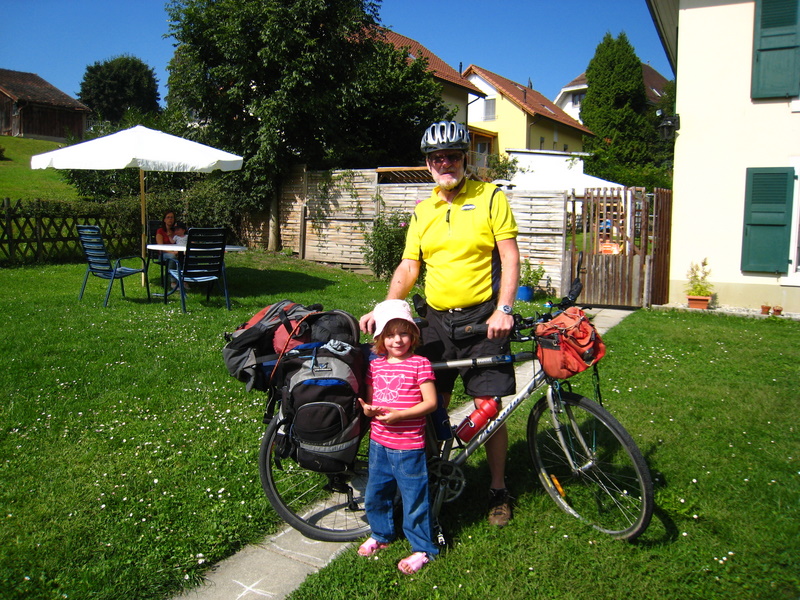
On August 29, I took a night flight from Montreal to Basel. Around noon, I hopped on the first train going to Lausanne, where I claimed my reserved train tickets for the next day. Yannick picked me up in the Cossonay Station at 7 p.m. |
Day 0 – Monday, September 1 – From Cossonay to Lausanne (20 km in 1½ h) – The Livorno train
|
To catch my train at 8 h 45, I left on my fully loaded bicycle at 6 a.m., with my bright yellow jersey on. Exceptionally, I had to ride in the dark – I should have know that the Central Europe Summer Time (CEST) is two hours early. Everything went fine. Putting a bicycle on a Swiss train is not a big deal: you just hang it by the front wheel on a hook in the specially marked wagon. With a connection in Zurich, the trip lasted 12 hours. On the train, I shared my compartment with a group of pensioners from Bern going to Genova, and then with young French backpackers and a restless, muzzled dog going to Pisa. Why, of all the places, did I choose to start off from Livorno? The fact is that, because I missed the « Show intermediate stops » button on the SBB Web page, I thought that Livorno was the only stop after Milano – which I had ruled out because I hate getting in or out big cities. Retrospectively, I think that Pavia, way up north, would have been a better choice, but then, the itinerary would have been radically different. In any case, it was already dark when I got off the train in Livorno at 8 p.m. One hour later, after a two-kilometer ride, I was settling in a nice little room in Hotel Giappone Inn (48 €), booked on Hostels.com. |
Day 1 – Tuesday, September 2 – From Livorno to Pisa (50 km in 4½ h)
|
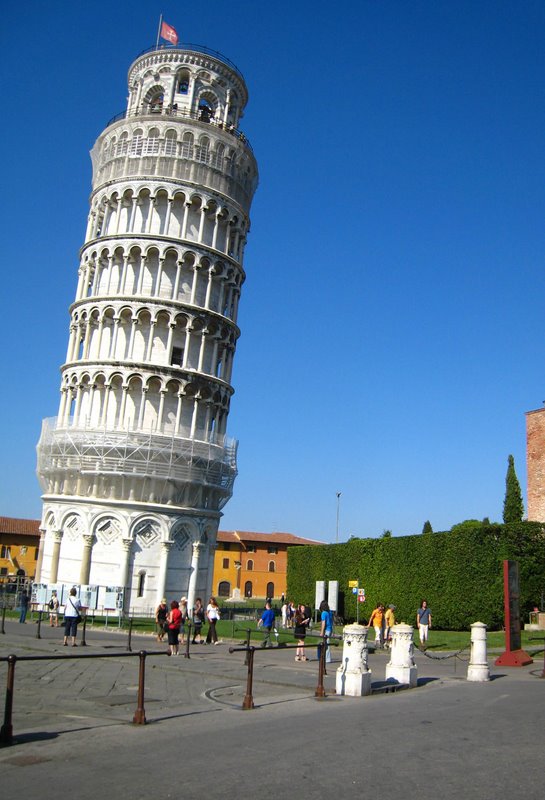
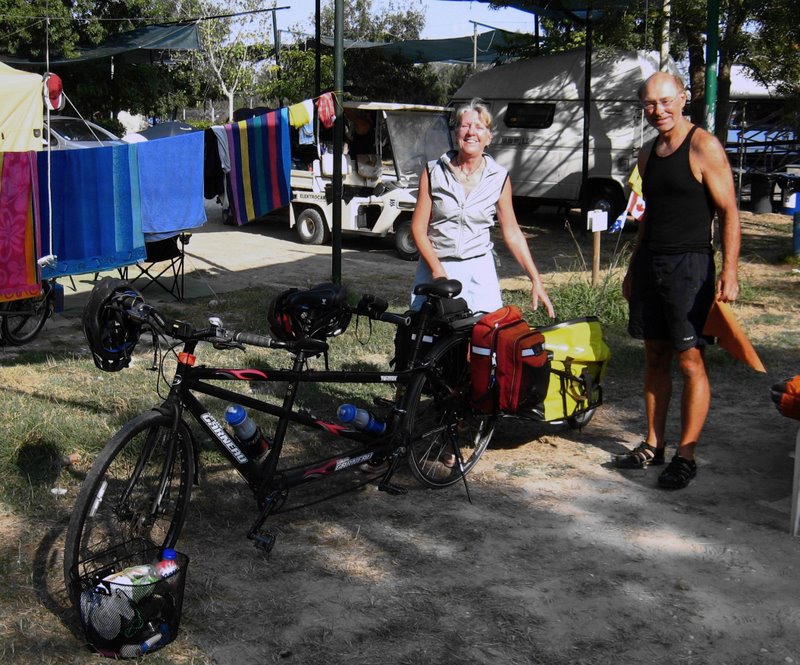
The next morning, after a light breakfast in Caffè Grande, I went for a walk around Castel Nuovo, standing in the middle of a large basin right in the center of the city. Rebuilt in a plain style after the devastating bombing raids of 1944, Livorno doesn’t attract hordes of tourist as many other Italian cities do. When I set off for Pisa around noon, under a clear blue sky, it was already hot. My plan was simple: crossing the canal and taking the shortest route northward (less than 30 km). What should have been a short ride in the costal plain got out of hand after a false start in the port installations. Wherever I went, the only way out was a four-lane highway, forbidden to cyclists. This is a clear illustration of Cycling in Italy Law no. 1: “If present, secondary roads signs probably lead to an endless loop”. So, I had to back track and head eastward on SP4 and SP21* deep enough in the countryside to stay clear of the highways knots. Then, I turned northward through the hills and small agricultural towns like Fauglia and Cenaia. Past the Arno River, I took SR206, built on the track of ancient Via Emilia. My GPS proved to be quite useful in the rural dirt roads as well as in the narrow streets of Pisa, to dodge one-way streets, deviations and dead ends. As I was heading for the campground, I stumbled upon the amazing Leaning Tower on Piazza dei Miracoli, packed tight with tourists. The first thing I did was buying a big bottle of ice-cold water (2 €) to refill my two bike bottles. Campeggio Torre Pendente is another caravan-packed campground (“Little Deutschland”), featuring a pool, a restaurant and a small grocery with cold beer. Like in most campgrounds I saw in Italy, the ground is barren except for an occasional tuft of weeds in protected spots. My neighbors were a couple of middle-aged teachers from Rawdon, Quebec. They had logged some 4000 km on their tandem, going all over Europe in three months. We exchanged tips on GPS riding. The next day, I left my bicycle in the campground and visited the Old City on foot, starting with the Camposanto frescoes. Like everywhere else in Europe, a good part of the historic monuments are cocooned in ungainly scaffoldings, like giant chrysalides, eventually metamorphosing into beautiful marble works in their original shades. A Place of Miracles, indeed. * SP (Strada Provinciale), SS (Strada Stadale) and SR (Strada Regionale) are open to cyclists. |
In Lausanne with Jade
The Leaning Tower of Pisa
A Dip in Liguria
Day 2 – Thursday, September 4 – From Pisa to La Spezia and Portovenere
(107 km in 6½ h; average mean speed 16.4 km/h, max. 39.6 km/h)
|
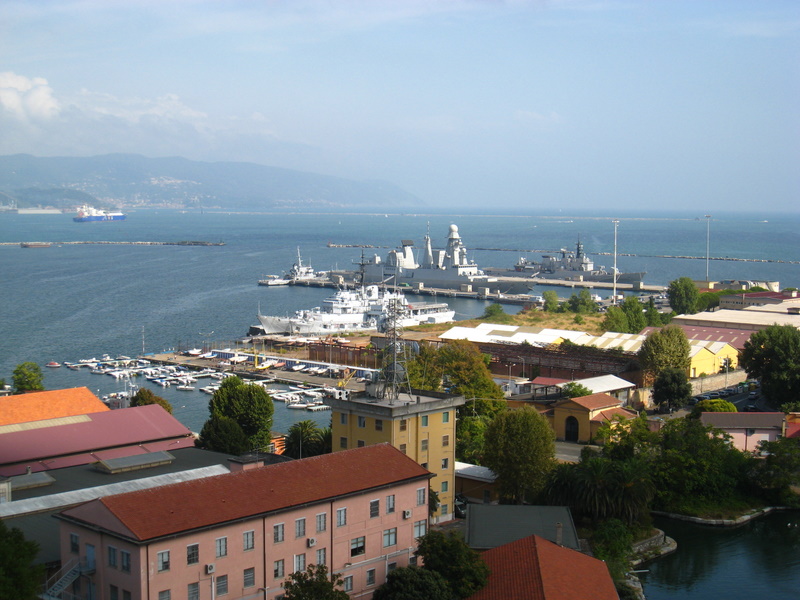
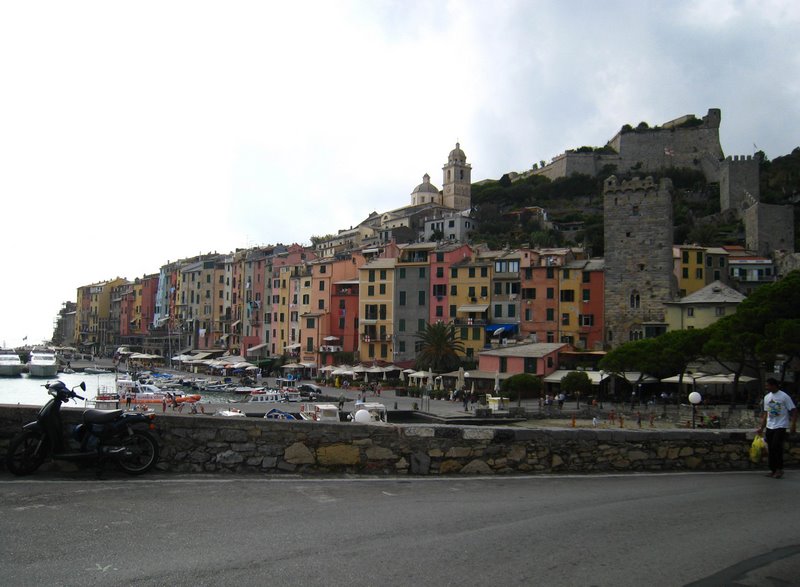
Early on a cool, grey morning, I took the shortest way to La Spezia, busy Via Aurelia. Just before Viareggio, I started to follow the seaboard. Cycling effortlessly in the flat coastal plain, I passed in front of an uninterrupted line of seaside resorts hiding the sea. There is a “bicycle path” on the beach side, but few cyclists use it, because there are too many pedestrians and hidden entrances. I stopped for a break in one of the rare public beaches, in Marina di Carrara. A few people were sunbathing on the coarse gravel shore, but nobody was swimming. A few kilometers past the docks where white Carrara marble blocks are loaded by huge cranes, a dark green promontory marks the end of the coastal plain. There, the road leaves the seashore and begins a smooth climb between high hills (SP21 and SP1). Except for the golden fields of standing corn and the wilting platanes, there were very few signs of the coming fall. Because there are no campgrounds past Arcola, I wanted to stop in Lerici, but I gave up after a few kilometers in the terrible hills. Reaching La Spezia around 3 p.m., I decided to go on to Portovenere, on the tip of the peninsula, some 11 km farther. Out of La Spezia, the road climbs steadily and offers spectacular views of the port facilities and of some big grey, Lego-style frigates, over the walled perimeter surrounding the naval base. Then, the road snaking around every bluff and ridge goes up and down, never higher than 50 m. The sea view is spectacular. That unique piece of land, a UNESCO Natural Reserve, is off limits for campers, supposedly to preserve its natural condition. The quaint village of Portovenere, a quiet fishing village topped by a big medieval fort, has been taken over by a new kind of invaders recently. There is a shop or a restaurant on the ground floor of most of the tightly-packed pastel-colored high houses on the waterfront. There were no tourist rooms there, only a few pricey hotels. Back in La Spezia around 5 p.m., I started roaming around the Central Station where small, cheap hotels can be found, according to the Lonely Planet – but all of them were either full or too expensive. There were some signs advertising rooms near the Western Union; I went there to make phone calls. Most Italians doing business with tourists speak English, but my basic Italian proved to be useful, because their English was often worse. I soon ran out of places to call, but the kind attendants proposed me some more. Finally, I talked to a woman who asked me to come to her place when she got back from her work at 7 p.m. I waited out the rain, sipping a cold beer in a terrace bar. When I reached her address, there were about ten possible names to ring. I explained my problem to a lady smoking in front of a shop. Flipping her cell phone, she asked the landlady to come down. My troubles weren’t over yet: seeing my loaded bicycle, she had changed her mind about renting me a room. I presented myself as a sportsman who had come all the way from Canada to see the beautiful Ligurian Coast, and had no other place to go. She let me in after I agreed to leave my bicycle outside. I got a nice room with a private bathroom (50 €) for two nights. She took a long time to explain the proper use of the elaborate multiple lock system. After a hot shower, I had a great fish diner on the pedestrian mall nearby. Back in my room, I had to close the window and use wax ear plugs to sleep because noisy locals kept haggling and shouting in the street until 2 a.m. |
The Port of La Spezia
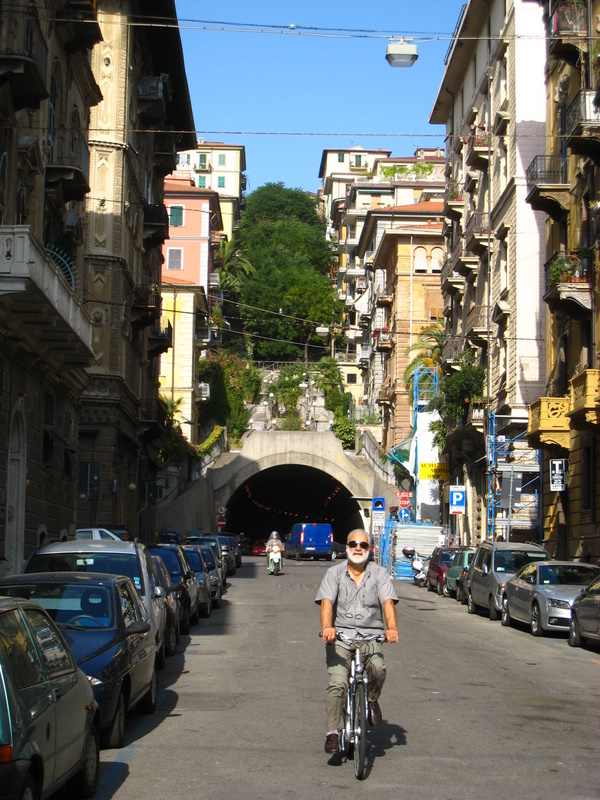
La Spezia
Day 3 – Friday, September 5 – From La Spezia to Riomaggiore and back
(30 km in 2½ h; a.m.s 11.7 km/h, max. 52.3 km/h)
|
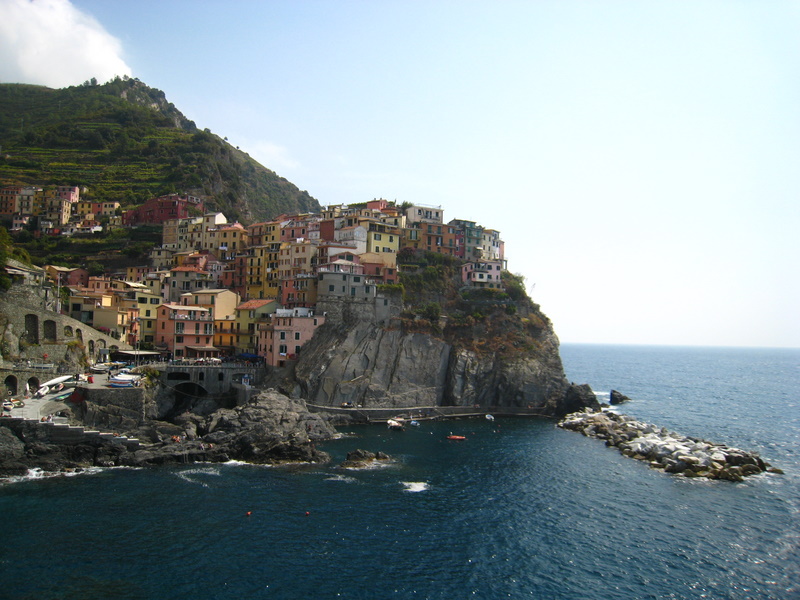
The next morning, somebody had pulled out my rear-view mirror during the night. Leaving my bicycle outside was not a big risk; there were already many others locked on that street and its U-lock and steel cable meant some extra work. Whatever, the second night, I pushed it inside in the hall without asking permission. I left La Spezia on a cool and sunny day, without my panniers. After a long climb on SP370 and going through a tunnel, I was riding on the beautiful panoramic coastal road some 300 m above the sea, going through vineyards spreading up and down the hills. Soon I was loosing every hard-earned meter going down the winding road to Riomaggiore, the first of the Cinque Terre, another small fishing village that morphed into a major tourist attraction. Around 11 a.m., I locked my bicycle in front of the railway station and started off on the pedestrian trail (5 €) snaking over the railway, in the middle of the escarpment. It was already bustling with tourists, but the column thinned after high-perched Manarola, the second village. Second best to a ship tour, walking is the best option to see the steep, towering cliffs sculpted by the waves. The temperature rose to some 30 °C and there were few shaded spots. I turned back after reaching Corniglia, some three kilometers from the starting point. I stopped for a picnic on a shaded, cliff-hanging terrace between the sky and the sea. Back in Riomaggiore, I walked past the station to the end of the trail, passing through a labyrinth of narrow alleys and steps. There, a high terrace offers a fantastic view of the village, with high houses piling up from the shore to the top of the hill like a giant stack of colored blocs. As I was on my way out on low gear, a young red-headed British girl cracked: “Hey! You look like Santa Claus!” “Thank you, sweetie, but I’m afraid I don’t have a present for you now”, I quipped. |
Portovenere
Manarola (Cinque Terre)
Back in Tuscany
Day 4 – Saturday, September 6 – From La Spezia to Piano di Mommio (90 km in 7 h)
|
Early in the cool morning, I was going back in my tracks on the flat coastal road, having discarded other options such as the SP1/Via Aurelia, to stay away from heavy trucks, and the small mountain roads going through the Apuane Alps - there are some campgrounds in that area, but climbing up there means severe suffering. In Viareggio, the temperature was back to 30 °C or more. Heading for the Massarosa campground, I had to take the SS439 to cross the highway. Then, there were no more road signs (C.I. Law no. 1) and soon after, speeding motorists were yelling warnings (or profanities?) at me: I was riding on the shoulder of the busy A12 highway. I turned back and headed south, looking for an overpass or an underpass, to no avail: as far as I could see, Viareggio, stuck between the sea and highways, is totally cut off from the countryside. Back to the starting point, I asked my way to Massarosa. The trick is to ride for about one kilometer on the access road and then to take the last exit instead of entering the highway. Without that information, I would have been doing circles there forever. Soon after, I was riding in the beautiful Tuscan countryside. In Massarosa, folks playing cards told me that the campground I was looking for actually was in Piano di Mommio, some 15 kilometers back. Case in point, the C.I. Law no. 2: “Because most small places lost their individual names when they merged, any given country address can be anywhere within a radius of 25 km”. To find Piano di Mommio, I had to ask my way to several people, who sent me in as many different directions – arrrghhh! Located in a quiet place at the foot of the hills, Campeggio Dotel Versaglia Country Club is a high-end place covered with trees, owned by an elderly British lady (30 € for two nights). My tent site, a flat grassy spot under a huge parasol pine, was gorgeous, except for the sticky resin globs in the grass. I went back to town to get some food. A peculiarity of Italy is that most supermarkets don’t carry cold beer; to take out some, try any bar. The next day, I went for a walk in the hills to enjoy the view of the pretty cypress-dotted countryside, but all the roads going up were dead ends, and every other house was guarded by a raging dog. After walking for some time on the uninspiring main road, I spent the rest of the afternoon at the swimming pool. A helicopter giving aerobatic tours spoiled an otherwise perfect Sunday afternoon.. |
Day 5 – Monday, September 8 – From Piano di Mommio to Florence
(120 km in 8 h; a.m.s.: 16.5 km/h, max: 47.8 km/h)
|
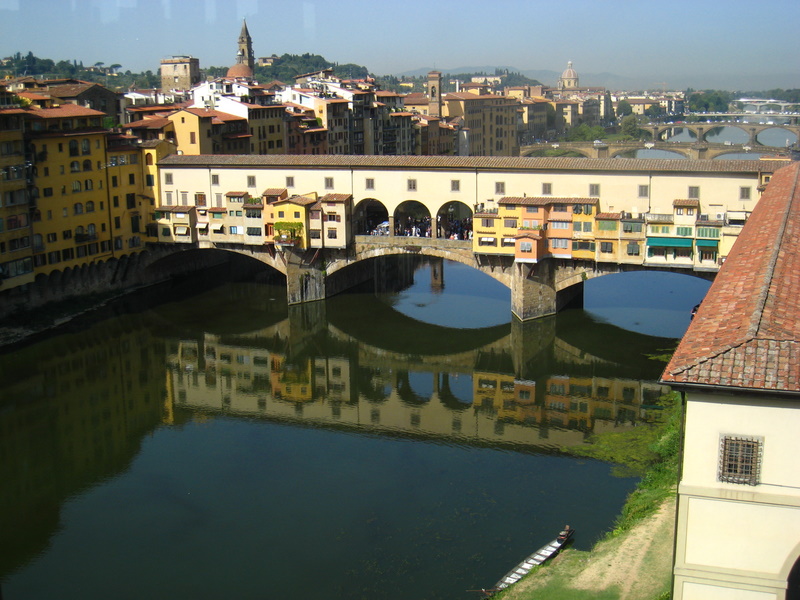
Hitting the road at 8 a.m. on a clear, cool morning, I was heading for Lucca on busy SS439, a narrow, shoulderless road. Like most rural roads I saw in Italy, it was littered with plastic and paper on both sides, with some occasional shattered glass. Despite the lousy road conditions in some places, I never felt threatened by the motorists, who are used to share the road with bicycles and slow motor tricycles and seldom showed signs of impatience. Once in a while, I pulled over to the side to let a bus or a truck pass; I hate blocking traffic, and even more riding with a grumbling diesel motor in my back. Just out of Massarosa, as the traffic subsided, I hit the only notable hill of the day, a 2½ km, 175 m high climb. Later, I fell on a nice bike path along Rio Serchio, from Ponte S. Pietro to Ponte S. Quirico, just before entering Lucca, a charming small walled city filled with tourist busses. After a quick tour of the place and an espresso on the main piazza, I took SP61. In a pastry shop just before Altopascio, I engaged in small talk with a lady who wanted to know everything about me. Having to tell the story of one’s life in five minutes certainly is the ultimate Italian fluency test! Because everything is closed from 1 to 5 p.m., there is nothing you can do, see or eat in most cities. I for one prefer riding than waiting. Around 1 p.m., I fell back on the Arno in Empoli. There is a campground near Limite-Capraia, but getting there involved a detour up in the hills. I preferred pushing on to Florence following the lazy, twisting river, until Lastra a Signa. I stayed on the south shore, riding through an occasional riverside park or on short bike path stretches. The GPS was worth its weight of gold to pick small streets avoiding traffic jams. Then, road works forced me to cross on the north side. Right in front of me, the Ponte Vecchio was basking in the late afternoon sunlight. I had to pass through swarms of tourists crowding the narrow sidewalks and overflowing in the cobbled streets, fighting for space with the slow-moving cars and humming scooters swooshing by. Reaching Ponte Niccolo, I crossed back the Arno to climb the Michelangelo parkway, going around the namesake hill, a quiet green space in the middle of an otherwise hectic city. Conveniently located near the belvedere right on the top, Campeggio Michelangelo (10.5 €) offers all the services and a beautiful view of the Old City, less than two kilometers away. After a cold shower, I moved to the bar just in time for the Happy Hour. The next two days, I walked around the City of Marvels under a perfect blue sky. The highlights of my stay are the spectacular view of the city on the top of the Duomo (6 €, with a close look at the staggering Last Judgment scene painted inside the cupola), and a visit to the Uffizi Gallery, to see the Botticelli, Michelangelo and da Vinci masterpieces, and a very rich exposition on “Giotto and his heirs”. During the hot afternoons, the few shaded spots in public parks were crowded, and gelati were selling like hot buns, so to speak. For the price of one of those, I cooled off in an Internet spot (3 €/h). The warm nights in the crowded campground were comfortable (no mosquitoes whatsoever), except for the night club nearby blaring dance music until 3 a.m. The last night, I met Bert, a 66 year-old Dutch cyclocamper who started off in Nice. Heading for Venice to meet his better half, he was nervous about crossing the Appenines. |
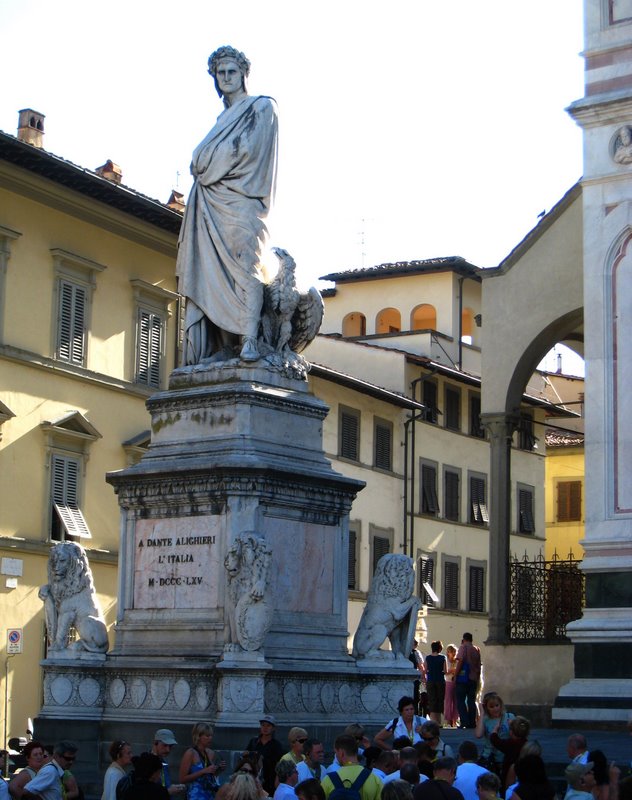
The Statue of Dante
The Ponte Vecchio in Florence
Day 6 – Thursday, September 11 – From Florence to Siena
(71 km in 5½ h; a.m.s.: 12.9 km/h, max: 47 km/h)
|
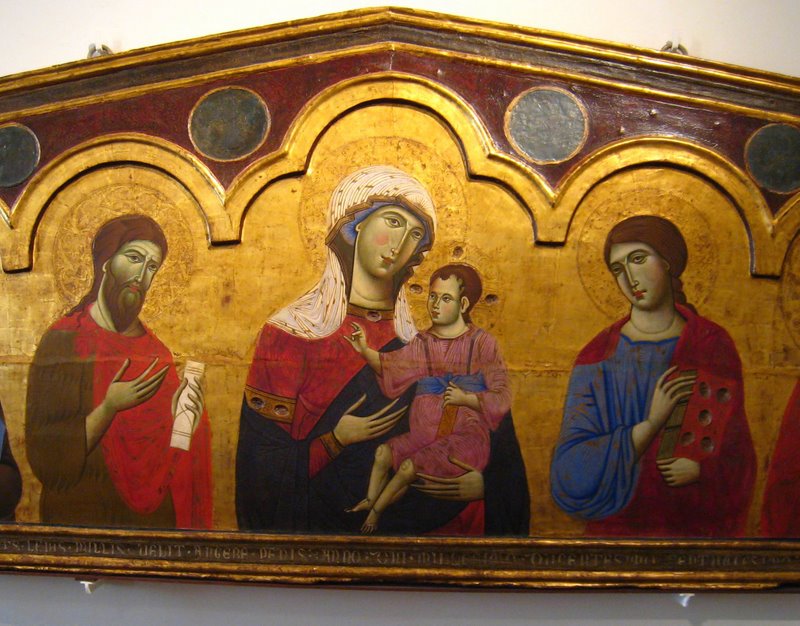
Leaving Florence on a grey morning was easy with the GPS. Instead of the easier SS2, I took the shorter SR222, cutting across the vineyards and olive fields of hilly Chianti. Soon, the sun was up. There are three main climbs, a small but steep one (350 m) in Chiocchio, a long, winding one in Panzano (475 m) and a killer in Castellina (575 m), and many more smaller ones. The sight of the gorgeous rural scenery is very rewarding, but more so going downhill. The gold and green landscape is spotted with large, barren brown patches, obviously fields sprayed with herbicides for the next spring. I stopped for water in Quercegrossa, named after the majestic secular oak trees growing around it. The road was a roller coaster to the very end; I had to walk my bicycle up the final Colleverde hill, and there stood proud Siena, a compact walled city capping a hill in the middle of a deep valley. Thanks to Google Maps viewed the night before, reaching Campeggio Monteverde (14.5 €), on the top of the namesake hill, wasn’t too difficult. Despite major revamping works in progress, the place was quiet and clean, and the services were adequate. I didn’t miss the crowded and noisy Michelangelo campground. There is a good bus service between the campground and the Old City (0.90 €). Warned of the coming rain, I planted my tent on a small bump on the barren sandy ground. Soon after, I slumbered into a deep sleep. I spent the next two days rambling around in the convoluted streets of the medieval city, visiting a record number of churches and museums, mainly because the weather turned to rain on the first day. Waiting for the bus, I picked up some hailstones bigger than the proverbial pigeon’s egg; the broken ones showed an opalescent agate-like structure, but aesthetic considerations were probably Iost on the local vine growers. It rained all night and the next morning, some campers had to pack up, but my stuff was still dry. That day, fleeing the rain, I visited the cathedral, renowned for its mosaics, and the Pinacoteca. The golden-backdrop paintings of the old Sienese masters are different from their Byzantine models, showing a serenity and refinement of style which probably inspired early 20th century Decorative Arts painters like Gustav Klimt (Patented art connoisseurs may say that I had an overdose of Madonna and Child paintings, which I won’t deny.) So, which city did I like best, Florence or its arch-rival Siena? The short answer is, they are like apples and oranges: you’ve got to sample both. Back to the damp campground, I squatted an isolated dry place under the porch of the First Aid clinic to cook myself a great dinner (see Minimalist Cooking for Campers). Later, I met two other cyclocampers, Lodvic, a young Belgian going to Pisa, and an Australian woman who was going on a nowhere trip all over Europe. |
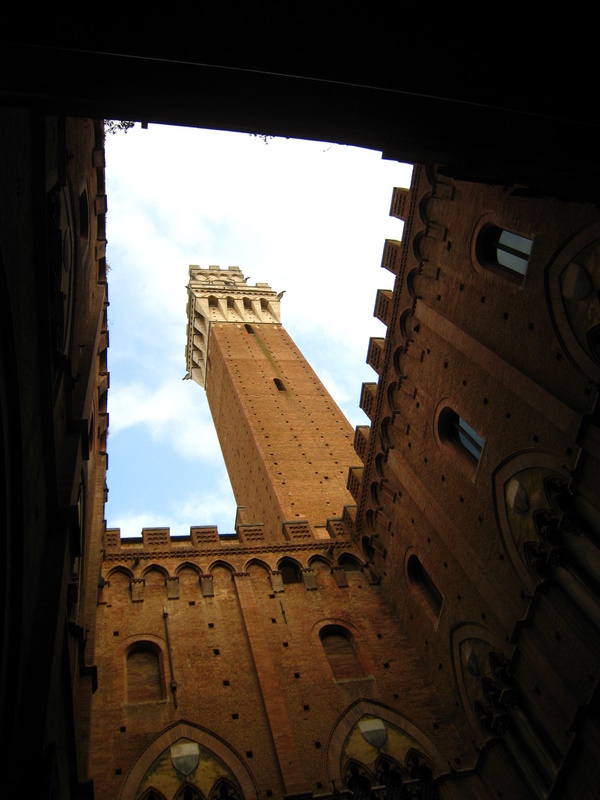
The Del Mangia Tower
Sienese Art
Day 7 – Sunday, September 14 – From Siena to Pienza
(61 km in 4½ h; a.m.s.: 13 km/h, max: 40 km/h)
|
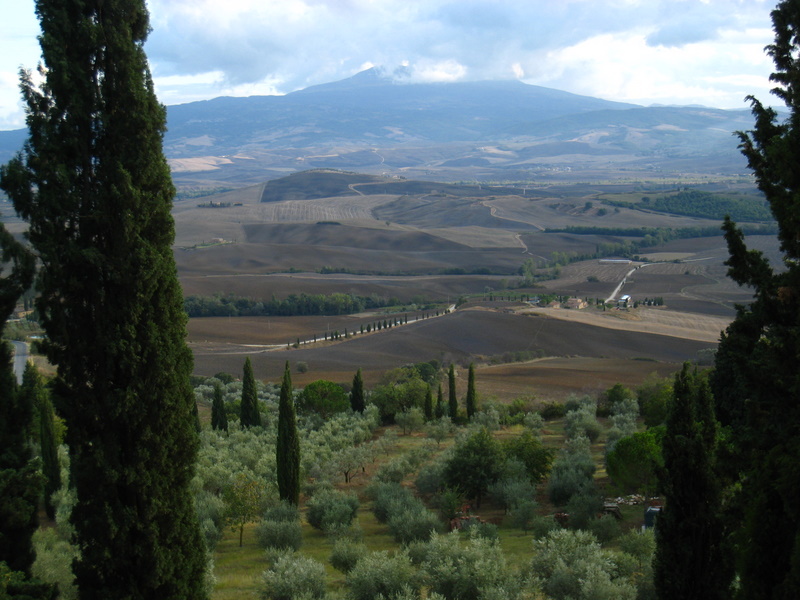
The next morning, everything except my sleeping bag was wet or damp, and everything else outside was muddy. I packed my stuff between two showers. The sun slowly came back. Taking my cue on Google Maps, I took SR2 (Via Cassia), going on high overpasses to dodge the steep hills surrounding the Old City. Farther away, the old Roman road passes through a relatively flat field-covered valley framed by distant mountains. After a long, smooth climb just before San Quirico d’Orcia, I turned eastward on SS146 to see the back country. Soon after, I was in Pienza. The day before, I got a very good guide from the Siena Tourist Office, listing every possible type of accommodations in that region. Along the road, there are many signs advertising agrotouristic (“on the farm”) campground sites, but I preferred a room over Ristorante del Falco (50 €), just in front of the old walled city. The first thing I did was drying my equipment in the park, chatting with three ladies, one English and two Canadians. They were a bit frustrated because “warm and sunny Italy” just wasn’t. Pienza is a model city built by Pope Pius II, a Quattrocento humanist, whose bestselling Historia duorum amantium (The Tale of the Two Lovers) was considered erotic according to the standards of that time. The small tourist-filled city, offering stunning panoramic views over the countryside, gleamed under the late afternoon sun. |
The Hills of Tuscany
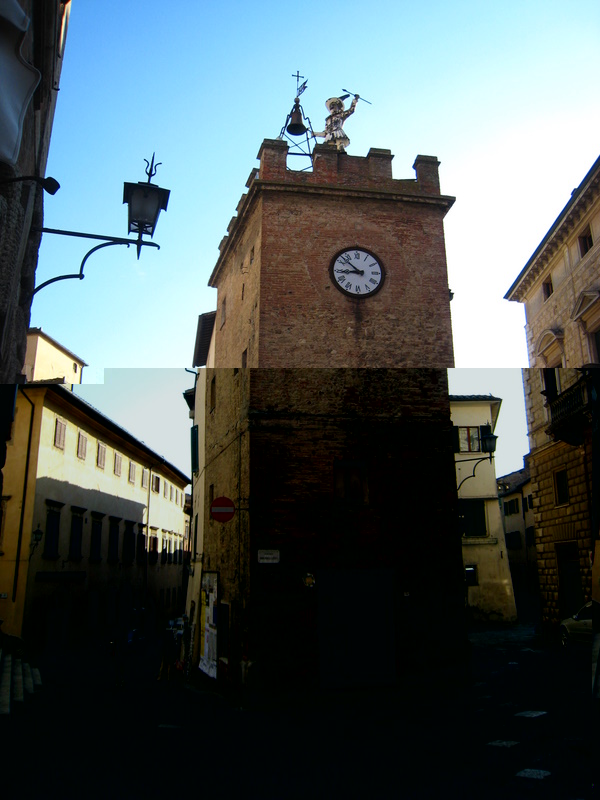
The Pulchinello Tower
Day 8 – Monday, September 15 – From Pienza to Lago di Chiusi
(44 km in 3½ h; a.m.s.: 13.3 km/h, max: 47.5 km/h)
|
Soon after leaving on a cold morning, I was climbing on the road snaking up toward Montepulciano (600 m) with the sun in my face. All roads may lead to Rome, but some are more bottom-bursting than others. I finally crossed the door of walled Montepulciano pushing my vehicle. The town of the Thousand Wine Merchant Stores was empty at that hour. On my way back, I passed right under the Pulcinello tower, topped by a grotesque Punch getting ready to strike the bell. As you may have guessed, Punch, an English diminutive for Pulcinello, is a Comedia dell’arte character originating from Montepulciano, and about as British as Parmegiano cheese. Reaching the empty Campeggio La Fattoria on Lake Chiusi, I put up my tent just in time before the rain. The closest grocery store was in Chiusi, on the top of a daunting hill, but luckily, I carried enough food. My only neighbors, a Belgian couple riding on a motorcycle, sold me an excellent wine bottle at cost price (1.55 €). Probably the only cheap commodity in Italy, wine certainly facilitates survival in a cold, damp campground. This time, I squatted the laundry room in the empty service block to cook myself a hearty dinner. Later, I walked to the shore in the drizzle. Surrounded by large farming fields, Lake Chiusi is polluted beyond any redemption and looks far better from the top of the hill. |
Through Umbria and Latium
Day 9 – Tuesday, September 16 – From Lago di Chiusi to Lago di Bolsena
(77 km in 6 h; a.m.s.: 13.5 km/h, max: 43.3 km/h)
|
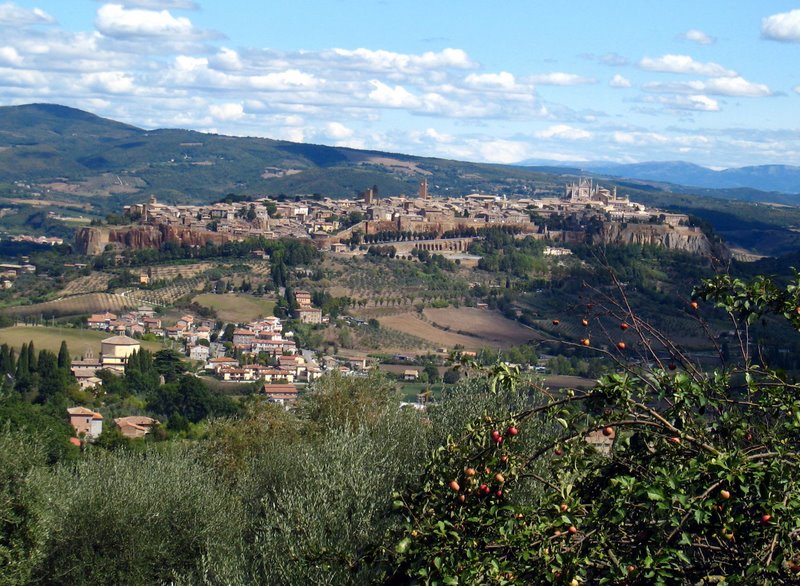
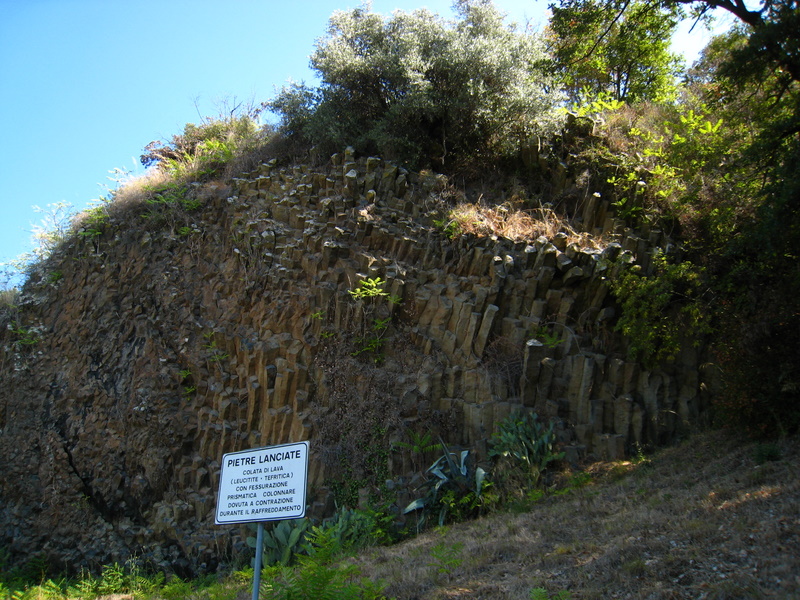
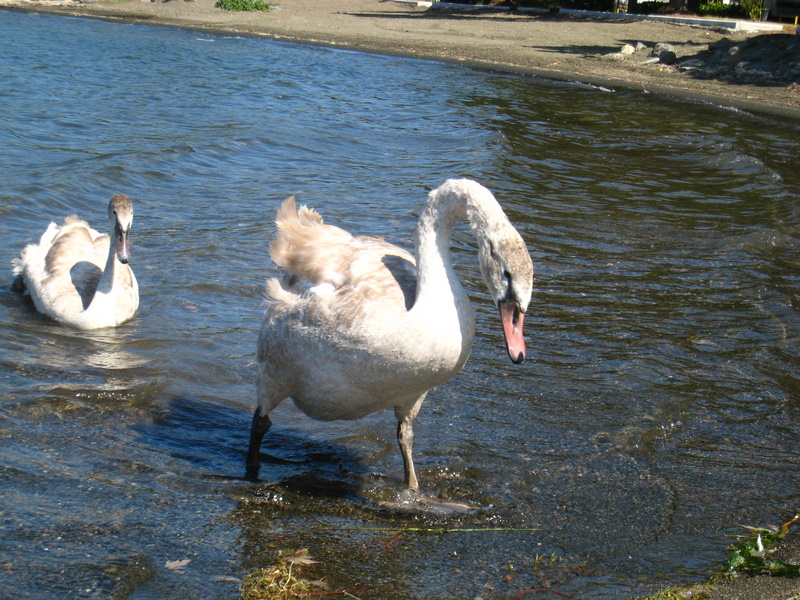
On a damp, record-cold morning (10 °C), I followed the water southward on the easy valley road, between the railway and the A1 autopista. Once again, the sun came back. After some 20 kilometers, I got bored of the flat and dreary industry-and-fields scenery. In Fabro, feeling like Julius Caesar crossing the Rubicon, I headed for Ficule up in the hills (550 m). Soon after leaving Wine Country, I was entering Olive Oil Country. Sparsely populated Umbria is definitely outside the “Disneyland Italy” circuit, and offers some gorgeous mountain panoramas along its roller coaster roads - a textbook case of C.I. Law no. 4 “One hill always hide another” or its corollary: “Going downhill is like using a bank card: you have to pay everything back on a very short notice”. Later, I was in front of Orvieto, a large walled city sitting on a rocky spur, looking like a huge battleship. I needed the rest of the daylight hours to reach the only campground in the area on Lake Bolsena, some 25 km away. However, I probably would have changed my plans if I had known was in store for me: a long 575 m climb and some more roller coaster roads before entering Latium and going over the 320 m-high rim of the caldera hiding Lake Bolsena (true to C.I. Law no. 5: “While most lakes usually lay in the lowlands, those of Latium are to be found on summits”). Gliding down to the town of Bolsena on the shore, I fell back on ancient Via Cassia, running along the lake and in front of a strange mineral formation, a big bunch of five-sided “sprouts” of volcanic stone (the “pietre lanciate”). In Campeggio Lido, some 3 km from Bolsena, I dried my equipment in the sun. The next day, I had my bike overhauled and my brake pads changed (10 €) in a small bicycle shop. The old man, speaking a local dialect with his helper, knew his business. Most of the patrons of the half empty campground were French caravaners – a rare occurrence. A small party started an animated pétanque game just in front of my tent. I walked to the village on a shore trail cut through a dense pack of tall bamboos. Later, I went to the deserted beach for a dip. Despite the muddy bottom, the water was very clear, probably because there are few large agricultural farms within the caldera. As I was taking pictures on the beach, a group of swans came by, led by a big male, coming in directly at me. Less than two meters away, the top honcho made a loud groan, signifying me to stand back. Clicking pictures, I complied. I knew that swans can hit viciously if you bug them, but not that they could bully people. I suppose that these beautiful birds have to defend their dwindling territory from intruders. Just before sunset, other birds in the trees did what they do best, giving a spirited concert. |
Orvieto
The Pietre Lanciate
Day 10 – Saturday, September 18 – From Lago di Bolsena to Lago Bracciano
(85 km in 6½ h; a.m.s.: 14.2 km/h, max: 45 km/h)
|
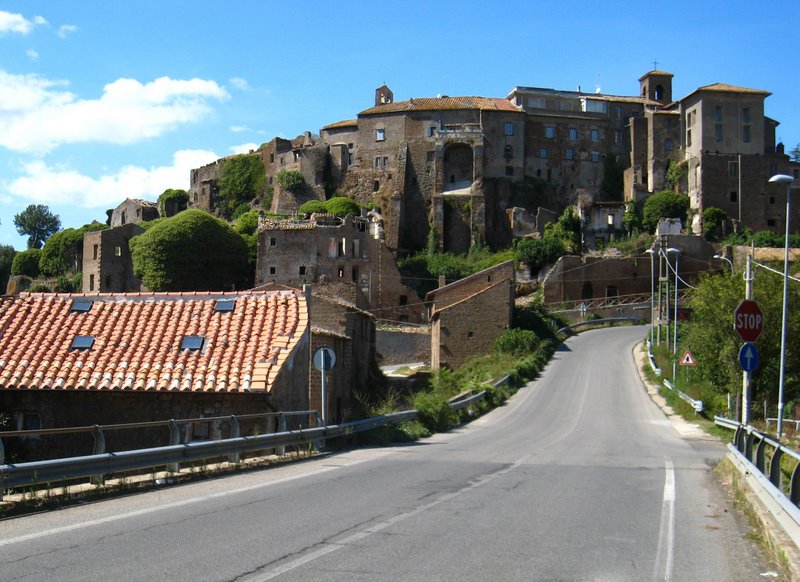
Back on Via Cassia (SS 2) on a cool, sunny morning, I was climbing back the caldera, fascinated by the beautiful panoramic view of the lake. After Montefiascone (315 m), I glided down toward the plain and as I closed in on Viterbo, at the base of the foothills, traffic was building up. Staying on the western side to dodge the jammed city center, I inadvertently took the autopista. Seeing the police helicopter doing vulture-style circles in the sky, I took the airport exit and pedaled back to Via Cassia, glad to have bypassed the clogged arteries. After going through grotto-pocked hills of volcanic tuff, I was on a slow climb culminating at 385 m past Vetralla. I quit busy SS 2 in Querce d’Orlando to take the Oriolo Romano road, a shortcut to Lake Bracciano. Riding in the quiet Hazelnut and Chestnut Country, I passed through quiet Vejiano, built around a large castle. The ride to Bracciano was relatively easy (435 m), but once I got there, due to one-way streets, I took the lakeshore road in the wrong direction. I could have avoided these extra kilometers using the GPS coordinates posted on Camping.it. Campeggio Porticciolo (9 €) is a small place with all the services, including a WiFi hot spot and a pizzeria manned by very good cooks. I met interesting people there, like a couple from Modena and British tourists. Lake Bracciano is less spectacular than Lake Bolsena, and its shores are littered with plastic junk. I wanted to visit the glamorous Bracciano castle the next day, but the bad weather was back. Instead, I pedaled in the rain to the Military Aviation Museum (free) in the Vigna di Valle Navy base, some five kilometers away. The large hangars house a large collection of vintage aircrafts and seaplanes, such as famous WW I and II fighters (including a Niewport and a Spitfire), a mean-looking Savoia-Marchetti Sparviero trimotor torpedo bomber (the “Hunchback”) and Italy’s first jet aircraft, the Caproni Campini CC.2 (1940), an oddball belt-and-suspenders design using a piston engine-driven compressor. I used the rest of the afternoon to read and to change a slow leaking air chamber. |
The Boss
The Vejano Castle
Day 11 – Sunday, September 20 – From Lago Bracciano to Passo Oscuro
(30 km in 1½ h; a.m.s.: 16.3 km/h, max: 38 km/h)
|
The game plan for that day was simple: putting up my tent as close as possible to the Michelangelo Airport in Fumicino. There are other campgrounds around Rome, but due to the cold weather, camping season was over as far as I was concerned. After a short climb to get out of the caldera, I was on a long faux plat slowly going down to the coastal plain. The sun was back and the ride through the ploughed or barren fields was a breeze. Campeggio Marina di Roma, listing its address in Fumicino, was in fact in Passo Oscuro, some 24 km away from the airport (C.I. Law no. 2), but thanks to a few well located signs, I got there easily. It’s a seasonal vacation village in a state of relative derelict, located close to smelly waters (depending on the winds) near the sea. Leaving my panniers, I rode to the airport across the plain, passing through a park of giant parasol pines in Fregene. Around noon, I stopped in Focene for lunch. That quiet seaside town, located right under the air corridor leading to the sea, probably had known better days before the International Airport was built. All alone in the restaurant, I was served an excellent bruschetta and fried squid meal for a decent price (18 €). Later, I had some trouble finding the entrance of the terminal and when I finally got in there, I inquired about the left luggage service, where I planned to dump my bicycle and camping equipment the next day. The prices were reasonable (6 €/day for the bicycle and 3.5 €/day for a large bag I bought there, or less than 50 € for five days). Michelangelo Airport is only 30 minutes away from the city center by train. On the way back, I had to fight a strong head wind, but that exploration trip wasn’t a waste of time. If you don’t know your way around in an airport, getting there alone on a heavily loaded bicycle can be tricky because you don’t want to leave it unattended. |
Day 12 – Friday, September 21 – From Passo Oscuro to Michelangelo Airport
(24 km in 1½ h; a.m.s.: 15 km/h, max: 38 km/h) – Five days in Rome
|
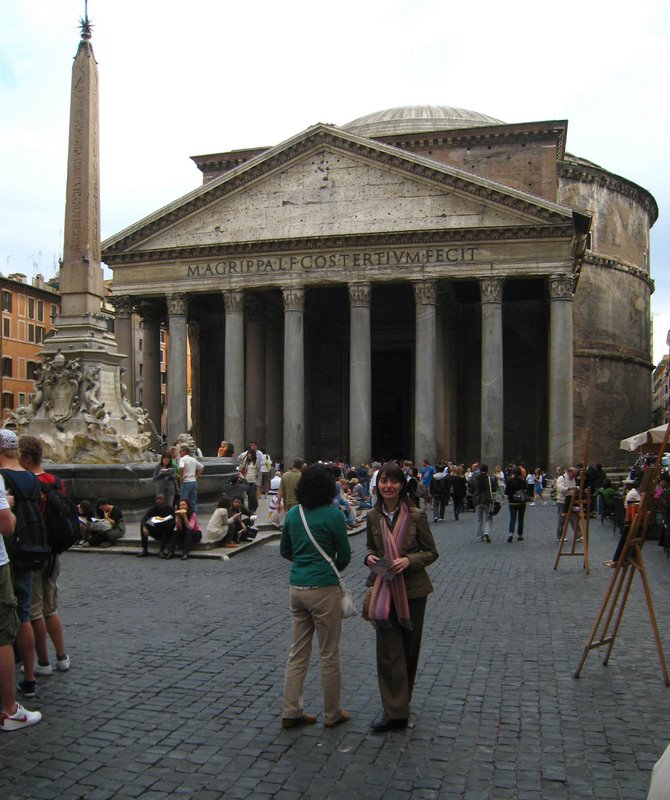
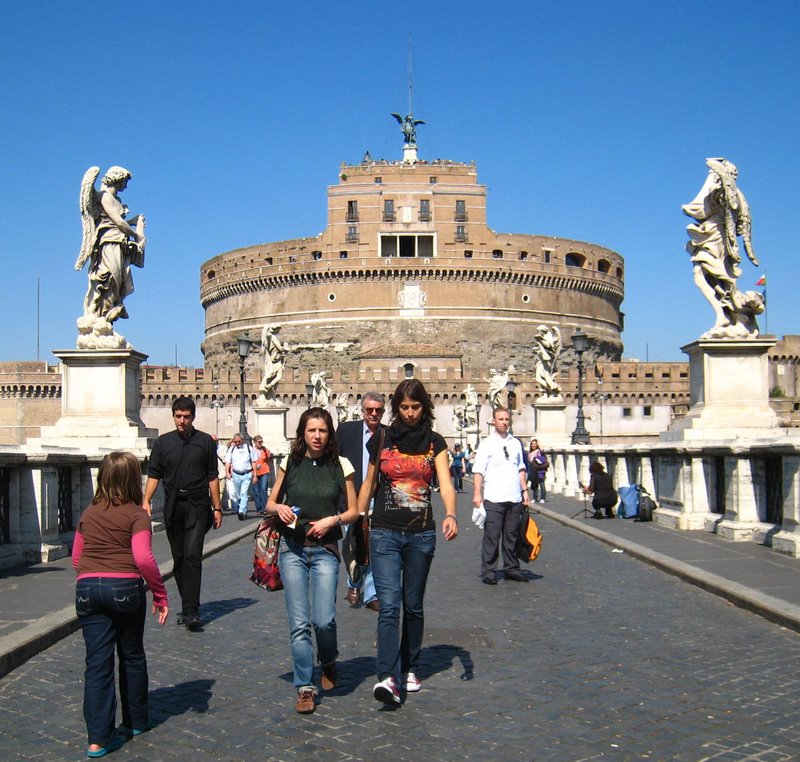
The last ride to the airport was without surprise. The train was in downtown Rome shortly before 11 a.m. Finding a decent place at a budget price there is a tall order; all the hotels posted in Hostels.com asked 90 € or more, except Aristoteles Hotel, near Stazione Termini. I walked over there and booked a nice room with a private bathroom and breakfast (70 €) for five days. Some places offered tourist rooms for less than that, but I could use a little comfort after camping for two weeks. The hotel is located on a quiet street full of small restaurants and services like laundries and Internet spots (charging only 2 €/h, due to stiff competition). In the afternoon on that perfect day, I took a long walk to revisit some of the mythic places of the Eternal City, including the Pantheon, Piazza Navone, the Spanish Steps and the Trevi Fountain, crammed with tourists. In the Old City, pedestrians are kings, because most small streets are now restricted areas for motor vehicles, including scooters. I saw a few cyclists in downtown Rome, but personally, I wouldn’t fell comfortable riding on its noisy arteries, in the middle of a stampede of motor vehicles. During the next four days, I walked all over the Old City, using the subway (1 €) to visit remote places. Describing the countless highlights of Rome is beyond the scope of this report, but on the whole, I had a favorable impression. As far as I know, downtown Rome is reasonably clean and well organized, and Romans are very kind people. On the negative side, restaurants are expensive; it is hard to have a decent dinner for less than 25 €, except maybe in Chinese restaurants near Stazione Termini. In my hotel room, I had a choice of about 100 (Italian only) channels, and most of them were broadcasting the same trash. But then, you don’t come to Rome to watch TV. |
The Pantheon
The Castel San Angelo
Conclusion
|
This wraps up a two-year cyclocamping trip in France, Switzerland and Italy, started in the spring of 2007 and finished in the fall of 2008. All in all, I think that June is a better choice than September. Due to climatic changes, there is no longer any guarantee that the sun will be there, even during the “sunny season”. One thing is sure, though: in September, it’s dark until 7 a.m. and dark again after 8 p.m., while in June, you can enjoy daylight from 5 a.m. to 10 p.m., which is a blessing for long rides. My luck apparently ran out on the last morning when I checked in with my plastic-wrapped bicycle (24 €) and luggage at the Air Transat desk: my name wasn’t on the passengers’ list. I had to wait for more than one hour before they found me a place and then, I had to run like mad to the customs to have my bike X-rayed and to go through the passport and small baggage controls (they found a small camping knife in the bottom of my bag). When I miraculously reached the gate five minutes before departure, a senior Air Transat employee stood in front of me. Instead of apologizing for the inconveniences, she sternly asked me why I had caused trouble on my last flight. “My last flight with Air Transat was a long, quiet and boring one”, I snapped back. “If there was any trouble on that flight, I was unaware of it”. She quizzed me about my age and address, before she realized that the troublemaker must have been somebody else with the same name. Obviously, I had been put on the black list. In Montreal, my bicycle didn’t follow. Air Transat delivered it to my apartment two days later, but one wheel and the baggage carrier had been damaged. It didn’t matter so much because I was safely back home, but this is the last time I plastic wrap a bicycle. I covered a total distance of some 800 km in 12 days and camped for 14 nights. Because of the cold temperature and bad weather during the last part of the trip, camping conditions were often marginal, at best. The quoted figures in kilometers are real distances traveled, but not necessarily the shortest ones, due to detours or deviations, deliberate or not. GPS tracks from Florence to Rome are available upon request (in .gdb Garmin format). |
Minimalist Cooking for Campers
|
Gourmet cooking on a campground is not a mere collection of recipes, it’s mainly a state of mind. The challenge is to use all of your multifold culinary skills with a minimum of equipment. 1 - Less is best: You can do all the cooking for one or two persons on a single butane gas burner and two stackable cooking pots with their lids (some juggling skills may help). 2 - Minimize your fuel consumption: Except perhaps in Saudi Arabia or in Alberta, gas refills may be hard to come by. When cooking pasta or rice, use less water and check more often. You don’t need a PhD in Physics to use your gas burner efficiently; just keep in mind that the temperature of boiling water is stable at 100 oC, until most the water has boiled off. Said differently, the temperature won’t get any hotter with a higher flame; you will only boil off more water faster. So, you can trim down the flame as soon as you have a slow simmering. 3 - Buy easily cooked food, for instance, spaghettini instead of spaghetti and parboiled rice, the so-called « five minute rice » which need 15 minutes. |
Baisic Fresh Tomato Sauce
|
Here is an example of minimalist camping cooking for a basic tomato sauce. Warning : Irresistible fragrance - Other campers may come to ask for the recipe. Ingredients:
Preparation: Fry the onion and garlic, add the tomatoes, put the lid on and let the mix simmer for a few minutes, then remove from the burner. Use the other pot to heat the water and cook the pasta or rice, then drain it and transfer it into the tomato sauce pot, and enjoy a great dinner! If your menu calls for meat, fish or seafood, cook it in the pot you just emptied. Let your imagination loose and cook yourself a different meal every day. * Prefer the oblong-shaped variety, the ones used to make tomato paste concentrate or sauce, because they don’t need to be peeled and won’t squash easily in the panniers. ** For rice, I use curry powder and soya sauce, and for pasta, any combination of the following dry spices: basil, thyme, tarragon, turmeric root, cumin and chili powder.. |
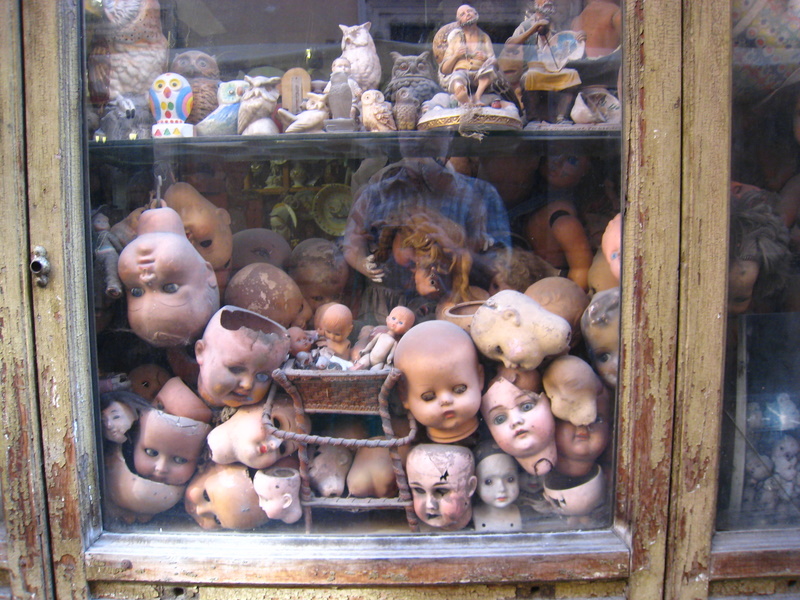
Cyclists from Québec in Pisa The Doll Hospital in Rome
 |
 |
 |