
Michael Jackson is one of the people who suffer from a skin disease called vitiligo. There are other famous persons who suffer from vitiligo, too. Jasser Arafat and Dudley Moore may be the most famous of them. But nobody seems to know anything about it. Here are most frequently asked questions with professional answers:
WHAT IS VITILIGO?
Vitiligo is a skin condition of white patches resulting from loss of pigment. Any part of the body may be affected. Melanin, the pigment that determines color of skin, hair, and eyes, is produced in cells called melanocytes. If these cells die or cannot form melanin, the skin becomes lighter or completely white. Affected skin is particularly sensitive to sunlight. The usual type of vitiligo is called 'Vitiligo Vulgaris' (means: common vitiligo). Variant types include linear, segmental, trichrome and inflammatory vitiligo.
HOW MANY PEOPLE ARE AFFECTED?
This disease affects an estimated 1% of the world's population. It affects individuals of all ethnic origins and both sexes, but is much more easily noticed on darker skin as areas that fail to tan. It is hereditary in one third of those affected. Vitiligo often starts on the hands, feet or face, and frequently pigment loss is progressive. Half the patients first notice vitiligo before 20 years of age. It often appears in an area of minor injury or sunburn.
HOW IS IT DIAGNOSED?
The diagnosis of vitiligo is usually straightforward, and no special testing is needed. While vitiligo is a cosmetic problem and does not affect the health directly, it is disfiguring and may be psychologically traumatic. The condition cannot be cured at present, but treatments are available that may be very helpful. Medical treatments target the immune system, and try to reverse the destruction. Surgical treatments are less commonly done, and transplant healthy melanocytes from other areas. Both treatments may be difficult and prolonged.
WHY IS MICHAEL JACKSON'S SKIN SO LIGHT?
There has been speculation that maybe one of the treatments for Vitiligo, Depigmentation therapy, has been performed. Keep in mind that we cannot absolutely confirm this, however it is a valid reason and appears to be correct. It is important to stress that only people with 50% of pigmentation loss, like Michael, may have this procedure and that no doctor will allow any prescriptions for this treatment to be made without prior full diagnosis. Depigmentation involves fading the rest of the skin on the body to match the already white areas. For people who have vitiligo on more than 50 percent of their bodies, depigmentation may be the best treatment option. Patients apply the drug monobenzylether of hydroquinone (monobenzone or Benoquin*) twice a day to pigmented areas until they match the already depigmented areas. Patients must avoid direct skin-to-skin contact with other people for at least 2 hours after applying the drug. The major side effect of depigmentation therapy is inflammation (redness and swelling) of the skin. Patients may experience itching, dry skin, or abnormal darkening of the membrane that covers the white of the eye. Depigmentation is permanent and cannot be reversed. In addition, a person who undergoes depigmentation will always be abnormally sensitive to sunlight.
(this text was mostly taken from mjni.com)
You can also read the story of a young vitiligo patient by clicking HERE
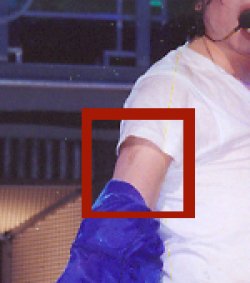
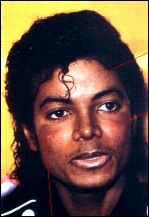
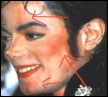
Pictures of the light spots on Michael's skin





VITILIGO SOCIETY