 |
 |
| History of Dance |
| To everything there is a season. A time for every event under heaven-... A time to weep, and a time to laugh; A time to mourn, and a time to DANCE! -Ecclesiastes 3 Part I: History of Ballroom Dance A: Historical Cause and Effect Social Dancing, which is simply group dancing for pleasure or recreation, has probably existed in some form since the beginning of human society. Most group dances were originally ceremonial rites grouped around three basic aspects of human existence: food supply, sexual impulse, and relationships with the spirit world .For primitive people, dancing was a formal expression of religion and/or social expression. When dance abandoned its primitive, pantomimic forms, when it ceased to be specifically about crops, war, wooing, initiation, or religion, it became pure social interaction, with no aim or purpose but the participants' employment. As the conditions of human existence change, so do social dances. Although they serve no concrete purpose, propitiate no gods, and celebrate no military victories, they are related to the fundamental concerns of modern life just as intimately as their ritualistic ancestors were to primitive life. Unlike art, social dance is not consciously formed, but its development is far from random of accidental. Unfailing, the dances of an epoch faithfully reflect the spirit and structure of that of technology, and its social customs and predominant ideologies. Establishing historical cause and effect is often difficult; similarly, social dance has not only mirrored cultural patterns, thereby to some extent maintaining them, but it has also on occasion altered them radically, revolutionizing the prevailing trends of thought and manners rather than reinforcing them Various changes in social dance through the ages clearly demonstrate its interdependency with the world around it. During the 14th century, for example, when social dance and folk dance were virtually indistinguishable, popular ring dances moved inside English upper-class homes as part of the evening entertainment. As long as the hearth occupied the center of the room, the dances retained their circular, and egalitarian, form. With the introduction of the chimney about 1368, however, the hearth could be moved to a side wall, which cleared the floor of obstacles and allowed processional dances�then favored in the royal courts where rank determined the order of procession--to replace the ring formations. Advancing technology and two world wars so continually restructured life in the 20th century that social dance has been changing almost constantly, quickly altering with the values and practices surrounding it. The syncopated rhythms of American Ragtime music inspired the Foxtrot and Shimmy. After the 19th Amendment gave women the vote in 1920, they became "emancipated": the flapper was born, as well as the Charleston. The Jitterbug burst from the Swing improvisations of the 1930's and 40's. Long playing phonograph records appeared in 1949;thus, in the 1950's, the teenagers born during the postwar "baby boom"could launch the Rock 'n' Roll phenomenon in both music and dance. By then, the once-shocking Waltz position and the sexual attitudes it represented were passe. Because everyone performed the steps individually, men no longer always "led" women, and couples were not essential. The emergence of Disco dance styles in the 1970's and later popular dance forms continued this trend, although some of the more formal dances required a partner. In a world that prides itself on the speed of its transformations, new forms are inevitable. Social dance no doubt will continue to evolve as society does. B: Process of History Coupled Dance, as a dance form, emerged in the Europe of the 15th century in a variety of vigorous styles in innovative adoptions and refinements of folk dance developed by the dancing masters of the time. These new dances, gay and lively in character, developed first as a social dance diversion among the aristocracy of France and Italy, the expanded developmentally to every royal court on the continent to become, in the later centuries, part of the social life of the emerging middle class as well. The forms of social dance in Europe developed in three phases, each characterized by different designs in rhythm , space, and floor patterns. The nature of these dances reflected the related elements of the respected time periods-- the elaborate and bulky fashions in clothes, the spacious floor areas of courts and palaces, and the elegance of the successive periods. Each period can be characterized by its most popular dance: the age of the Galliard (1500-1650), when that dance, bold and dashing in expanded movement, consisted entirely of leg thrusts and leaps and demanded the utmost vigor of the dancers; the age of the Minuet (1650-1750), when the energetic, expanded, and leaping movements were transformed to close movement in formal, measured, small steps; the age of the Waltz (1700-1900), when that dance with its gliding turns, brought a new joy and intimacy to social dance and an enraptured all of Europe. There were, of course, other, even opposite, dance styles in each period. The courtly Pavane and stately Saraband were rivals of the Galliard; the Contredanse and Quadrille competed effectively with the Minuet; the Polka and the Mazurka challenged the supremacy of the Waltz. By the end of the 19th century, however, these social dance steps had become repetitious and no longer reflected the quickened pace of the emerging contemporary world. In this vacuum a social dance explosion occured--the American introduction of the Two-step in 1891. Social dance from then on, as a product of the 20th century, belongs to the United States. The Two-step was followed by the Cakewalk of 1893, in turn followed by Ragtime music. Vernon and Irene Castle, in the decade from 1910 to 1920, enchanted both Europe and America with their famous exhibitions of the Tango (derived from Argentine folk dance), the Brazilian Maxixe, the Cakewalk and the Foxtrot. The black influence in Jazz dominated in the 1920's with the Shimmy and the Charleston, a form of the Jitterbug, of which another latter version was the Lindy Hop. The 1930's incorporated Latin- American rhythms with the Rumba, Conga, and Samba. World War II interrupted dance evolution in the 1940's, but the 1950's brought the Merengue and Cha Cha. The mid-1950's saw the dramatic emergence of Rock 'n' Roll, which utterly changed popular music. The 1950's closed with people Jitterbugging to Rock, but with the 1960's came the Bossa Nova and Discotheque dancing, the latter producing dozens of individualized, free-moving dances, such as the Twist. Disco dancing of the 1970's returned to couples together executing often complex, choreographed moves. Break Dancing--street dancing that combined acrobatic and martial arts movements--achieved popularity in the 1980's, and the Lambada became a craze in 1990. The role of composers of popular dance music in this development cannot be overestimated, nor can the many other elements the popularized American social dance throughout the world during the first half of the 20th century. Major influences were Vaudville, musical comedy, films and the popularity of such stars as Fred Astaire and Gene Kelly. Further reinforcement came from the accompanying technology, such as the mass impact of dance music on radio, records, and tape, and, more recently,the dance images on TV. Social dance today is international and reflects the democratization of dance more clearly than any other contemporary dance form. |
 |
|
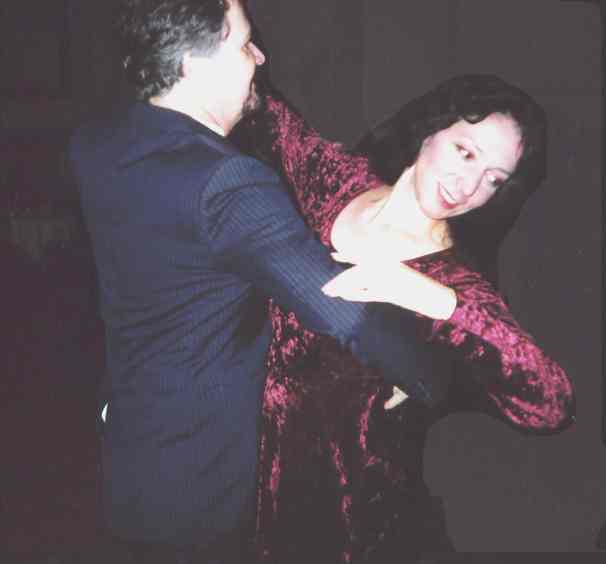 |
| Social Dance Instructor DeeDee Rose |
 |
 |
 |
 |
 |
 |
 |
 |
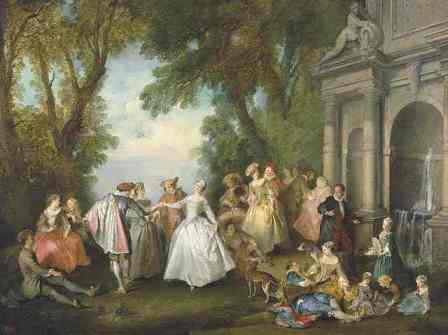 |
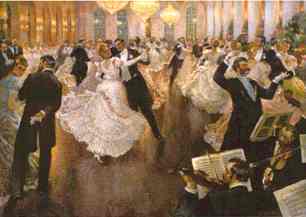
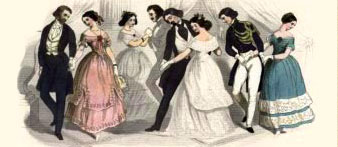
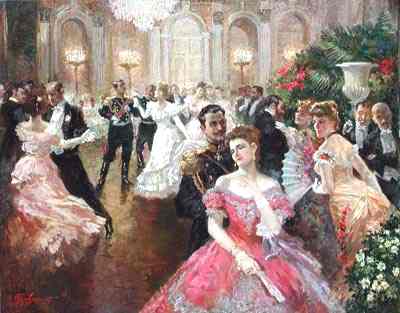
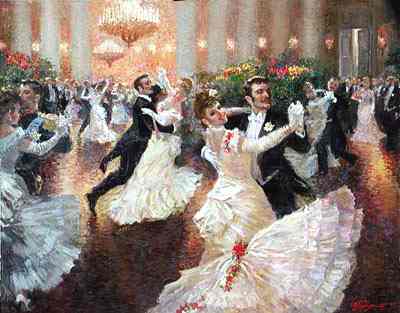
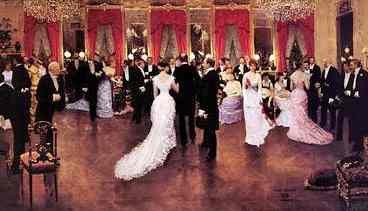
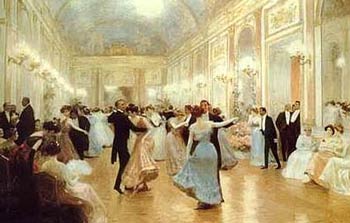
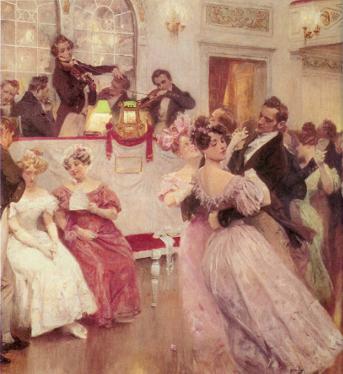
| Throughout the Renaissance and the 16th century, social dance became more firmly ensconced in the courts, whose members systematically dressed up and formalized the lusty folk dances to suit their elaborate codes of manners and attire. Styles emanated particularly for France, where the royal court dictated etiquette and moral behavior for all European gentry. The 17th century Minuet was nothing but manners, the final flourish of aristocratic elegance before national and then industrial revolutions returned social to the masses. When fine demarcations of rank and title vanished, square formations like the Cotillion and Quadrille, with partners constantly changing, filled the ballrooms. The Waltz--whose dizzying speed was derived as much from the newer, more polished surface of dance floors and the abandonment of hobnailed shoes as it was from the public's enthusiasm--also became popular. The embracing, closed hold of the Waltz successfully defied the polite convention of the period. |
 |
|
|
|
|
|