| This
paper reviews the very old problem of universals. After outlining
some of the positions that philosophers take on the issue, I briefly
speculate on what I think is, at least, a simpler way of looking at the
problem. No tropes or Platonic realms seem necessary to me, only a
relationships in time and space. I wrote more on the subject on 18 July 2007, in attempt to make my views more parsimonious. I still am not sure if I like the idea. |
The countless patterns observed among particular objects in the world are something that many take for granted. Several philosophy students may even be unaware of what is known as the problem of universals until the issue is brought to their attention. Our classification of particular objects in the world brings to light the problem, for how is it possible that properties such as circularity, wisdom, and reddness be in more than one place at a time? What and where exactly is the resemblance between two circles? The central debate amongst philosophers revolves around the use of universals as explanations of these resemblances. Universals can be defined as “entities that can be simultaneously exemplified by several different objects” (Loux 20). Those whose ontology includes the existence of universals are described as realists, while philosophers who do not hold universals to be actual elements of the world are called nominalists, and there is a further camp of thinkers, anti-realists, who disagree that there is even objective similarity between particular objects. Although exhausting the various arguments for each of these theories is an undergoing for a lengthy book, a few pages examining the pros and cons of positing universals, along with looking at some very simple figures, will show support for a version of imminent realism. The stance of realism, nominalism, and anti-realism are related in their treatment of three statements regarding concrete particulars. These statements are as follows:
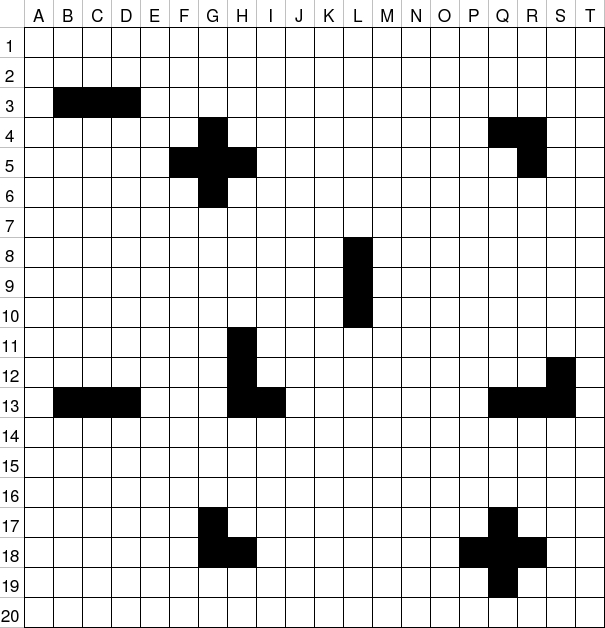
The nominalists will not, of course, roll over and die at this point, but they will insist that the third claim is what should be rejected. The classic sentence stated earlier may be turned around to read “Socrates exemplifies courage,” and a nominalist may claim that such a sentence does not use universals, but posits only the existence of the abstract concrete particular that is courage (Loux 66). A version of nominalism, trope theory, will insist that particulars may have specific attributes, but these attributes are unique in every particular; with this theory, the courage of Socrates is necessarily different from the courage of Plato, but the two may be related. Lastly, anti-realism, which can actually be considered a version of nominalism, will attempt to reject the first claim and the use of abstract reference. In other words, anti-realists believe that “talk apparently about courage is really talk about courageous particulars” (Loux 73). In other words, courageousness and circularity are not properties of the actual world, but are projected onto the world. The view to be weighed in detail at this time will be that of realism, which can be broken down into two subcategories, both of which accept the concept of universals. One version of realism is that of transcendent realism, endorsed by Plato, which claims that concrete particulars exemplify universals. In contrast, Aristotle argued for immanent realism, which states that universals can be found within individual particulars. We shall see support for a sort of immanent realism with some simple figures later on, but first it is necessary to weigh the positives and negatives of realism in general. Realism is certainly not without its critics. Some have claimed that the ontology of realism is bloated because it introduces an entirely new type of entity, and thus violates Occam's Razor, which states as a general rule that the theory introducing the fewest new entities is generally correct. These critics would claim that the existence of what appear to be universals can be explained as well or better without bringing in an extra type of entity into the world. They point out that realism may suffer an infinite regress of relations. For instance, in the example of Socrates' courage relating to Plato's courage, both particulars in the situation are related in that they both exemplify the single attribute of courage. We see the slippery slope of regress when we contemplate how the two relations between the concrete particulars of our philosophers and the universal of courage are related. In other words, we have a relationship between Socrates and this universal of courage, and we have a relationship between Plato and the universal courage. How is it that these two relationships related to each other? Should we posit another universal to describe the relations, and then another to describe the relationship between those relations and so forth, ad nauseum? Some other rather ugly problems crop up as well when we break down realism into its two complementary camps. If immanent realism is true, and universals can be found within concrete particulars, we may find ourselves able to make statements like “triangularity is both receding from and drawing closer from itself” (Loux 55). Nominalists would almost surely insist that such claims are necessarily false. Transcendent realism has its own problem, however, for those who oppose this version of realism will point out that we are surely unable to think about universals without assigning particulars to them; we cannot contemplate triangularity without thinking of a triangle, or courageousness without one to exemplify courage. The discussed challenges to realism are problematic, but not insurmountable. Realists may respond by stating that universals are, indeed, necessary, that the infinite regress is either not existent or not problematic, that the universals of immanent realism are exempt from such contradictions as in particulars, and that the forms of transcendent realism are beyond our realm of comprehension. While some or all of these counter-points of realism may well hold up, there is, perhaps, a simpler model that is preferable and delved into by Bertrand Russell, who concisely introduces what is perhaps the strongest case for the existence of universals. Russell asks us to consider the relationship between Edinburgh and London. As it so happens, Edinburgh lies to the north of London, but this statement “involves the relation 'north of', which is a universal” (Russell 98). Russell elaborates on this and points out that the relation is not in existence “in the same sense in which Edinburgh and London exist,” although the relationship itself is a property of the world independent of any observer (Russell 98). Even if there was no entity in existence to perceive the relationship between London and Edinburgh, the relationship would remain as a very real, yet not palpable, property of the world. It is in this example that Russell silences all of those who postulate wild semantics, distinct tropes, and ugly regresses. The relationship between these two cities “is neither in space nor in time, neither material nor mental, yet it is something” (Russell 98). The universal exemplified is simply a relationship of space, and we can explain every universal in such a manner, as a relationship of space or time. Some insight to the problem of universals can be gained by contemplating the most basic possible worlds. For the moment, we will completely ignore the complication of time. An important note can be found at first when we think of a world with no spatial dimensions; in the absence of any space whatsoever, no relations can exist, and universals are completely absent. If we are to take a single point in space and move the point in a single direction so that we have two points separated by some distance in space. This process spawns the universal of the points themselves, and the universal that describes the space between them. If we so desire, we can construct an infinite amount of possible one dimensional worlds, but rising to two dimensions will, hopefully, give us a more representative picture of our own world. Figure one shows a potpourri of various shapes. We can find universals between these shapes; “crossness,” for example, is exemplified in the shapes centered at G5 and Q18. We need not visit any Platonic realms to explain the universal; crossness is a pattern of dark tiles, perhaps “matter,” in space. The relationships between the particulars that are various aggregations of dark tiles can be explained in the same way as the relationship of empty space between them. If we wish, we can label the particular centered at R13 London, and call the particular at R4 Edinburgh, and describe the relationship as Russell did. The natural question to ask is whether or not this model could truly be a simplified version of our own world. We can add relations of time that occur in our own world; what is courageousness but a property of behavioral similarities in time exemplified by particulars? Could we not say that the courageousness of Socrates is attributed by certain related actions in Socrates' history? Color is often a misleading example in philosophy, and in this case it seems to evade explanation as a property of space or time. The “redness” of red, or the “blueness of blue,” however, are properties called “qualia,” which can be described as the intrinsic feels that we experience internally. Frank Jackson discusses qualia, defining them as “features of the bodily sensations especially, but also of certain perceptual experiences, which no amount of purely physical information includes” (Jackson online). The existence of qualia is a subject of debate in philosophy, but convincing retorts to Jackson may be found in the works of Daniel Dennett and Paul Churchland. What triggers the perception of the color red can be agreed upon, at least, as a physical pattern in space which matter reflects light at different wavelengths. Sound, likewise, is caused by vibrations of matter in space. What is of interest in relation to the proposed model of universals is the nature of matter itself, which is an endeavor of the physical sciences. If the figure does represent a simplified version of our own world, a world that can be reduced to bits of differently arranged matter or ripples in space, we can posit all universals as, albeit complex, relations of matter in time and space.
More on this subect can be found here. Works Cited
Jackson, Frank. "Epiphenomenal Qualia." Philosophical Quarterly 32. (1982): 127-136. 26 Feb. 2005 <http://instruct.westvalley.edu/lafave/epiphenomenal_qualia.html>. Larkin, William S. Lecture. Southern Illinois University Edwardsville, Illinois. 23 Jan. 2006. Loux, Michael J. Metaphysics: A Contemporary Introduction. 2nd ed. New York: Routledge, 1998. 20-93. Russell, Bertrand. The Problems of Philosophy. 2nd ed. New York: Oxford UP, 1997. 91-100. |