

I recommend that you fill your plate with two-thirds (or more) vegetables, fruits,
whole grains and beans and one-third (or less) fish, poultry or red meat.
MENU:
2 Tbsp. fresh lime juice
2 Tbsp. olive oil
1/2 tsp. Dijon mustard
2 medium bunches arugula, rinsed well and thick stems removed
2 firm but ripe pears, halved, cored and each cut into 6 wedges
Salt and freshly ground black pepper
1/2 cup crumbled feta cheese (optional)
1/3 cup pecans, toasted and roughly chopped (optional)
1/2 cup pomegranate seeds (from 1 medium pomegranate)
18 rinsed and dried leaves of Boston, Bibb, or green-leaf lettuce (optional)
In small bowl, whisk together lime juice, oil and mustard. In salad bowl, place arugula and pears. Toss with just enough dressing to coat. Season to taste with salt and pepper. Sprinkle with feta, pecans (if using) and pomegranate seeds, and serve. Or line salad plates with lettuce leaves and mound the salad in center of each.
Makes 6 servings. Per serving: 92 calories, 5 g. total fat (less than 1 g. saturated fat), 14 g. carbohydrate, less than 1 g. protein, 2 g. dietary fiber, 9 mg. sodium.
2 navel oranges, peel and pith removed, sliced across width of sections
2 Tbsp. orange juice
2 tsp. candied ginger, chopped
1 Tbsp. orange blossom honey mixed with 1/2 tsp. almond extract
1/4 tsp. ground cinnamon
1/4 cup slivered almonds, lightly toasted,* for garnish
4 ginger snaps, for garnish
On 2 plates, divide orange slices. In small bowl, combine orange juice, ginger, honey and cinnamon. Drizzle mixture over orange slices, sprinkle even amounts of almonds over each serving and garnish with 2 ginger snaps per plate.
*To toast almonds, place in small skillet with no oil. Over medium heat, stir almonds for about 4-5 minutes, until lightly browned and fragrant. Remove from heat and set aside.
Makes 2 servings. Per serving: 113 calories, 0 g total fat (0 g saturated fat), 29 g carbohydrates, 1 g protein, 3 g dietary fiber, 3 mg sodium.
Ever Green / Ever Healthy
December 2005
Topic: Food
A Cold Weather Staple: Chili
Whole Wheat Pie Crust
1/4 cup whole wheat flour
3/4 cup unbleached all-purpose flour
1 Tbsp. powdered sugar
1/8 tsp. of salt
1 Tbsp. butter, chilled
3 Tbsp. canola oil
1-2 Tbsp. ice water or cold apple juice
In a food processor, combine the whole wheat flour, all-purpose flour, sugar, and salt. Pulse for a few seconds to combine. (The dough can also be made by hand. In a medium bowl, mix the dry ingredients with a spoon, then use a fork or pastry blender to mix in the remaining ingredients.) Add the butter and canola oil. Pulse again until the ingredients are well combined and the mixture resembles crumbs. With the food processor running, add the ice water, beginning with 1 tablespoon and adding more, one teaspoon at a time, until the dough starts to come together. Gather the dough into a ball and let it rest for a few minutes.
This dough is softer and more delicate than traditional doughs, so care should be taken to handle it lightly and not overwork it.
Lightly flour a sheet of waxed paper large enough to roll out the dough. Press the dough into a flattened disk. Cover the dough with another sheet of floured waxed paper. Using a rolling pin, roll the dough out into a 12-inch circle. Remove the top sheet of waxed paper. Lift the bottom sheet and turn it over a 9-inch pie plate so that the dough falls into the pan. Peel away the waxed paper and gently press the dough into the pan, starting with the bottom, then the sides, pressing out any visible air bubbles.
Crimp the edges by pinching between your thumb and forefinger, trimming any excess dough. (The excess dough can be used to patch any edges that require extra dough.)
Refrigerate the dough while you prepare the filling. The dough can be covered and refrigerated overnight or can be tightly wrapped and frozen for up to 1 month.
Makes 1 crust. For a 9-inch pie; 10 servings
Per serving: 93 calories, 5 g. total fat (1 g. saturated fat), 10 g. carbohydrates, 1 g. protein, <1 g. dietary fiber, 41 mg. sodium.
Books
The following books contain recipes with good nutrition in mind. Purchase them at a bookstore,
or check to see if your public library carries them.
Betty Crocker's Living with Cancer Cookbook: Easy Recipes and Tips through Treatment and Beyond
Betty Crocker, 2002
The Cancer Survival Cookbook: 200 Quick & Easy Recipes with Helpful Eating Hints
Donna L. Weihofen, R.D., M.S., with Christina Marino, M.D., M.P.H., 1998
The Color Code: A Revolutionary Eating Plan for Optimum Health
James A. Joseph, Daniel A. Nadeau, Anne Underwood, 2002
Eat to Heal: The Phytochemical Diet and Nutrition Plan
Kristine M. Napier, M.P.H., R.D., L.D., 1998
Five a Day: The Better Health Cookbook: Savor the Flavor of Fruits and Vegetables
Elizabeth Pivonka, R.D., Ph.D., and Barbara Berry, M.S., R.D., 2002
Healthy Eating Cookbook: A Celebration of Food, Friends and Healthy Living - Second Edition
American Cancer Society, 2001
Phytopia Cookbook: A World of Plant-Centered Cuisine
Barbara Gollman and Kim Pierce, 1999
Tell Me What to Eat to Help Prevent Breast Cancer: Nutrition You Can Live With
Elaine Magee, M.P.H., R.D., 2000
Tell Me What to Eat to Help Prevent Colon Cancer: Nutrition You Can Live With
Elaine Magee, M.P.H., R.D., 2001
What Color is Your Diet?: The 7 Colors of Health
David Heber, M.D., Ph.D., 2001
source:http://www.aicr.org/site/PageServer?pagename=cs_recipes
**Back to top**
ALTERNATIVE MEDICINE
Alternative medicine field provides natural remedies and healthy solutions
for your most pressing health concerns as well as practical strategies for
self-care and prevention.
source:http://www.alternativemedicine.com
**Back to top**
NUTRITIONAL HEALING
Nutritional Healing specialises in nutritional/environmental
therapies for chronic medical conditions.
Nutritional medicine (a branch of alternative medicine/complementary medicine) employs
the principle that nutrition plays an important role in virtually every medical condition.
Addressing any existing nutritional imbalances and adopting a healthy diet are of great
importance, although nutrients and diet have considerably more medical applications than
simply correcting nutrient imbalances. Nutrients (vitamins, minerals, fatty acids, amino
acids, glyconutrients) and non-nutrient bioactive compounds (e.g. probiotics, herbs, enzymes,
hydrochloric acid, etc.) can also be used therapeutically to assist in the correction the many
underlying physical factors which are contributing to disease states. For example, nutrients
and non-nutrient bioactive compounds can increase or decrease the levels of important
chemicals in the body, reduce inflammation, influence hormonal balance, reduce levels of
toxic elements/chemicals, improve immune function, reduce oxidative stress, alter genetic
expression and reduce the coagulability of the blood.
source:http://www.nutritional-healing.com.au/content/home.php
**Back to top**
NARCOLEPSY (sleep disorder)
Narcolepsy is a chronic sleep disorder characterized by overwhelming
daytime drowsiness and sudden attacks of sleep.
People with narcolepsy often find it difficult to stay awake for long periods of time,
regardless of the circumstances. Narcolepsy can cause serious disruptions in your personal
and professional lives.
Some people mistake narcolepsy for depression, seizure disorder, fainting,
simple lack of sleep, or other conditions that may cause abnormal sleep patterns.
Narcolepsy is a chronic condition that doesn't go away completely.
Although there's no cure for narcolepsy, medications and lifestyle changes
can help you manage the symptoms. And talking to others � family, friends,
employer, teachers � can help you cope better with narcolepsy.
Signs and Symptoms
The signs and symptoms of narcolepsy include:
1. Excessive daytime sleepiness. The primary characteristic of narcolepsy is overwhelming
drowsiness and an uncontrollable need to sleep during the day. People with narcolepsy
fall asleep without warning, anywhere and at any time. For example, you may suddenly
nod off while at work or talking with friends. You may sleep for just a few minutes or
up to a half-hour before awakening and feeling refreshed, but then you fall asleep again.
In addition to sleeping at inappropriate times and places, you also may experience
decreased alertness throughout the day. Excessive daytime sleepiness usually is the
first symptom to appear and is often the most troublesome, making it difficult for
you to concentrate and function fully.
2. Sudden loss of muscle tone. This condition, called cataplexy, can cause a range of physical
changes, from slurred speech to complete weakness of most muscles, and may last for a few
seconds to a few minutes. Cataplexy is uncontrollable and is often triggered by intense
emotions, usually positive ones such as such as laughter or excitement, but sometimes fear,
surprise or anger. For example, your head may droop uncontrollably or your knees may
suddenly buckle when you laugh.
Some people with narcolepsy experience only one or two episodes of cataplexy a year,
while others have numerous episodes each day. About 70 percent of people with narcolepsy
experience cataplexy.
3. Sleep paralysis. People with narcolepsy often experience a temporary inability to move or speak
while falling asleep or upon waking. These episodes are usually brief � usually lasting only
several seconds to several minutes � but they can be frightening. You may be aware of the
condition and have no difficulty recalling it afterward, even if you had no control over what
was happening to you.
This sleep paralysis mimics the type of temporary paralysis that normally occurs during rapid
eye movement (REM) sleep, the period of sleep during which most dreaming occurs. This
temporary immobility during REM sleep may prevent your body from acting out dream activity.
Not everyone with sleep paralysis has narcolepsy, however. Many normal people experience a
few attacks of sleep paralysis, especially in young adulthood.
4. Hallucinations. These hallucinations, called hypnagogic hallucinations, may take
place when a person with narcolepsy falls quickly into REM sleep, as they do at sleep onset
at night and periodically during the day. Because you may be semiawake when you begin
dreaming, you experience your dreams as reality, and they may be particularly vivid and
frightening.
Other characteristics Other signs and symptoms of narcolepsy include restless nighttime sleep and occasional
automatic behavior. During episodes of automatic behavior, you continue to function during
sleep episodes � even talking and putting things away, for example � but you awaken with
no memory of performing such activities, and you generally don't perform these tasks well.
As many as 40 percent of people with narcolepsy experience automatic behavior during sleep
attacks. People with narcolepsy may also act out their dreams at night by flailing their arms
or kicking and screaming.
Usually, the signs and symptoms of narcolepsy first develop between the ages of 10 and 25,
but the condition can start before the age of 10 or in your 20s and 30s. It's rare for
narcolepsy to begin after age 40. Narcolepsy is chronic, which means signs and symptoms may
vary in severity, but they never go away entirely.
Causes
Research continues to determine the cause of narcolepsy. Genetics and some sort of trigger
may affect brain chemicals and contribute to the disorder. Only about 2 percent of people
with narcolepsy have a close relative with the disease, which suggests that factors other
than genetics are the cause of most narcolepsy.
1. Normal sleep pattern vs. narcolepsy
The normal process of falling asleep begins with a phase called non-rapid eye movement (NREM)
sleep. During this phase, your brain waves slow down considerably. After an hour or two of NREM
sleep, your brain activity picks up again, and REM sleep begins. Most dreaming occurs during
REM sleep.
In narcolepsy, however, you suddenly fall into REM sleep without first experiencing NREM sleep
and at abnormal times, such as during the day. Also, some of the aspects of sleep that normally
occur only during REM sleep, such as sudden lack of muscle tone, sleep paralysis and vivid
dreams, occur at other times during sleep in people with narcolepsy.
2. The role of brain chemicals
Scientists believe that people with narcolepsy who begin to feel drowsy and then drop
instantly into "dream sleep" may have imbalances in certain brain chemicals important in
regulating sleep. One example is hypocretin, a sleep-regulating chemical that plays an
important role in arousing you from sleep and keeping you awake.
Hypocretin is found in low levels in people with narcolepsy. These low levels of hypocretin
may even lead to the development of a diagnostic test for narcolepsy because hypocretin is
normally present in spinal fluid of people without the disorder, but often isn't found in the
spinal fluid of people with narcolepsy.
Research continues to focus on whether an abnormal gene may be responsible for narcolepsy or
if the body's immune system may be involved in mistakenly attacking hypocretin-producing cells
in the brain.
Risk factors
Narcolepsy affects males and females equally and occurs in all racial and ethnic groups.
However, rates do seem to vary by country.
In the United States, about one in 2,000 people is affected by narcolepsy, while in
Israel only one in 500,000 people has the disorder. Japan has the highest rate, affecting
about one in 600 people.
The condition may run in families. A small percentage of people with narcolepsy have a
close relative with the disease.
When to seek medical advice
See your doctor if you experience excessive daytime sleepiness that seriously disrupts
your personal or professional life.
Screening and diagnosis
Your doctor may make a preliminary diagnosis of narcolepsy based on your experience of both
excessive daytime sleepiness and sudden loss of muscle tone (cataplexy). After an initial
diagnosis, your doctor may refer you to a sleep specialist for additional studies and
evaluation.
Formal diagnosis may require staying overnight at a sleep center where you undergo an in-depth
analysis of your sleep by a team of specialists. Methods of diagnosing narcolepsy and
determining its severity include:
1. Sleep questionnaire. The Epworth Sleepiness Scale uses a series of short questions
to diagnose narcolepsy. You'll rank on a numbered scale whether certain situations,
such as sitting down after lunch, make you sleepy and, if so, how sleepy.
2. Polysomnogram. This test involves a variety of measuring tactics conducted through
electrodes placed on your scalp before you fall asleep. For this test, you must stay overnight
for observation at a medical facility. The test measures the electrical activity of your brain
(electroencephalogram) and heart (electrocardiogram), and the movement of your muscles
(electromyogram) and eyes (electro-oculogram).
3. Multiple sleep latency test. This method measures how long it takes for you to fall asleep
during the day. You'll be asked to fall asleep for a series of four or five naps, each nap
two hours apart. Specialists will observe your sleep patterns. People who have narcolepsy
fall asleep easily and enter into rapid eye movement (REM) sleep quickly.
These tests also can help doctors rule out other possible causes of your signs and symptoms.
Other sleep disorders, such as sleep apnea, can cause excessive daytime sleepiness.
Complications
Narcolepsy may cause you to experience serious problems in both the professional and personal
parts of your life. Others may perceive your undiagnosed condition as lazy, lethargic or rude.
Your performance may suffer at school or work.
Narcolepsy can affect intimate relationships. Extreme sleepiness may cause low sex drive
or impotence, and people with narcolepsy may even fall asleep while making love. The problems
caused by sexual dysfunction may be further complicated by emotional difficulties.
Intense feelings, such as anger or joy, can trigger some signs of narcolepsy, causing affected
people to withdraw from emotional interactions.
Sleep attacks may result in physical harm to people with narcolepsy. You're at increased risk
of a car accident if you have an attack while driving. Your risk of cuts and burns is higher
if you fall asleep while preparing food.
Treatment
Narcolepsy has no cure, but medications and lifestyle modifications can help you manage the
symptoms. Medications include:
1. Stimulants. Drugs that stimulate the central nervous system are the primary treatment to help
people with narcolepsy stay awake during the day. Modafinil (Provigil), a newer stimulant,
isn't as addictive and doesn't produce the highs and lows often associated with older stimulants.
Some people need treatment with methylphenidate (Ritalin) or various amphetamines.
Although these medications are effective, they may cause side effects, such as nervousness and
heart palpitations, and can be addictive.
2. Antidepressants. Doctors often prescribe antidepressant medications, which suppress REM sleep,
to help alleviate the symptoms of cataplexy, hypnagogic hallucinations and sleep paralysis.
These medications include the tricyclic antidepressants protriptyline (Vivactil) and
imipramine (Tofranil).
3. Sodium oxybate (Xyrem). This medication controls cataplexy, sleep paralysis and hallucinations
in people with narcolepsy. Sodium oxybate helps to improve nighttime sleep, which is often
poor in narcolepsy. In high doses it may also help control daytime sleepiness, even though
you take it only at night. However, because the use of this drug has been associated with
serious side effects, such as trouble breathing during sleep, sleepwalking and bed-wetting,
it's strictly regulated by the Food and Drug Administration.
If you have other health problems, such as high blood pressure or diabetes, ask your doctor
how medications for existing conditions may interact with those taken for narcolepsy.
Certain over-the-counter drugs, such as allergy and cold medications, can cause drowsiness
as a side effect. If you have narcolepsy, your doctor will likely recommend that you avoid
taking these medications.
Medications to treat narcolepsy can help reduce your signs and symptoms, but they can't
alleviate them entirely. Lifestyle changes also are an integral part of treating narcolepsy.
Self-care
Lifestyle modifications are important in managing the symptoms of narcolepsy.
You may benefit from these steps:
1. Stick to a schedule. Go to sleep and wake up at the same time every day, including
weekends.
2. Take naps. Schedule short naps at regular intervals during the day. Short naps at
strategic times during the day may be refreshing and may help you stay awake
for a few hours.
3. Avoid nicotine and alcohol. Using these substances can worsen your signs and symptoms.
4. Get regular exercise. Moderate, regular exercise may help you feel more awake during
the day and sleep better at night.
Coping skills
Dealing with narcolepsy can be challenging.
Making adjustments in your daily schedule may help. Consider these tips:
1. Talk about it. Tell your employer or teachers about your condition and work together to find
ways to accommodate your needs. This may include taking naps during the day, breaking up
monotonous tasks, tape-recording meetings or class periods, standing during meetings or
lectures, and taking brisk walks at various times throughout the day. The Americans with
Disabilities Act prohibits discrimination against workers with narcolepsy and requires
employers to provide reasonable accommodation to qualified employees.
2. Be safe. If you must drive a long distance, work with your doctor to establish a medication
schedule that ensures the greatest likelihood of wakefulness during your drive.
Stop for naps and exercise breaks whenever you feel drowsy. Don't drive if you feel
your sleepiness is not well controlled.
Support groups and counseling can help you and your loved ones cope with narcolepsy.
Ask your doctor to help you locate a group or qualified counselor in your area.
source:http://www.mayoclinic.com
**Back to top**
EXERCISE:HOW TO GET STARTED?
PHYSICAL BANEFITS OF REGULAR EXERCISE
PSYCHOLOGICAL & SOCIAL BENEFITS OF REGULAR EXERCISE
Increased physical activity can lead to a longer life and improved health.
Exercise helps prevent heart disease and many other health problems. Exercise
builds strength, gives you more energy and can help you reduce stress. It is
also a good way to curb your appetite and burn calories.
WHO SHOULD EXERCISE?
Increased physical activity can benefit almost everyone. Most people can begin gradual,
moderate exercise on their own. If you think there is a reason you may not be able to
exercise safely, talk with your doctor before beginning a new exercise program.
In particular, your doctor needs to know if you have heart trouble, high blood pressure
or arthritis, or if you often feel dizzy or have chest pains.
HOW LONG SHOULD I EXERCISE?
Start off exercising 3 or more times a week for 20 minutes or more, and work up to at least
30 minutes, 4 to 6 times a week. This can include several short bouts of activity in a day.
Exercising during a lunch break or on your way to do errands may help you add physical activity
to a busy schedule. Exercising with a friend or a family member can help make it fun, and
having a partner to encourage you can help you stick to it.
IS THERE ANYTHING I SHOULD DO BEFORE AND AFTER EXERCISE?
You should start an exercise session with a gradual warm-up period. During this time
(about 5 to 10 minutes), you should slowly stretch your muscles first, and then gradually
increase your level of activity. For example, begin walking slowly and then pick up the pace.
After you are finished exercising, cool down for about 5 to 10 minutes. Again, stretch
your muscles and let your heart rate slow down gradually. You can use the same stretches
as in the warm-up period.
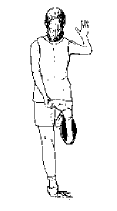
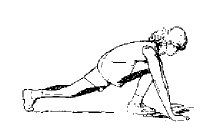
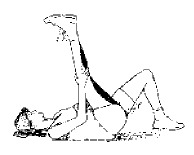
A number of warm-up and cool-down stretching exercises for your legs are shown at
the end of this handout. If you are going to exercise your upper body, be sure to use
stretching exercises for your arms, shoulders, chest and back.
HOW HARD DO I HAVE TO EXERCISE?
Even small amounts of exercise are better than none at all. Start with an activity you can
do comfortably. As you become more used to exercising, try to keep your heart rate at about
60 to 85% of your "maximum heart rate." To figure out your target heart rate, subtract your
age in years from 220 (which gives your maximum heart rate), and then multiply that number by
0.60 or 0.85. For example, if you are 40 years old, you would subtract 40 from 220, which would
give you 180 (220 - 40=180). Then you would multiply this number by either 0.60 or 0.85, which
would give you 108 or 153 (180 x 0.60=108 and 180 x 0.85=153).
When you first start your exercise program, you may want to use the lower number (0.60) to
calculate your target heart rate. Then, as your conditioning gradually increases, you may want
to use the higher number (0.85) to calculate your target heart rate. Check your pulse by
gently resting 2 fingers on the side of your neck and counting the beats for 1 minute.
Use a watch with a second hand to time the minute.
HOW DO I AVOID INJURING MYSELF?
The safest way to keep from injuring yourself during exercise is to avoid trying to do
too much too soon. Start with an activity that is fairly easy for you, such as walking.
Do it for a few minutes a day or several times a day. Then slowly increase the time and
level of activity. For example, increase how fast you walk over several weeks. If you feel
tired or sore, ease up somewhat on the level of exercise, or take a day off to rest. Try not
to give up entirely even if you don't feel great right away! Talk with your doctor if you
have questions or think you have injured yourself seriously.
WHAT ABOUT STRENGTH TRAINING
Most kinds of exercise will help both your heart and your other muscles. Resistance
training is exercise that develops the strength and endurance of large muscle groups.
Weight lifting is an example of this type of exercise. Exercise machines can also provide
resistance training. Your doctor or a trainer at a gym can give you more information about
exercising safely with weights or machines.
WARM UP and COOL DOWN STRETCHES
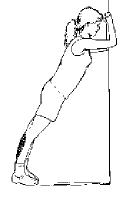
1. Calf Stretch
Face a wall, standing about 2 feet away from it. Keeping your heels flat and your back
straight, lean forward slowly and press your hands and forehead to the wall. You should
feel stretching in the area above your heels (this area is shaded in the picture). Hold
the stretch for 20 seconds and then relax. Repeat.
The food you eat can affect the way blood flows through your heart and arteries. A diet high in fat and cholesterol can gradually cause a buildup (called "plaque") in your arteries. That buildup slows down the blood flow and blocks small arteries. If the blockage happens in an artery that carries blood to the heart muscle, a heart attack can occur. If the blockage happens in an artery that carries blood to the brain, a stroke can occur. The right diet helps keep your arteries clear and reduces the risk of heart problems and stroke.
Keeping your heart healthy by watching what you eat and making healthy food choices isn't as hard as it sounds!
Tips for a heart-healthy diet
Eat less fat (especially butter, coconut and palm oil, saturated or hydrogenated vegetable fats such as Crisco, animal fats in meats and fats in dairy products).
Use nonstick vegetable oil cooking sprays instead of oils.
Buy lean cuts of meat, and eat fish, skinless chicken and turkey instead of beef.
Try low-fat snacks that have been baked instead of fried, such as pretzels.
Choose low-fat dairy products, such as skim milk, and low-fat cheese, yogurt and margarine.
Try to limit how many sweets you eat.
Eat no more than 4 egg yolks a week (use egg whites or
egg substitutes).
Bake, broil, steam or grill foods instead of frying them.
Eat fewer "fast foods" (burgers, fried foods), which are high in fat. Instead, eat more fruits, vegetables and carbohydrates (rice, pasta, breads, grains).
Drink low-calorie beverages, such as unsweetened tea or diet soda pop.
How much should I weigh?
Talk to your family doctor about determining your ideal weight, because every person is different. If you're overweight, the extra pounds put extra stress on your heart. Losing weight will help your heart stay healthy. If you need to lose weight, remember that losing just 10% of your body weight will reduce your risks for diabetes and heart disease.
Why is exercise good for my heart?
Exercise makes your heart stronger, helping it pump more blood with each heartbeat. The blood then delivers more oxygen to your body, which helps it function more efficiently. Exercise can also lower blood pressure, reduce your risk of heart disease and reduce levels of LDL ("bad" cholesterol), which clogs the arteries and can cause a heart attack. At the same time, exercise can raise levels of HDL ("good" cholesterol), which helps protect against heart disease.
Combined with a healthy diet, exercise can speed up weight loss. Exercise is also the best way to maintain weight loss. Regular exercise also helps you burn calories faster, even when you're sitting still.
What's the best type of exercise for my heart?
Aerobic exercise causes you to breathe more deeply and makes your heart work harder to pump blood. Aerobic exercise also raises your heart rate (which also burns calories). Examples of aerobic exercise include walking, jogging, running, swimming and bicycling.
How much exercise do I need?
In general, if you haven't been exercising, try to work up to 30 minutes, 4 to 6 times a week. Your doctor may make a different recommendation based on your health. If you can't carry on a conversation while you exercise, you may be overdoing it. It is best to alternate exercise days with rest days to prevent injuries.
How will I fit exercise into my busy schedule?
There are lots of ways to raise your heart rate during your regular day. Take the stairs instead of the elevator. Walk during a coffee break or lunch. Walk to work, or park at the end of the parking lot so you have to walk farther. Walk more briskly. Do housework at a quicker pace and more often (for example, vacuuming every day). Rake leaves, push the lawn mower or do other yard work.
source:http://www.familydoctor.orgWhy do I need to exercise my finger after an injury?
Exercising an injured finger can make it stronger and easier to move. You shouldn't start these exercises until your doctor says it is safe.
Range of Motion
This exercise can help you straighten your finger to make it easier to move. To do this exercise, use you uninjured hand to slowly straighten and bend the injured finger. Hold it straight then slowly bend it.
Finger Extension
This exercise makes it easier to straighten your finger. To do this exercise, put your injured hand flat, palm down, on a table. Lift each finger one at a time.
Grip Strengthening
This exercise can make your finger stronger. Make a fist with your injured hand and hold it a few seconds. You can do this exercise using only your hand, or you can squeeze a ball (for example, a soft "stress" ball, a racquetball, or a tennis ball). If you use a tennis ball, cut the side of the ball to make it easier to squeeze.
Object Pick-up
This exercise can help you do the things that you did before your injury, such as writing or tying your shoes. To do this exercise, pick up small objects such as coins, marbles, or buttons with the injured finger and the thumb.
source:http://www.familydoctor.org
 Include
two fruits or vegetables in every meal or snack. You'll feel fuller
and cut back on calories from other foods.
Include
two fruits or vegetables in every meal or snack. You'll feel fuller
and cut back on calories from other foods.
Eat breakfast. You'll be less likely to overeat later in the day.
Snack every 4 hours (try oranges, apples, pretzels, string cheese).
Eat at regular intervals. Do not starve.
Know your portions: 1/2 cup of rice is the size of your fist, an ounce of cheese is a large marble; a 3-ounce serving of meat is a deck of cards.
Divide your plate: 3/4 with vegetables,
grains, beans and fruit; 1/4 w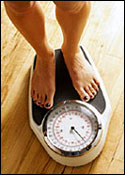 ith
extra-lean meat or low-fat dairy products.
ith
extra-lean meat or low-fat dairy products.
Make room for cravings. Have a cookie now and then; avoid anything heavier for that day.
Go for the less processed food (potato versus chips, whole-wheat bread over doughnuts.)
Don't eat on automatic pilot (i.e. tasting while cooking, pecking from the serving bowl.)
Limit alcohol to special occasions. Not
only is it highly caloric; it also stimulates appetite and  obliterates
willpower.
obliterates
willpower.
Brush your teeth after eating. So you get the 'done' feeling.
Eat beans: add a handful to salads and soups to curb hunger pangs longer.
Sweeten with spice. Add spices like cinnamon and vanilla to desserts versus sugar.
Try a new food each day. The flavor will
save you from dietary boredom (add mangos to a chicken dish, jalapeno
relish to your sandwich, winter pears to salad.)
Go spicy. Get a hot flavour boost with chillies, salsa and curry instead of by overeating.
Don't even open the menu. Resist temptation by just ordering the steamed veggies or something else low-fat, like a grilled chicken salad or a soup and salad combo.
Try an herbal supplement to help curb your appetite and give you more energy.
source:http://www.chennaionline.com/food/healthandnutrition/weight.aspAsthma in children usually has many causes, or triggers. These triggers may change as a
child ages. A child�s reaction to a trigger may also change with treatment. Viral infections
can increase the likelihood of an asthma attack. Common triggers of asthma include the
following:
Respiratory infections: These are usually viral infections. In some patients, other infections
with fungi, bacteria, or parasites might be responsible.
Allergens (see below for more information): An allergen is anything in a child�s environment
that causes an allergic reaction. Allergens can be foods, pet dander, molds, fungi,
roach allergens, or dust mites. Allergens can also be seasonal outdoor allergens (eg, mold
spores, pollens, grass, trees).
Irritants: When an irritating substance is inhaled, it can cause an asthmatic response.
Tobacco smoke, cold air, chemicals, perfumes, paint odors, hair sprays, and air pollutants
are irritants that can cause inflammation in the lungs and result in asthma symptoms.
Weather changes: Asthma attacks can be related to changes in the weather or the quality of the
air. Weather factors such as humidity and temperature can affect how many allergens and
irritants are being carried in the air and inhaled by your child.
Exercise (see below for more information): Exercise can trigger asthma. Exactly how exercise
triggers asthma is unclear, but it may have to do with heat and water loss and temperature
changes as a child heats up during exercise and cools down after exercise.
Emotional factors: Some children can have asthma attacks that are caused or made worse by
emotional upsets.
Gastroesophageal reflux (GER): GER is more commonly known as heartburn. GER is related to asthma
because the presence of small amounts of stomach acid outside of the stomach (in the esophagus)
can irritate the airways.
Inflammation of the upper airways (including the nasal passages and the sinuses): Inflammation
in the upper airways, which can be caused by allergies, sinus infections, or lung (respiratory)
infections, must be treated before asthmatic symptoms can be completely controlled.
Nocturnal asthma: Nighttime asthma is probably caused by multiple factors. Some factors may be
related to how breathing changes during sleep, exposure to allergens during and before sleep,
or body position during sleep.
Allergy-related asthma
Although an estimated 75-85% of people with asthma have some type of allergy, the allergy isn�t
always the primary cause of asthma. Even if allergies are not your child's primary triggers for
asthma (asthma may be triggered by colds, the flu, or exercise for example), allergies can still
make symptoms worse.
Children inherit the tendency to have allergies from their parents. People with allergies make
too much "allergic antibody," which is called immunoglobulin E (IgE). The IgE antibody recognizes
small quantities of allergens and causes allergic reactions to these usually harmless particles.
Allergic reactions occur when IgE antibody triggers certain cells (called mast cells) to
release a substance called histamine. Histamine occurs in the body naturally, but it is
released inappropriately and at too high an amount in people with allergies. The released
histamine is what causes the sneezing, runny nose, and watery eyes associated with some
allergies. In a child with asthma, histamine can also trigger asthma symptoms and flares.
An allergist can usually identify any allergies a child may have. Once identified, the best
treatment is to avoid exposure to allergens whenever possible. When avoidance isn't possible,
antihistamine medications may be prescribed to block the release of histamine in the body and
stop allergy symptoms. Nasal steroids can be prescribed to block allergic inflammation in the
nose. In some cases, an allergist can prescribe immunotherapy, which is a series of allergy
shots that gradually make the body unresponsive to specific allergens.
Exercise-induced asthma
Children who have exercise-induced asthma develop asthma symptoms after vigorous activity, such
as running, swimming, or biking. For some children, exercise is the only thing that triggers asthma;
for other children, exercise as well as other factors trigger symptoms. Young children with
exercise-induced asthma may have subtle symptoms such as coughing or undue breathlessness after
physical activity during play. Not every type or intensity of exercise causes symptoms in
children with exercise-induced asthma. With the right medicine, most children with exercise-induced
asthma can play sports like any other child. In fact, over 10% of Olympic athletes have exercise-induced
asthma they've learned to control.
If exercise is a child's only asthma trigger, the doctor may prescribe a medication that the
child takes before exercising to prevent airways from tightening up. Of course, asthma flares
can still occur. Parents (or older children) must carry the proper "rescue" medication
(such as inhalers) to all games and activities, and the child's school nurse, coaches, scout
leaders, and teachers must be informed of the child's asthma. Make sure the child will be able
to take the medication at school as needed.
The Five Parts to an Asthma Treatment Plan
Step 1 - Identifying and controlling asthma triggers
Children with asthma have different sets of triggers. Triggers are the factors that irritate
the airways and cause asthma symptoms. Triggers can change seasonally and as a child grows
older. Some common triggers are allergens, viral infections, irritants,
exercise, breathing cold air, and weather changes.
Identifying triggers and symptoms can take time. Keep a record of when symptoms occur and how
long they last. Once patterns are discovered, some of the triggers can be avoided through
environmental control measures, which are steps to reduce exposure to a child's allergy
triggers. Talk with your doctor about starting with environmental control measures that will
limit those allergens and irritants causing immediate problems for a child. Remember that
allergies develop over time with continued exposure to allergens, so a child's asthma triggers
may change over time.
Others who provide care for your child, such as babysitters, daycare providers, or teachers
must be informed and knowledgeable regarding your child's asthma treatment plan. Many schools
have initiated programs for their staff to be educated about asthma and recognize severe asthma
symptoms.
The following are suggested environmental control measures for different allergens and irritants:
Indoor controls
1. To control dust mites:
Use only polyester-filled pillows and comforters (never feather or down).
Use mite-proof covers (available at allergy supply stores) over pillows and mattresses.
Keep covers clean by vacuuming or wiping them down once a week.
Wash your child's sheets and blankets once a week in very hot water
(130 degrees Fahrenheit or higher) to kill dust mites.
Keep upholstered furniture, window mini-blinds, and carpeting out of a child's bedroom
and playroom because they can collect dust and dust mites (especially carpets).
Use washable throw rugs and curtains and wash them in hot water weekly. Vinyl window
shades that can be wiped down can also be used.
Dust and vacuum weekly. If possible, use a vacuum specially designed to collect and trap
dust mites (with a HEPA filter).
Reduce the number of dust-collecting houseplants, books, knickknacks, and
nonwashable stuffed animals in your home.
Avoid humidifiers when possible because moist air promotes dust mite infestation.
2. To control pollens and molds:
Avoid humidifiers because humidity promotes mold growth. If you must use a humidifier,
keep it very clean to prevent mold from growing in the machine.
Ventilate bathrooms, basements, and other damp places where mold can grow. Consider
keeping a light on in closets and using a dehumidifier in basements to remove air moisture.
Use air conditioning because it removes excess air moisture, filters out pollens from the
outside, and provides air circulation throughout your home. Filters should be changed
once a month.
Avoid wallpaper and carpets in bathrooms because mold can grow under them.
Use bleach to kill mold in bathrooms.
Keep windows and doors shut during pollen season.
3. To control irritants:
Do not smoke (or allow others to smoke) at home, even when a child is not present.
Do not burn wood fires in fireplaces or wood stoves.
Avoid strong odors from paint, perfume, hair spray, disinfectants, chemical cleaners,
air fresheners, and glues.
4. To control animal dander:
If your child is allergic to a pet, you may have to consider finding a new home for
the animal or keeping the pet outside at all times.
It may (but does not always) help to wash the animal at least once a week to remove
excess dander and collected pollens.
Never allow the pet into the allergic child's bedroom.
If you don't already own a pet and a child has asthma, don't acquire one.
Even if a child isn't allergic to the animal now, he or she can become allergic with
continued exposure.
Outdoor controls
When mold or pollen counts are high, give your child medications recommended by your
doctor (usually an antihistamine) before going outdoors.
After playing outdoors, the child should bathe and change clothes.
Drive with the car windows shut and air conditioning on during mold and pollen seasons.
Don't let a child mow the grass or rake leaves.
In some cases, the doctor may recommend immunotherapy when control measures and medications
are not effective. Speak with your child's doctor about these options.
Step 2 - Anticipating and preventing asthma flares
Patients with asthma have chronic inflammation of their airways. Inflamed airways are twitchy
and tend to narrow (constrict) whenever they are exposed to any trigger (such as infection or
an allergen). Some children with asthma may have increased inflammation in the lungs and
airways everyday without knowing it. Their breathing may sound normal and wheeze-free when
their airways are actually narrowing and becoming inflamed, making them prone to a flare. To
better assess a child's breathing and determine risk for an asthma attack (or flare), breathing
tests may be helpful. Breathing tests measure the volume and speed of air as it is exhaled from
the lungs. Asthma specialists make several measurements with a spirometer, a computerized
machine that takes detailed measurements of breathing ability.
At home, a peak flow meter (a hand-held tool that measures breathing ability) can be used to
measure airflow. When peak flow readings drop, airway inflammation may be increasing. The peak
flow meter can detect even subtle airway inflammation and obstruction, even when your child
feels fine. In some cases, it can detect drops in peak flow readings 2-3 days before a flare
occurs, providing plenty of time to treat and prevent it.
Another way to know when a flare is brewing is to look for early warning signs. These signs
are little changes in a child that signal medication adjustments may be needed (as directed in
a child's individual asthma management plan) to prevent a flare. Early warning signs may
indicate a flare hours or even a day before the appearance of obvious flare symptoms (such as
wheezing and coughing). Children can develop changes in appearance, mood, or breathing, or they
may say they "feel funny" in some way. Early warning signs are not always definite proof that a
flare is coming, but they are signals to plan ahead, just in case. It can take some time to
learn to recognize these little changes, but over time, recognizing them becomes easier.
Parents with very young children who can't talk or use a peak flow meter often find early
warning signs very helpful in predicting and preventing attacks. And early warning signs can
be helpful for older children and even teenagers because they can learn to sense little changes
in themselves. If they are old enough, they can adjust medication by themselves according to
the asthma management plan, and if not, they can ask for help.
Step 3 - Taking medications as prescribed
Developing an effective medication plan to control a child's asthma can take a little time and
trial and error. Different medications work more or less effectively for different kinds of
asthma, and some medication combinations work well for some children but not for others.
There are two main categories of asthma medications: quick-relief medications
(rescue medications) and long-term preventive medications (controller medications)
. Asthma medications treat both symptoms and causes, so they
effectively control asthma for nearly every child. Over-the-counter medications, home remedies,
and herbal combinations are not substitutes for prescription asthma medication because they
cannot reverse airway obstruction and they do not address the cause of many asthma flares. As
a result, asthma is not controlled by these nonprescription medicines, and it may even become
worse with their usage.
Step 4 - Controlling flares by following the doctor's written step-by-step plan
When you follow the first 3 steps of asthma control, your child will have fewer asthma symptoms
and flares. Remember that any child with asthma can still have an occasional flare (asthma attack),
particularly during the learning period (between diagnosis and control) or after exposure to a
very strong or new trigger. With the proper patient education, having medications on hand, and
keen observation, families can learn to control nearly every asthma flare by starting treatment
early, which will mean less emergency room visits and fewer admissions, if any, to the hospital.
Your doctor should provide a written step-by-step plan outlining exactly what to do if a child
has a flare. The plan is different for each child. Over time, families learn to recognize when
to start treatment early and when to call the doctor for help.
Step 5 - Learning more about asthma, new medications, and treatments
Learning more about asthma and asthma treatment is the secret to successful asthma control.
There are several organizations you can contact for information, videos, books, educational
video games, and pamphlets
(Visit this link)
Treatment of Asthma
The goals of asthma therapy are to prevent your child from having chronic and troublesome
symptoms, to maintain your child�s lung function as close to normal as possible, to allow your
child to maintain normal physical activity levels (including exercise), to prevent recurrent
asthma attacks and to reduce the need for emergency department visits or hospitalizations,
and to provide medicines to your child that give the best results with the fewest side effects.
Medicines that are available fall into two general categories. One category includes
medications that are meant to control asthma in the long term and are used daily to prevent
asthma attacks (controller medications). These can include inhaled corticosteroids, inhaled
cromolyn or nedocromil, long-acting bronchodilators, theophylline, and leukotriene antagonists.
The other category is medications that provide instant relief from symptoms (rescue medications).
These include short-acting bronchodilators and systemic corticosteroids. Inhaled ipratropium
may be used in addition to inhaled bronchodilators following asthma attacks or when asthma
worsens.
In general, doctors start with a high level of therapy following an asthma attack and then
decrease treatment to the lowest possible level that still prevents asthma attacks and allows
your child to have a normal life. Every child needs to follow a customized asthma management
plan to control asthma symptoms. The severity of a child's asthma can both worsen and improve
over time, so the type (category) of your child's asthma can change, which means different
treatment can be required over time. Treatment should be reviewed every 1-6 months, and the
choices for long- and short-term therapy are based on how severe the asthma is.
Talk to your doctor about the various medications available to treat asthma.
Follow this Legend: 1. Severity of Asthma||2. Long-Term Control ||3. Quick Relief
*1. Mild intermittent asthma
2. Usually none
3. Inhaled beta-2 agonist (short-acting bronchodilator)
If your child uses the short-acting inhaler more than 2 times per week, long-term
control therapy may be necessary.
*1. Mild persistent asthma
2. Daily use of low-dose inhaled corticosteroids or nonsteroidal agents such as cromolyn
and nedocromil (anti-inflammatory treatment), leukotriene antagonists, montelukast
3. Inhaled beta-2 agonist (short-acting bronchodilator)
If your child uses the short-acting inhaler everyday or starts using it more and
more frequently, additional long-term therapy may be needed.
*1. Moderate persistent asthma
2. Daily use of medium-dose inhaled corticosteroids (anti-inflammatory treatment) or low-
or medium-dose inhaled corticosteroids combined with a long-acting bronchodilator or
leukotriene antagonist
3. Inhaled beta-2 agonist (short-acting bronchodilator)
If your child uses the short-acting inhaler everyday or starts using it with
increasing frequency, additional long-term therapy may be needed.
*1. Severe persistent asthma
2. Daily use of high-dose inhaled corticosteroids (anti-inflammatory treatment),
long-acting bronchodilator, leukotriene antagonist, theophylline, omalizumab
(for patients with moderate-to-severe asthma brought on by seasonal allergens despite
inhaled corticosteroids)
3. Inhaled beta-2 agonist (short-acting bronchodilator)
If your child uses the short-acting inhaler everyday or starts using it with
increasing frequency, additional long-term therapy may be needed.
*1. Acute severe asthmatic episode (status asthmaticus)
2. This is severe asthma that often requires admission to the emergency department or
hospital.
3. Repeated doses of inhaled beta-2 agonist (short-acting bronchodilator)
**Seek medical help**
Acute severe asthmatic episode (status asthmaticus) often requires medical attention. It is
treated by providing oxygen or even mechanical ventilation in severe cases. Repeat or
continuous doses from an inhaler (beta-2 agonist) reverse airway obstruction. If the asthma
isn�t corrected using the inhaled bronchodilator, injectable epinephrine and/or systemic
corticosteroids are given to reduce inflammation.
Fortunately, for most children, asthma can be well controlled. For many families, the learning
process is the hardest part of controlling asthma. A child might have flares (asthma attacks)
while learning to control asthma, but don't be surprised or discouraged. Asthma control can
take a little time and energy to master, but it's worth the effort!
How long it takes to get asthma under control depends on the child's age, the severity of
symptoms, how frequently flares occur, and how willing and able the family is to follow a
doctor's prescribed treatment plan. Every child with asthma needs a doctor-prescribed
individualized asthma management plan to control symptoms and flares. This plan usually has
5 parts.
Symptoms of Asthma
*Wheezing
Wheezing is when the air flowing into the lungs makes a high-pitched whistling sound.
Mild wheezing occurs only at the end of a breath when the child is breathing out
(expiration or exhalation). More severe wheezing is heard during the whole exhaled breath.
Children with even more severe asthma can also have wheezing while they breathe in
(inspiration or inhalation). However, during a most extreme asthma attack, wheezing may be
absent because almost no air is passing through the airways.
Asthma can occur without wheezing, so wheezing is not necessary for the diagnosis of asthma.
Also, wheezing can be associated with other lung disorders, such as cystic fibrosis.
In asthma related to exercise (exercise-induced asthma) or asthma that occurs at night
(nocturnal asthma), wheezing may be present only after exercise or during the night.
*Coughing
Cough may be the only symptom of asthma, especially in cases of exercise-induced or
nocturnal asthma. Cough due to nocturnal asthma (night time asthma) usually occurs during
early hours of morning, such as 1 am to 4 am. Usually, the child doesn�t cough anything up
so there is no phlegm or mucus. Also, coughing may occur with wheezing.
*Chest tightness
The child may feel like the chest is tight or won�t expand when breathing in, or there may
be pain in the chest with or without other symptoms of asthma, especially in exercise-induced
or nocturnal asthma.
*Other symptoms
Infants or young children may have a history of coughs or lung infections (bronchitis) or
pneumonia. Children with asthma may get coughs every time they get a cold. Most children with
chronic or recurrent bronchitis have asthma.
**Symptoms can be different depending on whether the asthma episode is mild, moderate, or
severe.**
Symptoms during a mild episode: Children may be out of breath after a physical activity, such
as walking. They can talk in sentences and lie down, and they may be restless. The feeding may
be with interruption, therefore, the infant takes longer to finish the feed.
Symptoms during a moderately severe episode: Children are out of breath while talking. Infants
have a softer shorter cry, and feeding is difficult. There is feeding with interruption and
child may not be able to finish the usual quantity of the feed.
Symptoms during a severe episode: Children are out of breath while resting, they sit upright,
they talk in words (not sentences), and they are usually restless. Infants are not interested
in feeding and are restless and out of breath. Infant may try to start feeding but can not
sustain feeding due to breathlessness.
Symptoms indicating that breathing will stop: In addition to the symptoms already described,
the child is sleepy and confused. However, adolescents may not have these symptoms until they
actually stop breathing. The infant may not be interested in feeding.
In most children, asthma develops before the age of 5 years, and in more than half,
asthma develops before the age of 3 years.
Tests Used to Diagnose Asthma
Pulmonary function tests (PFTs) are used to test lung performance, but in children younger than
5 years, the results are typically not reliable.