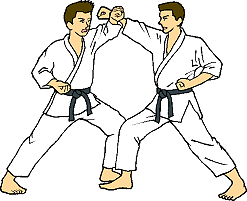
JU-JITSU
Ju-Jitsu in its original form, is possibly the most ancient of the Martial Arts, as the centuries passed and the laws and religions of civilisations changed, its origins suffered a similar fate of many other Arts and was almost lost in the histories of Japan and China, but new arts were formed as masters and students with their own variations in techniques opened new schools and kept Ju-Jitsu alive by orally handing down the Arts secrets from generation to generation.
Ju-Jitsu was formed by Samurai Warriors who were out of work, so to speak, due to the end of cival wars in Japan and were cashing in on the popularity of a still nervous population to learn an art of self defense. Ironically it was a Japanese swordmaster named Ittosai who mastered the art of Ju-Jitsu for the purpose of defeating an opponent without the use of a sword.
Today the Art of Ju-Jitsu is very different from that of centuries ago, although unlike many other Martial Arts, there exists no limitations on the techniques that may be practised but the roots of the Ju-Jitsu of today are a descendant of that ancient Art.
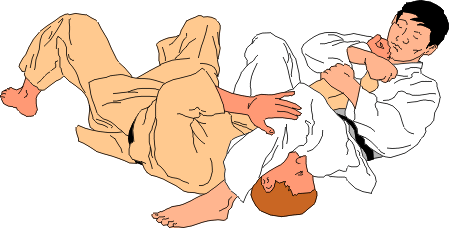
Ju-Jitsu typically consists of Throwing (Nage-waza),Grappling (Katame-waza), Joint locks (Kansetso-waza), Pinning (Osae-waza), Breakfalls (Ukemi-waza), Defend and counter strangles (Shime-waza), Defend and counter weapon attacks, Kicks, Blocks, Hand strikes, Stances and Kumite.
MISHUNDO-KARATE- JUDO- KOBUDO- LINKS