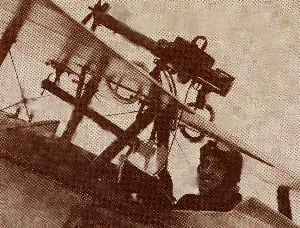
| The Lewis gun began its service with Belgium in 1913 and Britain in 1915. Its design was rooted in the workings of Samuel Maclean and came to be patented by Colonel Isaac Lewis of the USA. The Lewis Utilized an action vary much like the schmit-Rubin with rear locking lugs and a rotating bolt. The piston was returned by a helical return spring. Many were also fitted with an aluminum radiator enclosed in a steel casing. When the gun is fired the discharge of explosive gasses from the muzzel theoratically drew air through the rear of the radiator, thus cooling the gun. The gun prooved an able supplement for use on the battlefield. It was a heavy weapon, weighing in at twenty-six pounds, but it was far lighter then the Vickers Mg (40 Pounds) also in service. It worked well as a light mg with moving Infantry columns. It found widespread use among English and American aviators in the form of the MkII which was adapted for use on airplanes. the MkII discarded the cooling jacket as it was not needed in the cool airborn environment. This mg's distinctive shape is rediley observable on a whole host of WWI vintage airplanes. Many of the Mk IIs would be converted back to the MkI infantry foremat for reserve use during WWII. The Lewis was replaced by the Bren gun in 1936, but its service life was far from over. After the disaster at Dunkirk, it was brought back into use with the home Gaurd units to help defend the Island in case of attack. In addition to doing gaurd duty on the home front, it also found a place on merchant marine vessals. at this time many of the old aircraft Lewis Mgs were converted for use by the home gaurd by the addition of a buttstock and a wooden fore grip. |
| Models Lewis Mg .303 MKI (1915)- 47 round mag with cooling jacket buttstock and bipod. Sighted out to 2000 yds. Lewis Mg .303 MkII (1915)-same as MkI only cooling jacket and buttstock were removed. New spade type grip installed. Gained a 97 Round mag in 1916. Model utilized on airplanes. Lewis mg. .303 MkII* (1918)- Modified MkII for a faster cyclical rate. Lewis mg .303 MkIII- new production version of the MKII. Lewis Mg .303 SS(1942)- converted old Mks for naval use, gained a muzzel compensator and shoulder stock. The heavy barrel jacket was deleted. A similar arrangement was devised for home gaurd guns which gained a buttstock and wooden foregrip. Savage-Lewis Mg .30 (1940)- To help Britain the American Savage firm Converted US Lewis guns to the SS standard, deleting the barrel jacket and adding a skeleton buttsock when wooden replacements were unavailable. Sights were fixed at 400yds. These guns were painted with red rings to denote the gun's differing .30 US caliber. |
| The Lewis Gun in Britain |
| Mk II Lewis, note the absense of buttstock and cooling jacket as well as the taller 97 round magazine. |
 |
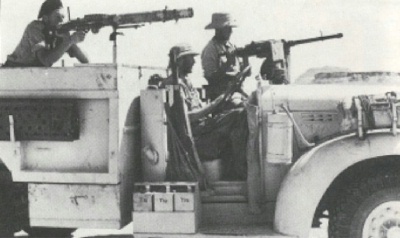 |
| Here one may see a MkI Lewis Mg positioned atop a Cheverolet truck (upper left) belonging to the British Long range desert group (LRDG) who carried out many raids in North Africa during WWII. Note buttstock and Cooling jacket. |
| History |
| Statistics Length-50 inchs Weight-26 pounds Cycling rate- 550 rpm Barrel-26.25 inchs with four grooves Muzzle Velocity-2450fps |
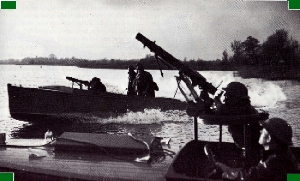 |
| Mk I Lewis with Spade style grip being employed on an anti-aircraft boat patrol. Note that it has a cooling jacket and traditional 47 round magazine. |
 |
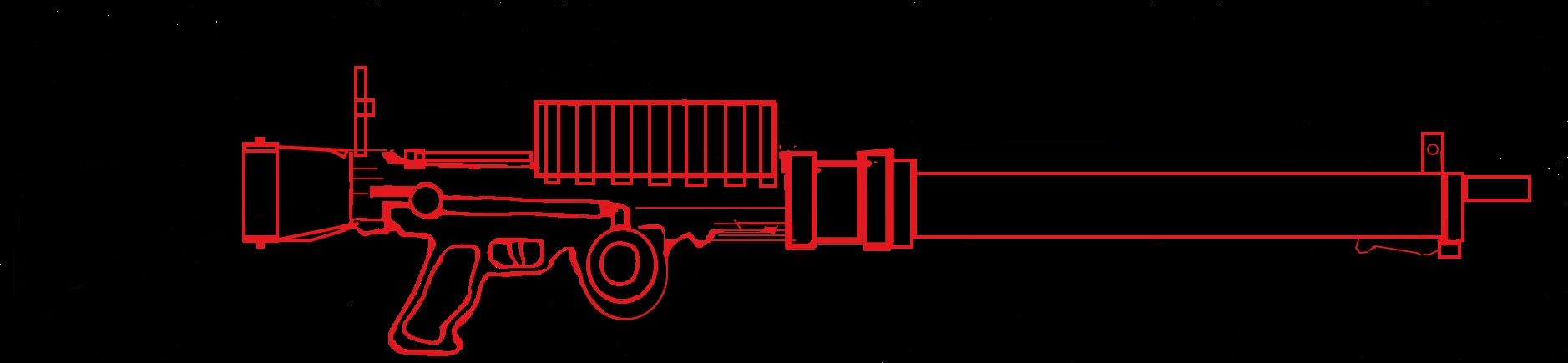 |
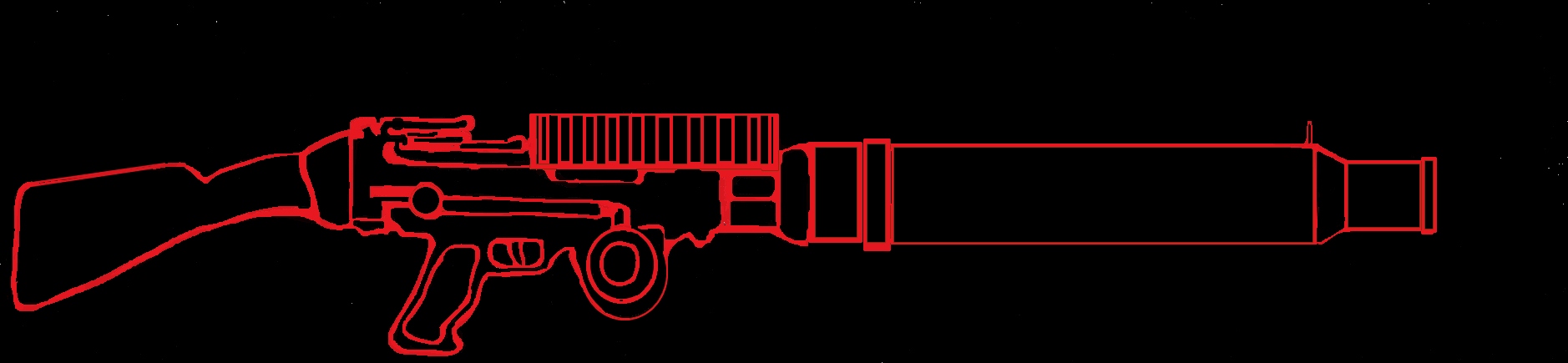
| Mk 1 Lewis with cooling jacket and buttstock |
| MkII - MkIII Lewis without cooling jacket and with 97 Round magazine and spade grips, |