 |
|
 |
| British WWII Planes |
 |
 |
 |
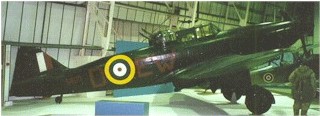
| Primary function Fighter Wingspan 39.4 ft 12 m Length 35.3 ft 10.75 m Height 12.1 ft 3.7 m Speed 303 mph 488 km/h Armament 4x 7.7mm machine gun (600 rounds each) Two-seat fighter with a four-gun arangment. The Defiant was a very good aircraft but the weight of the guns caused it many problems. After the initial succes heavy losses followed, it was then used as a night fighter for some time and later as a target tug. |
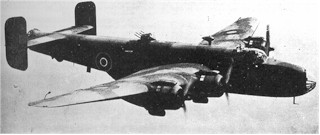
| Primary function Heavy bomber Wingspan 104 ft 31.75 m Length 71.6 ft 21.82 m Height 20.7 ft 6.32 m Speed max. 311 mph 501 km/h Number built 6,176 Heavy bomber, but wasnt very known. The Halifax was a mid-wing aircraft with twin fins and rudders. Halifaxes flew 75,532 missions during WWII. They were also used as glider tug and transport. A nickname was "Halibag". |
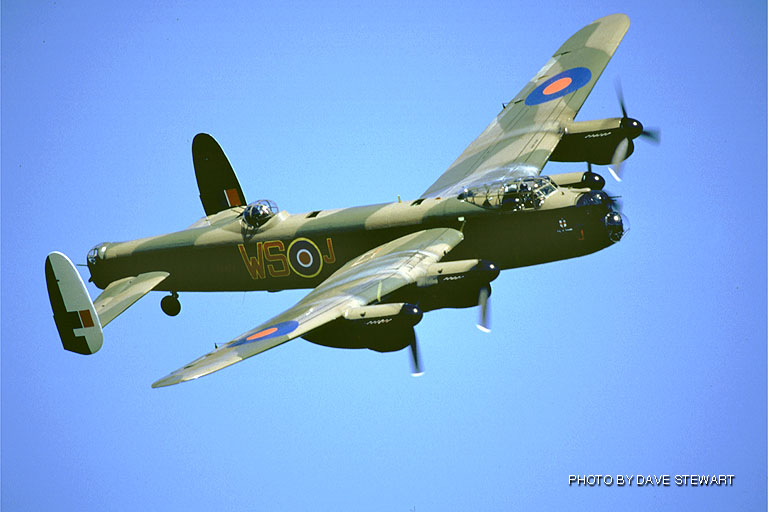
| Primary function Heavy bomber Wingspan 90 ft 27.46 m Length 70 ft 21.34 m Height 19.5 ft 5.94 m Speed max. 250 mph 402 km/h Number built 209 Twin-engined heavy bomber. Manchester was basically a good aircraft, but the Vulture engine was unreliable and dangerous. The Manchester is remembered because of its four-engined development, the Lancaster. |
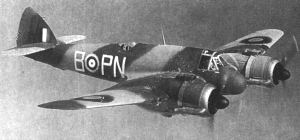 |
| Primary function Long-range heavy attack/fighter, night fighter, torpedo bomber Wingspan 57 ft 10 in 17.63 m Length 41 ft 8 in 12.6 m Height 15 ft 10 in 4.84 m The Beaufighter was designed as a long-range heavy fighter. It saw service as a night fighter, a torpedo bomber, a ground attack fighter and an anti-shipping aircraft. In addition to operations in Europe, it also served in the Middle East and Far East. The Beaufighter was the first effective radar equipped night fighter. |
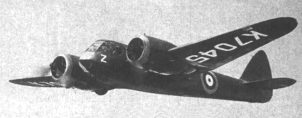 |
| Primary function Dive bomber Length 35.6 ft 10.85 m Height 12.4 ft 3.79 m Speed 225 mph 362 km/h Number built 192 A rugged monoplane dive bomber. The Skua was a low-wing monoplane with a distinctive "greenhouse"cockpit. Originally made for a two-seat fighter, it was obviously unsuitable for that role. |
 |
| Primary function Fighter Speed 466 mph 750 km/h Monoplane fighter, using the wing of the Tempest, but smaller and lighter. The wing panels were joined so that it would reduce the wing span therefore making it more able to "Juke" out the enemy. |
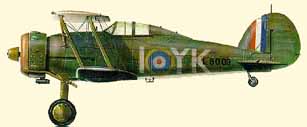
| Primary function Fighter Wingspan 32.3 ft 9.85 m Length 27.5 ft 8.38 m Height 10.4 ft 3.17 m Number built Minimum 756 Last British biplane fighter. The Gladiator was used during WWII in many different missions. |
 |
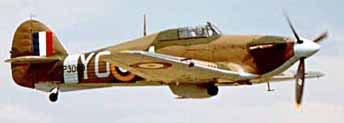 |
| Role Fighter Thrust 1,280 HP 955 kW Wingspan 40 ft 12.2 m Length 32 ft 3 in 9.8 m Height 13 ft 1 1/2 in 4 m Speed cruising 206 mph 332 km/h Number built 12,870 (+ 1,451 in Canada) The Hurricane was the first monoplane fighter produced by Hawker, and was available in large numbers at the beginning of World War II. Hurricanes played a important role in the Battle of Britain and went on to fly on more fronts than any other British fighter. |
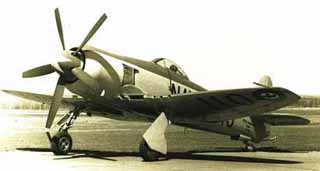 |
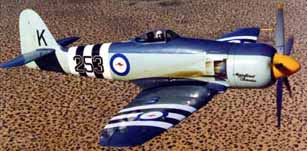
| Primary function Fighter Wingspan 38 ft 4 3/4 in 11.7 m Length 34 ft 8 in 10.6 m Height 16 ft 1 in 4.9 m Number built 860 The Hawker Sea Fury was designed as a smaller and lighter naval version of the Hawker Tempest. The Sea Fury had folding wings and tail-hook. The Sea Fury was a fighter-bomber capable of carrying bombs and rockets under its wings. Most of the 860 Sea Furys built went to the Royal Navy. The Sea Fury was one of the faster piston-engine aircraft built; as a result, some of th eplanes were used to in races. Others have been restored to original flying condition and are frequently seen at airshows. |
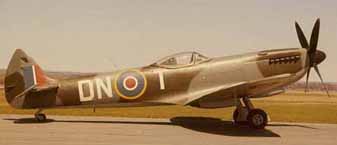 |
| Primary function Fighter Wingspan 36.8 ft 11.23 m Length 29.9 ft 9.12 m Height 11.4 ft 3.48 m Number built 20,334 An uncompromised, fast and maneuvrable fighter. The remarkable thin wing made the Spitfire capable of very high speeds, but it had to be checked over and over more than most of the other planes. The Spitfire served as first-line fighter throughout WWII. The Spitfire was continously changed to meet all kinds of threats and demands. Some people say that it is the most famous military aircraft ever. |
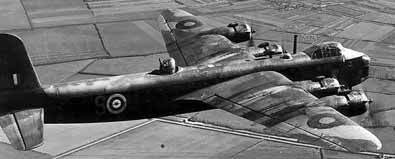 |
| Primary function Heavy bomber Length 87.3 ft Height 22.8 ft Wingarea 1,460 sq ft Speed 270 mph Date deployed May 1940 Number built 2,375 This was one of the first four engine heavy bombers which was used for only a short time in world war 2 because it was replaced bye the Lancaster and the Halifax. The main reason why the Sterling was a very short term plane was because it had take off and landing problems which at times would put the pilot and crew in serious danger. When it was replaced by the Lancaster and the Halifax those problems were fixed. |
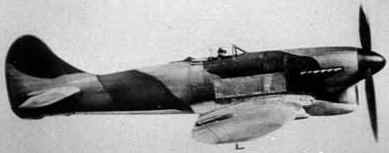 |
| Primary function Fighter Length 33.66 ft Height 16.1 ft Speed 428 mph Crew One Date deployed June 1943 Number built 800 The Typhoon was a new plane with a thinner wing, longer fuselage, and all around better vision from the cockpit. Finding a satisfactory engine proved to be a problem. Engine problems ended up taking the Typhoon off the market in World War II. |
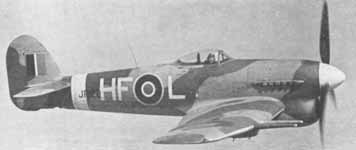 |
| Primary function Fighter-bomber Length 32 ft Height 15.3 ft Speed 404 mph Crew One First flight 24-2-1940 Date deployed May 1941 Number built 3,332 Also named the Typhoon, this plane had a powerful engine with 2180 horse power. This powerful engine gave the Typhoon exceptional low-altitude performance, but it had a lot of troubles. Another problem was the conservative wing design, the thickness of the wing was too thin to fly at the altitutes that this plane flew in.. A bad high-altitude performance and problems with the tail structure. The Typhoon then earned fame as ground attack aircraft. |