 |
|
 |
| American WWII Planes |
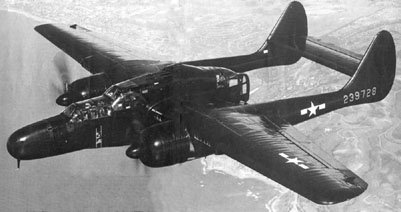 |
| The P-61 was the first American based airplane designed for night. It had two engines which made it a better fighter. But it had a flaw, its radar systems weren't the best and normally would have radar problems. |
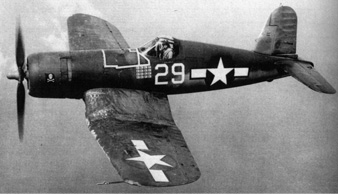 |
| Known as the most outstanding fighter to be used in WWII was the Corsair. Known to the Japanese as "Whistling Death" the Corsair was famous for it's bent wings and it's high kill ratios. The Corsair was the first U.S. fighter to exceed 400 m.p.h. But due to its long nose the Navy tried to take the Corsair out of the fleet of the Navy because it was hazardous to the pilots because they had very little space to see. |
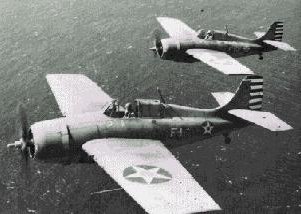 |
| This stubby little plane was the main fighter for the U.S. Navy during the hard fought first year of the war. It saw action at the Coral Sea and at Midway. Despite claims that it was no match against the experianced Japanese fighters and there star plane the Zero, it held its own grown because how sturdy it was and because of the pilots that flew it. |
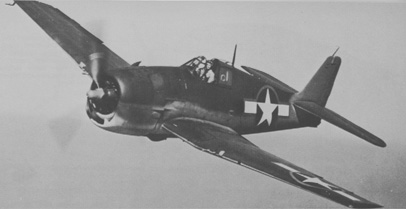 |
| The Hellcat replaced the F4F Wildcat during the last three years of the war as the main fighter for the U.S. Navy. It was rugged, dependable, and had the performance to match or beat the Japanese fighters that it fought. |
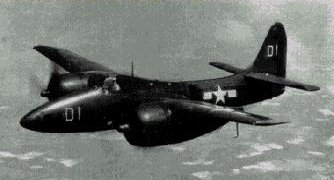 |
| In 1938 the U.S. Navy first started building the Tigercat and soon to come they would have built a masterpiece. The wings of the Tigercat had foldable wings and a tricycle landing gear. It also had large guns to keep up with the other fighters flying with and against it. The Tigercat was so loved by some of the soldiers that it was even used in some wars to come. |
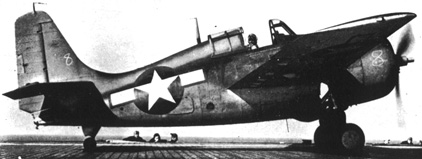 |
| This aircraft above was able to do many different things. The General Motars Wildcat had the ability to hold 20% more ammunition then most of the rest of the planes. It had four 50 caliber machine guns spreading all around the plane. Its engine was very powerful and was even able to escort smaller carriers. |
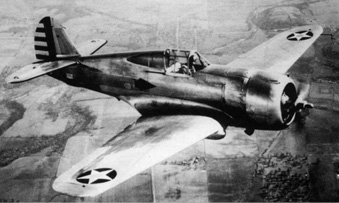 |
| First known as the Curtiss Model 75, the Hawk was the plane that followed the Curtiss P-40. By the beginning of WWII the P-36 was already considered not usable. Sooner or later American's had to stop using the P-40 because of different circumstances that happened while fighting the Japanese planes. |
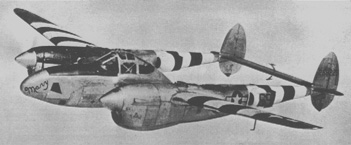 |
| The twin boomed Lightning was a revolutionary design for a long range interceptor fighter. Some pilots would get 40 plus kills using the Lightning. P-38s were also used in the famous mission that shot down Japanese admiral Isoroku Yamamoto. The P-38's high speed and large nose section made the plane a natural for missions that they had to take pictures. |
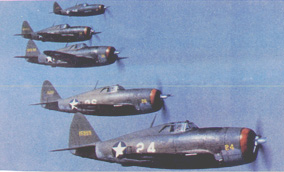 |
| The "Jug", the P-47 was a heavy plane that weighed 7 tons (14,000 pounds) fighter for it's time. Designed as an interceptor, it found it's true role as a hard hitting ground attack aircraft. It's great strength and massive engine could withstand damage better than most other planes of its time. The "Jug" was a bomber and was included in many missions while bombing in the World War II. |
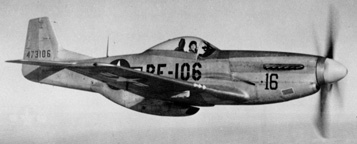 |
| The P-51 is considered to be one of greatest single seat fighters to be used in WWII. It's ability to fly long distances and escort other fighters, earned it fame during the long missions to Germany and over the Pacific ocean. |