| Introductions Mental Illness |
| Medications/Disease |
| Members & Drs. |
| Donate/Volunteer |
| Recommended Links |
| Preventing Suicide |
| Statistics and Heredity Rollover MI |
| About Us |
| Discussion & Chat |
| Forums |
| Books |
| Videos |
| Causes & Preventions |
| Contact Us |
| Schizophrenia News Archive |
| Mental Researches |
| Sign Guestbook/View Guestbook |
Bipolar Disorder
| Common Myth | Signs & Symptoms | Suicide | Can Children and Adolescents Have Bipolar Disorder? | What Causes it? | |
| How is it treated? | How to get Help | What About Clinical Studies | References |
|
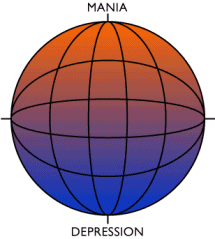
Until recently, bipolar disorder was known as manic depression. The word bipolar is now used to indicate the 2 poles, or extremes, that characterize the disorder. Bipolar disorder can affect a person's ability to experience a normal range of mood. If you picture a globe, the North Pole would be mania, and the South Pole would be depression. Every time you experience symptoms at one pole for at least 1 week, it is called an episode. Experiencing 4 or more episodes of mania and/or depression in a year is called rapid-cycling bipolar disorder. "Manic-depression distorts moods and thoughts, incites dreadful behaviors, destroys the basis of rational thought, and too often erodes the desire and will to live. It is an illness that is biological in its origins, yet one that feels psychological in the experience of it; an illness that is unique in conferring advantage and pleasure, yet one that brings in its wake almost unendurable suffering and, not infrequently, suicide." "I am fortunate that I have not died from my illness, fortunate in having received the best medical care available, and fortunate in having the friends, colleagues, and family that I do." Kay Redfield Jamison, Ph.D., An Unquiet Mind, 1995, p. 6. (Reprinted with permission from Alfred A. Knopf, a division of Random House, Inc.) As defined by the American Psychiatric Association, bipolar disorder includes 4 main mood episodes—Mania, Hypomania, Depression, and Mixed Mood.
Types of Mood Episodes Associated With Bipolar Disorder1 :
Types of Bipolar Disorder:
References: 1. American Psychiatric Association. Diagnostic and Statistical Manual of Mental Disorders. 4th Ed. Text Revision. Washington, DC: American Psychiatric Association; 2000. 2. Depression and Bipolar Support Alliance. Guide to Depression and Manic-Depression [brochure]. Chicago, Ill: Depression and Bipolar Support Alliance; 2001.
|
| Common Myth |
|
The Truth About Bipolar Disorder When it comes to mental illness, most people fear what they do not understand. Many of the myths surrounding bipolar disorder, however, are being put to rest thanks to extensive research. Here are some myths that you may have heard:
|
| Bipolar Signs and Symptoms |
|
Bipolar disorder causes dramatic mood swings”from overly "high" and/or irritable to sad and hopeless, and then back again, often with periods of normal mood in between. Severe changes in energy and behavior go along with these changes in mood. The periods of highs and lows are called episodes of mania and depression. Signs and symptoms of mania (or a manic episode) include:
A manic episode is diagnosed if elevated mood occurs with three or more of the other symptoms most of the day, nearly every day, for 1 week or longer. If the mood is irritable, four additional symptoms must be present. Signs and symptoms of depression (or a depressive episode) include:
A depressive episode is diagnosed if five or more of these symptoms last most of the day, nearly every day, for a period of 2 weeks or longer. A mild to moderate level of mania is called hypomania. Hypomania may feel good to the person who experiences it and may even be associated with good functioning and enhanced productivity. Thus even when family and friends learn to recognize the mood swings as possible bipolar disorder, the person may deny that anything is wrong. Without proper treatment, however, hypomania can become severe mania in some people or can switch into depression. Sometimes, severe episodes of mania or depression include symptoms of psychosis (or psychotic symptoms). Common psychotic symptoms are hallucinations (hearing, seeing, or otherwise sensing the presence of things not actually there) and delusions (false, strongly held beliefs not influenced by logical reasoning or explained by a person's usual cultural concepts). Psychotic symptoms in bipolar disorder tend to reflect the extreme mood state at the time. For example, delusions of grandiosity, such as believing one is the President or has special powers or wealth, may occur during mania; delusions of guilt or worthlessness, such as believing that one is ruined and penniless or has committed some terrible crime, may appear during depression. People with bipolar disorder who have these symptoms are sometimes incorrectly diagnosed as having schizophrenia, another severe mental illness. It may be helpful to think of the various mood states in bipolar disorder as a spectrum or continuous range. At one end is severe depression, above which is moderate depression and then mild low mood, which many people call "the blues" when it is short-lived but is termed "dysthymia" when it is chronic. Then there is normal or balanced mood, above which comes hypomania (mild to moderate mania), and then severe mania. 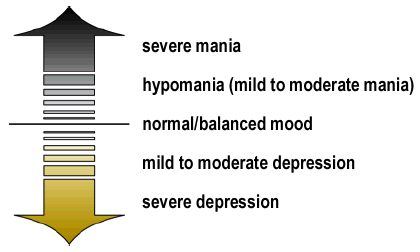
In some people, however, symptoms of mania and depression may occur together in what is called a mixed bipolar state. Symptoms of a mixed state often include agitation, trouble sleeping, significant change in appetite, psychosis, and suicidal thinking. A person may have a very sad, hopeless mood while at the same time feeling extremely energized. Bipolar disorder may appear to be a problem other than mental illness—for instance, alcohol or drug abuse, poor school or work performance, or strained interpersonal relationships. Such problems in fact may be signs of an underlying mood disorder. Diagnosis of Bipolar DisorderLike other mental illnesses, bipolar disorder cannot yet be identified physiologically for example, through a blood test or a brain scan. Therefore, a diagnosis of bipolar disorder is made on the basis of symptoms, course of illness, and, when available, family history. The diagnostic criteria for bipolar disorder are described in the Diagnostic and Statistical Manual for Mental Disorders, fourth edition (DSM-IV).
|
| Suicide |
|
Some people with bipolar disorder become suicidal. Anyone who is thinking about committing suicide needs immediate attention, preferably from a mental health professional or a physician. Anyone who talks about suicide should be taken seriously. Risk for suicide appears to be higher earlier in the course of the illness. Therefore, recognizing bipolar disorder early and learning how best to manage it may decrease the risk of death by suicide. Signs and symptoms that may accompany suicidal feelings include:
If you are feeling suicidal or know someone who is:
While some suicide attempts are carefully planned over time, others are impulsive acts that have not been well thought out; thus, the final point in the box above may be a valuable long-term strategy for people with bipolar disorder. Either way, it is important to understand that suicidal feelings and actions are symptoms of an illness that can be treated. With proper treatment, suicidal feelings can be overcome. |
| Can Children and Adolescents Have Bipolar Disorder? |
|
Both children and adolescents can develop bipolar disorder. It is more likely to affect the children of parents who have the illness. Unlike many adults with bipolar disorder, whose episodes tend to be more clearly defined, children and young adolescents with the illness often experience very fast mood swings between depression and mania many times within a day. Children with mania are more likely to be irritable and prone to destructive tantrums than to be overly happy and elated. Mixed symptoms also are common in youths with bipolar disorder. Older adolescents who develop the illness may have more classic, adult-type episodes and symptoms. Bipolar disorder in children and adolescents can be hard to tell apart from other problems that may occur in these age groups. For example, while irritability and aggressiveness can indicate bipolar disorder, they also can be symptoms of attention deficit hyperactivity disorder, conduct disorder, oppositional defiant disorder, or other types of mental disorders more common among adults such as major depression or schizophrenia. Drug abuse also may lead to such symptoms. For any illness, however, effective treatment depends on appropriate diagnosis. Children or adolescents with emotional and behavioral symptoms should be carefully evaluated by a mental health professional. Any child or adolescent who has suicidal feelings, talks about suicide, or attempts suicide should be taken seriously and should receive immediate help from a mental health specialist. |
| What Causes Bipolar Disorder? |
|
Scientists are learning about the possible causes of bipolar disorder through several kinds of studies. Most scientists now agree that there is no single cause for bipolar disorder—rather, many factors act together to produce the illness. Because bipolar disorder tends to run in families, researchers have been searching for specific genes”the microscopic "building blocks" of DNA inside all cells that influence how the body and mind work and grow”passed down through generations that may increase a person's chance of developing the illness. But genes are not the whole story. Studies of identical twins, who share all the same genes, indicate that both genes and other factors play a role in bipolar disorder. If bipolar disorder were caused entirely by genes, then the identical twin of someone with the illness would always develop the illness, and research has shown that this is not the case. But if one twin has bipolar disorder, the other twin is more likely to develop the illness than is another sibling. In addition, findings from gene research suggest that bipolar disorder, like other mental illnesses, does not occur because of a single gene. It appears likely that many different genes act together, and in combination with other factors of the person or the person's environment, to cause bipolar disorder. Finding these genes, each of which contributes only a small amount toward the vulnerability to bipolar disorder, has been extremely difficult. But scientists expect that the advanced research tools now being used will lead to these discoveries and to new and better treatments for bipolar disorder. Brain-imaging studies are helping scientists learn what goes wrong in the brain to produce bipolar disorder and other mental illnesses.New brain-imaging techniques allow researchers to take pictures of the living brain at work, to examine its structure and activity, without the need for surgery or other invasive procedures. These techniques include magnetic resonance imaging (MRI), positron emission tomography (PET), and functional magnetic resonance imaging (fMRI). There is evidence from imaging studies that the brains of people with bipolar disorder may differ from the brains of healthy individuals. As the differences are more clearly identified and defined through research, scientists will gain a better understanding of the underlying causes of the illness, and eventually may be able to predict which types of treatment will work most effectively. |
| How Is Bipolar Disorder Treated? |
| Most people with bipolar disorder ”even those with the
most severe forms”can achieve substantial stabilization of their mood
swings and related symptoms with proper treatment.
Because bipolar disorder is a recurrent illness, long-term preventive treatment is strongly recommended and almost always indicated. A strategy that combines medication and psychosocial treatment is optimal for managing the disorder over time. In most cases, bipolar disorder is much better controlled if treatment is continuous than if it is on and off. But even when there are no breaks in treatment, mood changes can occur and should be reported immediately to your doctor. The doctor may be able to prevent a full-blown episode by making adjustments to the treatment plan. Working closely with the doctor and communicating openly about treatment concerns and options can make a difference in treatment effectiveness. In addition, keeping a chart of daily mood symptoms, treatments, sleep patterns, and life events may help people with bipolar disorder and their families to better understand the illness. This chart also can help the doctor track and treat the illness most effectively. Medications for bipolar disorder are prescribed by psychiatrists”medical doctors (M.D.) with expertise in the diagnosis and treatment of mental disorders. While primary care physicians who do not specialize in psychiatry also may prescribe these medications, it is recommended that people with bipolar disorder see a psychiatrist for treatment. Medications known as "mood stabilizers" usually are prescribed to help control bipolar disorder. Several different types of mood stabilizers are available. In general, people with bipolar disorder continue treatment with mood stabilizers for extended periods of time (years). Other medications are added when necessary, typically for shorter periods, to treat episodes of mania or depression that break through despite the mood stabilizer.
Treatment of Bipolar DepressionResearch has shown that people with bipolar disorder are at risk of switching into mania or hypomania, or of developing rapid cycling, during treatment with antidepressant medication. Therefore, "mood-stabilizing" medications generally are required, alone or in combination with antidepressants, to protect people with bipolar disorder from this switch. Lithium and valproate are the most commonly used mood-stabilizing drugs today. However, research studies continue to evaluate the potential mood-stabilizing effects of newer medications.
Thyroid FunctionPeople with bipolar disorder often have abnormal thyroid gland function.Because too much or too little thyroid hormone alone can lead to mood and energy changes, it is important that thyroid levels are carefully monitored by a physician. People with rapid cycling tend to have co-occurring thyroid problems and may need to take thyroid pills in addition to their medications for bipolar disorder. Also, lithium treatment may cause low thyroid levels in some people, resulting in the need for thyroid supplementation. Medication Side EffectsBefore starting a new medication for bipolar disorder, always talk with your psychiatrist and/or pharmacist about possible side effects. Depending on the medication, side effects may include weight gain, nausea, tremor, reduced sexual drive or performance, anxiety, hair loss, movement problems, or dry mouth. Be sure to tell the doctor about all side effects you notice during treatment. He or she may be able to change the dose or offer a different medication to relieve them. Your medication should not be changed or stopped without the psychiatrist's guidance. Psychosocial TreatmentsAs an addition to medication, psychosocial treatments”including certain forms of psychotherapy (or "talk" therapy)”are helpful in providing support, education, and guidance to people with bipolar disorder and their families. Studies have shown that psychosocial interventions can lead to increased mood stability, fewer hospitalizations, and improved functioning in several areas. A licensed psychologist, social worker, or counselor typically provides these therapies and often works together with the psychiatrist to monitor a patient's progress. The number, frequency, and type of sessions should be based on the treatment needs of each person. Psychosocial interventions commonly used for bipolar disorder are cognitive behavioral therapy, psychoeducation, family therapy, and a newer technique, interpersonal and social rhythm therapy. NIMH researchers are studying how these interventions compare to one another when added to medication treatment for bipolar disorder.
Other Treatments
A Long-Term Illness That Can Be Effectively TreatedEven though episodes of mania and depression naturally come and go, it is important to understand that bipolar disorder is a long-term illness that currently has no cure. Staying on treatment, even during well times, can help keep the disease under control and reduce the chance of having recurrent, worsening episodes. |
| How Can Individuals and Families Get Help for Bipolar Disorder? |
|
Anyone with bipolar disorder should be under the care of a psychiatrist skilled in the diagnosis and treatment of this disease. Other mental health professionals, such as psychologists, psychiatric social workers, and psychiatric nurses, can assist in providing the person and family with additional approaches to treatment. Help can be found at:
People with bipolar disorder may need help to get help.
|
| What About Clinical Studies for Bipolar Disorder? |
|
Some people with bipolar disorder receive medication and/or psychosocial therapy by volunteering to participate in clinical studies (clinical trials). Clinical studies involve the scientific investigation of illness and treatment of illness in humans. Clinical studies in mental health can yield information about the efficacy of a medication or a combination of treatments, the usefulness of a behavioral intervention or type of psychotherapy, the reliability of a diagnostic procedure, or the success of a prevention method. Clinical studies also guide scientists in learning how illness develops, progresses, lessens, and affects both mind and body. Millions of Americans diagnosed with mental illness lead healthy, productive lives because of information discovered through clinical studies. These studies are not always right for everyone, however. It is important for each individual to consider carefully the possible risks and benefits of a clinical study before making a decision to participate. In recent years, NIMH has introduced a new generation of "real-world" clinical studies. They are called "real-world" studies for several reasons. Unlike traditional clinical trials, they offer multiple different treatments and treatment combinations. In addition, they aim to include large numbers of people with mental disorders living in communities throughout the U.S. and receiving treatment across a wide variety of settings. Individuals with more than one mental disorder, as well as those with co-occurring physical illnesses, are encouraged to consider participating in these new studies. The main goal of the real-world studies is to improve treatment strategies and outcomes for all people with these disorders. In addition to measuring improvement in illness symptoms, the studies will evaluate how treatments influence other important, real-world issues such as quality of life, ability to work, and social functioning. They also will assess the cost-effectiveness of different treatments and factors that affect how well people stay on their treatment plans. |
|
The Systematic Treatment Enhancement linical Trials page on the NIMH Web site http://www.nimh.nih.gov/, visit the National Library of Medicine's clinical trials database http://www.clinicaltrials.gov, or contact NIMH.Program for Bipolar Disorder (STEP-BD) is seeking participants for the largest-ever, "real-world" study of treatments for bipolar disorder. To learn more about STEP-BD or other clinical studies, |
| References |
|
1Narrow WE. One-year prevalence of depressive disorders among adults 18 and over in the U.S.: NIMH ECA prospective data. Population estimates based on U.S. Census estimated residential population age 18 and over on July 1, 1998. Unpublished. 2Regier DA, Narrow WE, Rae DS, et al. The de facto mental and addictive disorders service system. Epidemiologic Catchment Area prospective 1-year prevalence rates of disorders and services. Archives of General Psychiatry, 1993; 50(2): 85-94. 3American Psychiatric Association. Diagnostic and Statistical Manual for Mental Disorders, fourth edition (DSM-IV). Washington, DC: American Psychiatric Press, 1994. 4Hyman SE, Rudorfer MV. Depressive and bipolar mood disorders. In: Dale DC, Federman DD, eds. Scientific American®; Medicine. Vol. 3. New York: Healtheon/WebMD Corp., 2000; Sect. 13, Subsect. II, p. 1. 5Goodwin FK, Jamison KR. Manic-depressive illness. New York: Oxford University Press, 1990. 6Geller B, Luby J. Child and adolescent bipolar disorder: a review of the past 10 years. Journal of the American Academy of Child and Adolescent Psychiatry, 1997; 36(9): 1168-76. 7NIMH Genetics Workgroup. Genetics and mental disorders. NIH Publication No. 98-4268. Rockville, MD: National Institute of Mental Health, 1998. 8Hyman SE. Introduction to the complex genetics of mental disorders. Biological Psychiatry, 1999; 45(5): 518-21. 9Soares JC, Mann JJ. The anatomy of mood disorders—review of structural neuroimaging studies. Biological Psychiatry, 1997; 41(1): 86-106. 10Soares JC, Mann JJ. The functional neuroanatomy of mood disorders. Journal of Psychiatric Research, 1997; 31(4): 393-432. 11Sachs GS, Printz DJ, Kahn DA, Carpenter D, Docherty JP. The expert consensus guideline series: medication treatment of bipolar disorder 2000. Postgraduate Medicine, 2000; Spec No:1-104. 12Sachs GS, Thase ME. Bipolar disorder therapeutics: maintenance treatment. Biological Psychiatry, 2000; 48(6): 573-81. 13Huxley NA, Parikh SV, Baldessarini RJ. Effectiveness of psychosocial treatments in bipolar disorder: state of the evidence. Harvard Review of Psychiatry, 2000; 8(3): 126-40. 14Vainionpaa LK, Rattya J, Knip M, Tapanainen JS, Pakarinen AJ, Lanning P, Tekay A, Myllyla VV, Isojarvi JI. Valproate-induced hyperandrogenism during pubertal maturation in girls with epilepsy. Annals of Neurology, 1999; 45(4): 444-50. 15Llewellyn A, Stowe ZN, Strader JR Jr. The use of lithium and management of women with bipolar disorder during pregnancy and lactation. Journal of Clinical Psychiatry, 1998; 59(Suppl 6): 57-64; discussion 65. 16Thase ME, Sachs GS. Bipolar depression: pharmacotherapy and related therapeutic strategies. Biological Psychiatry, 2000; 48(6): 558-72. 17Suppes T, Webb A, Paul B, Carmody T, Kraemer H, Rush AJ. Clinical outcome in a randomized 1-year trial of clozapine versus treatment as usual for patients with treatment-resistant illness and a history of mania. American Journal of Psychiatry, 1999; 156(8): 1164-9. 18Tohen M, Sanger TM, McElroy SL, Tollefson GD, Chengappa KN, Daniel DG, Petty F, Centorrino F, Wang R, Grundy SL, Greaney MG, Jacobs TG, David SR, Toma V. Olanzapine versus placebo in the treatment of acute mania. Olanzapine HGEH Study Group. American Journal of Psychiatry, 1999; 156(5): 702-9. 19Rothschild AJ, Bates KS, Boehringer KL, Syed A. Olanzapine response in psychotic depression. Journal of Clinical Psychiatry, 1999; 60(2): 116-8. 20U.S. Department of Health and Human Services. Mental health: a report of the Surgeon General. Rockville, MD: U.S. Department of Health and Human Services, Substance Abuse and Mental Health Services Administration, Center for Mental Health Services, National Institutes of Health, National Institute of Mental Health, 1999. 21Henney JE. Risk of drug interactions with St. John's wort. From the Food and Drug Administration. Journal of the American Medical Association, 2000; 283(13): 1679. 22Nierenberg AA, Burt T, Matthews J, Weiss AP. Mania associated with St. John's wort. Biological Psychiatry, 1999; 46(12): 1707-8. 23Stoll AL, Severus WE, Freeman MP, Rueter S, Zboyan HA, Diamond E, Cress KK, Marangell LB. Omega 3 fatty acids in bipolar disorder: a preliminary double-blind, placebo-controlled trial. Archives of General Psychiatry, 1999; 56(5): 407-12. 24Strakowski SM, DelBello MP. The co-occurrence of bipolar and substance use disorders. Clinical Psychology Review, 2000; 20(2): 191-206. 25Mueser KT, Goodman LB, Trumbetta SL, Rosenberg SD, Osher FC, Vidaver R, Auciello P, Foy DW. Trauma and posttraumatic stress disorder in severe mental illness. Journal of Consulting and Clinical Psychology, 1998; 66(3): 493-9. 26Strakowski SM, Sax KW, McElroy SL, Keck PE Jr, Hawkins JM, West SA. Course of psychiatric and substance abuse syndromes co-occurring with bipolar disorder after a first psychiatric hospitalization. Journal of Clinical Psychiatry, 1998; 59(9): 465-71. This publication, written by Melissa Spearing of NIMH, is a revision and update of an earlier version by Mary Lynn Hendrix. Scientific information and review were provided by NIMH Director Steven E. Hyman, M.D., and NIMH staff members Matthew V. Rudorfer, M.D., and Jane L. Pearson, Ph.D. Editorial assistance was provided by Clarissa K. Wittenberg, Margaret Strock, and Lisa D. Alberts of NIMH. source ..:: NIMH ::..
|
Copyright© 2005. All Rights Reserved.