- 43 -
The Vacuum Effect
There are four fundamental forces at work in the universe. Gravity,
electromagnetism, the strong nuclear force, and the weak nuclear force. For
centuries, science has sought one unifying theory, a single force to explain
how and why the universe works. The vacuum effect may be the elusive
theory they have been searching for.
Basically, the vacuum effect is the regulation of matter's internal empty
space by the compression exerted upon matter by the surrounding external
empty space.
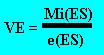 {The Vacuum Effect (VE) equals Mass/Matter (M) multiplied by its Internal (i) Empty Space (ES), divided by the compression of the surrounding External (e) Empty Space (ES).}
The principle of the vacuum effect is this:
External empty space is constantly compressing matter, which instigates heat within matter. As a mass heats up, empty space is drawn in between its matter as a
cooling mechanism. The hotter the mass, the more intense the vacuum effect.
To put it simply, the vacuum effect is the interaction between heat and cold (i.e.,
matter and empty space).
In order to explain the theory, we must first understand what heat and
cold really are, and the basic structure of mass.
Mass is any physical object. An object is made of molecules. Molecules
are made of atoms. Atoms are made of particles called matter. Matter is made
of quarks. As of yet, we don't know what quarks are made of, but I will come
back to them later. It must be noted that within each of these levels there is,
comparatively speaking, a great deal of empty space.
- 44 -
A quantum is the fundamental unit of energy. The plural of quantum is
quanta. Quanta are also known as photons, which are the fundamental
particles of light. Quantum mechanics explains the behavior of the particles
inside the atom. Quantum theory states that energy, like matter, comes in
particles. Thus, energy and matter are in fact the same thing. Everything is
quanta.
Matter is neither created nor destroyed, but only changes form. Matter and
energy are the same thing. Energy is heat. Therefore, heat is neither created
nor destroyed, but only changes form. Which means the amount of heat, and
hence the amount of cold, that exists in the universe is constant.
To state it broadly, heat is the matter of the universe, and cold is the
empty space, or "universal filling."
Heat is characterized by vibration, or motion. Matter vibrates as a result
of friction, which is caused by compressing two or more particles together.
The greater the compression, the more excessive the vibration, and the hotter
the matter becomes.
Heat pushes continuously outward from its source. As matter heats up,
it expands. It is the duty of heat to prevent a mass from being crushed.
Cold is empty space. In relation to matter, cold is characterized by constricted vibration. Cold pushes continuously into matter. As matter cools
down it shrinks, or compresses. It is the duty of cold to prevent a mass from
drifting apart.
CONTINUED
Home Next
1, 2, 3