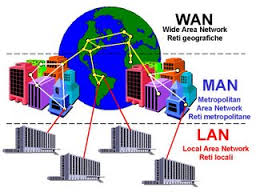
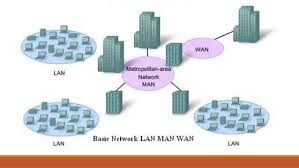
-The main differentiation among these
classifications is their area of coverage (distinguish by the
geographical area each network serves).
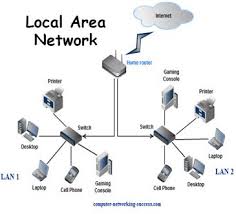
-A local area network (LAN) is a network that connects computers and devices in a limited geographical area.
-Areas of coverage: LANs located within the same building (closely
positioned group of buildings) such as a home, school computer
laboratory, office building.
-Distance: LANs span (cover) distance less than a mile.
-Ownership: LANs are owned and operated by individual organizations.
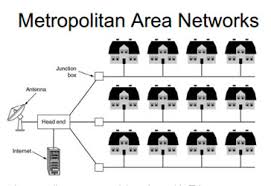
-A metropolitan area network (MAN) is a high-speed network that connects local area networks (LANs) in a metropolitan area.
Main characteristics of MAN:
-Areas of coverage: MANs connect various locations such as campuses,
offices, and government, that are frequently used as links between
buildings.
-Distance: MANs span (cover) distance up to 100 miles (161 km).
-Ownership: MANs are owned by a group of users who jointly own and operate the network.
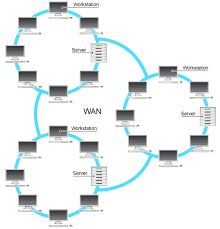
-A wide area network (WAN) is a network that covers a large geographical area
Main characteristics of WAN:
-Areas of coverage: WANs located within
a countryside and worldwide networks, (such as a city, country, or the
world) using a communications channel that combines many types of media
such as telephone lines, cables and radio waves. The Internet is the
world’s largest WAN.
-Distance: WANs span (cover) distance greater than 100 miles.
-Ownership: WANs have no ownership.