The Electrolytic Process
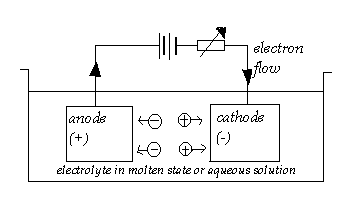
The electrolytic process requires that an electrolyte, an ionized solution or molten metallic salt, complete an electric circuit between two electrodes. When the electrodes are connected to a source of direct current one, called the cathode, becomes negatively (-) charged while the other, called the anode, becomes positively (+) charged. The positive ions in the electrolyte will move toward the cathode and the negatively charged ions toward the anode. This migration of ions through the electrolyte constitutes the electric current in that part of the circuit. The migration of electrons into the anode, through the wiring and an electric generator, and then back to the cathode constitutes the current in the external circuit.
Menu NEXT---Definition of Electrolysis Page written and maintained by 5E Wong Mei Chi Michi